

Six cities make it easy to stay for months in one place. Each entry covers how long you can legally stay and what a month costs. Each one also lists internet speed, time zone, and a safety or air quality note. The list starts with the cities that need the least paperwork and ends with the ones that need the most.
What Makes a City Good for a Long Stay
A long stay needs different things from a two-week trip. The city should allow several months in one place without border runs. Monthly costs should stay steady, and the internet should handle daily video calls.
The wifi figures below are national medians from the Speedtest Global Index for March 2026. They do not show what one apartment gets, so it helps to check the wifi speed before booking a stay.
Staying 180 or 183 days can also make you a tax resident in some countries. The guide to visa renewal rules covers what happens when a first permit ends. Visa and cost details were checked in October 2026, and the official government source has the final word. The article offers general information, not legal or tax advice.
Six Cities Built for Staying Put
1. Tbilisi, Georgia
Tbilisi is one of the easiest places to start a long stay. Most travelers arrive with no visa application and can stay for a year.
- Visa: Citizens of more than 95 countries get 365 days visa-free. There is no dedicated nomad visa.
- Internet: Georgia’s national fixed median is about 45 Mbps, and mobile runs about 161 Mbps. One local guide lists 80 to 150 Mbps in coworking spaces.
- Cost: Two local guides put a comfortable month at $1,000 to $1,500. A one-bedroom in Vera or Saburtalo costs about $500 to $700.
- Time zone: UTC+4. A 9 a.m. call in New York falls at 5 or 6 p.m. in Tbilisi.
- Safety: The U.S. State Department lists Georgia at Level 1 (exercise normal precautions) and advises against travel to Abkhazia and South Ossetia. The UK Foreign Office advises avoiding political demonstrations in Tbilisi.
The work rules changed in 2026. Georgia’s labor ministry said that from March 1, remote work needs a work permit. Parliament changed the law on April 16. Two Tbilisi law firms say people who work only for foreign clients now fall outside the permit system. One tracker still called the position unclear in July, so the latest rules are worth confirming with Georgian authorities before a long stay.
Best for: Remote workers who want a full year in one place with little paperwork and a lower budget.

2. Mexico City, Mexico
Mexico City works well for people on US business hours and has a large coworking scene.
- Visa: Mexico has no dedicated nomad visa. Visitors can usually get a tourist permit for up to 180 days. Longer stays use the Temporary Resident Visa.
- Internet: Mexico’s national fixed median is about 104 Mbps. One review measured 45 to 70 Mbps across Roma Norte, Condesa, Polanco, and Coyoacán.
- Cost: Guides list $1,200 to $2,200 a month in total. One tracker says rents in Roma Norte and Condesa have about doubled since 2020.
- Time zone: UTC-6 all year, one hour behind New York in winter and two hours behind in summer.
- Safety: The U.S. State Department lists Mexico City at Level 2 (exercise increased caution) in its May 29, 2026 advisory.
The residence route asks for more money. Sources in 2026 list about $4,300 to $4,500 a month for six months, or about $73,000 in savings. Consulates set their own figures, so the nearest Mexican consulate has the final number. Coyoacán and Escandón cost less than Roma and Condesa, according to one tracker. Income from foreign clients also sits in a grey area that depends on your home-country rules, so a tax adviser is worth a call.
Best for: Workers on US hours who want a big city with deep coworking options.

3. Chiang Mai, Thailand
Chiang Mai has been a nomad base for years and is one of the lowest-cost cities on this list.
- Visa: The Destination Thailand Visa lasts five years. Each entry allows 180 days, and one extension adds 180 more for 1,900 baht. The visa costs 10,000 baht and needs proof of at least 500,000 baht in funds. The visa does not allow work for Thai clients.
- Internet: Thailand’s national fixed median is about 280 Mbps. One tracker lists 50 to 200 Mbps as typical in Chiang Mai.
- Cost: Estimates start near $800 a month and reach $1,200 to $1,800 for a comfortable setup. A one-bedroom costs about $300 to $500, and coworking costs about $90 to $150.
- Time zone: UTC+7. A 9 a.m. call in New York falls at 8 or 9 p.m. in Chiang Mai. A 9 a.m. call in London falls at 3 or 4 p.m.
- Air quality: Burning season runs from about February to April, with March the worst month. In 2026 the city topped IQAir’s world ranking for four days in a row.
Staying 180 days or more in a calendar year can make you a Thai tax resident. A full 180 plus 180 day stay crosses that line in many years. One law firm also reports that a police clearance certificate became mandatory for applicants on August 31, 2026. Many residents leave town for the worst weeks, and the visa allows multiple entries.
Best for: Workers who want a low-cost base from November to February and plan to be elsewhere during the smoke.

4. Medellín, Colombia
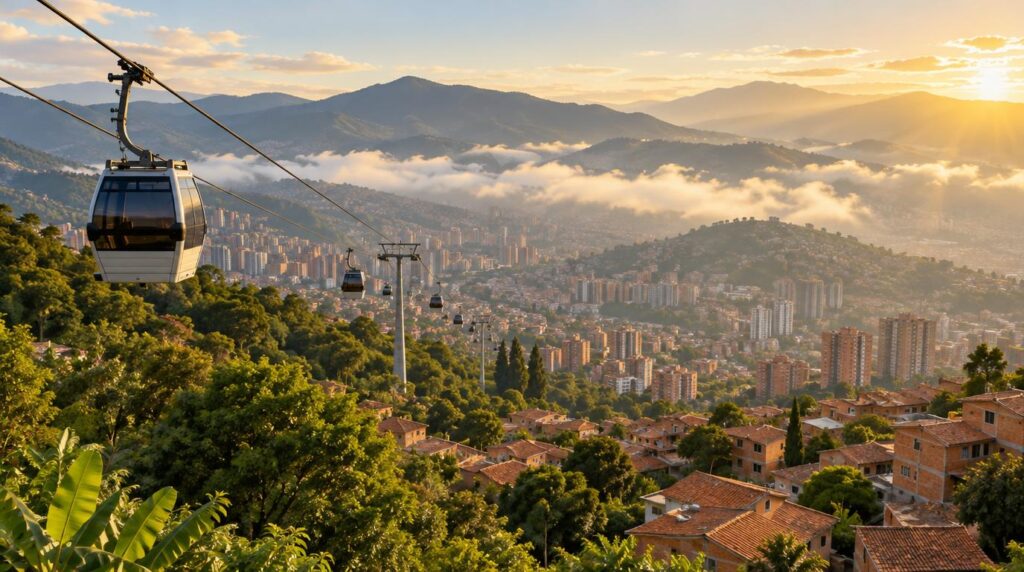
Medellín combines a two-year nomad visa with mild weather all year and a time zone close to New York.
- Visa: Colombia’s digital nomad visa lasts up to two years and covers foreign income only. The visa requires health insurance for the full stay. Income must reach three times the Colombian minimum wage, which most sources put at about $1,400 a month.
- Internet: Colombia’s national fixed median is about 214 Mbps, and mobile runs about 45 Mbps.
- Cost: One cost guide puts digital nomads at $1,200 to $1,500 a month. Furnished one-bedrooms cost $400 to $700 in Laureles and $600 to $1,200 in El Poblado.
- Time zone: UTC-5 all year, the same as New York in winter and one hour behind in summer.
- Safety: The U.S. State Department lists Colombia at Level 3 (reconsider travel), updated March 31, 2026. The advisory cites street crime, demonstrations, and landslides in mountain cities such as Medellín.
Sources disagree on the exact income figure, so the official visa portal is the place to confirm it. Time on this visa does not count toward Colombia’s five-year residence track. Rents in El Poblado and Laureles keep rising, and Envigado and Sabaneta cost less. A longer stay also leaves time for weekend trips from Medellín.
Best for: Workers on US Eastern hours who want a visa with a lower income bar and a mild climate.
5. Valencia, Spain
Valencia pairs a coastal city with a nomad permit of up to three years.
- Visa: Spain’s digital nomad visa lasts up to three years when you apply from inside Spain, and one year through a consulate. The visa requires about EUR 2,849 a month in 2026. No more than 20 percent of income can come from Spanish clients.
- Internet: Spain’s national fixed median is about 278 Mbps, and mobile runs about 92 Mbps.
- Cost: One tracker lists a mid-tier month at about $1,890. A central one-bedroom costs about $1,000 to $1,350, and coworking costs about EUR 120 to EUR 200.
- Time zone: UTC+1 in winter and UTC+2 in summer. A 9 a.m. call in New York falls at 3 p.m. in Valencia.
- Safety: The U.S. State Department lists Spain at Level 2 (exercise increased caution) as of August 2026.
Renewal rules are still moving. One report says renewals now require six months of residence each year. Another says Spain’s Supreme Court ruled in May 2026 that the 183-day rule has no legal force, and practice is still settling. Spending 183 days or more in Spain also makes you a tax resident on worldwide income.
Best for: Workers on European hours who want a mild climate and a route to several years in one country.

6. Lisbon, Portugal
Lisbon has one of the most developed remote worker communities in Europe, though rent has climbed.
- Visa: The D8 visa starts as a four-month entry visa. The visa then becomes a two-year residence permit, which can be renewed for three more years. Most sources list the 2026 income bar at about EUR 3,680 a month, and one lists EUR 3,480. Only active income counts.
- Internet: Portugal’s national fixed median is about 244 Mbps, and mobile runs about 138 Mbps.
- Cost: A comfortable month costs about EUR 2,000 to EUR 2,500. A one-bedroom costs about EUR 1,000 to EUR 1,700, and a coworking hot desk costs EUR 180 to EUR 250.
- Time zone: UTC+0 in winter and UTC+1 in summer. A 9 a.m. call in New York falls at 2 p.m. in Lisbon.
- Safety: The U.S. State Department listed Portugal at Level 1 (exercise normal precautions) going into 2026.
Porto costs about 15 to 20 percent less than Lisbon overall, with most of the difference in rent. The D8 permit can lead to permanent residence after about five years of lawful residence. Passive income points to the D7 visa instead.
Best for: Workers who want a long, renewable permit and European hours, and who meet the income bar.

Pick a Base and Plan the Flight
Each of these six cities gives you months in one place under clear rules. Tbilisi and Mexico City need the least paperwork, and Lisbon asks for the most income. Match the city to your client hours, your budget, and the income your visa asks for. Check the official visa page before you book anything, since rules shifted in several of these countries during 2026. Then search flights to your next base on FlyBibe and plan the move.