
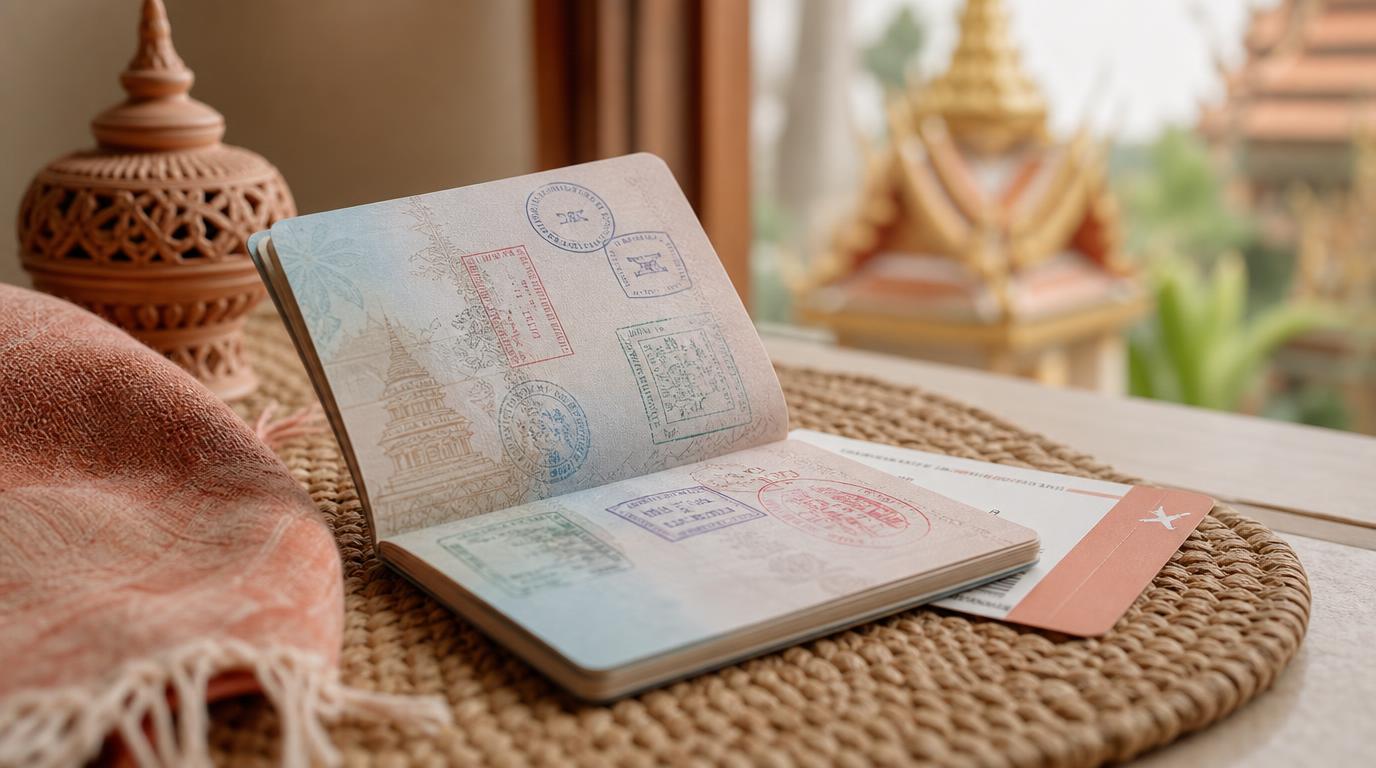
Thailand’s Destination Thailand Visa, or DTV, is the long-stay option most remote workers land on once a 60-day tourist entry stops being enough. This guide covers who qualifies, what the application actually requires, what it costs, and what the visa means for your taxes once you’re settled in.
What the DTV is
The DTV is a five-year multiple-entry visa that lets holders stay in Thailand for up to 180 days per entry, with the option to extend once at a local immigration office for another 180 days. That means a continuous stretch of close to a year in the country before an overseas trip is required to re-enter. It launched in 2024 as Thailand’s answer to the digital nomad visa wave and covers three groups: remote workers and freelancers under the Workcation category, people pursuing approved cultural or wellness activities under Thai Soft Power, and spouses or children under 20 traveling as dependents of a DTV holder.
- Validity: 5 years, multiple entry
- Stay per entry: Up to 180 days
- Extension: One 180-day extension per entry, filed in Thailand
- Visa fee: 10,000 THB
- Extension fee: 1,900 THB
One thing worth knowing before you apply: the DTV is legally a special tourist visa. Holders can work remotely for employers or clients based outside Thailand, but they cannot take a Thai work permit or perform paid work for Thai-registered companies.
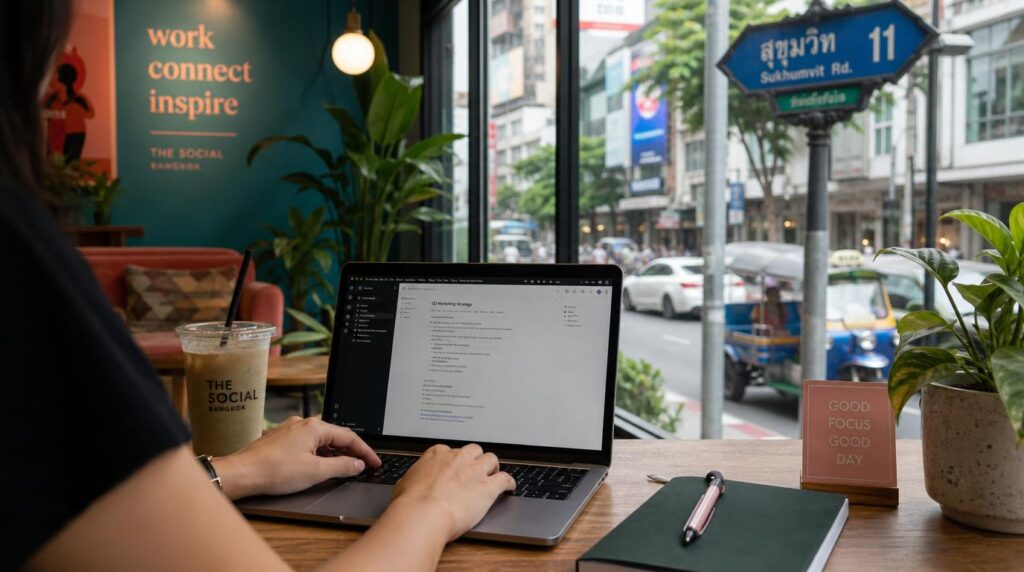
Most Workcation applicants end up basing in Bangkok or Chiang Mai, where the coworking scene and rental market are already built around long-stay remote workers.
Eligibility
The baseline requirements apply to every applicant regardless of category. You need to be at least 20 years old, hold a passport valid for at least six months from your travel date, and have a clean record with Thai immigration. Beyond that, eligibility splits by category.
- Workcation: Remote employment with a foreign company or self-employment with clients based outside Thailand. Thai authorities can assess whether the employer or income source looks legitimate, so a real contract or invoicing history matters more than a template letter.
- Thai Soft Power: Enrollment in an approved activity such as Muay Thai training, Thai culinary courses, medical treatment, seminars, or cultural festivals. Language schools were removed from the qualifying list in 2025, so a Thai-language course alone will not support this category anymore.
- Dependents: Spouse or children under 20 accompanying a DTV holder, with relationship documents legalized where the applicant’s embassy requires it.
- Financial proof: At least 500,000 THB, roughly 14,000 to 17,000 USD depending on the exchange rate, held in a personal bank account. Most embassies want three months of bank statements showing that balance held steady, and a growing share of rejections trace back to funds that were deposited shortly before applying rather than seasoned over time.
Interpretation: the financial and documentation bar is manageable for most established remote workers, but it rewards planning ahead. If your income is irregular or your savings only recently crossed 500,000 THB, wait out the three-month window before applying rather than risk a rejection that resets your timeline.
Application process
Applications go through the official Thai e-Visa portal at thaievisa.go.th or through a Royal Thai Embassy or Consulate, and they must be filed from outside Thailand, in the country where you legally reside or have current entry status. In-person submission is no longer required for most applicants now that the system runs fully online.
- Core documents: Passport biodata page, a recent passport-style photo, proof of your current location (a utility bill, driver’s license, or similar), and your 500,000 THB financial evidence.
- Workcation extras: An employment contract or certificate, proof of salary or income for the last six months, and business registration documents if you’re self-employed.
- Soft Power extras: A letter of acceptance or appointment from the institute or provider running the activity you’re enrolled in.
- Dependent extras: Legalized proof of relationship and a copy of the primary applicant’s DTV and income documents.
- Processing time: Typically 5 to 15 business days, though any request for additional documents resets the clock, so applying at least a month before travel gives you room.
Once approved, the DTV arrives as an e-visa PDF rather than a passport stamp. Print it, carry it alongside your passport, and complete Thailand’s arrival registration (TDAC) before you land, since immigration checks for both at entry.
Cost
The visa itself costs 10,000 THB per issuance, paid when you submit your application. Add the cost of gathering supporting paperwork, which for most Workcation applicants means bank statement printing or translation and possibly document authentication at your embassy if a document originates in a third country. Extending your stay inside Thailand costs a separate 1,900 THB, payable at the immigration office before your current 180 days run out.
Validity and renewal
The five-year validity is for the visa itself, not for a single stay. Each entry still resets to a fresh 180-day clock, extendable once to roughly 360 days before you need to leave and re-enter. There’s no direct path from the DTV into permanent residency. Long-term settlement in Thailand generally runs through a separate track like the LTR visa, so if permanent residency is the end goal, treat the DTV as a flexible multi-year bridge rather than the final step.
Tax note
This is general information, not tax advice, and you should confirm your specific situation with a qualified tax professional before making decisions.
Thailand determines tax residency by physical presence, not visa type. Spend 180 days or more in the country within a calendar year, counted cumulatively rather than in one continuous stretch, and you become a Thai tax resident for that year regardless of whether you hold a DTV, retirement visa, or any other status. Once you cross that threshold, foreign-sourced income that you remit into Thailand can be subject to Thai personal income tax, under rules the Revenue Department tightened starting in 2024 so that income earned and later brought into the country in a different year no longer escapes taxation. Thailand has double taxation agreements with more than 60 countries, which can offset some of this if your home country also taxes the same income.
If you plan to stay under 180 days a year, none of this applies to you and your foreign income stays untaxed in Thailand. If you’re aiming for the extended 360-day stretch the DTV allows, you will cross the threshold and should plan for Thai tax filing obligations rather than be surprised by them later.

Who it’s for
The DTV fits remote workers and freelancers who already have a stable income history and want a legitimate, long runway in Thailand without visa runs every two months. It also fits people planning a genuine soft-power stay, like an extended Muay Thai training block, over someone hoping to use it as a loophole for a Thai-language course.
- Good fit: Freelancers and remote employees with three-plus months of steady bank balances and a real foreign contract or invoicing trail. The 500,000 THB threshold sits comfortably above what a lean nomad budget needs elsewhere in the region, so anyone drawn here mainly by cost should compare it against Southeast Asia’s cheaper hubs first.
- Skip it if: Your income is inconsistent, you can’t document 500,000 THB held for three months, or you’re hoping to work for a Thai employer, since the DTV doesn’t permit that.
For anyone new to Thailand, plugging into an existing nomad network in Bangkok or Chiang Mai makes the first few months easier than building one from scratch.
Search flights to Thailand on FlyBibe
The DTV gives remote workers one of the longest, most flexible stays in Southeast Asia without constant visa runs, as long as the paperwork is in order before you apply. Once your visa is approved, search flights to Bangkok, Chiang Mai, or Phuket on FlyBibe and start planning the move.
Requirements current as of August 2026. Immigration and tax rules change, so confirm current requirements with your nearest Royal Thai Embassy or Consulate, or a qualified immigration and tax professional, before finalizing any plans.