
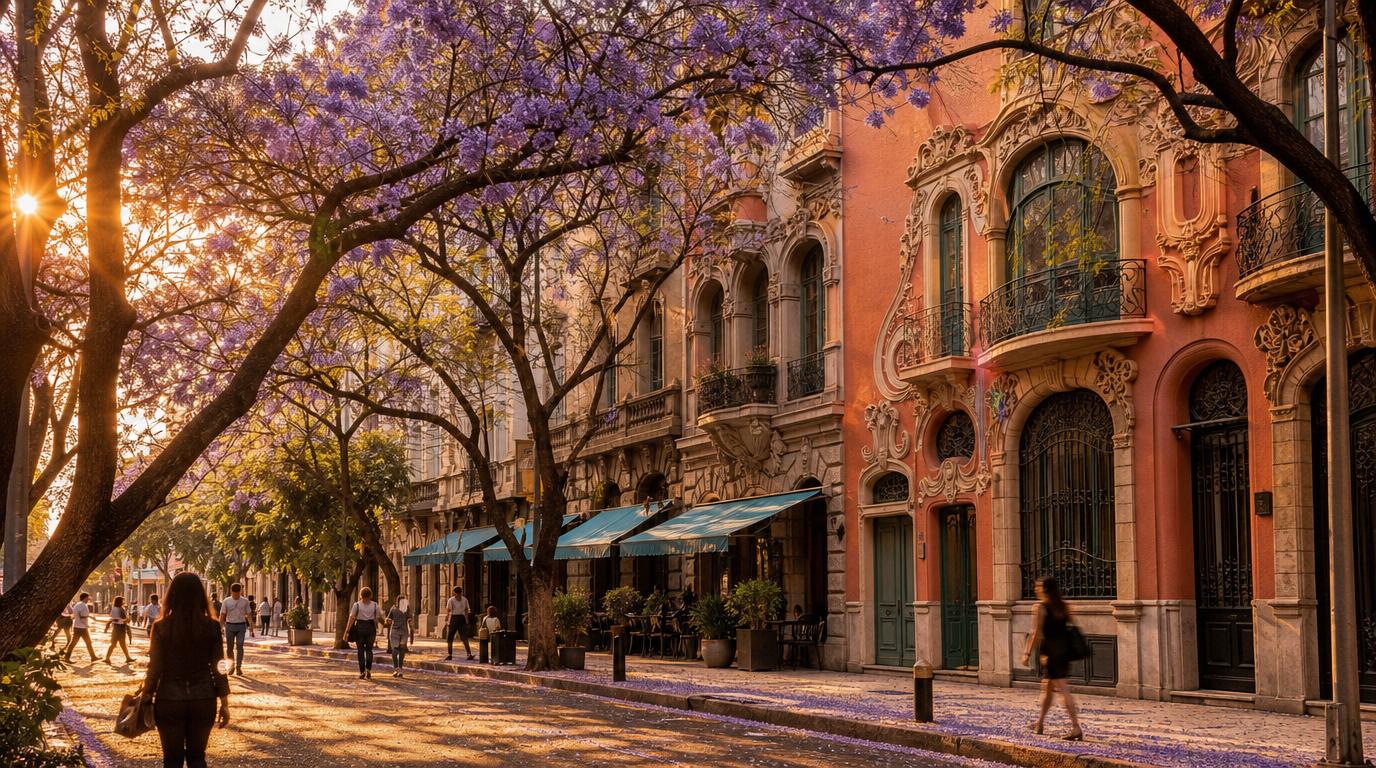
Mexico City has become one of Latin America’s most popular bases for remote workers, and neighborhood choice makes a real difference here. Rent, coworking access, and even wifi reliability shift block by block. This guide covers internet speeds, visa rules, and the five neighborhoods that hold up best for people running real client calls, not just sightseeing.
Internet and connectivity
Fixed broadband in Mexico City is fast enough for video calls across nearly all the central neighborhoods.
- Fixed broadband: average download speed of 113.7 Mbps citywide, with Totalplay and Telmex Infinitum fiber pushing past 300 Mbps in central areas.
- Mobile data: Telcel averages around 90.7 Mbps download, the fastest of Mexico’s carriers and a solid backup when apartment wifi drops.
- Coworking wifi: most established spaces run on dedicated fiber, so it’s rarely the bottleneck.
A Telcel SIM is worth picking up on day one. Apartment wifi installation can lag your move-in date, and mobile data covers the gap.
Cost of living
Budgets vary more sharply by neighborhood here than in most nomad hubs.
- Comfortable monthly budget: roughly $1,600 to $2,400 covering rent, food, transport, and a coworking membership, based on multiple 2026 cost-of-living breakdowns.
- One-bedroom rent: $800 to $1,500 in Roma Norte, $900 to $1,800 in Condesa, from about $600 in Juárez, and $500 to $900 in Coyoacán.
- Coworking membership: $80 to $350 a month depending on the space, with day passes from $15 to $25.
Moving a few blocks from Roma Norte or Condesa into Juárez or Del Valle can cut rent by 20 to 30 percent without losing much walkability.
Visa and how long you can stay
Mexico has no dedicated digital nomad visa, but the standard entry options cover most remote-work stays.
- Tourist entry: up to 180 days for US, Canadian, EU, and many other passport holders, granted at the border officer’s discretion.
- Temporary Resident Visa: for stays longer than 180 days, requiring proof of about $4,300 to $4,500 in monthly income, or roughly $73,000 to $75,000 in savings.
- Process: apply at a Mexican consulate abroad, then exchange the visa sticker for a resident card at a local immigration office within 30 days of arrival.
Most nomads on shorter trips just use the 180-day tourist entry and never touch the residency process. It only becomes relevant once you plan to stay past six months.
Timezone fit for remote work
Mexico City runs on Central Standard Time year-round and stopped observing daylight saving in 2022.
- US Eastern: one hour ahead of Mexico City.
- US Central: same time as Mexico City.
- US Pacific: two hours behind Mexico City.
- UK and Central Europe: six and seven hours ahead, respectively.
That gives a full workday overlap with US clients, plus a usable morning window for European calls before those offices close.
Best neighborhoods for remote work
Roma Norte
The default first stop for nomads, and still the easiest place to plug into a ready-made community.
- Rent: $800 to $1,500 for a one-bedroom.
- Coworking: Selina, WeWork, Público, Homework, and Almaspace all have locations here.
- Vibe: walkable, café-dense, a high concentration of English-speaking businesses.
Rents have climbed 40 to 60 percent since 2020 as the nomad wave arrived, so it’s no longer the bargain it once was. Still the fastest way to meet people if community matters more than saving money.

Condesa
Quieter and greener than Roma Norte, built around Parque México and Parque España.
- Rent: $900 to $1,800 for a one-bedroom.
- Coworking: Público and Homework both run Condesa locations, plus a steady supply of laptop-friendly cafés.
- Vibe: Art Deco streets, slower weekday mornings, similar walkability to Roma Norte.
Pick Condesa over Roma Norte if you want the same central location with less foot traffic outside your window.
Juárez
Sits between Roma Norte and Paseo de la Reforma, and has gentrified fast without matching Roma’s price tag.
- Rent: from about $600 for a one-bedroom, noticeably below Roma Norte and Condesa.
- Coworking: a growing scene, plus quick access to Reforma’s office towers and Zona Rosa.
- Vibe: central, less curated than Roma Norte, strong value for the location.
The practical choice if budget matters but you still want a short walk to Roma Norte’s cafés.
Polanco
The upscale, corporate option, better suited to client-facing work than café culture.
- Rent: $1,200 to $2,500 for a one-bedroom, the highest of the neighborhoods covered here.
- Coworking: WeWork and IOS Offices both run polished locations here.
- Vibe: quiet streets, international dining, proximity to Chapultepec Park.
Worth the premium if your calls need a boardroom-appropriate background, or if you’re based near the Santa Fe business district.
Coyoacán
A slower-paced, more residential option in the south of the city.
- Rent: $500 to $900 for a one-bedroom, among the lowest of the established nomad areas.
- Coworking: limited compared to Roma Norte or Condesa, so expect more café work or a home setup.
- Vibe: colonial architecture, strong local food scene, noticeably fewer tourists.
Best for people who already have a routine and want lower rent over easy coworking access. Budget 20 to 30 minutes by Uber to reach Roma Norte or Condesa.

Safety
The US State Department rates all of Mexico at Level 2, exercise increased caution, but that’s a national rating, not a neighborhood-specific one.
- Violent crime: concentrated outside the tourist and expat corridors; the city’s homicide rate has fallen from its 2018 peak.
- Petty crime: phone snatching and pickpocketing in busy transit areas and crowded markets is the more common risk for nomads.
- Neighborhood safety: Roma Norte, Condesa, Polanco, Juárez, and Coyoacán are all considered safe with normal precautions.
Basic city habits cover most of the risk: keep your phone out of sight on the street, use Uber or DiDi at night instead of walking, and skip flashing valuables.
Best time to go
Mexico City sits at 2,240 meters, so altitude shapes the climate as much as the calendar does.
- Dry season: November through April, sunny days with little rain, plus cool nights that call for a jacket.
- Rainy season: May through October, with short but intense afternoon storms that usually clear by evening.
- Shoulder months: March and October skip both the rain and the peak holiday crowds.
Since you’re working most days anyway, rainy season isn’t much of a dealbreaker. Storms tend to hit in the late afternoon and rarely touch a morning coworking session.
Who it’s for, and who should skip it
Mexico City works well for remote workers who want a real city, not a beach town, and who plan to stay long enough for neighborhood choice to matter.
- Good fit: people on US client hours who want walkable streets, an established coworking scene, and direct flights home.
- Good fit: budget-conscious nomads willing to trade Roma Norte’s convenience for Juárez or Coyoacán’s lower rent.
- Consider skipping: anyone who needs guaranteed European business-hours overlap, since the gap runs six to seven hours.
- Consider skipping: nomads set on a slow, beach-town pace, since CDMX is dense, high-altitude, and built for a full workweek.
Roma Norte and Condesa cover the classic nomad experience: fast wifi, walkable cafés, and a built-in community. Juárez and Coyoacán trade some of that convenience for lower rent, and Polanco suits anyone who needs a more corporate setting. Wherever you land, Mexico City delivers strong internet and a full workday overlap with US clients. Search flights to Mexico City on FlyBibe and start narrowing down your base.