
Mexico has no dedicated digital nomad visa. Remote workers who want to stay past 180 days use the Temporary Resident Visa instead. It’s applied for under the economic solvency category. This guide covers who qualifies, what the application involves, what it costs, and the tax question most guides skip.
What the Temporary Resident Visa actually is
The Temporary Resident Visa, or Residente Temporal, is Mexico’s general long-stay permit. It’s for foreigners who want to live in the country for more than 180 days, up to four years. It comes in several categories, including family unity and investment. The one remote workers use is economic solvency. That means proving you can support yourself without working for a Mexican employer.
Most nationalities can enter Mexico visa-free for up to 180 days on a tourist permit (FMM). Working remotely for a foreign employer during that window sits in a gray area. Mexico has historically not enforced against tourists doing this. The Temporary Resident Visa formalizes that status, or covers anyone who wants to stay past 180 days in one stretch.
A visa this long-term usually means settling into a routine rather than living out of a suitcase, which is where a coworking membership tends to pay off over city-hopping between cafes.
Income and savings requirements
You qualify one of two ways: steady income or savings. You only need one, not both.
- Income path: bank statements from the last six months, showing monthly income of at least $4,630 USD per person. Verified through an employment letter, freelance contracts, 1099s, pay stubs, or direct deposit records.
- Savings path: investment or bank statements from the last twelve months. These must show an average monthly balance of at least $78,025 USD per person.
- Each dependent (spouse, child) typically adds close to $1,500 USD a month to the income requirement. A comparable savings threshold applies too, on top of the primary applicant’s figure.
Those numbers come from the Mexican consulate in Las Vegas, for 2026. They land close to the federal formula, which ties the requirement to Mexico’s daily UMA unit. The catch: each consulate converts that formula into local currency differently. Published figures genuinely vary by post, from roughly $2,500 to $4,800 a month for the same visa. Confirm the exact number with the consulate covering your place of legal residence before gathering documents.
There’s no restriction by nationality. Anyone who clears the financial threshold, and applies from where they legally reside, can pursue this path.
Documents and application process
The Temporary Resident Visa is a two-stage process. You apply at a consulate outside Mexico first, then finish the process inside the country once you arrive.
- Book an appointment through Mexico’s consular portal, citas.sre.gob.mx. Use the consulate covering your place of legal residence.
- Bring a valid passport, a completed and printed visa application form, a passport-style photo, and your income or savings documentation.
- Attend the interview. A consular officer reviews your file and captures your biometric information. Extra documents can be requested on the spot.
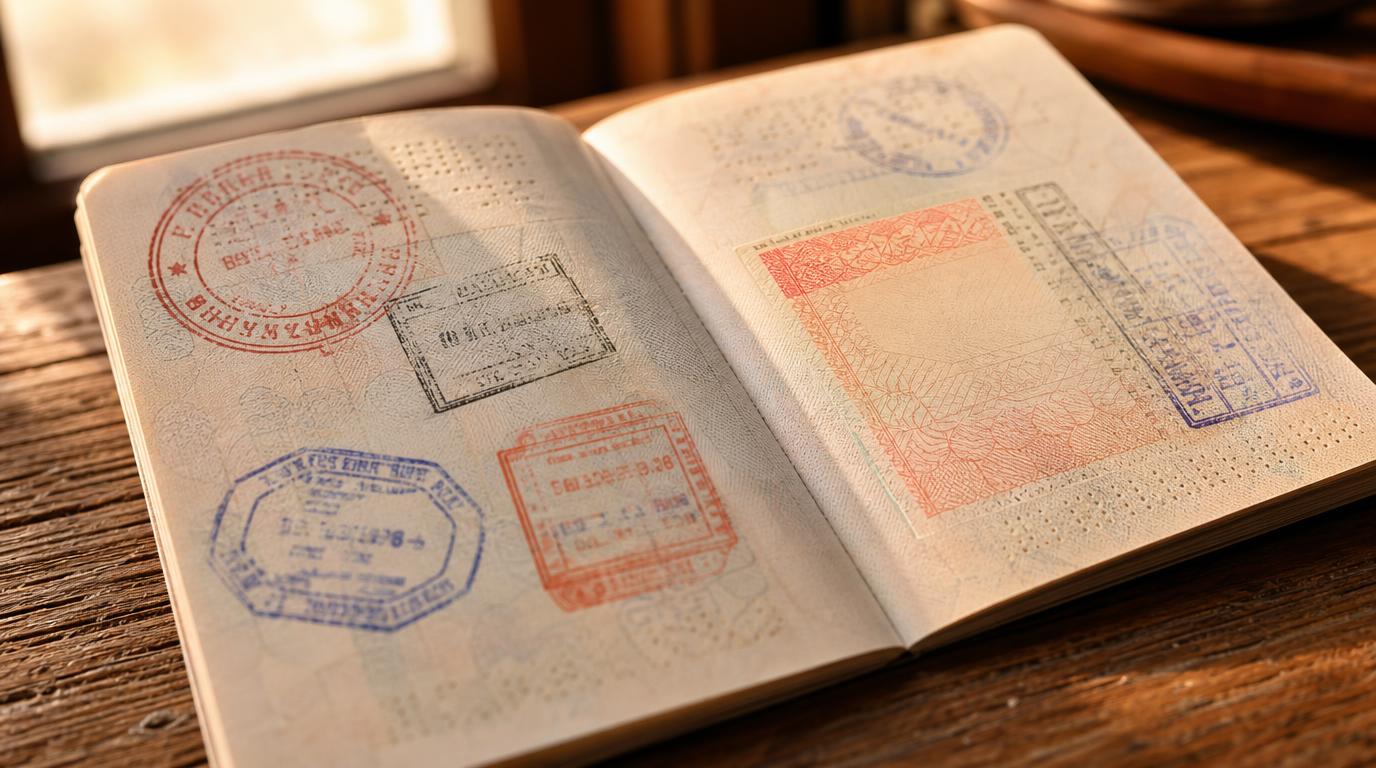
- Receive the visa, typically within one to ten business days of your appointment. It arrives as a sticker in your passport, valid for 180 days. That gives you a single-entry window to travel to Mexico.
Getting the sticker isn’t the end of it. Once you enter Mexico, you have 30 days to visit a local INM (Instituto Nacional de Migración) office. There you exchange the sticker for a physical Temporary Resident Card, a process called the canje. You’ll need proof of a Mexican address, like a utility bill or a landlord’s letter, to complete it. During the canje, you generally can’t leave Mexico without a written exit permit from INM. Plan travel around this window, not through it.

What it costs
Costs come in two batches: what you pay at the consulate abroad, and what you pay at INM once you’re in Mexico.
- Consular visa fee: $56 USD, paid at your appointment.
- INM change-of-status fee: 1,847 MXN, paid when you start the canje.
- Residency card fee, which scales with the years requested. Roughly 11,141 MXN (about $600 USD) for one year, up to about 25,058 MXN (around $1,400 USD) for four years upfront.
- Optional work permit add-on, only needed if you’ll work for a Mexican employer: 4,341 MXN.
These government fees roughly doubled starting January 2026, under new legislation. Figures floating around from 2025 or earlier are already out of date. Family members applying together may qualify for a reduced card fee. Eligibility for that discount is decided case by case at the INM office handling the application.
Validity and renewal
The Temporary Resident Visa can be issued for one to four years at a time. It’s renewable at an INM office inside Mexico, up to a combined total of four years under temporary status. After four consecutive years, you become eligible to convert to Permanent Residency. That status carries no expiration date, and removes the renewal cycle entirely.
The visa on its own doesn’t authorize working for a Mexican company. It’s built around income or savings from outside Mexico. Continuing to work for a foreign employer, or foreign clients, is exactly what it’s designed for. Taking a role with a Mexican employer requires the separate work permit add-on above.

The tax question
Holding the Temporary Resident Visa and being a Mexican tax resident are two different things. They’re decided by two different government offices. Getting the visa doesn’t automatically make you a tax resident. Staying long enough usually does.
The most commonly cited trigger is physical presence. Spend 183 or more days in Mexico within a calendar year, consecutive or not. Mexico’s tax authority, the SAT, can then treat you as a tax resident on your worldwide income. A second, less predictable trigger is the “center of vital interests” test. This can apply even under 183 days. It kicks in if more than half your income comes from Mexican sources, or you’ve built a permanent home and family base there. Some tax specialists note this second test is fact-specific, not a fixed rule. Two people with similar day counts can land on different sides of it.
Mexican tax residents pay ISR (income tax) on worldwide income, at progressive rates from roughly 1.92% up to 35%. This is general information, not tax advice, and rules like these change. If you plan real time in Mexico under this visa, talk to a cross-border tax professional first. Find one who knows both your home country’s rules and Mexico’s.
US citizens face a separate wrinkle: Mexican tax residency doesn’t excuse anyone from filing a federal return back home, regardless of where the income was earned.

Who it’s for, and who should skip it
This visa makes sense if you plan to base yourself in one Mexican city for months at a time. It suits people who want a local lease, a Mexican bank account, and a longer runway than a tourist permit gives.
- Good fit: remote workers whose income comfortably clears the consulate’s threshold. People who want legal footing beyond 180 days, without repeated visa runs. Most people on this visa end up renting long-term rather than living out of hotels, which makes a proper health insurance policy worth arranging before departure rather than after.
- Skip it if: your income or savings sit below the threshold right now, or you only plan short stints under six months. Also skip it if you need to work directly for a Mexican employer, since that calls for an employer-sponsored work permit instead.
Related: Mexico City digital nomad guide: best neighborhoods
The disclaimer that matters here
Immigration and tax rules change, and consulates apply the federal formula differently. Confirm current income thresholds, documents, and fees directly with the consulate handling your application. Talk to a qualified immigration or tax professional before making firm plans. This article reflects information verified as of August 25, 2026.
Once the paperwork is sorted, the fun part is picking where to land. Mexico City, Oaxaca, and Playa del Carmen all have strong remote-work communities and reliable wifi to match. Search flights to Mexico on FlyBibe and start scoping out your first stretch of work from there.