
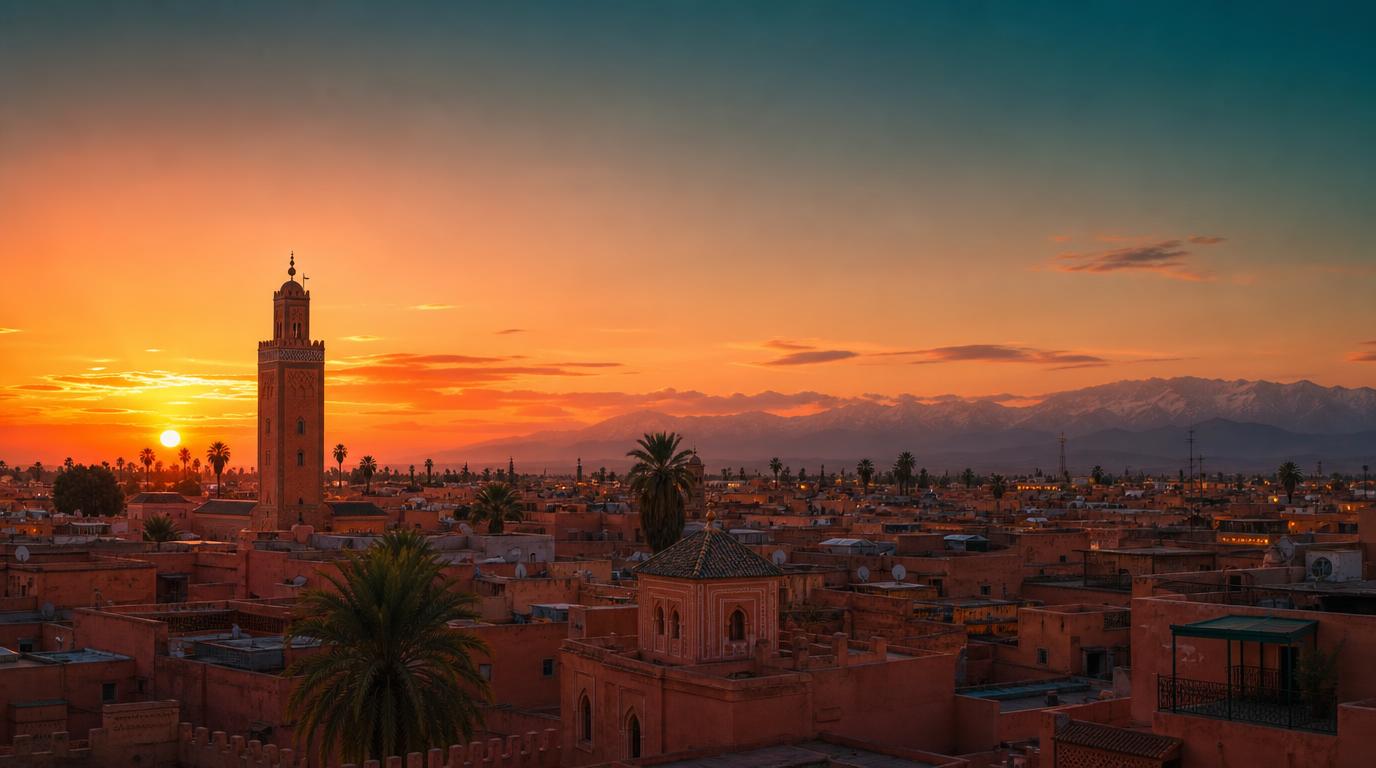
Marrakech pairs a low cost of living with a growing coworking scene centered in the Gueliz district. This guide covers real rent numbers, internet speeds by neighborhood, visa rules, and where remote workers actually get work done. Use it to decide if a stretch of work from the Red City fits your setup.
Internet speed
Fixed broadband in Marrakech varies sharply by neighborhood and building age.
- Gueliz and modern apartments: 60-85 Mbps download is common in newer buildings and coworking spaces.
- City-wide average: an Ookla-based national report put Marrakech’s fixed broadband around 63 Mbps down and 17 Mbps up.
- Medina riads: old cabling means shared wifi in the medina often drops well below that, sometimes to a crawl during peak hours.
- Mobile backup: 4G from Maroc Telecom or Orange covers most of the city, useful when a riad’s wifi is unreliable. See our comparison of eSim vs local sim vs portable wifi hotspot-for-nomads
Sources disagree on the citywide average. Some put it closer to 30 Mbps, others report 80 Mbps in nomad-heavy pockets of Gueliz. For serious video calls, book accommodation in Gueliz or work from a coworking space rather than relying on medina wifi.
Cost of living
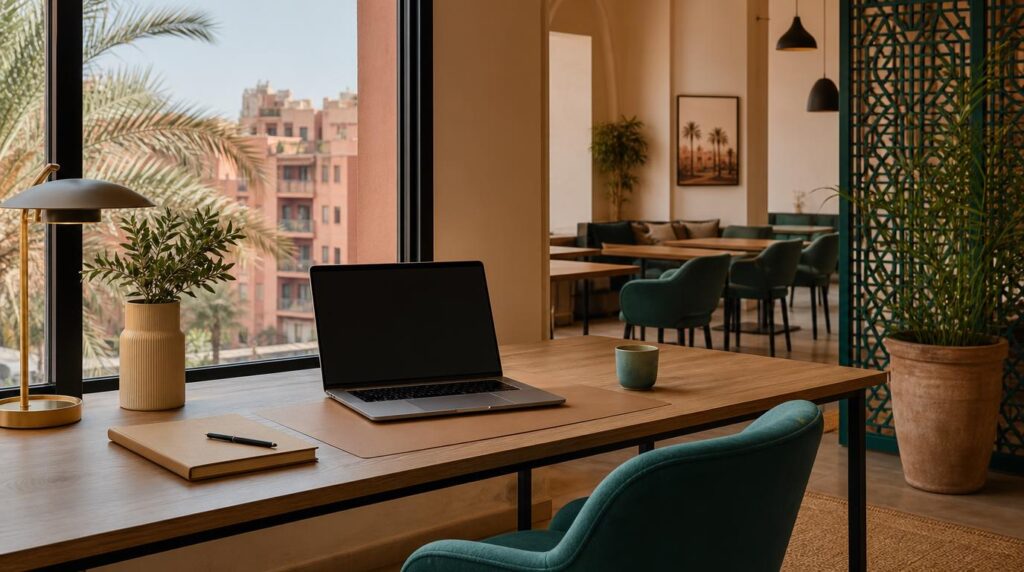
Marrakech is one of the cheaper bases in North Africa for a remote worker, though pricing swings hard with neighborhood choice.
- Rent, Gueliz furnished studio or 1BR: $400-650/month.
- Rent, medina shared riad room: $300-500/month.
- Food: $250-350/month cooking at home with some meals out. A cheap restaurant meal runs about $4.
- Coworking membership: roughly $100-150/month for a hot desk, or pay-as-you-go from about $3/hour.
- Local transport: $25-30/month for buses and the occasional petit taxi.
A realistic monthly budget lands between $900 and $1,500, depending on how much coworking access and comfort you want. That is meaningfully cheaper than most Southern European nomad hubs, and it still buys a real bedroom rather than a shared dorm.
Visa and entry
Morocco has no dedicated digital nomad visa as of mid-2026.
- Tourist entry: citizens of the US, UK, EU, Canada, Australia, and roughly 60 other countries enter visa-free for up to 90 days.
- Legal status while working: tourist entry does not formally authorize local employment, but it places no restriction on remote work for employers or clients outside Morocco.
- Extending a stay: many nomads take a short border run to Ceuta, Melilla, or a nearby country to reset the 90-day clock. This is common practice but not officially guaranteed, and immigration officers have discretion.
- Longer stays: a carte de sejour residency card, applied for locally, covers stays beyond 90 days and runs one year with renewal options.
Anyone planning more than a single 90-day stretch should check current rules with a local immigration contact rather than assuming repeated border runs will always work.
Timezone fit
Morocco currently runs on UTC+1 year-round, with an exception during Ramadan when clocks shift back to UTC+0. That is about to change. The government has confirmed a permanent switch to UTC+0 starting September 20, 2026, putting Morocco on the same time as London and Lisbon full time.
- US Eastern: 5-6 hours ahead, workable for a late-morning-to-afternoon overlap window.
- US Pacific: 8-9 hours ahead, overlap is limited to early morning US time.
- UK: roughly aligned, within an hour either way depending on the season.
- Central Europe: within one to two hours, one of the easier overlaps on this list.
For anyone working mainly with European clients or teammates, Marrakech is one of the more convenient African bases available right now.
Coworking and community
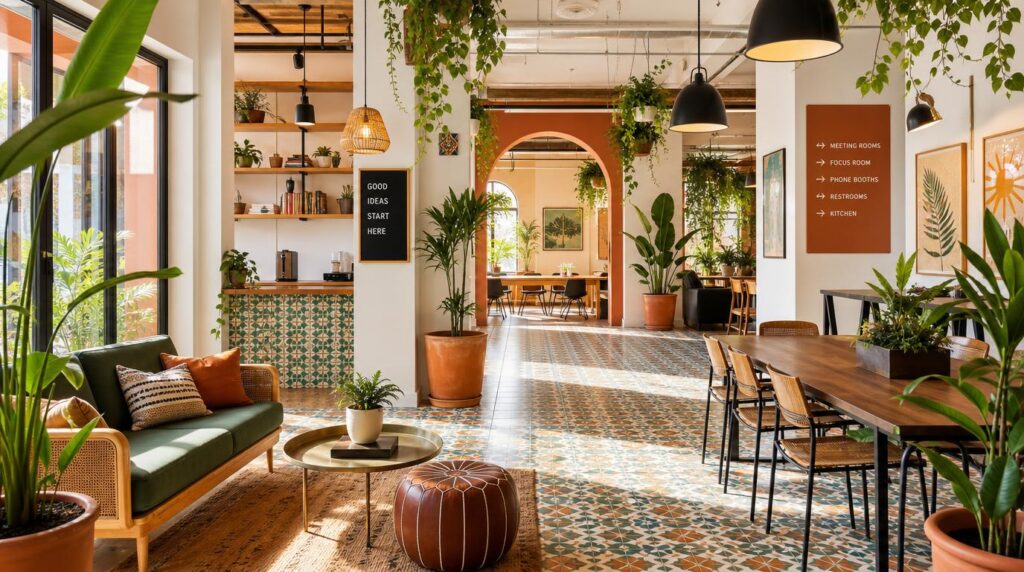
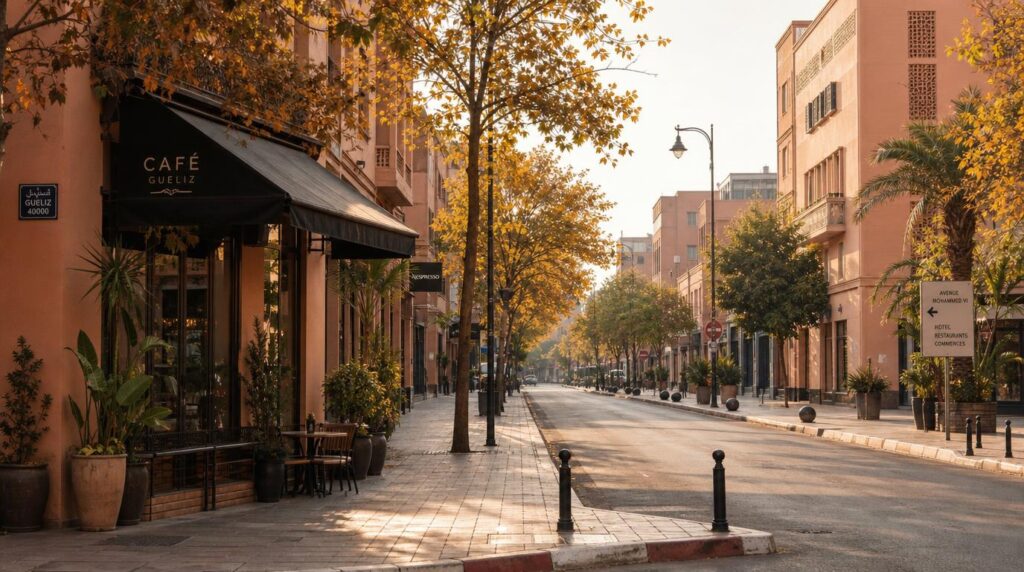
Gueliz, the newer part of the city, is where most organized coworking activity is concentrated.
- L’Blassa: a coworking space and art gallery in central Gueliz, known for solid wifi and daily desk rates.
- CWC Hub: a coworking and business center near the train station, geared toward longer memberships and meeting rooms.
- Cowork in Marrakech: a smaller, quieter space at Marrakech Plaza, favored for focused solo work.
- Cafes: Cafe Clock and a handful of Gueliz coffee shops double as informal workspaces, though wifi quality varies by location.
The community is smaller than Chiang Mai or Bali, but active enough to find regular meetups through local Facebook and Meetup groups built around the nomad scene.
Safety
Morocco is generally low-risk for violent crime, and Marrakech sees a heavy year-round police presence in tourist and business districts.
- Petty crime: pickpocketing and inflated prices are the most common issues, concentrated around Jemaa el-Fnaa and the medina’s souks.
- Scams: unsolicited “guides” offering directions or tours are a known setup for overcharging, best declined outright.
- Street harassment: solo female travelers report more catcalling than in most European cities, more common in the medina than in Gueliz or Hivernage.
- Neighborhood note: Gueliz and Hivernage are better lit at night and generally considered more comfortable for longer stays than the medina.
None of this is unusual for a major tourist city, and most visitors report feeling safe with ordinary precautions.
Related: Safest digital nomad cities for solo remote workers
Best time to visit
Marrakech runs hot for a large chunk of the year, which shapes when it actually works for sustained remote work.
- March to May and September to November: mild days around 23-30°C, the most comfortable stretch for working from a terrace or walking to a coworking space.
- June to August: frequently above 38°C, tough for anyone without reliable air conditioning.
- December to February: mild days near 18-20°C with cooler nights, quieter and cheaper than peak season.
If your schedule is flexible, book a spring or autumn stretch and skip the deep summer heat entirely.
Who it’s for
Marrakech works well for remote workers on European client hours who want a low cost of living without giving up a real coworking scene.
- Good fit: freelancers and small teams working European daytime hours, anyone who wants a short flight to Spain, Portugal, or France for weekend trips.
- Better to skip: anyone needing consistent US Pacific-hours overlap, or anyone who wants a plug-and-play nomad hub with dozens of coworking options like Chiang Mai or Bali offer.
Search flights to Marrakech
Marrakech delivers real savings, workable European timezone overlap, and a genuine coworking scene in Gueliz, as long as you plan around the summer heat and pick your neighborhood with care. It rewards a bit of local knowledge more than some easier nomad hubs do. Search flights to Marrakech on FlyBibe and start planning your stretch of work from the Red City.