
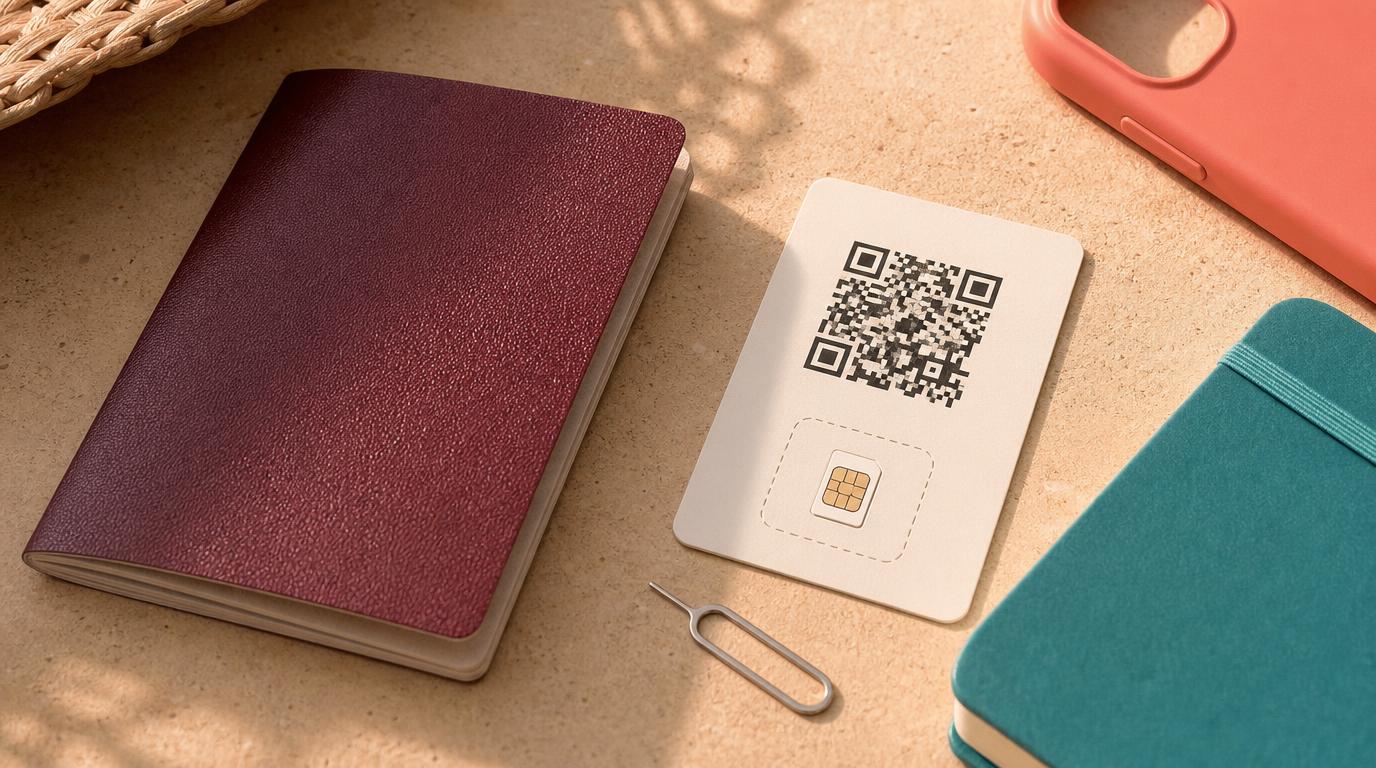
Getting online in a new country usually comes down to three choices: an eSIM installed before you land, a local SIM card bought after you land, or a portable wifi hotspot you carry as its own device. Each works differently on cost, setup effort, and how many devices you can run off it at once. Here’s how they actually compare, so you can pick the right one before your next flight.
Setup and time to get online
- eSIM: Install the profile through an app like Airalo or Nomad eSIM before you fly. Data activates at first connection, so you can land already online.
- Local SIM: Requires a physical shop after arrival, and in Thailand and Vietnam, showing your passport for mandatory registration before the SIM works. Counters at Bangkok’s Suvarnabhumi Airport back up badly during Friday evening arrivals.
- Portable wifi hotspot: The device itself can ship to you in advance, but it still needs a data source, either a SIM card, an eSIM, or a bundled provider plan loaded into it before it does anything.
For a border crossing where you land, deal with jet lag, and just want wifi working by the time you reach your rental, an eSIM removes the most friction. A local SIM adds a stop, though usually a quick one outside peak arrival hours. The passport registration step is also worth planning around. It exists in Thailand and Vietnam specifically to curb SIM fraud, and skipping the airport counter for an in-town 7-Eleven or carrier shop later that day is often faster anyway.
Cost per gigabyte
- eSIM: Airalo’s Thailand plan runs $9.90 for 50GB over 10 days, including 100 minutes. Holafly’s unlimited 30-day plan costs $75.90, aimed at people who’d rather not track a data cap at all.
- Local SIM: Usually the cheapest option by far. Indonesia’s Telkomsel sells 30GB for roughly €6 (about $6.50) in Bali, and Thailand’s AIS tourist SIM runs 449 to 1,599 baht (about $13.85 to $49.25) depending on validity and data included.
- Portable wifi hotspot: The device costs $60 to $499 upfront, from an unlocked Huawei E5577Cs at the low end to a Netgear Nighthawk M6 at the high end. Data on top runs $5 to $15 per GB, or a flat day pass like Skyroam Solis’s $9 for unlimited data over 24 hours.
Local SIM wins on price per gigabyte in nearly every country checked here. eSIM costs more because that premium buys you skipping the shop entirely. Factor in the exchange rate risk too. Local SIM prices are usually quoted in the local currency, so the dollar cost shifts with the market, while most eSIM providers charge in fixed USD, which makes budgeting easier over a longer stay even if the raw price is higher.

Multi-device and hotspot capability
- eSIM: Tethering rules vary by plan and aren’t always generous. Holafly’s US unlimited plan caps hotspot use at just 500MB, even though the base data itself is unlimited, worth checking before you plan to tether a laptop.
- Local SIM: Your phone’s own hotspot function usually works without an extra cap beyond your total data allowance, so tethering a laptop is straightforward.
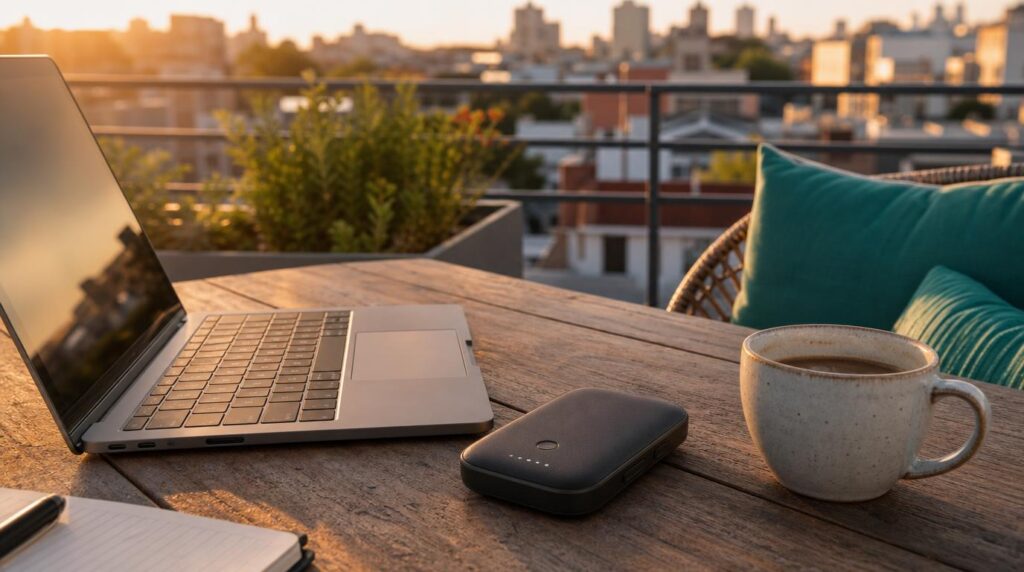
- Portable wifi hotspot: Built specifically for this job. The Netgear Nighthawk M6 connects up to 32 devices at once, and the GlocalMe G4 Pro handles 10, useful for a co-working group or several laptops sharing one connection.
If tethering a laptop is the whole point of the plan, read the fine print on eSIM hotspot limits first. Some unlimited plans quietly throttle tethering specifically, even when the base data has no cap.
Reliability across regions
- eSIM: Depends entirely on which local carrier the provider partners with. Nomad eSIM automatically switches between Thailand’s AIS, dtac, and True Move networks to find the strongest signal, which matters more outside Bangkok.
- Local SIM: Lets you pick the strongest network directly. Telkomsel dominates coverage in Bali’s tourist zones despite costing more than competitors, and Telcel is the safer nationwide choice in Mexico once you’re outside Mexico City, Guadalajara, or Cancun.
- Portable wifi hotspot: Devices using Cloud SIM technology, like GlocalMe’s, switch between local operator networks automatically across 140-plus countries without a physical SIM swap, useful as a genuine backup when accommodation wifi drops.
None of the three is failure-proof on its own. Nomads whose work depends on a stable connection during calls often keep two of these active at the same time, one as the daily driver and a second as a fallback that doesn’t share the same carrier, so a single network outage doesn’t take out both.
Local phone number and calls
- eSIM: Mostly data-only. A handful of providers, like Simbye, now bundle a real phone number with unlimited calls and texts, but most standard plans from Airalo or Holafly skip this entirely.
- Local SIM: Comes with a local number by default, which matters for rideshare apps, delivery apps, and bank verification codes that some services won’t send to a foreign number.
- Portable wifi hotspot: No phone number at all. It’s purely a wifi bridge, so calls and texts still route through whatever’s in your phone.
If daily life depends on a local number for banking or rideshare verification, a local SIM is the only one of the three that solves it outright. In Mexico City, for example, a foreign number can block rideshare account setup and some delivery apps entirely, not just slow them down, so nomads settling in for months tend to grab a local SIM in the first week regardless of which connectivity option they use day to day.
Verdict by traveler type
- Landing somewhere new for a few weeks: An eSIM from Airalo or Nomad eSIM, installed before departure, gets you online the moment you land without hunting for a shop on day one.
- Settling into one base for three months or more: A local SIM, Telkomsel in Bali or Telcel in Mexico, costs less per gigabyte over time and comes with a number that local apps and banks actually trust.
- Working from co-working spaces or unpredictable apartment wifi: A portable hotspot like the Nighthawk M6 or GlocalMe G4 Pro gives every device its own connection and doubles as backup when the venue’s wifi drops mid-call.
Find the setup that fits your stay
Getting online abroad rarely comes down to one right answer. Local SIM cards win on cost and give you a number apps trust, eSIMs win on convenience the moment you land, and portable hotspots win when several devices need a connection or apartment wifi can’t be trusted. Most nomads end up combining two of the three depending on how long they’re staying. Wherever your next stretch of work takes you, search flights on FlyBibe and get moving.