

Bogotá is Colombia’s largest and highest-altitude capital, sitting at 2,640 meters in the Andes. This guide covers what actually matters for a remote worker: internet speed, visa rules, cost of living, and the neighborhoods worth the extra rent. It also breaks down where the city gets genuinely risky, since safety here shifts more block to block than in most major nomad hubs.
Internet and connectivity
Bogotá’s fixed broadband outperforms most of Latin America. City-level figures come from Ookla’s Speedtest Global Index, which tracks Bogotá separately from the national Colombian average.
- Fixed broadband: 181.93 Mbps download, 93.36 Mbps upload, 6 ms latency, among the fastest of any Latin American capital.
- Mobile data: 24.35 Mbps download, 13.94 Mbps upload, solid for video calls but not a full replacement for fiber.
- National comparison: Colombia overall runs closer to 48 Mbps download on real-world browser tests, well below what Bogotá’s fiber-heavy neighborhoods deliver.
For anyone renting in Chapinero, Usaquén, or Chicó, fiber is standard and calls rarely drop. Coworking spaces add a second connection as backup, which covers the rare outage.
Cost of living
Bogotá costs less than Medellín’s most popular nomad neighborhoods, but more than Colombia’s smaller cities. Estimates vary by source, so treat these as a realistic range rather than a fixed number.
- One-bedroom rent: $300-700/month, with Usaquén and Chicó at the top of that range and areas like Teusaquillo or La Soledad closer to $250-450.
- Groceries: roughly $120-200/month for someone cooking at home most nights.
- Private healthcare (prepagada): $40-80/month, on top of Colombia’s free public system.
- Total monthly budget: estimates range from about $900 to $1,300/month for a single remote worker, excluding coworking membership.
The spread mostly comes down to neighborhood choice. Renting in Chicó or Usaquén can push the total closer to $1,500, while Teusaquillo keeps it nearer $1,000.
Visa and entry
Most nomads start on a tourist entry and switch to the digital nomad visa if they plan to stay longer.
- Tourist entry: 90 days visa-free for US, UK, EU, and most visa-exempt passports.
- Digital nomad visa (V-Nómadas Digitales): valid up to 2 years, requires proof of remote work or freelance income for the past 6 months.
- Income requirement: at least 3x Colombia’s minimum wage, COP 5,252,715/month (roughly $1,300 USD) as of 2026.
- Other requirements: health insurance with repatriation coverage, a clean background check, and apostilled or translated supporting documents.
- Tax residency trigger: more than 183 days in Colombia within any rolling 12-month period makes worldwide income taxable locally.
Processing typically takes 2 to 6 weeks. Visa rules shift often enough that it’s worth checking Colombia’s Cancillería portal directly before applying, rather than relying on any single guide.
Timezone fit
Colombia doesn’t observe daylight saving, so its offset from UTC never changes.
- UTC-5 year-round.
- US Eastern: same time in northern winter, one hour behind during US daylight saving.
- US Pacific: 2 to 3 hours ahead depending on the season.
- UK and Central Europe: 5 to 7 hours behind, so overlap is limited to Bogotá mornings.
Anyone working US client hours gets close to a full overlapping workday. European clients mean early starts or leaning on async communication.
Coworking and community
The coworking scene concentrates in Chapinero and the Parque 93 area, with a few larger operators scattered elsewhere.
- Selina Parque 93: live-work hybrid a few blocks from the park, popular with nomads who want housing and workspace together.
- Tierra Firme Coworking (Chapinero): smaller and community-focused, known for a daily shared lunch and casual Spanish practice.
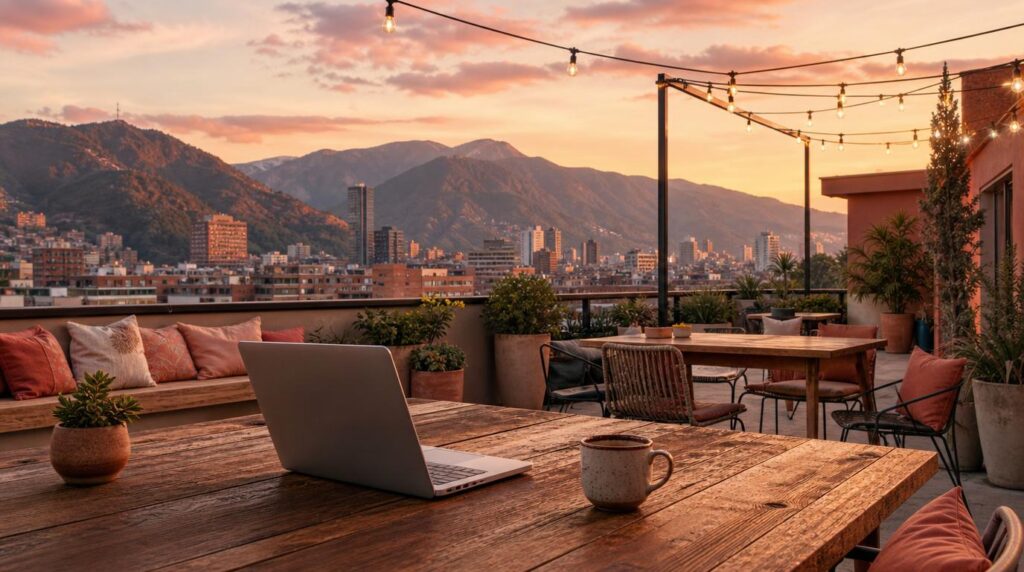
- Counity (Chapinero, near Parque 93): rooftop terrace with mountain views, unlimited coffee, central location.
- WeWork: multiple locations including Chicó, Chapinero, and Salitre for anyone who wants a familiar global brand.
- WON and Work Mates: more budget-friendly options for longer stays.
Day passes and flexible memberships are standard across most of these. Testing two or three spaces in the first month is a reasonable way to find the right fit.
Best neighborhoods for digital nomads
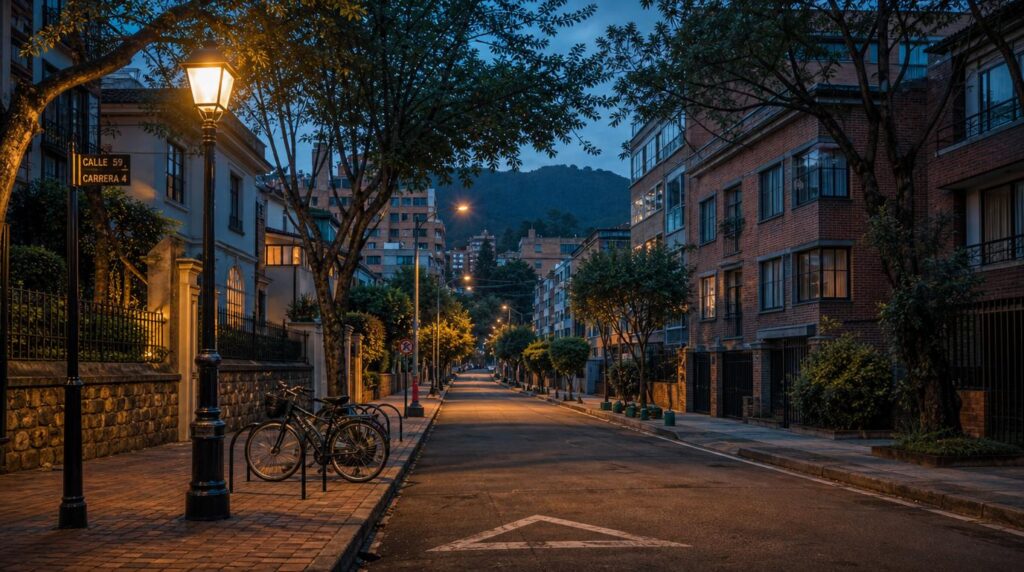
Where you live changes the Bogotá experience more than in almost any other nomad base. The city is sharply stratified, and safety, noise, and cost swing block by block.
- Chapinero, especially Chapinero Alto: the default pick, walkable, LGBTQ+-friendly, dense with cafes and coworking spaces, strong police presence. A 1BR runs roughly $350-600.
- Usaquén: quieter and more residential, colonial-era streets, a well-known Sunday market. Good for anyone who wants distance from nightlife noise. Rent similar to Chapinero or slightly higher.
- Rosales and Chicó: the most affluent option, low crime, close to a diplomatic zone in feel. Rent runs $500-700 and up.
- Zona Rosa / Parque 93: nightlife and restaurants alongside coworking, comfortable at most hours, busier than Usaquén.
- Teusaquillo: centrally located, calmer, and more budget-friendly than Chicó or Usaquén, a solid choice for a first stay.
La Candelaria, the historic center, is worth visiting for the colonial architecture and free walking tours. Most long-term nomads don’t base themselves there, since it empties out at night and pickpocketing is common south of Calle 7.

Safety
Bogotá’s reputation lags behind its actual numbers. Violent crime sits below Colombia’s national average in the areas nomads actually use, and the real everyday risk is petty theft.
- Phone snatching: motorbike riders grab phones out of hands on the street, mostly targeting people looking at maps. Keep the phone close to the body or use earbuds for directions instead.
- Taxi overcharging: street taxis are known for running up fares on foreigners. Use DiDi or InDriver instead, both fixed-price and trackable.
- Fake police scams: someone posing as an officer asks to inspect documents or cash. Ask to be escorted to the nearest CAI, the local police station; real officers comply, and scammers walk away.
- Drink spiking (scopolamine): rare but real at bars and clubs. Never accept an open drink from a stranger.
- Areas to avoid: Ciudad Bolívar, San Cristóbal, Bosa, and Soacha on the southern periphery. Within Chapinero, stay north of Calle 50 after dark.
None of this is unique to Bogotá among large Latin American capitals. Sticking to Chapinero, Usaquén, Rosales, or Teusaquillo, and using ride-hailing apps after dark, removes most of the real risk.
Best time to visit
Altitude keeps temperatures steady year-round, so the calendar question here is about rain, not heat.
- Dry seasons: December to March and June/July to August, with January and February typically the driest and clearest.
- Rainy seasons: April to May and October to November, when afternoon downpours are common.
- Typical daytime temperature: 14-20°C (57-68°F) regardless of season, with cool nights all year.
There’s no bad month to be in Bogotá for someone mostly working indoors. Anyone prioritizing weekend hikes or outdoor sightseeing should aim for December through February.
Who Bogotá is for, and who should skip it
Bogotá works well for nomads on US client hours who want a real city: walkable neighborhoods, a strong coffee and food scene, and a coworking network that doesn’t feel like an afterthought. It’s a reasonable alternative to Medellín for anyone priced out of El Poblado.
- Good fit: nomads who want culture and density over beach weather, US-hours workers, people comfortable navigating a large capital city.
- Consider skipping: anyone who needs heavy overlap with European working hours, or wants warm, low-altitude weather without a flight to the coast.
Search flights to Bogotá
Bogotá delivers fast fiber internet, a genuine digital nomad visa path, and neighborhoods safe enough to settle into without much compromise. Chapinero, Usaquén, and Teusaquillo cover most of what a remote worker actually needs: reliable coworking, real safety, and a short walk to good food. The rain and the altitude take about a week to adjust to, and then the city just works. Search flights to Bogotá on FlyBibe and start planning the move.