
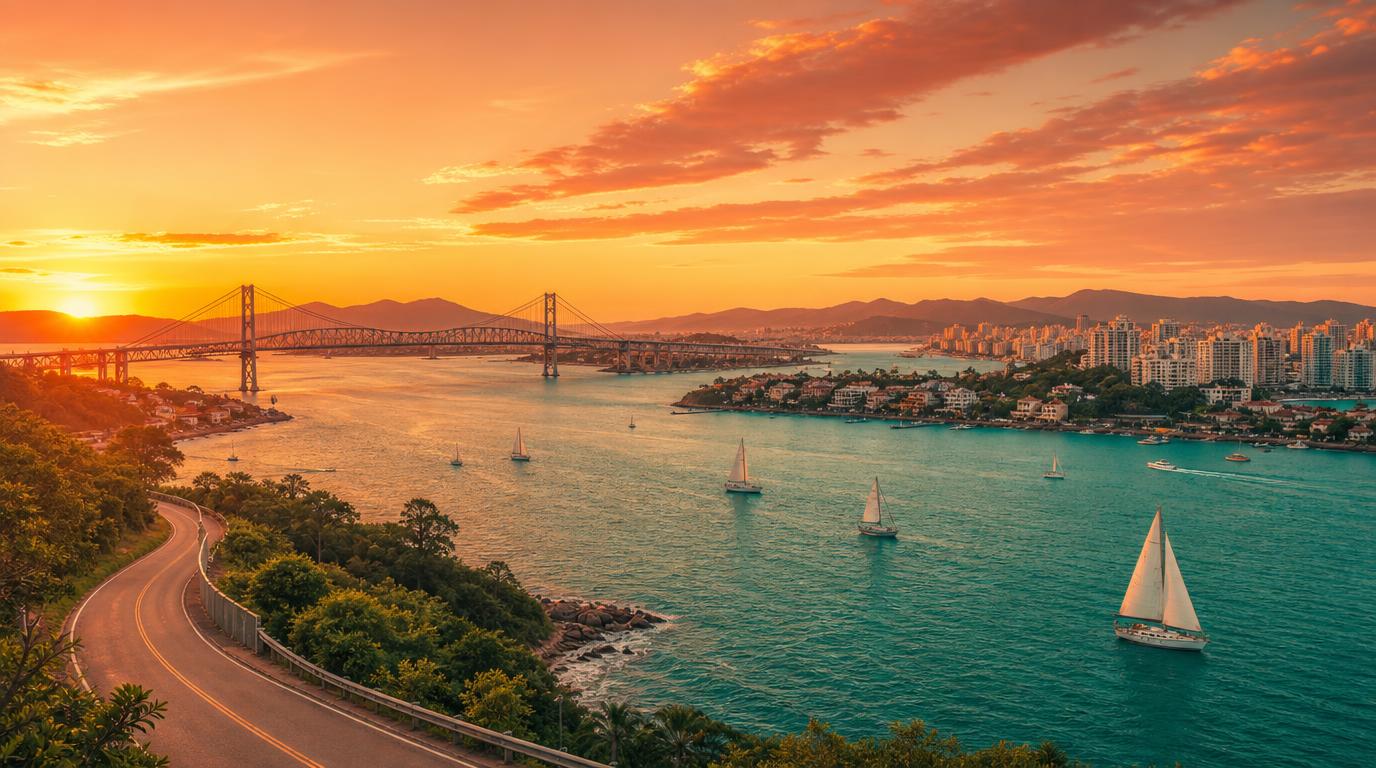
Florianopolis is an island city in southern Brazil that has quietly become the country’s biggest draw for remote workers, built on fast fiber internet, a real tech industry, and a homicide rate lower than any other state capital in Brazil. This guide covers what it actually costs to live there, how safe it is neighborhood by neighborhood, visa options, and whether the timezone works for your clients.
Internet and Working Conditions
Florianopolis is nicknamed “Silicon Island,” and the name is earned. The city hosts roughly 140 startups, the highest startup density of any Brazilian city, and average internet speeds around 235 Mbps, about 40% faster than competing Brazilian tech hubs.
- National fixed broadband median: 215-220 Mbps, ranking Brazil around 26th to 28th worldwide on the Speedtest Global Index, well above the global median of 120 Mbps.
- Local coworking wifi: ranges from 100 Mbps to 300 Mbps depending on the space, with several spots advertising dedicated fiber lines.
- Mobile data: national average download speeds around 257 Mbps on 4G/5G networks.
For anyone doing video calls or moving large files, this puts Florianopolis well ahead of most Latin American nomad hubs. The tech-hub reputation also means better odds of finding a coworking space built with developers and startups in mind, not just tourists with laptops.
Cost of Living
Florianopolis costs more than Brazil’s interior cities, but it’s still a fraction of US or Western European rents.
- 1-bedroom apartment, city center: R$3,400/month (about $665).
- 1-bedroom apartment, outside center: R$2,492/month (about $490).
- Groceries: R$400-500/month (about $80-98).
- Inexpensive restaurant meal: R$45 (about $9).
- Basic utilities: R$436/month (about $85).
- Public transport pass: R$414/month (about $81).
- Mobile plan (10GB+): R$64/month (about $12.50).
- Home broadband: R$112/month (about $22).
Numbeo puts baseline monthly costs excluding rent at around $647 for a single person. Add rent outside the center and a full month of basics lands around $1,140. Add a coworking membership, which runs $54-$144/month depending on the space, plus regular meals out and weekend trips, and a realistic all-in budget sits closer to $1,400-$1,800. That’s more than Chiang Mai or Bali, but still well under what the same lifestyle costs in Lisbon or Austin, and the exchange rate has kept the real weak enough that dollar and euro earners get real purchasing power out of it.
Safety
This is the category Florianopolis wins on. According to the Atlas da Violência 2026, produced by IPEA and Brazil’s Public Security Forum, the city recorded 9.7 homicides per 100,000 residents in 2024, the lowest of all 27 Brazilian state capitals and less than half the capital-level average of 23.4. Salvador, at the other end, records 52.7.
“Safest Brazilian capital” is a relative title, not a guarantee, and street-level caution still matters:
- Safer areas: Lagoa da Conceição (the main nomad hub, well-patrolled), Jurerê Internacional (upscale, private security), Barra da Lagoa, and Praia dos Ingleses.
- Use more caution: Rio Vermelho after dark, and downtown Centro once shops close for the night.
- Common scams: ATM card skimming, taxis that “forget” to use the meter, staged distraction theft in crowded spots, and fake vacation rental listings during peak season.
- Basic habits that help: use Uber or 99 instead of hailing a taxi on the street, withdraw cash only from ATMs inside banks or malls, and avoid walking isolated beach paths after dark.
Multiple nomads describe walking around Lagoa da Conceição at night without incident, and the data backs that up relative to the rest of the country. The risk here looks more like petty theft and scams than violent crime, which is a very different calculus than most of Brazil’s bigger mainland cities.

Visa and Entry
Brazil’s entry rules shifted at the start of 2026, so verify directly with your consulate before booking (checked as of September 2026).
- Tourist stays: Most EU and Schengen passport holders still enter visa-free for up to 90 days. As of January 1, 2026, several previously visa-exempt nationalities, including the US, Canada, Australia, and Mexico, now need an eVisa: $80.90, multiple-entry, valid up to 10 years (5 years for Canadian and Australian passports), applied for through the VFSeVisa portal.
- Digital nomad visa (VITEM XIV): requires proof of $1,500/month in income or $18,000 in savings. Valid for one year, renewable for a second. Apply through Portal eConsular, then register with Brazil’s Federal Police within 90 days of arrival and apply for a CPF (taxpayer number).
The eVisa change caught a lot of travelers off guard, since the US in particular went through a visa-free stretch before this reinstatement. If a 90-day tourist stay is enough, budget the eVisa fee and the processing time into your trip. If you’re staying longer, the VITEM XIV route is worth the paperwork given how affordable the city is relative to the income bar.
Timezone Fit
Florianopolis sits at UTC-3 year-round. Brazil doesn’t observe daylight saving time, so the offset never shifts on this end, only the other timezone moves.
- US Eastern: Florianopolis runs 1-2 hours ahead, meaning close to a full overlapping workday.
- US Pacific: 4-5 hours ahead, still workable for a morning-heavy schedule.
- UK: 3-4 hours behind, so Floripa mornings line up with UK afternoons.
- Central Europe: 4-5 hours behind, similar overlap in the local morning.
This makes Florianopolis one of the stronger South American options for anyone with US East Coast clients or teammates, and still workable for European hours if you’re an early starter.
Coworking and Community
- Nomadico (Barra da Lagoa): coliving plus coworking, private rooms from about $770 for four weeks, fiber internet, weekly community events.
- Cool Office (Lagoa): fast wifi, A/C, minutes from the lake.
- Favo Coworking (Ingleses): $54/month, 100 Mbps.
- Impact Hub Floripa (Saco Grande): $90-133/month, 200 Mbps, part of the global Impact Hub network.
- S7 Coworking (Centro): $57/month, 300 Mbps, the fastest advertised speed in the city.
- Sandbox Coworking (Rio Tavares): $110/month, 200 Mbps.
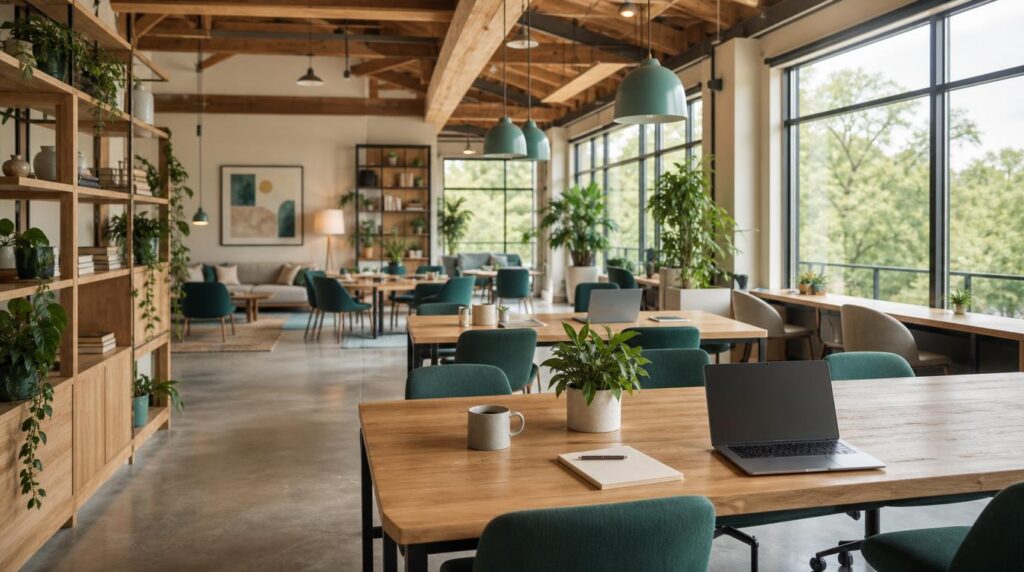
Lagoa da Conceição is the center of nomad life, with the highest concentration of coworking spots, cafes, and other remote workers. It’s also where most of the informal networking with the local startup scene happens, since Florianopolis’s tech community isn’t shy about mixing with visiting foreign talent.
Best Time to Visit
- June to August: the driest and coolest stretch, averaging around 17°C (63°F), best for people prioritizing focused work over beach days. Ocean temperatures drop to around 19°C, so swimming isn’t the draw here.
- December to March: hot, with highs near 29-30°C, and Brazil’s peak beach season. Expect higher prices, Carnival crowds, and the occasional severe summer thunderstorm.
- October-November and April-May: the shoulder seasons, and generally the sweet spot, warm enough for the beach, without peak-season prices or crowds.
Who Florianopolis Is For
Florianopolis works well for remote tech workers who want genuinely fast internet, a real professional community, and a strong safety profile without giving up beach access. It’s a strong fit for anyone working US East Coast hours, and workable for European hours too.
- Good fit: developers and startup-adjacent workers, surfers who also code, anyone prioritizing safety over rock-bottom prices.
- Consider skipping it: budget nomads chasing Southeast Asia price points, since Florianopolis runs closer to $1,400-$1,800/month all-in than $800. Also skip it if your work depends on heavy overlap with Asia-Pacific hours, since the timezone math doesn’t work in that direction.
Ready to Go?
Florianopolis pairs some of Brazil’s fastest internet with its lowest capital-city homicide rate, at a cost still well below US or European rents. Between the tech scene in Lagoa da Conceição and the beaches ten minutes from most coworking spaces, it’s an easy place to actually get work done between surf sessions. Search flights to Florianopolis on FlyBibe and start planning the move.