

A digital nomad is a person who works from anywhere with a laptop and an internet connection. Nomads choose to combine that work with travel. MBO Partners, a research firm that tracks the trend each year, counted 18.5 million American workers in this group in 2025. The group makes up about 12% of the US workforce.
Most people reach this life with a plan and a few months of preparation. The steps below follow the order that works for most beginners. Each step gives the main facts and links to a longer guide when you need more detail. Prices and rules were checked on November 2, 2026, and they change, so confirm them on official sites before you act.
Step 1. Choose how you will earn money
You need income that does not depend on where you sit. Three paths cover most nomads.
- Keep your current job and work remotely. Your pay stays the same, so this path is the fastest. Ask your manager for permission in writing. Learning to negotiate a permanent remote work arrangement helps, and a short written case makes the request easier to approve.
- Find a new remote job. Some remote roles still limit where you may live, so read the location rules before you apply. A list of remote job boards for location-independent work is a good place to start.
- Freelance. You pick your clients and your hours, and you also carry the risk of slow months. Compare the best freelance platforms for digital nomads to find your first clients. Then learn how to set your freelance rates so your pay still works in a cheaper country.
Aim to have at least a few months of steady pay before you leave. Visa offices often ask for bank statements that show steady income, so a record of on-time pay helps.
Step 2. Build a savings cushion
Save money before you go. The Consumer Financial Protection Bureau suggests three to six months of expenses for most single people. It suggests up to nine months if your income is irregular, which describes many freelancers.
To find your own number, price out your first base. Lisbon makes a good example. Numbeo is a cost-of-living database. On November 1, 2026, it showed that one person spends about €758 a month in Lisbon before rent, or about $849. A one-bedroom apartment outside the city center averages €1,072 a month, and typical prices run from €900 to €1,400. Nomad health insurance adds about €61 a month, based on the plan in Step 5. The table adds those three costs together.
| Rent level | One-bedroom rent | Total per month | 3 months | 6 months | 9 months |
|---|---|---|---|---|---|
| Low | €900 | €1,719 | €5,157 | €10,314 | €15,471 |
| Middle | €1,072 | €1,891 | €5,673 | €11,346 | €17,019 |
| High | €1,400 | €2,219 | €6,657 | €13,314 | €19,971 |
The middle case comes to about $2,100 a month at the exchange rate Numbeo used. The totals leave out flights, visa fees, and fun, so add a cushion on top. If your income changes from month to month, build your budget around your lowest recent month. The post on how to budget as a digital nomad with a variable income shows how.

Step 3. Pick your first base
Choose one place for your first one to three months. Moving each week usually costs more and wears you out. Compare cost, safety, internet speed, and time zone in each city. Time zone matters most when your clients or team keep set hours.
A guide on how to balance cost, safety, and internet when picking a destination walks through the trade-offs. If your budget is tight, the list of cheapest digital nomad cities under $1,500 a month narrows the field. The Lisbon digital nomad guide covers the neighborhoods behind the budget above.
Step 4. Choose a visa or legal way to stay
Most countries let visitors stay for a set number of days. Those tourist rules often do not allow work. A digital nomad visa gives you permission to live in a country while you work for employers or clients abroad. Read about the difference between a digital nomad visa and a tourist visa before you pick a country. The list of top countries with official digital nomad visa programs shows your options. The guide to visa income requirements by country shows what each one asks for.
Four programs show how much the rules differ.
- Portugal D8 visa. The income requirement is €3,680 a month, which is four times the Portuguese minimum wage of €920. See the Portugal D8 visa guide.
- Spain. The requirement is about €2,849 a month, which is 200% of the Spanish minimum wage. See the Spain digital nomad visa guide.
- Estonia. You need gross income of €4,500 a month, measured over the past six months. See the Estonia visa guide.
- Thailand. The Destination Thailand Visa lasts five years and allows up to 180 days per entry. It asks for proof of at least 500,000 baht in savings. See the Thailand DTV guide.
You may plan to move around Europe on tourist entry instead. The Schengen area lets most visitors stay 90 days in any 180-day period, and the European Commission offers an official calculator. The guide to the Schengen 90/180 day rule explains how the count works.

Step 5. Get health insurance
Many visas ask for proof of health cover, and a medical bill abroad can reach thousands of dollars. Nomad plans are built for people who move often. SafetyWing’s Nomad Essential plan costs $62.72 for four weeks for ages 18 to 39. The price steps up at ages 40, 50, and 60, and the medical limit is $250,000.
Read the policy terms before you buy. Plans like this one usually exclude pre-existing conditions, and they also exclude care such as maternity and cancer treatment. Compare options in the guide to the best health insurance plans for digital nomads. Travel insurance covers trip problems such as lost bags and canceled flights. The post on travel insurance with remote work coverage explains what to look for.
Step 6. Sort out taxes and banking
This section gives general information only. It is not tax, legal, or financial advice, so check your own situation with a qualified tax professional.
US citizens file a US tax return wherever they live. The guide on how US citizens file taxes while working remotely abroad covers the basics. One tool that many Americans abroad use is the Foreign Earned Income Exclusion. The IRS lets a qualifying worker exclude up to $130,000 of foreign earned income for 2025 and up to $132,900 for 2026. You claim it on Form 2555. To qualify, you must pass one of two tests. The physical presence test requires 330 full days outside the US in any 12 months in a row. The bona fide residence test requires you to live in a foreign country for a full tax year.
Citizens of other countries should ask their home tax office how it treats long stays abroad. The rules depend on where you count as a tax resident.
For money, keep your home bank account open and add a card with no foreign transaction fees. Some nomads also need a local account. The post on how to open a bank account without local residency explains the options.
Step 7. Pack light and plan your internet
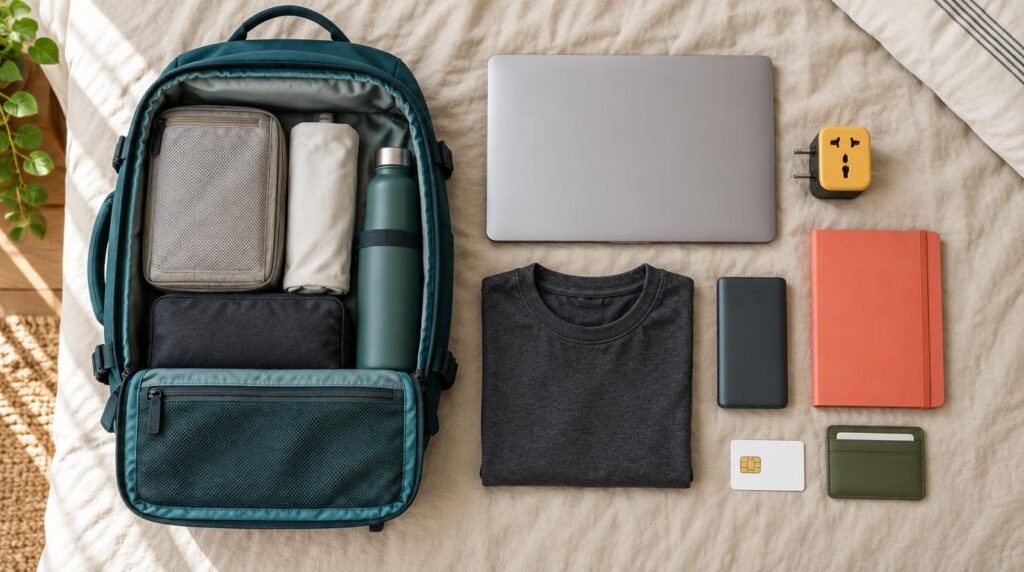
Pack for one carry-on if you can. A laptop, a charger, a plug adapter, a spare battery, and a few clothes cover most of the list. The digital nomad packing list for long-term travel goes item by item.
Plan your connection before you land. An eSIM lets you get mobile data without a physical card, and a local SIM is often cheaper for long stays. The guide to eSIM vs local SIM vs portable wifi hotspot compares the three. A VPN protects your data on public wifi, and the guide to the best VPN for digital nomads helps you choose one.
Step 8. Book a one-way flight and test a short stay
Start with a trial. Book your flight and book a place to stay for two to four weeks, not a full year. A short stay shows you whether the wifi, the noise, and the time zone work with your job.
Check the internet before you pay. The post on how to find reliable wifi speed before booking a stay shows the tools to use. A coliving space is a good first choice because it comes with a desk, fast wifi, and people to meet. The guide on how to choose a coliving space over a hotel or Airbnb covers the trade-offs.
For flights, a one-way ticket fits an open-ended plan, but it can cost more than a round trip on some routes. Some airlines and border agents also ask for proof that you will leave, so check the entry rules for your destination before you buy. Read one-way vs round-trip tickets for open-ended travel before you decide. Then use the guide to the best time to book international flights to pick your dates.
Step 9. Build a routine and a community
The first weeks abroad feel exciting, and then the work still has to get done. MBO Partners found that 73% of digital nomads have lived this way for three years or less. Only 11% have done so for more than five years. It also estimates that between 19% and 22% of nomads return to a settled life each year. A steady routine and some friends make the lifestyle easier to keep.
Set fixed work hours and a fixed place to work. The guide on how to keep a consistent routine while traveling for work gives practical ideas. Loneliness is common among solo travelers, so read how to build community as a solo digital nomad. If you start to feel worn out, avoiding burnout with a sustainable travel pace shows how to slow down.

Common mistakes to avoid
- Working without telling your employer. MBO Partners reports that 13% of nomads with traditional jobs say their employer does not know they travel. Working from another country can create tax and legal problems for both you and the company, so get permission first.
- Working on a tourist entry that does not allow work. Read the entry rules for each country before you start.
- Skipping your home tax return. Living abroad does not remove the duty to file in many countries.
- Moving too fast. A new city each week raises costs and leaves little time for work.
- Overstaying a visa. Count your days and set a reminder a few weeks before your permit ends.
Plan your first flight
Once your income, savings, and paperwork are in place, the next job is booking the trip. FlyBibe helps remote workers find flights and tours made for the laptop lifestyle. You can search for a one-way flight to your first base and add a short tour for your first weekend. Start small, stay for a month, and adjust the plan from what you learn.