

Many jobs marked remote still require you to live in a certain country or time zone. The seven job boards below show those limits clearly, so you can find work that you can do from anywhere. Each entry covers cost, location filters, and one real drawback. All details were checked in September 2026.
What These Boards Were Judged On
A remote job can still require you to live in one country, so location rules came first. Boards that filter by country or time zone ranked higher. Cost and screening also counted. The list starts with the clearest location filters and ends with two boards that charge for key features. Pay shown on a listing helps too, since several nomad visas set a minimum income.
1. Himalayas
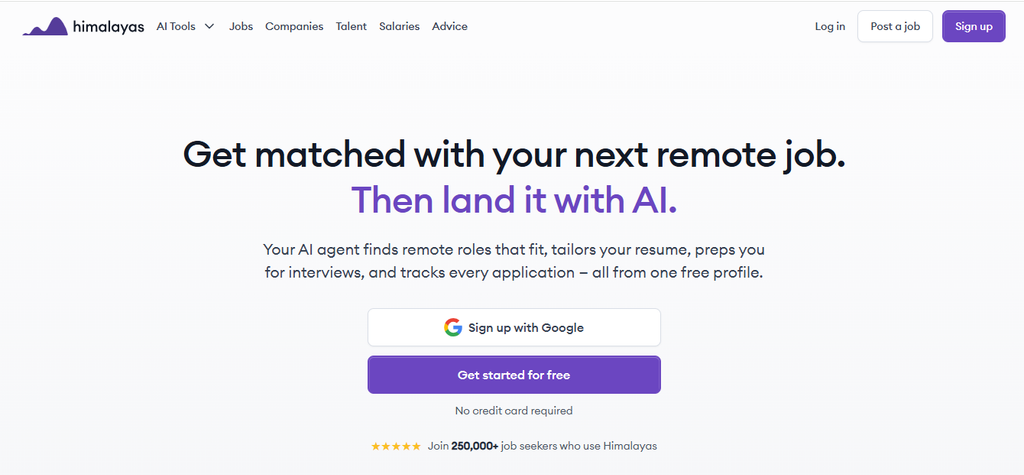
Himalayas lets you search by country, by time zone, or for jobs that are open worldwide.
- Cost: Free account for job seekers.
- Location filters: Browse by country or time zone. A worldwide page lists jobs with no location or time zone limits.
- Size: About 100,000 live remote jobs, based on the board’s own figures.
- Time zone setting: Employers pick specific time zones, all time zones, or leave the field blank.
Himalayas says most remote jobs on its board have some location or time zone rule. A job with a blank time zone field may not show up under time zone filters, so check the worldwide page too. Some roles need work hours that overlap with another region, and a separate guide explains how to manage meetings across time zones.
Best for: Workers outside the US or Europe who want to confirm eligibility before applying.
2. Real Work From Anywhere
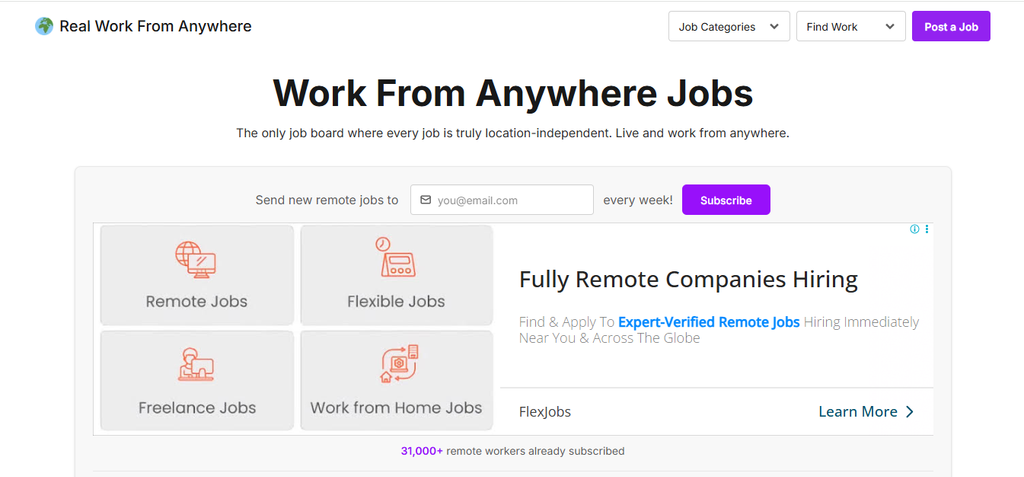
Real Work From Anywhere lists only jobs that it says have no location limits.
- Cost: Free to browse, with a weekly email of new jobs.
- Location rule: The site says all of its listings are open to workers anywhere in the world.
- Fields covered: Software, design, customer support, sales and marketing, management and finance, and product.
- Pay details: Some listings show a salary range in US dollars.
The board is small and leans toward tech and crypto companies. A few job titles name a region, such as EMEA or APAC, even with the worldwide label. Read the job text to be sure. The site also notes that taxes depend on whether a company hires contractors or uses a local employer service.
Best for: Travelers who want a short list of roles with no location limits.
3. We Work Remotely
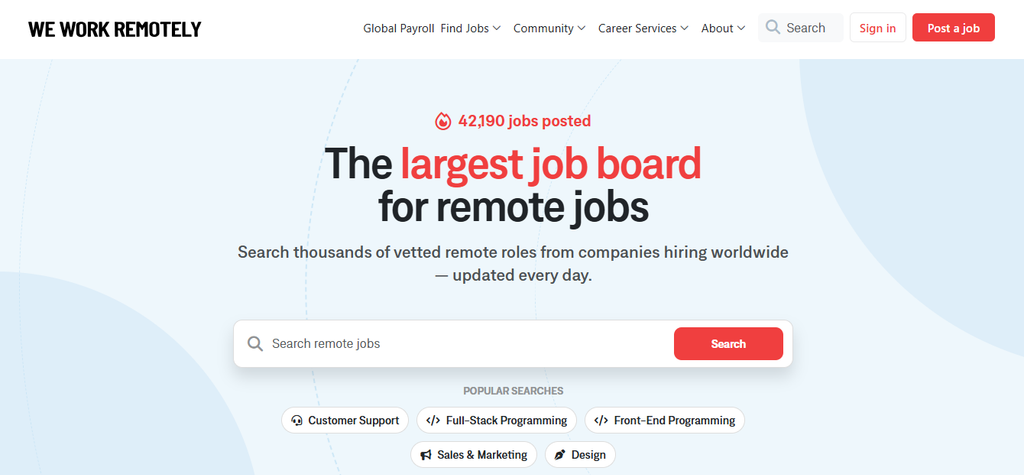
We Work Remotely is a well-known board with filters for regions, countries, and salary.
- Cost: Free for job seekers. Employers pay $299 to post a job.
- Location filters: Regions include Europe, North America, Latin America, and Worldwide, plus a full country list.
- Fields covered: Programming, design, DevOps, product, customer support, sales and marketing, and management and finance.
- Job types: Full-time and contract roles.
Listing cards show tags such as Anywhere in the World, or a row of country flags. A tag can sit next to text that names a home country, so the job description is worth reading before applying. Some listings also carry a Boosted or Promoted label.
Best for: Developers, designers, and sales or support workers who want a wide free board.
4. Working Nomads
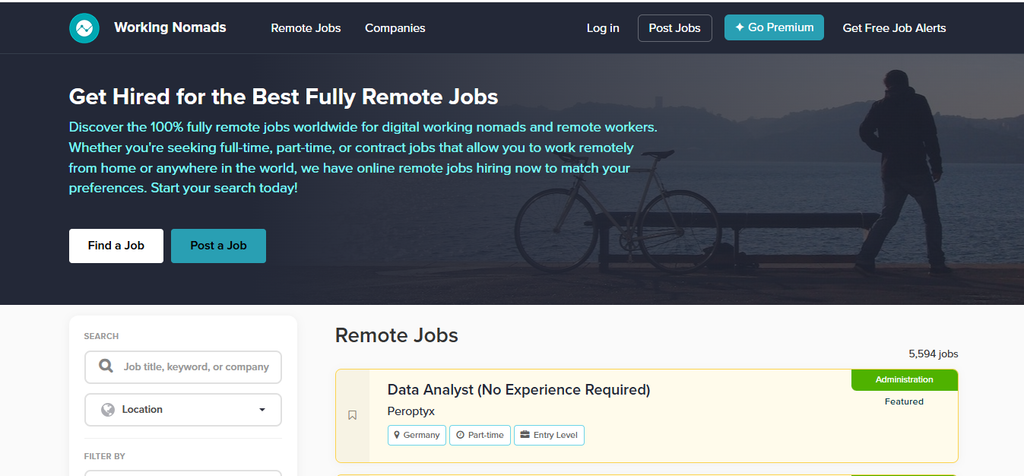
Working Nomads has collected remote jobs for digital nomads since 2014 and sorts them by region, including Africa.
- Cost: Free public list and free job alerts. Premium costs $17.95 a month, $39.95 a quarter, or $79.95 a year.
- Location filters: Pages for Anywhere, Africa, Europe, Latin America, the Middle East, APAC, and North America, plus single countries.
- Fields covered: More than 15 categories, from development and design to legal, finance, and healthcare.
- Screening: The site says it checks employers before listing their jobs.
The free list shows only a share of the jobs. Premium says it adds about ten times more postings, plus advanced filters and an ad-free view. The free list is enough for a short daily check, and a longer search may justify the quarterly plan.
Best for: Searchers who want region pages, including Africa, and free job alerts.
5. Dynamite Jobs
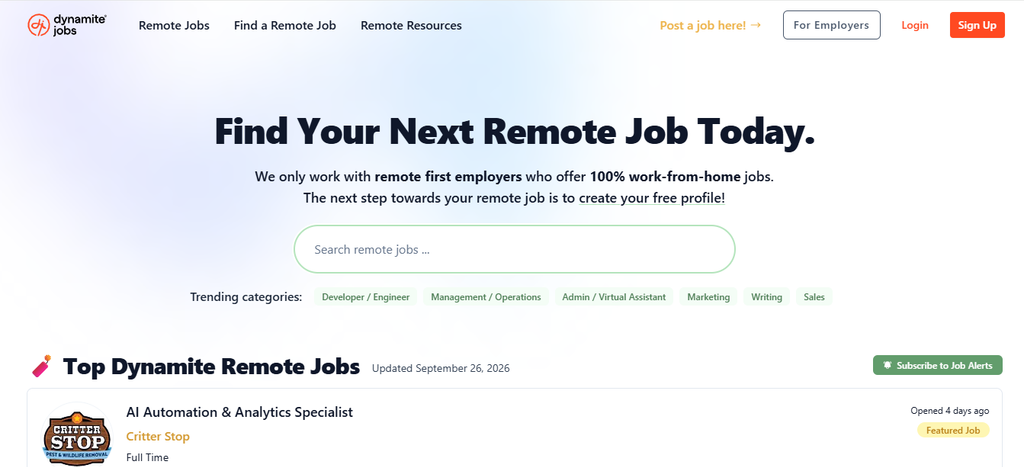
Dynamite Jobs works only with remote-first employers that offer fully remote roles.
- Cost: Free profile and job alerts for job seekers.
- Track record: The site has worked with remote-first companies since 2017.
- Fields covered: Developer, operations, admin and virtual assistant, marketing, writing, and sales roles.
- Pay details: Listings show pay, from $500 a month for an internship to $180,000 to $220,000 a year for a senior engineer.
The site points out that work from home and work from anywhere mean different things. Some listings still name a country, such as a US-based engineering role in the current sample. Pay varies widely, from small internships to senior salaries.
Best for: Operations, marketing, writing, and support workers who want fully remote roles without paying a fee.
6. FlexJobs
FlexJobs charges job seekers a fee and says it verifies its listings and screens the companies behind them.
- Cost: A 14-day trial has been reported at $2.95. Reviews disagree on later monthly prices, so the pricing page is worth checking first.
- Size: 242,121 remote jobs from 15,447 companies, according to its homepage.
- Location labels: Listings read Work from Anywhere or Work from Anywhere in U.S., and a separate page lists work-from-anywhere jobs.
- Fields covered: Dozens of categories, including an international jobs category.
Many listings on the homepage carry the U.S. label, so the paid search still needs a location check. Paying for screening may suit anyone who has met fake postings before.
Best for: Searchers who want screened listings and accept a monthly fee.

7. Remote OK
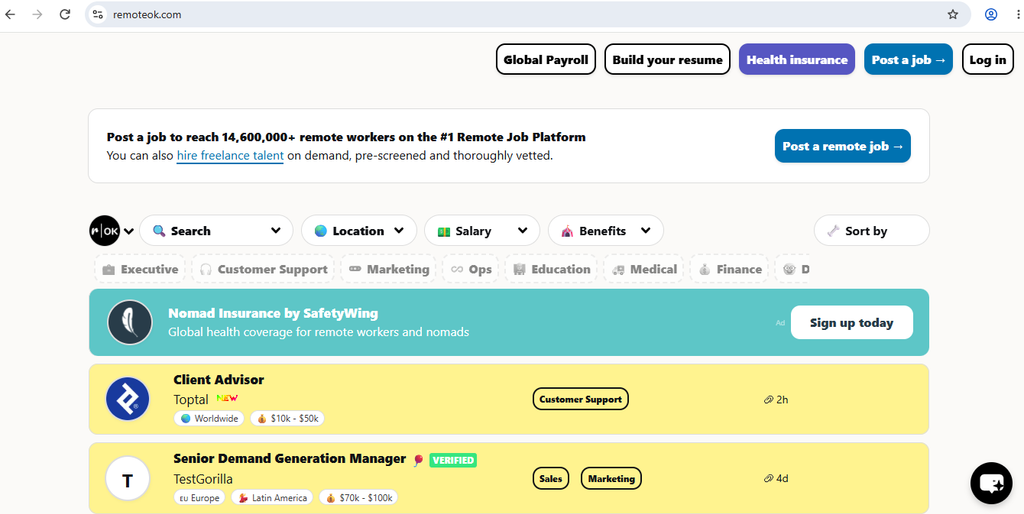
Remote OK is a high-volume board that claims more than 100,000 remote jobs.
- Cost: Free to browse. Premium costs $14.95 a month with a 12-month commitment.
- Paid filters: Premium adds filters for salary, time zone, and tech stack, plus salary data and instant alerts.
- Trial: No free trial is offered.
The time zone filter sits behind the paywall, which matters for location-independent searches. The free view works for a quick daily scan, though salary data stays hidden. Anyone who joins commits to 12 months, even though billing is monthly.
Best for: Workers who like to scan many new jobs each day.
Check Each Listing Before You Apply
Fake postings exist on job sites of all kinds. The FTC reports that losses to job and employment agency scams rose from $90 million in 2020 to $501 million in 2024.
- Location line: Find the country or time zone rule in the listing before writing an application.
- Payment requests: The FTC says anyone who asks you to pay to get a job is a scammer.
- Employer check: Search the company name with words such as review or scam, and skip employers with no online footprint.
Workers who already have a job have another option. Asking an employer for a permanent remote arrangement may be faster than a new search. Once an offer arrives, another guide explains how digital nomads open bank accounts without residency.
Next Steps for Your Search
A workable setup uses one board that shows location rules clearly, one broader board, and daily alerts on both. Check the location line on every listing before you apply, and ignore any job that asks for money. A location-independent job lets you choose where to live, and the next step is often a flight. Once a job is lined up and you have picked your next base, search flights on FlyBibe and book the trip.