
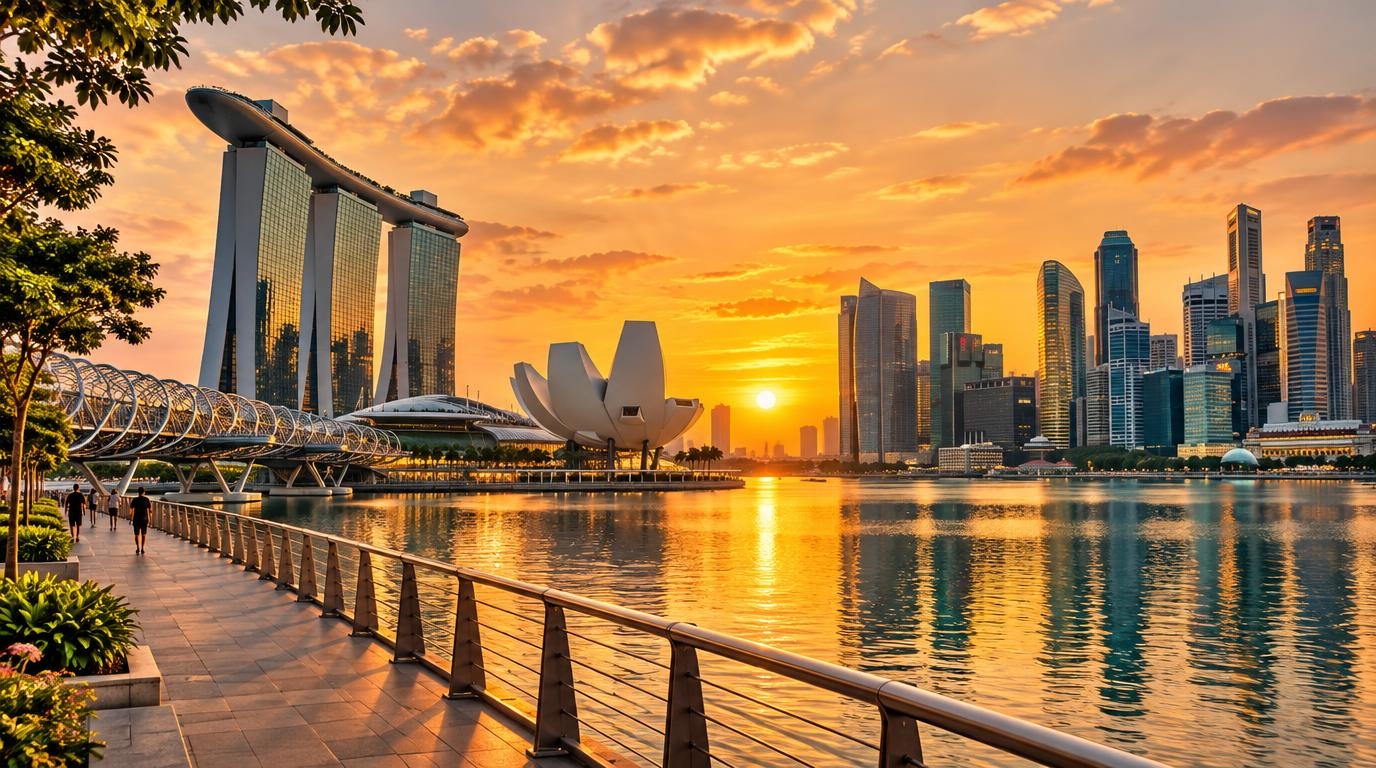
Singapore offers some of the fastest home internet in the world and a very low rate of street crime. Rent is the main cost, and the visa rules need a careful read. This guide covers wifi, a worked monthly budget, visa rules, the best areas, coworking, time zones, safety, and when to go.
Wifi and mobile data in Singapore
Internet quality is a strong point here, both at home and on a phone.
- Home broadband: Reports of the 2026 Ookla Speedtest Global Index put the median fixed broadband speed between roughly 310 and 460 Mbps. The figure depends on the month and on whether a city or the whole country was measured.
- Mobile: Singtel recorded a median download speed of 296.76 Mbps in the first half of 2025, and 421.79 Mbps on 5G. Both figures come from Ookla’s Speedtest Connectivity Report, and the other large carriers recorded lower speeds.
- Backup connection: An eSIM can work as a spare line during a home outage. The post on eSIM vs local SIM vs portable wifi hotspot compares the options.
Video calls, large uploads and cloud work should run without trouble on these speeds. Short-term rooms still vary, so a recent speed test from the host or operator is worth requesting. The guide on how to find reliable wifi speed before booking a stay explains how.
Cost of living in Singapore
Housing sets the budget in Singapore. Hawker food keeps meals affordable, and the rest of a monthly budget sits well below rent.
- Room in a shared flat: Cove’s April 2026 data, based on 1,621 listings, shows a median of S$1,550 per month for a standard room. A master or ensuite room has a median of S$2,400.
- Studio or one-bedroom: The same listings show a median of S$2,450 for a studio and S$4,200 for a one-bedroom apartment.
- Coliving: Operators list starting prices of about S$800 at Dash and S$1,000 at Cove. Figment starts at S$1,600 for a room with a shared bathroom. Prices differ by property, so each operator should confirm the current rate.
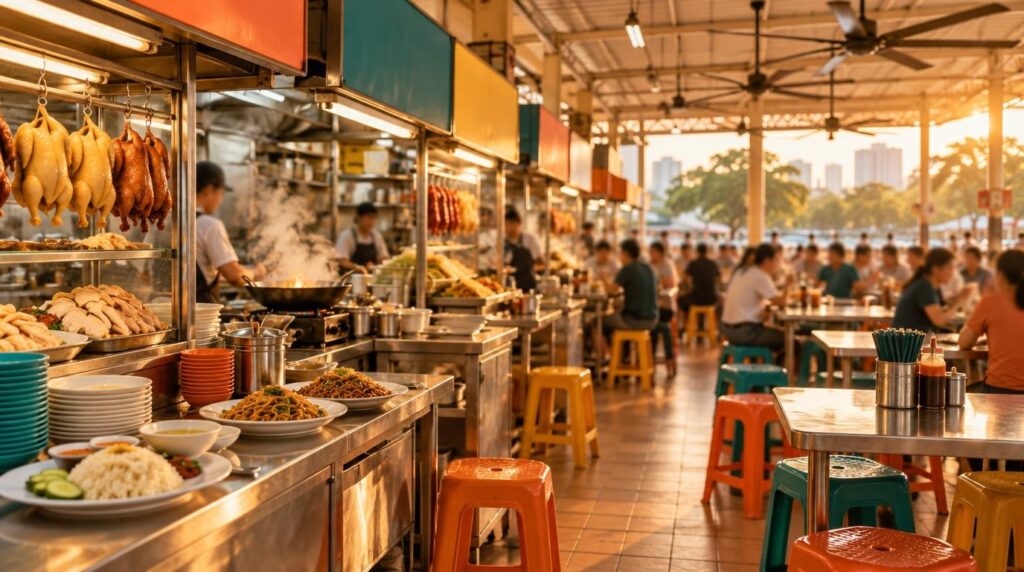
- Hawker meals: A meal costs about S$4 to S$8. Chicken rice often runs S$3.50 to S$5, and meals in central areas tend to cost S$1 to S$2 more than in the suburbs.
The table below turns these figures into three monthly budgets in Singapore dollars. The rent, coworking and food figures come from the sources above. Transport, phone and other costs are planning allowances rather than measured prices.
| Monthly line | Lean | Mid-range | Comfortable |
|---|---|---|---|
| Housing | S$1,550 (standard room) | S$2,400 (ensuite room) | S$4,200 (one-bedroom) |
| Coworking | S$275 (part-time desk) | S$374 (WeWork desk) | S$700 (premium desk) |
| Food | S$700 | S$1,000 | S$1,500 |
| Transport | S$120 | S$150 | S$200 |
| Phone and data | S$40 | S$50 | S$60 |
| Other costs | S$300 | S$500 | S$800 |
| Total | S$2,985 | S$4,474 | S$7,460 |
Housing makes up about half or more of each budget. A one-bedroom apartment alone costs more than the whole lean budget.
Rental rules also shape the choices. The Urban Redevelopment Authority sets a minimum rental period of three months for private homes, and HDB public housing flats require six months. A stay shorter than three months usually means a hotel, a licensed serviced apartment, or a coliving operator. A few operators offer stays as short as a week at selected properties.
The guide on how to choose a coliving space over a hotel or Airbnb helps with that decision.
Visa and entry rules
Singapore has no digital nomad visa, so most remote workers arrive on a short-term visit pass. The rules below were checked on 4 November 2026 and can change.
- Entry: Most nationalities enter without a visa and receive a Social Visit Pass at the border. Secondary sources describe a stay of 30 or 90 days depending on the passport. The Immigration and Checkpoints Authority (ICA) publishes official guidelines by nationality.
- Visa-required passports: Citizens of some countries, including Nigeria, are listed by ICA as needing a visa before travel. The post on digital nomad visas for Nigerian and other non-Western passport holders covers other options.
- Remote work on a visit pass: Sources disagree here. The Ministry of Manpower (MOM) says a person in Singapore who works for an overseas-based client does not need a work pass. Its published answer is written for stay pass holders, such as Dependant’s Pass holders. Some advisers say a Social Visit Pass allows no work of any kind, including remote work.
- Overseas Networks and Expertise (ONE) Pass: This is the closest option to a long-stay visa. The pass requires a fixed monthly salary of at least S$30,000 for the previous 12 months at an established overseas company, or outstanding achievements. From 28 January 2027, an AI and Tech track starts. The track lets part of the S$30,000 come from vested share awards, with a fixed salary floor of S$22,500.
Few remote workers meet the ONE Pass thresholds, and the visit pass question is unsettled. Written confirmation from MOM or ICA before a long stay is a sensible step. The post on digital nomad visa vs tourist visa explains the difference in general terms.
Singapore also pairs well with nomad visas nearby. Malaysia’s DE Rantau nomad pass and Thailand’s Destination Thailand Visa both allow longer stays.
Best areas to live in Singapore
The averages below come from Cove’s April 2026 listings and cover all room types, from shared rooms to full apartments. They show relative price levels rather than the cost of one home.
- Tanjong Pagar: The average is S$3,030. The area sits in the central business district. Coworking options include The Hive’s Tanjong Pagar campus and The Working Capitol’s heritage shophouses on Keong Saik Road, Telok Ayer Street and Ann Siang Road.
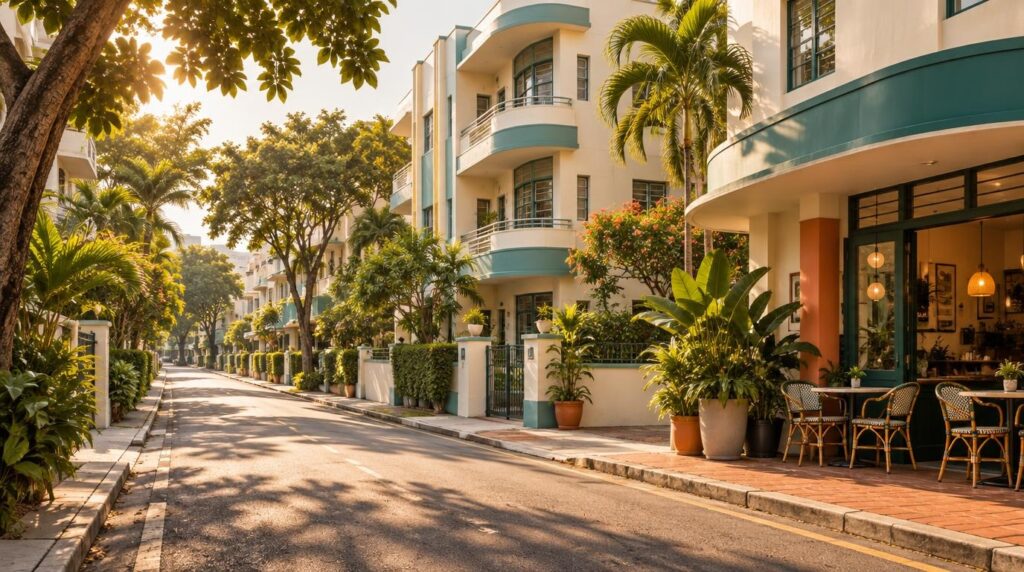
- Tiong Bahru: The average is S$1,922. The district is known for art deco apartment blocks, boutiques and cafes, and it has its own MRT station.
- Jalan Besar and Rochor: The average is S$2,398. The area has its own MRT station and sits next to Little India, which Cove also lists as a rental neighbourhood.
- Joo Chiat and Katong: The average is S$1,838. The east side is known for its food, heritage shophouses and East Coast Park, and most east-side areas average between S$1,750 and S$1,900.
- Holland Village: The average is S$1,736. Cove describes it as a favourite with expats, with a cafe culture and a village feel.
- Newton and Novena: The average is S$1,793. The area is one of the cheaper central choices.
Distance from the centre has a clear effect on rent. Newton and Novena average S$1,793, while nearby Balestier averages S$1,595, so one stop farther out could save about S$200 a month. Telok Ayer sits at the other end, with an average of S$4,693.
Coworking and community
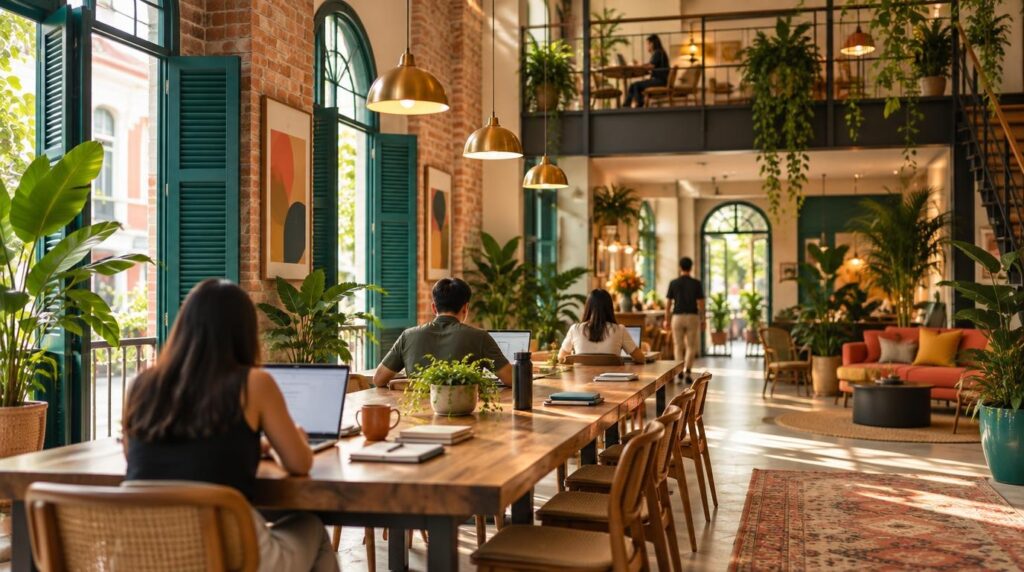
Singapore has plenty of coworking options, and prices run from a few hundred dollars to more than S$700 a month. The figures below come from a 2026 comparison that checked operator rate cards in September and October.
- Budget hot desks: The Working Capitol starts at S$250 per month. The Hive starts at S$275, and its Tanjong Pagar campus charges S$300.
- Mid-range desks: WeWork charges S$374 on a committed term and S$439 month to month. JustCo lists hot desks at S$340 on a flexible plan or from S$280 on a fixed term, before 9% GST.
- Premium desks: Industrious, formerly The Great Room, and Arcc Spaces charge roughly S$600 to S$800.
- Day passes: The Hive charges S$30, City Serviced Offices S$48, JustCo S$50 before GST, and WeWork S$50 to S$70 depending on the building.
A part-time membership or a few day passes could cost less than a full desk for people who work from home on some days. The list of coworking spaces offering day passes for short stays names more options. Coliving operators such as Cove also run member events, and its blog lists wellness sessions, padel matches and trivia nights for 2026.
Time zone fit
Singapore runs eight hours ahead of Greenwich Mean Time all year. Daylight saving changes in the US and Europe shift the offsets by an hour. The overlap figures below assume a 9 to 5 day in the other location and a 9 to 6 day in Singapore.
- US Eastern: Singapore is 13 hours ahead in winter and 12 hours ahead in summer. There is no overlap in normal working hours. A call at 8 pm in Singapore falls at 7 am in New York in winter.
- US Pacific: Singapore is 16 hours ahead in winter and 15 hours ahead in summer. Overlap is zero, and a 10 pm call in Singapore falls at 6 am in Los Angeles in winter.
- UK: Singapore is 8 hours ahead in winter and 7 hours ahead in summer. The overlap is one hour in winter, from 5 pm to 6 pm Singapore time, and two hours in summer.
- Central Europe: Singapore is 7 hours ahead in winter and 6 hours ahead in summer. The overlap is two hours in winter, from 4 pm to 6 pm Singapore time, and three hours in summer.
Singapore suits clients in Europe and teams in nearby Asian time zones better than clients in the Americas. Workers with US clients usually move to evening or early morning calls. The guide on managing client meetings across multiple time zones offers scheduling ideas.
Safety and health
Singapore has low street crime, and the main risks are online scams, mosquitoes and strict laws.
- Government advisory: The US State Department rates Singapore at Level 1, which means to exercise normal precautions.
- Crime figures: The Singapore Police Force recorded a physical crime rate of 341 cases per 100,000 people in 2025. Scam and cybercrime cases fell by 24.8 per cent to 41,974 in 2025, from 55,810 in 2024.
- Strict laws: Vapes are banned, and enforcement has increased in recent years. The US State Department warns that penalties for breaking local laws can be more severe than in the United States.
- Dengue: The peak season runs from May to October. The National Environment Agency reported 119 cases in the week ending 13 June 2026, the highest weekly total of the year at that point. Repellent can help during these months.
Scam and cybercrime cases ran at 687 per 100,000 people in 2025, about twice the physical crime rate. Travel health cover is also worth arranging, and the guide to the best health insurance plans for digital nomads compares options. The roundup of the safest digital nomad cities for solo remote workers places Singapore alongside other cities.
Best time to visit Singapore
Singapore sits near the equator, so temperatures stay warm and rain can fall in any month.
- Northeast Monsoon, December to March: The early part, in December and January, is the wetter period and can bring prolonged heavy rain.
- Southwest Monsoon, June to September: The weather is usually drier and hotter, with short showers and occasional early morning thunderstorms called Sumatra squalls.
- Rain days: One travel guide counts 9 to 10 rainy days a month in the southwest monsoon. The same guide counts 19 to 20 in April and May, and 21 to 25 in October and November.
- Haze: Smoke from fires in nearby countries mostly affects the dry season, from August to October. In October 2026, haze kept air quality in the unhealthy range across the island. The 24-hour index reached 186 in the central region on 9 October.
A stay in June or July avoids the heaviest monsoon rain. Such a stay also usually comes before the peak haze months, although haze timing changes by year. Dengue season overlaps with this period, so each season has a trade-off. Flight prices to the region vary by month, and the guide to the cheapest months to fly to Southeast Asia, Europe, and Latin America shows the pattern.
Who Singapore suits, and who should skip it
Singapore works best for short stays of a few weeks to three months, with a budget that covers high rent.
Singapore suits these readers:
- Remote workers with clients in Europe or in nearby Asian time zones.
- People who need fast, steady internet for calls and large files.
- Travelers who want low street crime and an easy MRT commute between coworking and home.
Readers on a tight budget or with US clients may do better elsewhere. The lean budget above is S$2,985 a month, and housing takes about half of it. Workers who need clear long-term work rights also face an unsettled visa picture.
Several cities in the region cost less and offer a nomad visa. The Kuala Lumpur digital nomad guide and the roundup of the best digital nomad cities in Southeast Asia cover them. The post on balancing cost of living, safety, and internet helps weigh the trade-offs.
Plan your Singapore stay
Singapore works best as a stay of a few weeks to three months, with fast internet, low street crime and easy transit. If the costs and visa rules fit your plans, search flights to Singapore on FlyBibe and compare routes and dates. Travelers who want a cheaper base nearby can run the same search for Kuala Lumpur. Choosing dates around the monsoon and haze months can also make the stay more comfortable.