
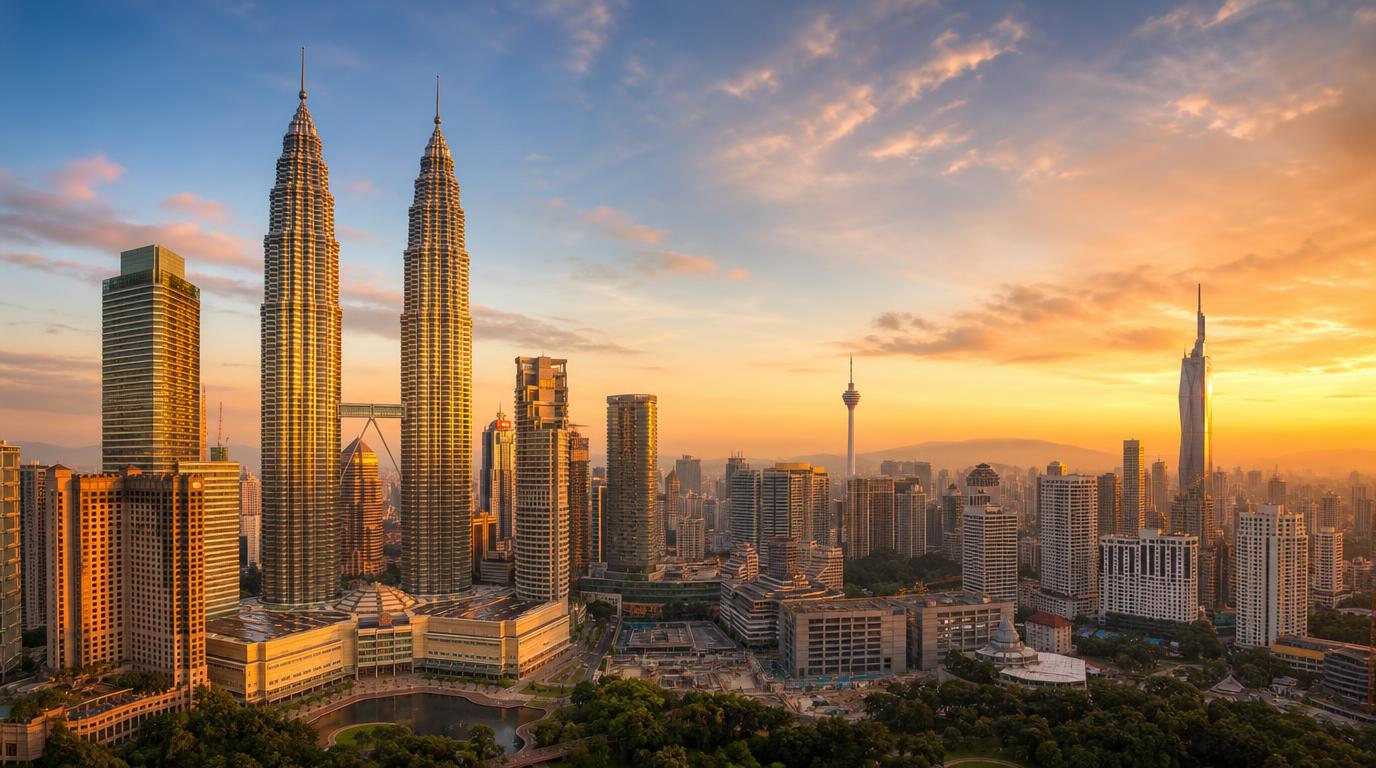
Kuala Lumpur gets skipped over for Chiang Mai and Bali, but it runs on faster internet, cheaper rent than most regional capitals, and a visa built specifically for remote workers. This guide covers what it actually costs to live there, how the DE Rantau Nomad Pass works against just showing up on a tourist stamp, and whether the city fits your working hours.
Internet speed
Malaysia’s fixed broadband averages 169.89 Mbps download, ranking 46th globally, while mobile speeds average 154.13 Mbps, good for 25th worldwide, according to Ookla’s Speedtest Global Index for April 2026.
- Fixed broadband: 169.89 Mbps download, 66.10 Mbps upload, 8ms latency.
- Mobile: 154.13 Mbps download, strong enough for video calls on a hotspot if a building’s wifi is unreliable.
- Coverage: fiber is standard in condos across KLCC, Bangsar, and Mont Kiara; 5G covers most of the city core.
Those numbers put KL well ahead of Bali or Chiang Mai on raw speed, and the gap holds up in practice, not just on paper. A dropped video call because of local wifi is rare here compared to elsewhere in Southeast Asia.
Cost of living
A single person’s core monthly expenses (food, transport, utilities, entertainment, excluding rent) run about RM2,467, roughly $611, per Numbeo’s August 2026 data. Add housing and a coworking membership and a realistic remote-worker budget lands between $900 and $1,500 a month depending on neighborhood and workspace choice.
- Rent, 1-bedroom, city centre (KLCC, Bukit Bintang): RM2,468/month, about $610.
- Rent, 1-bedroom, outside centre (Bangsar, Mont Kiara edges): RM1,500/month, about $371.
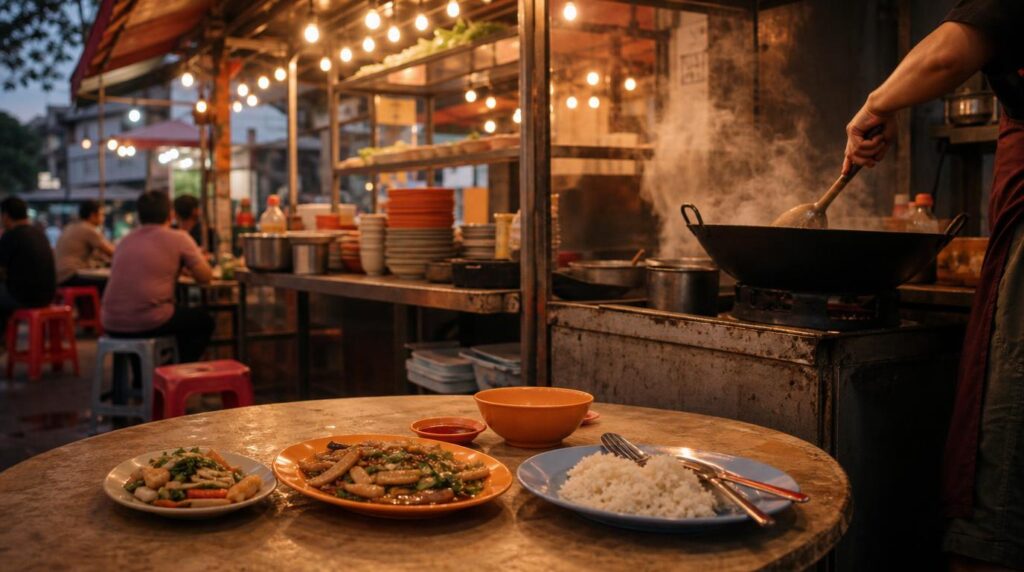
- Food: RM20 (about $5) for an inexpensive meal out; a mid-range dinner for two runs RM120 (about $30).
- Local transport: a monthly public transit pass costs RM50, about $12, covering the LRT/MRT network across most of the city.
- Coworking: hot-desk memberships at spots like WORQ typically fall in the RM400-700/month range (roughly $100-175), on top of rent.
The takeaway is that KL undercuts Singapore and Bangkok on rent while beating most of Southeast Asia on internet reliability, which is the actual trade digital nomads care about. A couple splitting a city-centre one-bedroom and eating out regularly should still budget under $2,000 combined.
Visa and entry
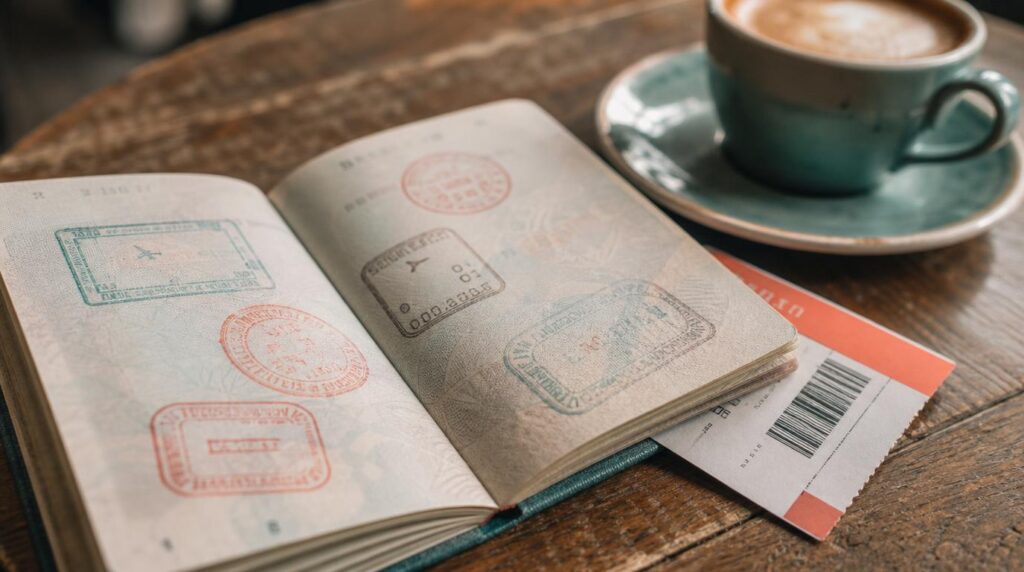
Malaysia gives most Western passport holders a straightforward tourist entry and, separately, a purpose-built remote work visa if you want to stay legally beyond that.
Tourist entry:
- US, UK, EU, Australian, and most Western passports: visa-free entry for up to 90 days, stamped as a social visit pass on arrival.
- Entry requirement: all visitors must complete the Malaysia Digital Arrival Card (MDAC) online before arrival, and a passport valid at least six months beyond entry.
- Overstay risk: Malaysia enforces overstays with fines and possible detention, so track the 90 days closely rather than assuming a border run resets the clock informally.
DE Rantau Nomad Pass (Malaysia’s digital nomad visa):
- Income requirement: roughly $24,000/year for tech-sector applicants, and around $60,000/year for non-tech remote professionals, earned from outside Malaysia.
- Validity: initial approval covers 3-12 months, renewable up to a total of 24 months.
- Cost: about MYR 1,000 (roughly $210-230) for the primary applicant, plus MYR 500 (roughly $105-115) per dependent, covering a spouse and children.
- Process: fully online application, typically 4-8 weeks for a decision, followed by finalizing entry formalities in Malaysia.
Sources on the exact income thresholds and processing times vary slightly by year as the program matures, so confirm current figures on the official DE Rantau portal before applying rather than relying solely on this or any third-party summary. For most people testing the city out for a month or two, the 90-day tourist entry is simpler and free; the DE Rantau Pass makes sense once you know you want KL as a longer-term base and want to stop resetting on tourist stamps.
Timezone fit
Kuala Lumpur runs on GMT+8, year-round, no daylight saving.
- US East Coast: 12-13 hours ahead, meaning your morning is their previous evening. Async work is realistic; live calls mean one side works very early or very late.
- US West Coast: 15-16 hours ahead, essentially a full flip. Expect asynchronous collaboration only.
- UK: 7-8 hours ahead. A KL afternoon (2-6pm) overlaps a UK morning (7-11am), giving a real daily window for calls.
- Central Europe: 6-7 hours ahead, similar overlap logic to the UK, slightly later.
This makes KL a strong base for anyone working with European clients or teams, and a workable one for US-based async roles, but a rough fit for anyone who needs regular live meetings on US business hours.
Coworking and community
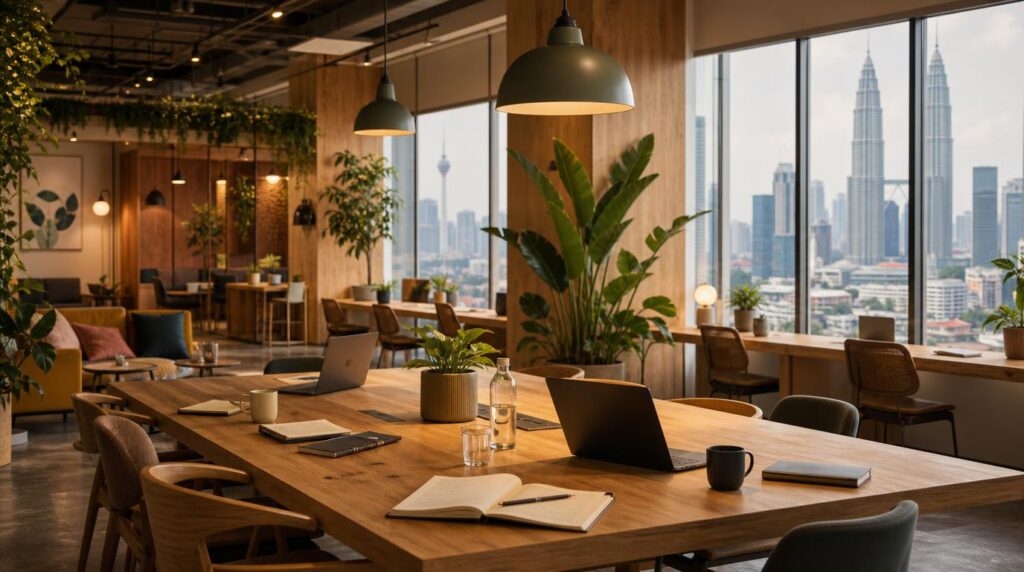
- WORQ (multiple locations, including Bangsar South): the most established option citywide, 24/7 access, active events calendar.
- Colony (KLCC and other central sites): higher-end interiors, strong community programming, popular with startup and creative crowds.
- Sandbox Space (Sri Petaling, Bandar Sunway): more affordable, genuine 24/7 access.
- WeWork (KL Eco City): the familiar global chain option, well connected to transit.
- Cafe alternatives: ZUS Coffee locations lean on fast wifi and outlets for casual work sessions; Bean Brothers and VCR are popular sit-and-work spots in Bukit Bintang and Bangsar.
The nomad and expat community in KL is real but less visibly clustered than Chiang Mai’s or Canggu’s, it runs more through coworking event calendars and Telegram/Facebook groups than a single obvious neighborhood scene.
Related: Chiang Mai digital nomad guide: cost of living and coworking
Safety
Kuala Lumpur scores around 41 on Numbeo’s safety index, and violent crime against foreigners is rare. The bigger risks are petty theft and scams rather than physical danger.
- Common scams: inflated unofficial taxi fares (use Grab or official airport counters instead), a “show me your currency” street con concentrated around Chinatown, and fake-police cash demands, legitimate officers don’t collect money on the street.
- Areas for extra caution: Petaling Street/Chinatown and Chow Kit after dark, where petty theft is more common.
- Consistently safe areas: KLCC, Bangsar, and Mont Kiara, day and night.
- Practical habits: keep phones away from the road edge when walking, use e-hailing apps over street taxis, and stick to bottled water and hot, freshly cooked food.
Best time to visit
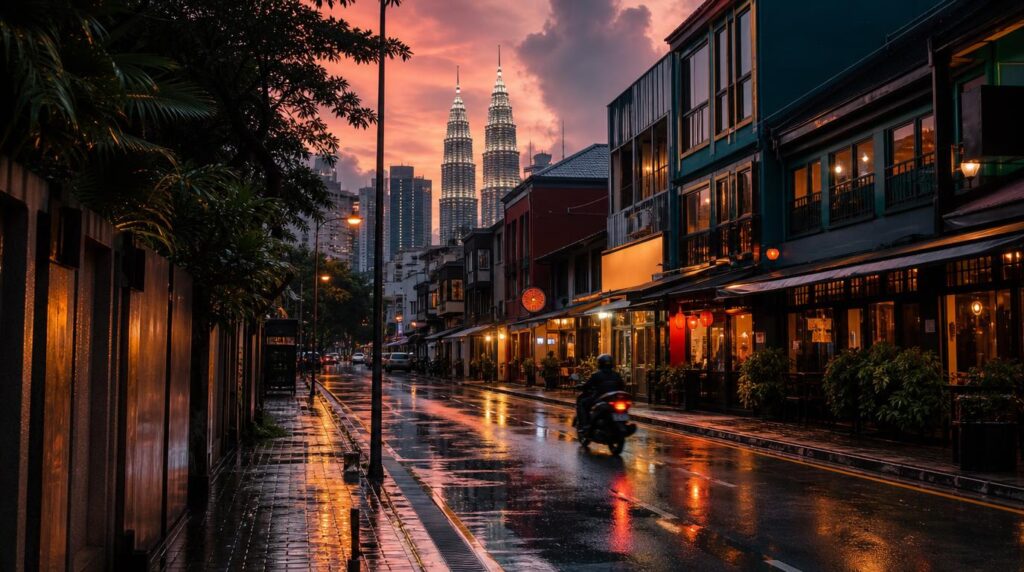
Kuala Lumpur sits near the equator, so temperature barely shifts across the year, averaging 27-28°C (81-82°F) in every season. Rain is the variable that matters.
- Best window: May-July and December-February, with 14-17 rain days a month versus up to 28 in the wetter stretch.
- Wettest months: March-November sees the heaviest and most frequent rainfall, though showers are typically short, tropical downpours rather than all-day rain.
- Events worth planning around: Chinese New Year and Thaipusam (late January/early February), Independence Day (August 31), and Deepavali (October/November) all bring festival energy, and slightly higher hotel rates around the January-February window.
Who it’s for and who should skip it
KL suits remote workers who want reliable infrastructure, low costs, and a legal path to stay longer without constant visa runs. It’s a strong fit for anyone on European work hours, and workable for US-based async roles.
- Good fit: budget-conscious nomads who prioritize fast, dependable wifi; anyone building a case for the DE Rantau Pass; people who want a home base with easy regional flight access across Southeast Asia.
- Skip it if: you need daily live overlap with US business hours, or you came to Southeast Asia specifically for a tight-knit, walkable nomad scene like Canggu or Chiang Mai offer, KL’s community exists but is more dispersed.
Related: Canggu vs Ubud vs Seminyak: best Bali base for nomads
Ready to base yourself in KL?
Kuala Lumpur delivers what actually matters for remote work: fast, consistent internet, rent that stretches further than most regional capitals, and a visa path built for exactly this kind of stay. Whether you’re testing it out on a 90-day tourist entry or applying for the DE Rantau Pass, search flights to Kuala Lumpur on FlyBibe and start planning the move.