
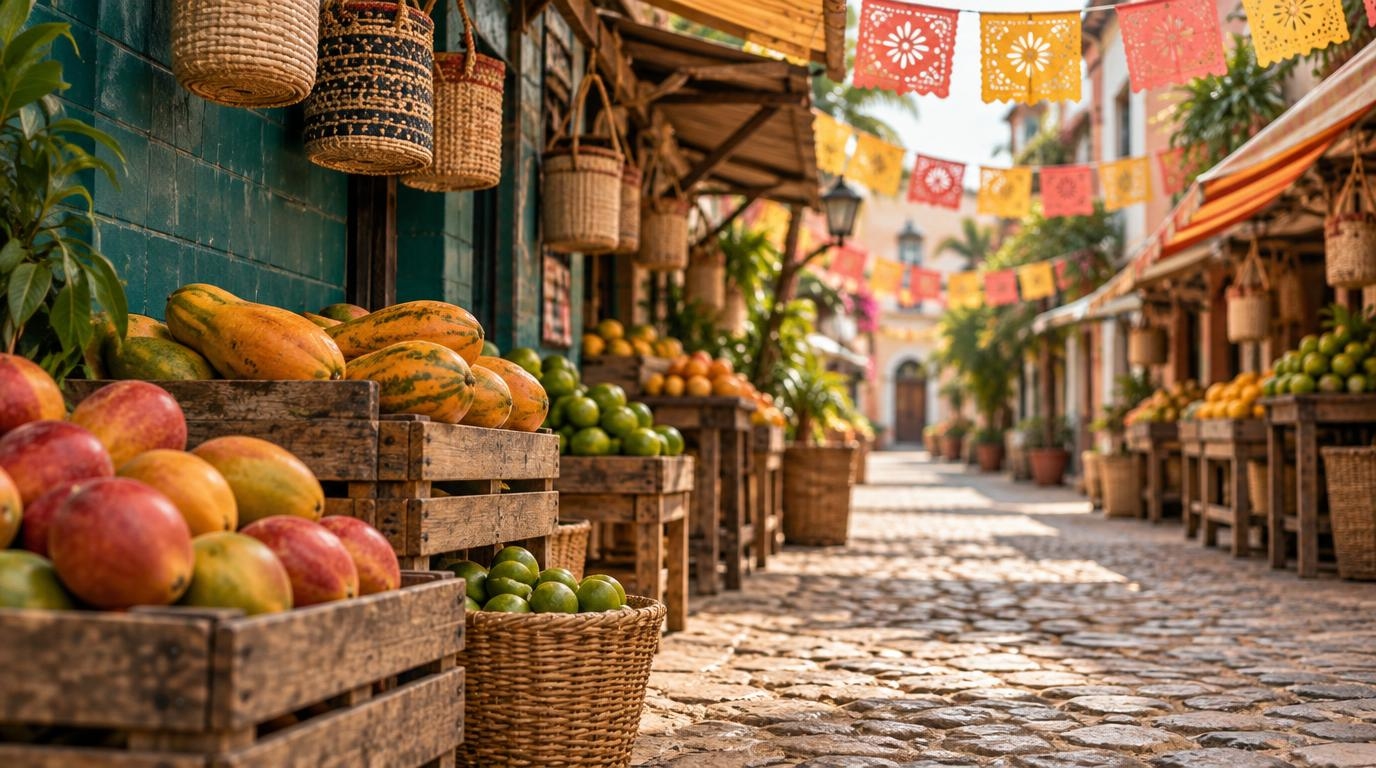
Mexico and Colombia are two popular Latin American bases for remote workers. Both sit close to US time zones and have large nomad communities. Visa rules, monthly costs, and safety differ in ways that matter for a long stay. The sections below compare the two countries side by side, using figures checked in October 2026.
Where nomads usually base themselves
- Mexico. Many remote workers start in Mexico City, in areas such as Roma Norte and Condesa. The Mexico City neighborhoods guide covers the options in more detail. Beach-focused workers can choose Playa del Carmen on the Caribbean coast. People who prefer a smaller city can look at Oaxaca City.
- Colombia. Many newcomers begin in Medellín, where El Poblado and Laureles are well-known districts. The Medellín district comparison explains the differences. Bogotá is the capital and a very large city, and the Bogotá safety and neighborhood guide explains where visitors tend to stay. Cartagena offers a warm Caribbean setting, and the Cartagena cost and safety guide covers the details.
Visas and entry
- Mexico. Mexico has no dedicated nomad visa. Most visitors enter on a tourist permit for up to 180 days, but the border officer sets the number of days. Some travelers received only 10 to 30 days in 2026. Sources disagree on whether remote work for foreign clients breaks the terms of that permit. Longer stays use the Mexico temporary resident visa, which a consulate issues before arrival. Consulates now test income in UMA units, with a usual bar of 680 UMA in monthly income or 11,460 UMA in savings. At the 2026 UMA value of MXN 117.31, those figures are MXN 79,771 a month or MXN 1,344,373 in savings. At about 18.6 pesos per dollar, that is roughly USD 4,290 a month or USD 72,300. Reports quote USD 4,000 to USD 4,700 a month, depending on the exchange rate and the consulate.
- Colombia. The Visa V for digital nomads lasts up to two years and requires work for foreign clients or employers. Applicants must show monthly income of at least three times the minimum wage for the prior three months. The 2026 minimum wage is COP 1,750,905, so the bar is COP 5,252,715. At about 3,160 pesos per dollar, that is roughly USD 1,660. Many guides still list USD 1,400, which used an older exchange rate. The visa also requires health insurance, and reported government fees run between roughly USD 175 and USD 235 depending on the source. Visitors without the visa can stay 90 days and extend once by 90 days, for up to 180 days per calendar year.
Colombia sets the lower income bar by a wide margin. Mexico’s monthly threshold is about 2.6 times higher at current rates, and Mexico offers no nomad-specific route. Readers can compare more countries in the guide to visa income requirements by country. The Colombia digital nomad visa guide lists the full document set.
Cost of living
- Mexico. Mexico City costs more than Medellín on the comparisons below. One 2026 estimate puts a comfortable month at about USD 1,690. A cost comparison site lists the average one-bedroom at USD 735 across the city and USD 980 in the center. The peso also reached its strongest level in nearly a year in late October 2026, near 18.6 per dollar. A stronger peso raises the dollar cost of a month.
- Colombia. Medellín costs less than Mexico City on the same comparison. The average one-bedroom is USD 399, and USD 532 in the center. El Poblado is one of the pricier districts, with furnished one-bedrooms from USD 600 to USD 1,200. Envigado lists one-bedrooms at COP 1.7 million to COP 2.5 million, or roughly USD 540 to USD 790. A February 2026 report based on Numbeo puts a single person’s costs at COP 2,328,009 a month before rent, near USD 740.
Rent drives most of the difference, so a modest budget usually stretches further in Medellín. Both currencies move with the market, and the guide on managing currency exchange risk explains how nomads limit the effect. Sources use different methods, so the totals work best as rough comparisons.
Internet
- Mexico. The browser-based tester SpeedOf.Me lists a national median of 54.4 Mbps download, ranked 30th of 119 countries. Totalplay leads the providers in that data, at 111 Mbps. Older Ookla data for the fourth quarter of 2023 shows Guadalajara at 80 Mbps on fixed lines.
- Colombia. SpeedOf.Me lists a national median of 48.2 Mbps, ranked 37th of 119 countries. Ookla data for the fourth quarter of 2023 shows Cartagena at 147 Mbps on fixed lines. Movistar led the providers in that report, at 210 Mbps.
National medians include slow rural lines, so they say little about a fiber apartment in a large city. Some of these figures are three years old, and the testers use different methods. Both countries offer speeds that suit video calls in the main nomad areas. The guide to checking wifi speed before booking shows how to confirm a connection before paying for a stay.
Time zone and overlap
- Mexico. Mexico City stays on UTC-6 all year because Mexico ended daylight saving time in October 2022. Quintana Roo, the home of Playa del Carmen, uses UTC-5. Mexico City runs 1 hour behind US Eastern in winter and 2 hours behind in summer. Against US Pacific, it runs 2 hours ahead in winter and 1 hour ahead in summer.
- Colombia. Colombia uses UTC-5 all year with no daylight saving time. The country matches US Eastern in winter and runs 1 hour behind in summer. Against US Pacific, it runs 3 hours ahead in winter and 2 hours ahead in summer.
Workers with European clients face a longer day. Colombia sits 5 to 6 hours behind the UK and 6 to 7 hours behind Central Europe. Mexico City sits 6 to 7 hours behind the UK and 7 to 8 hours behind Central Europe. The shifts depend on when each region changes its clocks. The guide to Latin American cities with US overlap goes deeper on schedules. A separate piece covers managing client meetings across time zones.

Coworking and community
- Mexico. Mexico City has many coworking spaces in Roma Norte and Condesa. One guide counts 16 WeWork sites across the city. Local options include Público Condesa and Openhub Condesa. Another guide lists typical monthly prices from USD 150 to USD 350.
- Colombia. Medellín has well-known nomad spaces such as Selina and Siembra in El Poblado. One guide describes Siembra as community focused. Monthly memberships run about USD 100 to USD 250. Laureles spaces are reported to cost 30 to 40 percent less than El Poblado spaces with similar wifi.
Workers who move often may prefer flexible plans. The guide to coworking space memberships for frequent travelers compares the options.
Safety
- Mexico. The US State Department rates Mexico at Level 2, Exercise Increased Caution, in an advisory reissued on May 29, 2026. Secondary reports list six states at Level 4, Do Not Travel, namely Colima, Guerrero, Michoacán, Sinaloa, Tamaulipas, and Zacatecas. The same reports place Mexico City, Quintana Roo, and Oaxaca at Level 2 and Jalisco at Level 3. Mexico’s statistics agency INEGI reported a national homicide rate of 21.4 per 100,000 people for 2025. Mexico City recorded about 9, and analysts caution that official figures may not fully reflect the violence.
- Colombia. The US State Department rates Colombia at Level 3, Reconsider Travel. Level 4 zones cover Arauca, Cauca, Valle del Cauca outside Cali, Norte de Santander, and a strip along the Venezuela border. Medellín, Bogotá, and Cartagena sit outside those zones. Colombia’s homicide rate was about 26 per 100,000 in 2025. The police call that the lowest in seven years. InSight Crime reports a 1.9 percent rise and 14,780 homicides, the most in a decade. Bogotá also recorded 1,554 thefts per 100,000 people in 2025, among the highest of the main cities.
A magnitude 7.4 earthquake struck western Colombia in August 2026, and one report counts at least 289 deaths. Afar reports that Bogotá, Cartagena, and Medellín were largely undamaged. An adviser quoted there suggests deferring nonessential trips to the coffee region.
National figures hide large differences between cities, and other governments may rate the same areas differently. The guide to the safest cities for solo remote workers offers a wider view. Health cover also matters in both countries, and the guide to travel insurance for remote workers explains what policies include.

Best time to go
- Mexico. Mexico City has a dry season from November to April and a rainy season from May to October. March to May is often the warmest stretch. Dry months bring clear skies, while the rainy season brings fresher air and green parks.
- Colombia. Medellín averages about 22.5 degrees Celsius all year, and monthly averages vary very little. The two rainy seasons run from April to May and from September to November. Showers are typically short, and about 4 to 5 hours of sun per day remain during the rainy seasons.
Medellín suits workers who want steady weather all year. Mexico City suits those who can plan a long stay around the dry season.
Which country fits which traveler
- Budget and visa focused workers. Colombia usually fits better. Medellín rents are lower, and the nomad visa has the lower income bar.
- Workers who want a large city with deep options. Mexico City offers a larger set of coworking spaces and neighborhoods. Monthly costs and the residency bar are higher, so incomes near USD 4,300 or more make the visa path easier.
- Workers tied to a specific US time zone. Colombia stays within 1 hour of US Eastern all year. Mexico City sits 1 to 2 hours behind Eastern and 1 to 2 hours ahead of Pacific.
Neither country wins on all points. The choice depends on income, schedule, and comfort with each city. The guide to balancing cost, safety, and internet helps readers weigh those trade-offs.
The information here is general and is not legal or immigration advice. Entry rules, income thresholds, and exchange rates change, so travelers should confirm details with the official consulate before applying.
Ready to test one of these bases? FlyBibe offers flights and tours made for the laptop lifestyle. Remote workers can browse flights and tours for your move and plan the trip into Mexico City, Medellín, or another base. Weekend tours fit around the work week, so a new city feels familiar sooner. Planning flights and tours together keeps the move simple and leaves more time for work.