
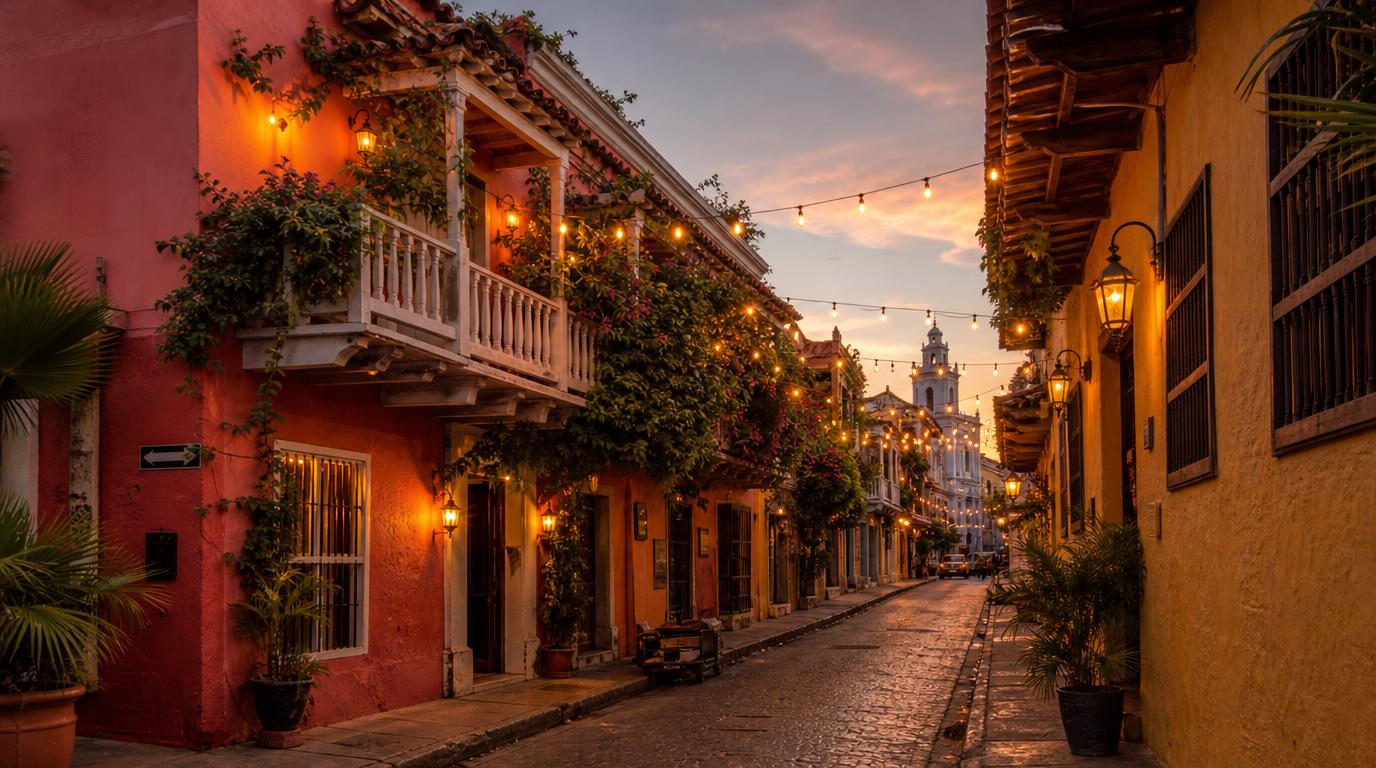
This guide covers what it actually costs to live and work from Cartagena, Colombia, and how safe the city really is for a remote worker settling in for weeks or months. It pulls together current rent prices, wifi speeds, visa rules, and neighborhood-by-neighborhood safety notes, not a general travel impression. By the end you’ll know whether Cartagena fits your budget, your work schedule, and your risk tolerance.
Internet and wifi reliability
Colombia’s national broadband numbers look strong on paper, but Cartagena’s on-the-ground experience runs slower than the country average, and that gap matters for anyone planning to work here full time.
- National fixed broadband average: around 207 Mbps across Colombia.
- National mobile average: around 42 Mbps.
- Cartagena-specific reported average: closer to 10 Mbps, based on user speed tests logged by nomad-tracking sites, rated slow for remote work.
- Most reliable option: a paid coworking desk rather than a home rental or café connection.
The gap between the national figures and what nomads actually report using in Cartagena is wide enough to flag rather than smooth over. Treat the national number as what’s technically available in the city’s newer buildings and hotels, and the lower figure as what a typical apartment or café connection delivers day to day. If a stable video call matters for your job, budget for a coworking membership or an apart-hotel with dedicated fiber rather than counting on a rental’s included wifi.
Cost of living
Cartagena costs more than most Colombian cities for rent, since tourism keeps demand high in and around the historic center, but everyday expenses outside rent stay reasonable.
- 1-bedroom apartment, historic center: around $1,040/month (3,330,000 COP).
- 1-bedroom apartment, outside the center: around $575/month on average, ranging roughly $450-790.
- Inexpensive meal out: about $5 (16,000 COP).
- Mid-range dinner for two: around $133 (425,000 COP).
- Local transport: a one-way bus fare costs about $1.20, a monthly pass around $58.
- Coworking membership: hot desks run roughly $300-315/month.
Put it together and a single remote worker renting outside the historic center, cooking most meals, and paying for a coworking desk can land a realistic monthly budget in the $1,000-1,400 range. Some nomad-focused cost trackers put the figure closer to $2,800/month, but that number tends to assume shorter, hotel-style stays and heavier restaurant spending rather than a longer rental, so treat it as the upper end rather than the baseline.

Visa and entry
Most nomads start on Colombia’s tourist entry, then decide whether the digital nomad visa is worth the paperwork for a longer stay.
- Tourist entry: US, UK, and EU passport holders get 90 days visa-free on arrival.
- Annual cap: total tourist days can’t exceed 180 per calendar year, and leaving and re-entering doesn’t reset the clock.
- Extension: a Permiso Temporal de Permanencia costs around 150,000 COP (roughly $47) as of 2026, though EU/Schengen and Ecuadorian nationals are exempt from the fee.
- Digital nomad visa (Visa V, Nomadas Digitales): requires proof of foreign-sourced remote income of at least three times Colombia’s minimum wage, roughly $1,100/month, plus private health insurance covering the full stay.
- Digital nomad visa cost and validity: government fees run about $225-235 total, and the visa grants up to two years of legal residence, renewable.
For a stay under three months, the tourist entry is simpler and free. Anyone planning to stay longer, or to come and go more than once within a year, gets more value from the digital nomad visa, since it replaces repeated border runs and the 180-day ceiling with up to two years of legal stay. Visa rules shift periodically, so confirm current requirements directly with Colombia’s Ministry of Foreign Affairs before applying. This information was checked as of August 2026.
Timezone fit
Colombia runs on UTC-5 year-round with no daylight saving changes, which simplifies scheduling once you know where the overlap actually falls.
- US Eastern: matches Colombia in US winter, one hour ahead of Colombia during US daylight saving months.
- US Central: matches Colombia during US daylight saving months, one hour ahead the rest of the year.
- US Pacific: two to three hours behind Colombia, depending on daylight saving.
- UK: five to six hours ahead of Colombia.
- Central Europe: six to seven hours ahead of Colombia.
Cartagena works cleanly for anyone syncing with US East Coast or Central time clients, with a full workday overlap and no early mornings or late nights required. Europe is a harder fit, since a Colombian morning lines up with a European afternoon, so meetings need to happen before lunch local time or move to async.
Coworking and community
The nomad scene in Cartagena is smaller and more transient than Medellin or Bogota, but a couple of real options exist.
- Selina Cartagena Cowork, in Getsemaní: wifi, air conditioning, standing desks, an outdoor terrace, and a pool, inside the same building as Selina’s hostel.
- Coworkation: a second dedicated coworking space in the city, with hot desks running around $300-315/month.
- Average nomad stay: nomad-tracking sites put it at around six days, well short of the weeks-long stays typical in Medellin.
If community and long-term friendships are the priority, Cartagena works better as a stopover than a base, most visitors passing through stay under two weeks. It’s a stronger fit as a short, productive stretch bookended by longer stays somewhere with a deeper resident nomad scene.
Safety
Cartagena’s tourist core is well-policed and generally safe during the day, but the usual precautions for a Latin American tourist city apply, and a few scams specifically target visitors.
- Safe by day: El Centro (the walled city) and San Diego stay safe with a visible police presence; Getsemaní is fine before dark when its streets stay busy.
- After dark: avoid Bocagrande’s beach at night due to poor lighting, and use taxis or rideshare rather than walking between neighborhoods late.
- Common scams: meterless taxis overcharging foreigners (agree on a price before getting in), “free” beach samples from vendors that come with a surprise bill, and street-sold island tours at inflated prices.
- Nightlife risk: scopolamine, a drug slipped into drinks that can leave victims compliant and unable to recall events, is a documented concern in bars and clubs. Never accept a drink from a stranger or leave your own unattended.
- Petty theft: pickpocketing in crowded tourist areas is the most common crime; keep valuables out of back pockets and off tables.
None of this makes Cartagena unusually dangerous by regional standards, but the safety picture depends heavily on which neighborhood and what time of day, rather than one citywide rating. Solo travelers, including solo women, generally report feeling safe with standard precautions, though local safety trackers flag street harassment as more common here than in some other Colombian cities.
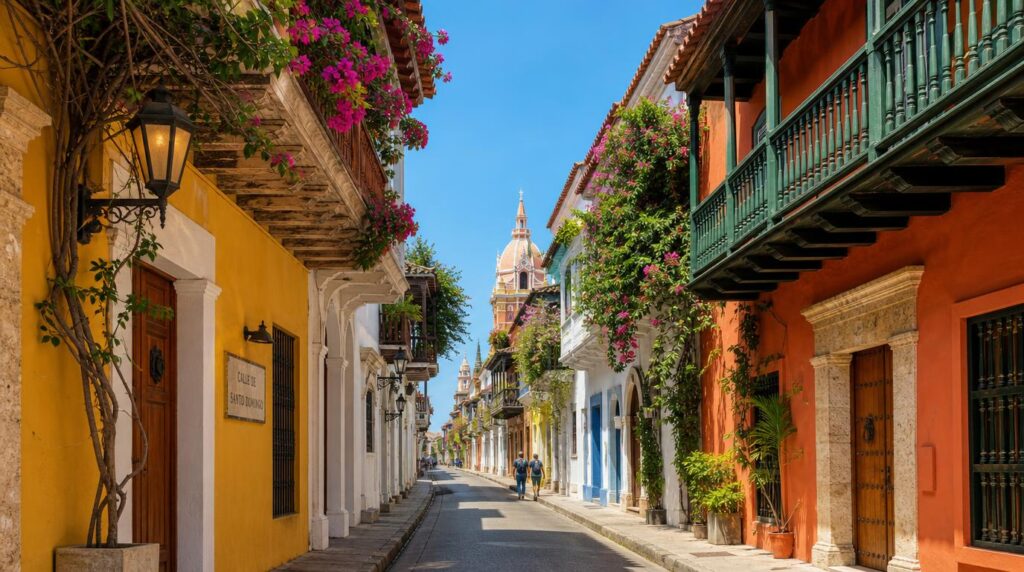
Best time to visit
Cartagena’s temperature barely moves across the year, so the real choice is between rain, crowds, and price rather than hot versus cold.
- Dry season: December through April, calmer seas and minimal rain.
- Rainy season: May through November, with October the wettest month at around 230mm of rain over 16 days.
- Temperature: a near-constant 24-32°C (75-90°F) year-round.
- Sweet spot: mid-February through mid-March, the driest stretch of the year with moderate crowds since Colombian schools are back in session.
- Events to plan around: the Hay Festival Cartagena (late January), the Cartagena International Film Festival (early-to-mid February), Semana Santa (March or April), and the Christmas-to-New Year stretch, when hotel rates commonly triple.
For a work-focused stay, dry season without the holiday crowds, roughly January through mid-March minus festival weeks, offers the best mix of good weather, lower prices, and a city that isn’t overrun.
Who it’s for, and who should skip it
Cartagena suits someone on US Eastern or Central hours who wants a short, high-energy coastal stretch with real historic character, rather than a long-term base.
- Good fit: stays of two to six weeks, US-hours workers, anyone prioritizing atmosphere and beach access over deep community.
- Skip it if: you need fast home wifi without paying for a coworking desk, you’re on European client hours, or you’re looking for a long-term nomad community to settle into.
Book the trip
Cartagena delivers colonial architecture, beach access, and workable US-hours scheduling for a fraction of what a comparable US or European coastal city costs, as long as you budget for a coworking desk and stay alert the same way you would in any Latin American tourist hub. It reads better as a short stay than a long-term base. If the dry-season timeline and cost breakdown above fit your schedule, search flights to Cartagena on FlyBibe and start planning your dates.