
Latin America solves a scheduling problem that Southeast Asia and Europe can’t. Every city on this list sits at UTC-5 or UTC-6 year-round, with no daylight saving shift to track twice a year. That means a fixed, predictable overlap with US Eastern, Central, or Pacific business hours, whatever the season. Here are seven bases that back that timezone advantage up with real infrastructure, cost, and visa options.
What this list is filtering for
Every city here gets checked against the same five things: internet speed reliable enough for video calls, a realistic monthly budget, a workable visa path, real timezone overlap with US clients, and an actual coworking or nomad scene, not just cheap rent. Cities are ranked by how well they balance all five, not just by cost.
1. Mexico City, Mexico
Mexico City anchors this list because it pairs the deepest remote work infrastructure in the region with a visa path that’s been running for over a decade. The country dropped daylight saving nationwide in 2022, so the clock here never moves.
- Internet: Mexico’s national median fixed broadband speed is about 92 Mbps (Ookla data), with fiber options well above that at coworking spots in Roma Norte and Condesa.
- Cost: Around $1,800-1,900/month all in, based on a $950-1,050 one-bedroom in the city center plus roughly $835/month for food, transport, and utilities (Numbeo).
- Visa: Temporary Resident Visa, applied for at a Mexican consulate before arrival, requires $2,500-4,000/month income or $40,000-70,000 in savings, and is valid one year, renewable up to four.
- Timezone: UTC-6 year-round, matching US Central time exactly, with 6-7 hours of overlap with Eastern and Pacific.
- Coworking: WeWork (Reforma, Polanco, Roma Norte), Impact Hub CDMX, and PÚBLICO Coworking.
Dry season runs November through April, which is also when air quality tends to be best. Stick to Roma, Condesa, and Polanco after dark and this is one of the easiest cities in the hemisphere to actually get work done. Best for: someone who wants big-city infrastructure and an established visa process, not a beach improvisation.

2. Playa del Carmen, Mexico
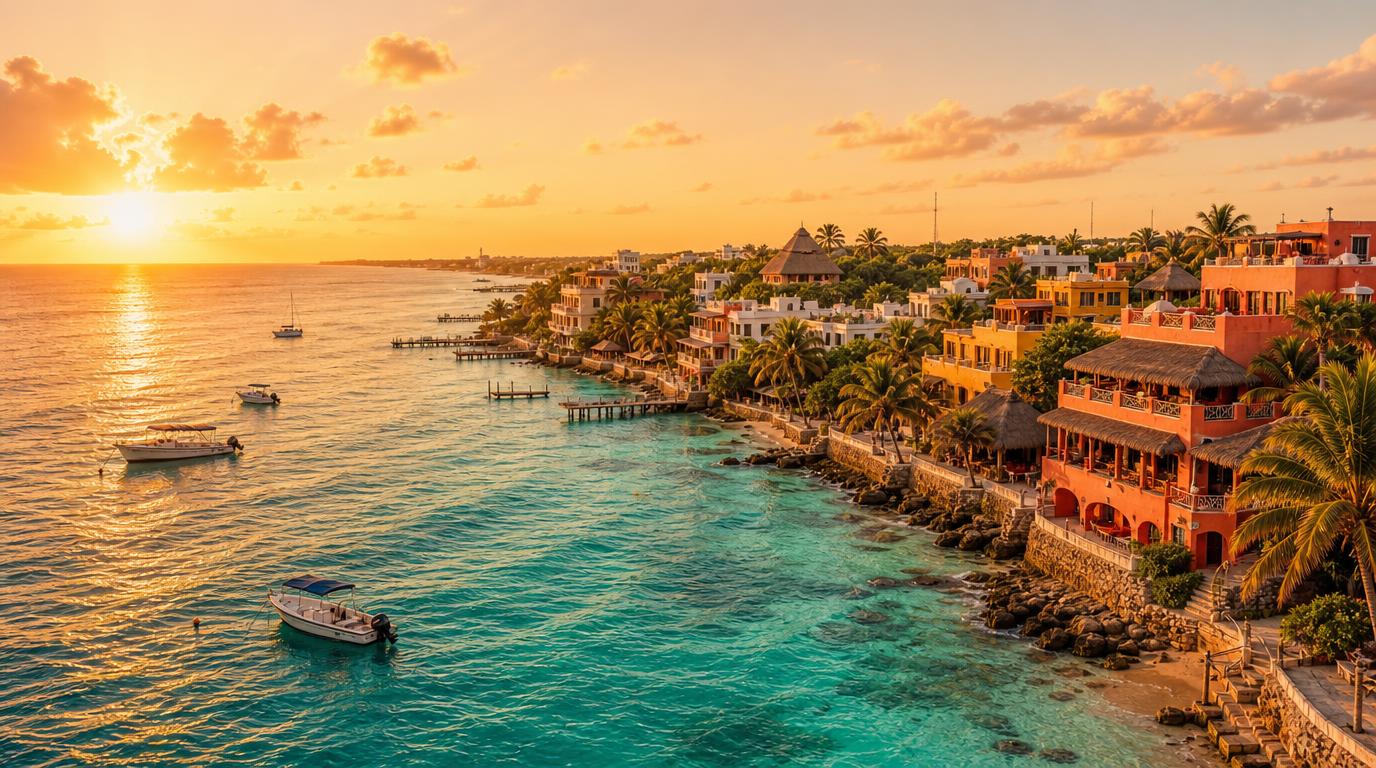
If Mexico City is the work base, Playa del Carmen is the version built around downtime between calls. Quintana Roo keeps a fixed UTC-5 offset, which lines up exactly with US Eastern time in winter and falls one hour behind it once the US shifts to daylight saving in spring.
- Internet: Averages around 25 Mbps in shared listings, on the slower side, so a coworking membership beats relying on Airbnb wifi.
- Cost: Roughly $3,300/month for a full nomad budget, noticeably higher than Mexico City.
- Visa: Same Temporary Resident Visa as Mexico City applies nationwide.
- Timezone: UTC-5 fixed, exact US Eastern match for half the year.
- Coworking: NEST, COFFICE, and Bunker Coworking.
Safety here is uneven. Incidents rarely target tourists directly, but cartel activity and the crowded 5th Avenue strip both come up often enough in local reporting to warrant caution, especially at night. October through March brings the best beach weather and least seaweed. Best for: remote workers who want beach life without giving up EST-aligned mornings.

3. Medellín, Colombia
Medellín has spent the last decade building the kind of nomad infrastructure that used to only exist in Southeast Asia, and Colombia’s fixed UTC-5 offset means it never drifts out of sync with the US.
- Internet: City average sits around 13 Mbps, but fiber connections above 200 Mbps are common in El Poblado and Laureles coworking spaces.
- Cost: About $2,396/month for a full nomad budget, with a coworking hot desk running around $127/month.
- Visa: Colombia’s digital nomad visa needs $900/month in verifiable income, costs roughly $220-280 total in fees, and is valid up to two years.
- Timezone: UTC-5 fixed, matching US Eastern in winter, one hour behind it in US daylight saving months.
- Coworking: Espacio, Epicentro, and 71Haus & Blunch.
Laureles runs quieter and safer than the more tourist-heavy Poblado, where petty theft and after-dark robbery come up in recent visitor reports. Rain falls year-round, but the driest stretches land in December through February and June through August. Best for: a two-year visa runway and the lowest income bar on this list.
4. Bogotá, Colombia
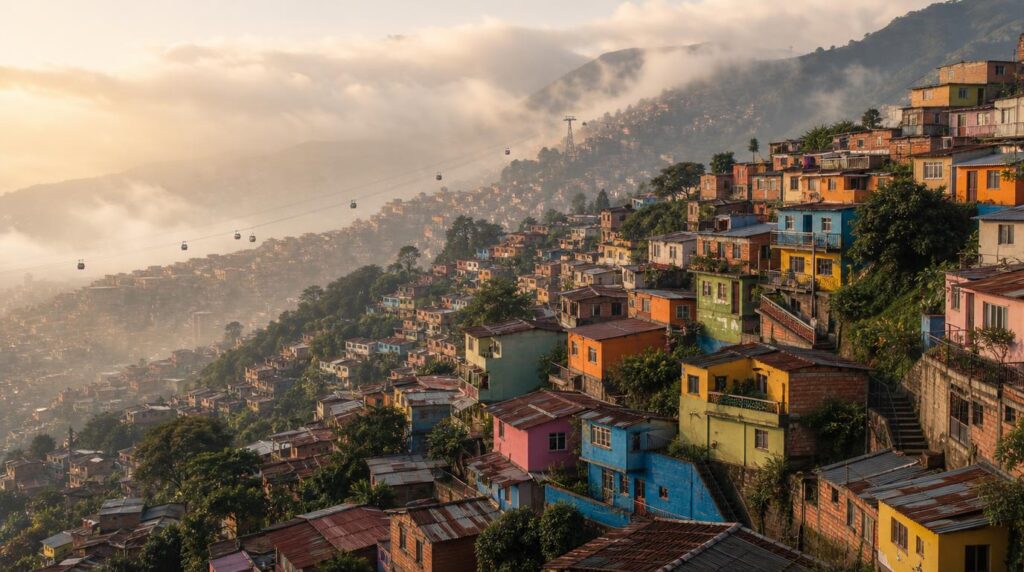
Bogotá trades Medellín’s mild climate for a bigger, more corporate coworking scene and consistently cool weather that never really changes month to month.
- Internet: City-wide average lands near 10 Mbps, though residents in northern neighborhoods report 350+ Mbps broadband where fiber has been installed.
- Cost: About $2,097/month for a nomad budget, with studio rent in the center starting around $724/month.
- Visa: Same national digital nomad visa as Medellín, $900/month income, up to two years.
- Timezone: UTC-5 fixed, identical to Medellín and Panama City.
- Coworking: Atom House, HubBOG, and Plura Coliving (around $700/month with housing included).
Chico, Rosales, and Usaquén in the north are the safe, amenity-heavy neighborhoods most nomads settle into. Southern Bogotá is widely flagged as unsafe, and Chapinero needs extra caution after dark. June through August is the driest window, with temperatures holding steady around 16-17°C year-round. Best for: anyone who wants a real city, not a beach town, with a bigger corporate and startup coworking network.
5. Panama City, Panama
Panama runs on the US dollar, which removes currency conversion from the list of things to think about, and it carries a safety reputation that beats most of its regional competitors.
- Internet: Averages around 22 Mbps in shared listings, similar to Playa del Carmen.
- Cost: Around $3,330/month for a nomad budget, the priciest on this list, with a coworking hot desk near $300/month.
- Visa: Panama’s digital nomad visa requires $36,000 in annual foreign income, costs $400-800 total with fees and paperwork, and runs nine months, renewable once for a maximum 18 months.
- Timezone: UTC-5 fixed, same overlap as Bogotá and Medellín.
- Coworking: CascoStation and Coworking PTY.
The income bar here is the highest of any visa on this list, which filters the city toward more established freelancers and remote employees rather than early-career nomads. January through March is dry season and the easiest stretch weather-wise. Best for: dollarized banking and a stronger overall safety rating, if the income requirement fits.

6. Lima, Peru
Lima is the cheapest base with the widest overlap window, 7-8 hours against US Eastern time, but the visa situation here needs a caveat before booking a one-way flight.
- Internet: City-level tests average around 11 Mbps, though Peru’s national median fixed broadband speed is far higher, over 250 Mbps by some country-wide measures. That gap likely reflects older residential connections versus newer fiber builds, so a coworking desk is worth the cost.
- Cost: About $1,883/month for a full nomad budget, with one-bedroom rent in the center around $753/month.
- Visa: Peru’s digital nomad visa exists on paper but still isn’t processable as of 2026. Most remote workers use 90-day tourist stays (capped at 183 days per year) or the renewable Independent Worker visa instead.
- Timezone: UTC-5 fixed, no daylight saving.
- Coworking: Comunal and Starscamp.
Staying past 183 days in a rolling year can trigger Peruvian tax residency, worth flagging before committing to a long stretch. Miraflores and Barranco are the neighborhoods most nomads default to for safety and walkability. December through April brings sun; June through September brings Lima’s foggy, overcast “garúa” season. Best for: the lowest cost of living here, for someone comfortable working around the visa gap.
7. San José, Costa Rica
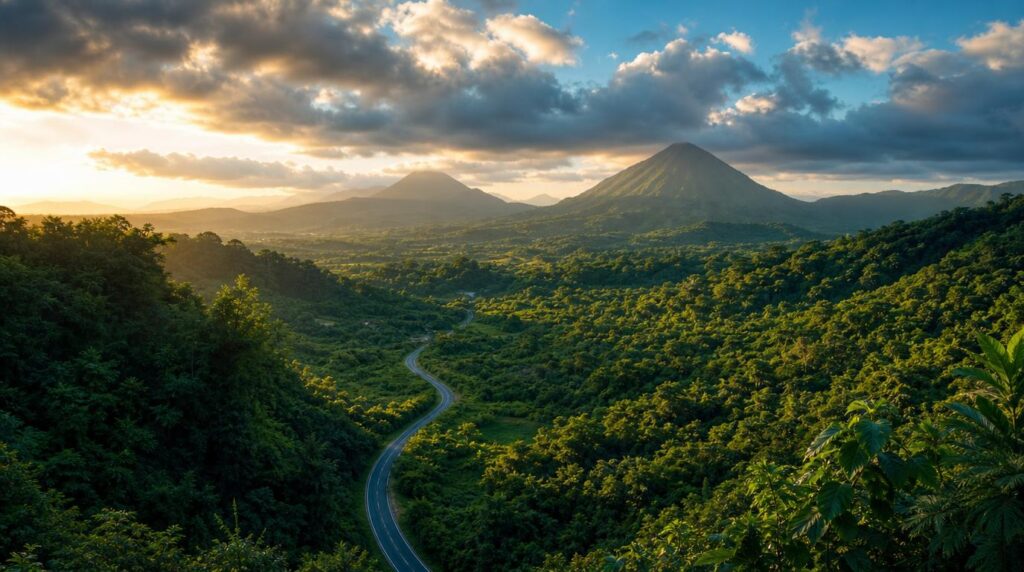
San José closes the list with a formal, purpose-built digital nomad visa and Costa Rica’s usual pitch: stability, nature access, and a government that has actually finished the paperwork for remote workers.
- Internet: Costa Rica’s national median fixed broadband speed runs around 156 Mbps, though local reviews rate San José’s everyday wifi as one of the weaker points of living there.
- Cost: Estimated around $1,700/month, the second-cheapest option on this list after Lima.
- Visa: Costa Rica’s digital nomad visa requires $3,000/month income ($4,000 for a family), runs up to one year with a possible one-year extension, and bars work for local employers.
- Timezone: UTC-6 fixed, matching Mexico City and US Central time.
- Coworking: Selina CoWork San José and Regus San José.
The application fee hadn’t been finalized as of this writing, worth double-checking directly on Costa Rica’s immigration portal before applying. Safety ratings here run higher than most of this list. December through April is dry season across the Central Valley. Best for: a fully built, no-workaround visa process backed by a reputation for stability.
Find your next base
All seven of these cities solve the same core problem: getting real, overlapping hours with US clients or teammates without fighting a twelve-hour time difference. Mexico City and Costa Rica line up with Central time, while Colombia, Panama, and Peru match Eastern, and none of them touch daylight saving. Pick the one that fits your budget and visa timeline, and search flights on FlyBibe to get there.