
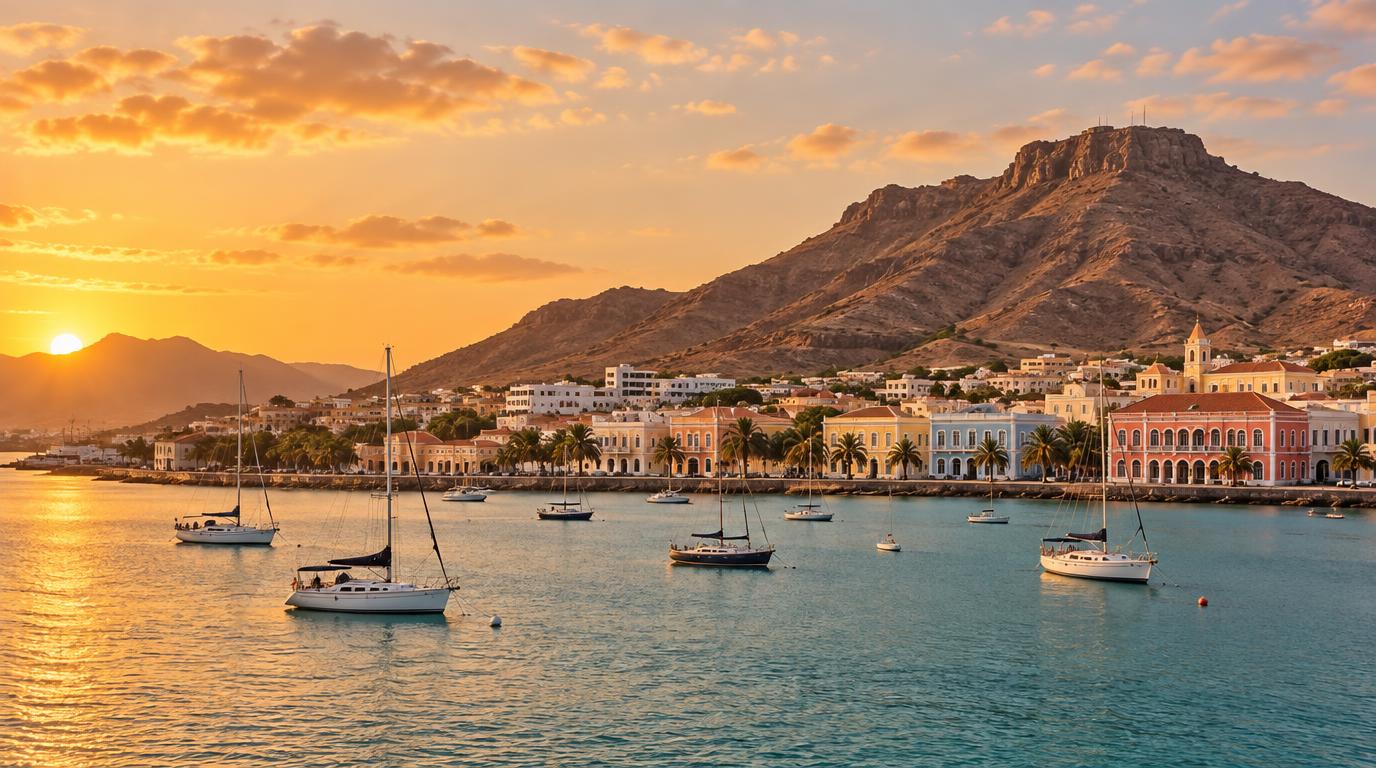
Cape Verde is a group of Atlantic islands with a government remote work visa, no local tax on foreign income, and warm weather all year. This guide covers wifi, monthly costs, visa and entry rules, safety, and the three islands most remote workers consider. Visa details were last checked in October 2026.
Which Island to Base Yourself On
Three islands hold most of the remote work activity, and each one has a different pace.
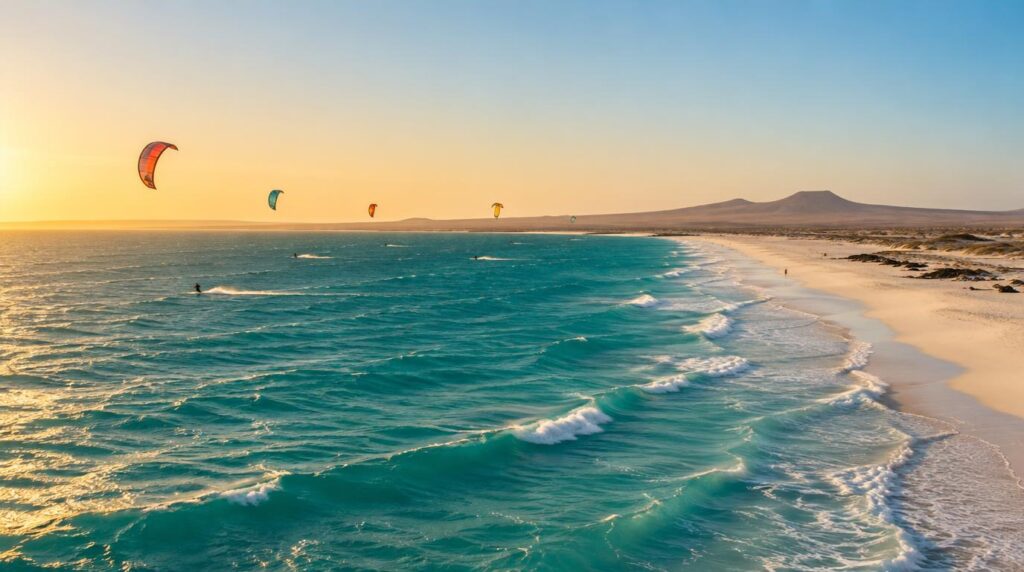
- Sal (Santa Maria): A beach town with kitesurfing, the most tourist services, and the most coworking options. Costs are higher here than on the other two islands.
- São Vicente (Mindelo): A port city of about 70,000 people with a Creole music scene and a large Carnival. Monthly costs are lower than on Sal.
- Santiago (Praia): The capital, with a historic Plateau district and the largest hospitals. International flights are limited and mostly connect through Lisbon or Dakar, according to Nomada.
Sal has the easiest setup, while Mindelo costs less and has a stronger Creole character, according to Nomada.
Internet Speed and Power
Speeds are acceptable in the main towns and weaker on smaller islands and in villages.
- National fixed broadband: About 39.6 Mbps download and 15.2 Mbps upload, based on Ookla’s May 2026 Speedtest Global Index data reported by Worlddata.
- Mindelo broadband: About 14 Mbps download and 8 Mbps upload over the past 12 months, according to Speedgeo. Freaking Nomads lists 80 Mbps down and 50 Mbps up for the same city, so the sources disagree.
- Mobile data: About 25 Mbps average download in the second quarter of 2024, according to Speedgeo.
- Fiber: Available in larger towns such as Santa Maria, Sal Rei, Mindelo, and Praia.
- Power: Freaking Nomads rates the grid as unreliable. Outlets are Type C and F at 230V, according to Nomada.
Fiber should handle video calls, but the wide range of published speeds makes a test worthwhile before signing a long rental. Our guide on how to check wifi speed before booking a stay explains how. An eSIM or local SIM works as a backup connection. Visitors with different plugs will also need a power adapter.
Cost of Living
Published monthly budgets run from about $950 to about $2,100, depending on the source and the island.
- Santa Maria (Sal): About $1,455 for a mid-range month, according to Nomada. Rent is $700, groceries $280, dining out $220, utilities $100, coworking $120, and transport $35.
- Praia: About $1,180 on Nomada. Nomads.com lists $2,068 for a nomad lifestyle.
- Mindelo: About $950 on Nomada and $1,307 on Freaking Nomads, which uses Numbeo data. Another comparison site lists $1,845.
- Rent: A one-bedroom apartment in Santa Maria costs about €480 to €750 per month, according to Trip Verdict.
- Currency: The Cape Verdean escudo is pegged to the euro at 110 escudos per euro. Many places on Sal also accept euros, and Nomada describes the islands as cash-first.
Lower figures usually assume local food and simple housing. Higher figures assume imported groceries, restaurant meals, and a coworking desk. Budgeting close to $1,500 a month on Sal matches the detailed Nomada breakdown. Mindelo and Praia cost less on the Nomada figures, though other sources rank them higher. Nomada also lists tap water as bottled only, which adds a small monthly cost.
Visa and Entry: Remote Working Cabo Verde
Cape Verde has a formal remote work visa for stays beyond the free tourist period. The program launched in December 2020 and covers employees, freelancers, and self-employed people who work for clients or employers outside Cape Verde.
Rules and fees change, so confirm each figure on the official Cabo Verde government portal before applying.
- Length of stay: Third-party guides report six months, renewable to 12 months in total.
- Income proof: An average bank balance of €1,500 over the last six months for one person, or €2,700 for a family. WhereToEmigrate quotes these figures from the official government page. Some sites list higher amounts, such as $1,615 a month or $27,000 a year, which the official wording does not support.
- Other documents: Six months of bank statements or recent salary receipts, proof of remote work, international health insurance for the full stay, an accommodation booking, and a clean criminal record, according to Expat.com.
- Processing time: Third-party guides report about two weeks for the online application.
- Fees: The official government page does not publish a fee for this route, according to WhereToEmigrate. One third-party guide lists €20, and EASE registration adds an airport security tax of 3,400 escudos, about €31.
- Tax: Approved remote workers pay no local income tax on foreign earnings. Local employment is not allowed.
Stays of 30 days or less do not need the visa, but all air travelers have entry steps to complete.
- Visa-free stays: Citizens of about 67 countries can enter without a visa, according to a published 2026 list. The list gives 30 days to the United States, United Kingdom, Canada, and EU countries. Nigeria and Ghana receive 90 days.
- Visa on arrival: This option ended on January 1, 2026 for citizens of 96 countries. They must now get a visa from an embassy or consulate before travel, according to VisasNews.
- EASE registration: All air travelers register on the EASE portal at least five days before departure and pay the airport security tax of 3,400 escudos.
Nomads who plan to stay past the free period for their passport will usually need the Remote Working visa. Our guide on digital nomad visa vs tourist visa helps decide which route fits. The €1,500 bar is lower than several European programs, and the income requirements by country comparison shows the full range. The visa also asks for international cover, so health insurance plans for digital nomads are worth reviewing early. Home-country tax rules may still apply, so check residency rules where you pay tax.

Timezone Fit
Cape Verde stays on UTC-1 all year, so the offsets below change when other countries move their clocks.
- US Eastern: 3 hours ahead in summer, 4 hours ahead in winter.
- US Pacific: 6 hours ahead in summer, 7 hours ahead in winter.
- UK: 2 hours behind in summer, 1 hour behind in winter.
- Central Europe: 3 hours behind in summer, 2 hours behind in winter.
- Nigeria: 2 hours behind all year.
The islands suit workers who serve Europe, the UK, and the Americas. A 9am to 5pm day in New York ends between 8pm and 9pm in Cape Verde. Asia-Pacific hours are harder, since a 9am call in Singapore falls at midnight.
Coworking and Community
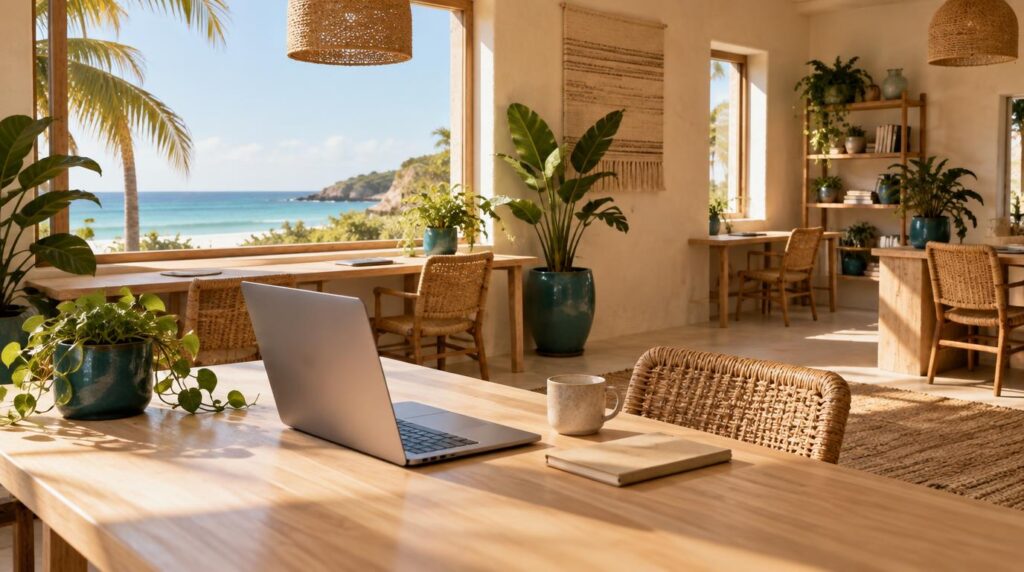
Coworking options are few, and most sit in the three main towns.
- Santa Maria: Go Hub, described by Freaking Nomads as the most loved coworking space on Sal, and Work Sal Coworking Space, which offers hot desks and backup power.
- Mindelo: Nomadico Coworking.
- Praia: Salav Coworking, based at a guesthouse.
- Price: Desks cost about €100 to €150 per month, according to Trip Verdict.
- Program hubs: The Remote Working program reports hubs with a community manager and daily events, according to Small Business UK.
Sources disagree on community size. Freaking Nomads describes Sal as having many like-minded people, while Nomad.watch scores community in Mindelo as limited. The scene is likely smaller than in Lisbon or Chiang Mai. Solo remote workers may find it useful to read how to build community as a solo digital nomad. Coworking listings change often, so confirm a space is open before arriving.
Safety
Official advice combines a low overall risk level with warnings about crime.
- US rating: Level 1 with a crime indicator, and extra caution advised in Praia, according to the US State Department.
- Canada rating: A high degree of caution because of crime, according to Travel.gc.ca.
- Petty crime: Pickpocketing and bag snatching occur frequently in Praia, Mindelo, and Sal, according to Canada.
- Praia stairways: The US advises avoiding the hillside stairways between neighborhoods, even during the day.
- After dark: Isolated armed robberies have been reported outside resort areas on Sal and Boa Vista, according to Buch-dein-Visum.
- Water: Several drownings occur each year, especially in Praia and on Sal.
- Taxis: Registered taxis are tan or cream, and blue and yellow on Sal and Boa Vista.
- Airport rules: Knives with blades of 6 cm or more and pepper spray are banned in carry-on bags.
- Medical care: The largest hospitals are in Praia and Mindelo, and Nomada suggests medical evacuation cover.
Most reported problems involve petty theft. Leaving valuables in the apartment, using registered taxis, and avoiding unlit areas after dark can reduce the main risks.
Best Time to Go
- Dry season: November to June or July, with sunshine and steady trade winds.
- Windiest months: December to March bring the strongest trade winds, which suits kitesurfing on Sal.
- Rainy season: August to October, with short, heavy showers that peak in September.
- Temperature: 21°C to 27°C through the year, according to Nomada.
- Quiet months: October is the quietest month for tourism on Sal, so prices can be lower.
- Carnival: Mindelo Carnival usually falls in February or early March.
December to May offers the best mix of dry weather and wind for time outdoors. October costs less but brings heat, humidity, and light wind.
Who Cape Verde Suits, and Who Should Skip It
Cape Verde fits these remote workers well:
- People who serve European, UK, or American clients
- People who want six months without local income tax and a €1,500 income bar
- Kitesurfers and beach lovers who can work from an apartment or a small coworking space
These readers may prefer another base:
- Workers who need fast, steady fixed broadband everywhere, since Mindelo speeds are reported as low as 14 Mbps
- Workers who want a large built-in community, since Madeira’s nomad village is known for its community model
- Workers on Asia-Pacific hours
- Readers comparing African bases, since Cape Town is often ranked among the leading African nomad hubs, and Windhoek is a rising base in Namibia
Plan Your Cape Verde Stay
Cape Verde suits remote workers who want a warm, tax-free six months on European or American hours, with a budget near $1,500 a month. Santa Maria is the easiest place to start, and Mindelo costs less. Once the plan is set, search flights to Cape Verde on FlyBibe and pick a date in the dry season.