

Cape Town is Africa’s most established digital nomad base, with fast fibre in the right postcodes, a dedicated remote work visa, and scenery that makes the daily commute to a coworking desk feel unfair to everyone back home. It also has real safety trade-offs that shift block by block. This guide covers what fast wifi and workable rent actually cost, how the visa works, and which specific neighborhoods make sense for a stay measured in months.
Internet and wifi
Cape Town’s internet holds up well for remote work, provided you land in a fibre-served neighborhood rather than assuming coverage is uniform.
- Fibre in the city center: Cape Town City Centre averaged 99 Mbps download and 99 Mbps upload on fibre connections in Q1 2026, with latency around 8 ms, the fastest reading of any South African metro area tested.
- National fixed broadband average: 36 Mbps down and 28 Mbps up between January and March 2026, well below what fibre lines can deliver, since many households pay for slower, cheaper packages than their connection supports.
- Fibre coverage: roughly a third of Cape Town households have fibre access based on the most recent metro estimates, so coverage still skips entire blocks.
- Coworking speeds: Workshop17 locations commonly advertise wifi around 200 Mbps, with backup power on top.
If you’re renting month to month, confirm the specific building already has fibre installed rather than trusting a listing’s “fast wifi” claim. Mobile LTE fills gaps well in most nomad neighborhoods, but it isn’t a substitute for a fibre line during video calls.
Cost of living
A single remote worker in Cape Town spends real money on rent in the popular areas, but still comes out well below Western Europe or the US coastal cities.
- All-in monthly budget: around $2,667 for a single person as of August 2026, covering rent, food, transport, and daily spending.
- One-bedroom rent, central areas: R10,000-R18,000 a month (roughly $625-$1,125 at current exchange rates) across Gardens, Tamboerskloof, and Sea Point.
- Groceries: about R800-R1,200 a week for one or two people.
- Eating out: a cappuccino runs close to R37, and a casual restaurant meal typically costs R150-R250.
Rent moves the monthly budget more than any other line item. Trading Atlantic Seaboard ocean views for Gardens or the City Bowl stretches the same budget noticeably further without giving up walkability or coworking access.
Visa and entry
Most passports get 90 days visa-free in South Africa, and a longer stay now has a formal legal path built for remote workers.
- Tourist entry: citizens of the US, UK, Canada, Australia, Ireland, and all EU member states receive a free 90-day visitor’s permit on arrival, with no advance application required.
- Remote Work Visitor Visa: in effect since May 2024, this visa lets people employed by or contracted to a company outside South Africa live in the country for up to 12 months initially, renewable to a 3-year total.
- Income requirement: applicants need to show gross annual income of at least ZAR 650,976. Sources convert that figure anywhere from about $35,000 to $62,000, since the rand has moved a lot over the past year. At the August 2026 rate near R16 to the dollar, it works out to roughly $40,000.
- Tax registration: stay longer than 183 days within any 12-month period and you’re required to register with the South African Revenue Service and pay tax on income earned while physically present.
For a first trip, the 90-day tourist entry covers most trial runs without any paperwork. The remote work visa only earns its application fee once you already know Cape Town is where you want to base for most of a year.
Timezone fit
Cape Town runs on South Africa Standard Time, UTC+2 year-round, since the country doesn’t observe daylight saving.
- UK: 1-2 hours ahead of London, depending on whether the UK is on GMT or British Summer Time.
- Central Europe: the same time as Paris or Berlin in the northern summer, 1 hour ahead in the northern winter.
- US East Coast: 6-7 hours ahead of New York.
- US West Coast: 9-10 hours ahead of Los Angeles.
For a European client base, Cape Town overlaps a full working day with almost no adjustment needed. For US clients, expect early mornings if you want live overlap. A 9am call in Cape Town lands around 2-3am on the US West Coast.
Safety and best areas to stay
Cape Town’s crime statistics are real, and reporters like to lead with them, but the risk concentrates heavily outside the areas where nomads actually live and work.
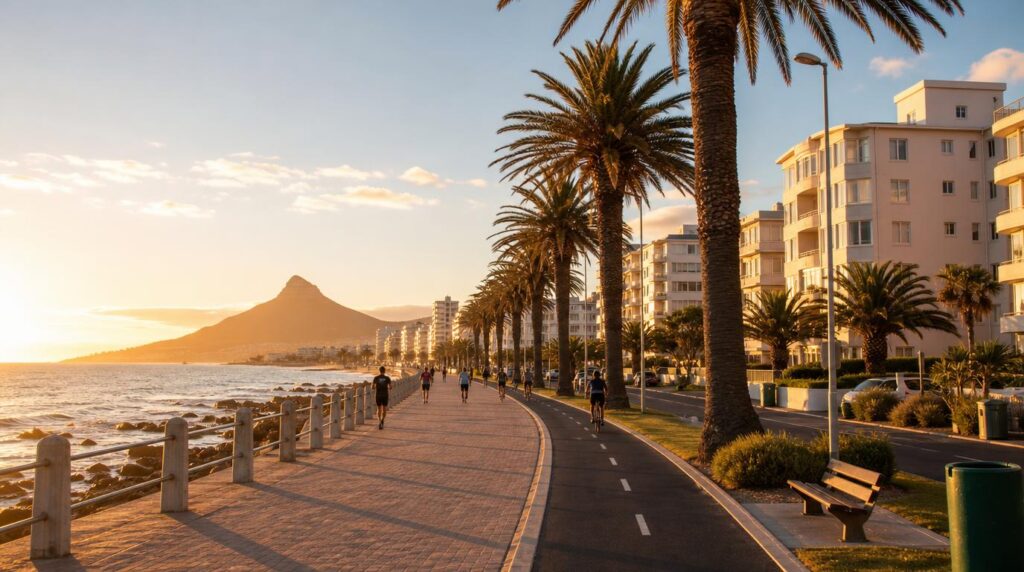
- Best areas to stay: Sea Point, Green Point, De Waterkant, Gardens, Tamboerskloof, and Camps Bay come up most consistently for safety, walkability, and proximity to coworking spaces.
- Areas to avoid: the Cape Flats, including Khayelitsha, Nyanga, Manenberg, and Hanover Park, see high rates of gang-related violence and aren’t places visitors have any reason to end up.
- Common-sense precautions: take Uber or the MyCiTi bus rather than minibus taxis or walking at night, and don’t leave bags or electronics visible in a parked car.
- Recent trend: Western Cape murders fell 8% year-on-year and aggravated robbery dropped 19% in the quarter through March 2026, though gang violence stayed concentrated in specific Cape Flats precincts nomads have no reason to visit.
Base yourself in one of the areas above, and Cape Town’s crime numbers mostly stay a headline you read rather than something you personally run into. Solo travelers, women especially, should stick to Uber after dark no matter which neighborhood they’re in.
Coworking and community
Cape Town has more established coworking infrastructure than most African cities, concentrated in the City Bowl and along the Atlantic Seaboard.
- Workshop17: the city’s largest operator, with locations at the V&A Waterfront, Kloof Street, Bree Street, and Cape Quarter, offering hot desks, meeting rooms, and backup power.
- Neighbourgood: a community-focused space in the City Bowl, known for networking events and a social atmosphere.
- Ideas Cartel: a more upscale option with private offices alongside hot desks.
- Digital Nomad Week: an annual four-day community festival backed by the City of Cape Town, typically held in January or February when the nomad population peaks for the southern summer.
Most coworking spaces run generators or battery backup as standard. That matters less than it used to now that Eskom has kept the national grid free of load shedding for well over a year, but it still smooths over the rare local outage.

Best time to visit
Cape Town has a Mediterranean climate, opposite the Northern Hemisphere calendar: dry summers, wet winters.
- Summer (December-February): hot and dry, average highs of 25-30°C. Peak season, with the highest rent and the busiest cafes.
- Shoulder seasons (March-May, September-November): mild temperatures, fewer tourists, and lower accommodation prices. Generally the best window for a working stay.
- Winter (June-August): cooler and rainy, 12-16°C, with fewer beach days but also the lowest rents and quietest coworking spaces.
If minimizing rent and crowds matters more than beach weather, a winter stint works fine. Most of the city’s indoor life, coworking, restaurants, wine tasting, doesn’t slow down in the rain.

Who it’s for, and who should skip it
Cape Town rewards remote workers who want scenery and an established community without giving up decent infrastructure, and who are willing to stay alert about where they walk and when.
- Good fit: people basing for 1-3 months who want hiking, beaches, and a built-in nomad scene without committing to a full remote work visa.
- Good fit: European-hours workers who want daytime overlap without odd-hour calls.
- Skip it: solo travelers who’d find gated buildings, private security, and careful nighttime routines exhausting as part of daily life.
- Skip it: anyone chasing the cheapest possible rent, since the savings from a township-adjacent lease aren’t worth the safety trade-off for a short-term visitor.
Cape Town delivers fast fibre, a workable visa path, and daytime overlap with Europe, as long as you stick to Sea Point, Green Point, Gardens, or the City Bowl and treat the safety advice as a normal part of planning, not an afterthought. Search flights to Cape Town on FlyBibe and start with a 90-day stay before deciding whether the Remote Work Visitor Visa is worth the extra paperwork.