

Ponta do Sol, on Madeira’s south coast, runs the Digital Nomad Village, a government-backed program built specifically for remote workers. This guide covers what it actually costs to live there in 2026, how the community and coworking scene work day to day, and the internet, visa, and safety details worth checking before you book a flight.
Internet and connectivity
Madeira’s internet infrastructure holds up well against mainland Portugal, which already ranks among Europe’s faster countries for fixed broadband.
- Fixed broadband: Portugal’s national median download speed sits at 184 Mbps, and Madeira’s fiber network delivers a similar 100 to 200 Mbps in Funchal and Caniço.
- Ponta do Sol and coworking spaces: the free coworking hub at the John dos Passos Cultural Centre runs on dedicated fiber, and mobile coverage across the island is solid on 4G with 5G expanding.
- Weak spots: rural mountain villages and some older north coast towns still run on slower connections, so it’s worth checking a specific address before signing a lease.
For anyone working off video calls or large file transfers, Funchal, Ponta do Sol, and the main south coast towns are reliable enough to skip a backup SIM entirely.
Cost of living
Madeira is still cheaper than most of Western Europe, but Funchal rent has climbed fast since the nomad boom started in 2021.
- Rent, Funchal: a one-bedroom on a 12-month lease runs €900 to €1,350 a month in the city center, and €700 to €1,100 outside it.
- Rent, Ponta do Sol and Calheta: smaller and generally cheaper, often €700 to €1,000 for a comparable one-bedroom. Short-term furnished rentals aimed at nomads run 40 to 80 percent higher than long-term leases.
- Daily costs: groceries, local transport, and eating out for one person typically add up to €700 to €1,000 a month outside rent, depending on how often you cook.
- Coworking: Cowork Funchal runs about €160 a month, Sangha Cowork Funchal is around €150 plus VAT, and the Ponta do Sol coworking space is free as of 2026, though that could change as the program matures.
All in, a single remote worker can expect to spend roughly €1,400 to €2,000 a month in Funchal, and closer to €1,200 to €1,700 in Ponta do Sol or Calheta, before travel or extras.
Visa and entry
Madeira is part of Portugal and the Schengen Area, so entry rules follow Portuguese and EU law rather than anything island-specific.
- EU, EEA, and Swiss citizens: no visa needed, free to live and work.
- Tourist stays: most other passports, including US, UK, Canadian, and Australian, get 90 days within any 180-day period under standard Schengen rules.
- D8 digital nomad visa: for longer stays, non-EU remote workers need proof of monthly income at four times Portugal’s minimum wage, which comes to €3,680 in 2026, plus roughly €11,040 in savings.
- Processing time: official guidance still cites 30 to 60 days, but several 2026 sources report AIMA backlogs pushing real processing closer to 6 to 9 months. Worth confirming current wait times with an immigration lawyer before planning a start date around it.
Anyone testing the waters can work from Madeira for a full 90-day tourist stay with no visa at all. The D8 only becomes necessary once you want to stay longer than that.
Timezone fit for remote work
Madeira runs on Western European Time, the same zone as the UK year-round, which makes it one of the easier remote bases for European clients.
- UK: identical time zone, full overlap all day.
- Central Europe: Madeira sits one hour behind CET, so a 9am call in Berlin or Paris lands at 8am locally, an easy adjustment.
- US Eastern: Madeira runs about five hours ahead, so a standard US workday falls in the Madeira afternoon and evening.
- US Pacific: roughly eight hours ahead, meaning real overlap only happens in the Pacific’s early morning or Madeira’s late evening.
This setup favors anyone working with UK or EU clients over anyone trying to sync daily with the US West Coast.
Coworking and community
The Digital Nomad Village in Ponta do Sol, launched in 2021 by the regional government, Startup Madeira, and nomad advocate Gonçalo Hall, is the reason Madeira shows up on so many nomad shortlists.
More than 10,000 nomads have passed through the program since it launched, and Ponta do Sol and its surrounding towns now hold an estimated 200 resident nomads at any given time.
- Free coworking: the main hub at the John dos Passos Cultural Centre offers desks, fiber internet, and a shared kitchen, with no membership fee as of 2026.
- Slack community: joining gets you into a running calendar of hiking trips, mindfulness sessions, coding workshops, and open mic nights, posted weekly.
- Funchal options: Cowork Funchal and Sangha Cowork Funchal serve the capital’s larger, more permanent nomad and startup crowd.
- Annual events: Purple Fridays DJ nights run through the summer season, and the Digital Nomad Festival returns to Ponta do Sol every December.
The community leans social by design. Someone who wants to work quietly can still use the coworking space without joining every event, but the main draw for people who choose Ponta do Sol specifically is the built-in social calendar.

Safety
Portugal consistently ranks among the safest countries in the world, and Madeira’s small, tight-knit geography keeps violent crime close to zero.
- Petty theft: occasional pickpocketing around Funchal’s Mercado dos Lavradores and the harbor area, standard crowded-market caution applies.
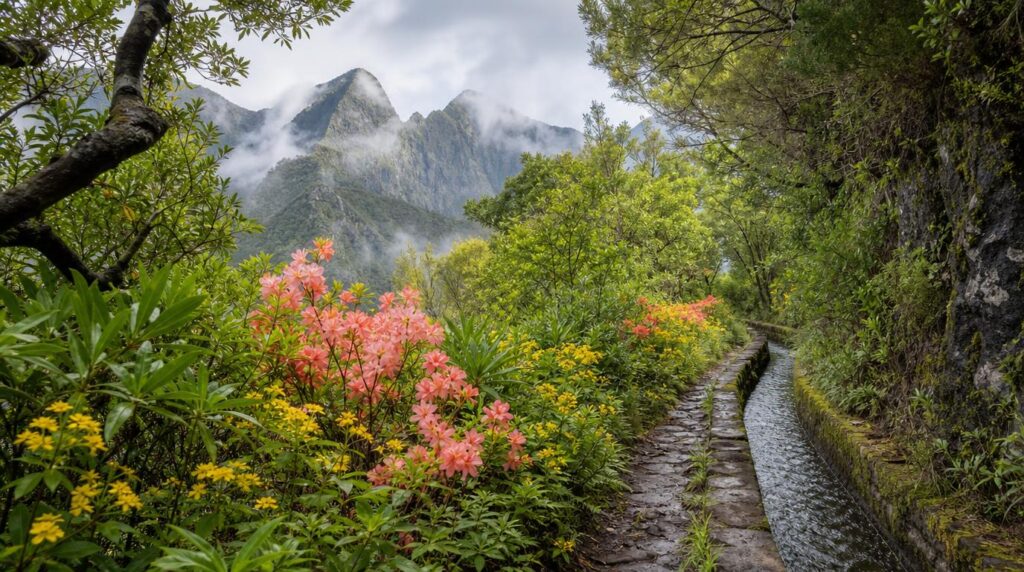
- Hiking risk: the levada trails and mountain routes are the real hazard on the island. Closed trails and sudden weather shifts cause a handful of injuries and deaths most years.
- Driving: mountain roads are steep and narrow but well maintained, with modern tunnels connecting most of the island.
The safety concerns worth taking seriously here are about terrain, not crime.
Best time to visit
Madeira holds a mild, spring-like climate year-round, so timing matters more for crowds and price than for weather extremes.
- Spring (April-May): wildflowers in bloom, Funchal’s Flower Festival in May, temperatures around 18-25°C.
- Summer (June-August): the driest and busiest months, good for lava pool swimming and canyoning, but also peak season for short-term nomad rentals.
- Autumn (September-November): fewer crowds, mild temperatures near 18-22°C, with rain picking up toward December.
- Winter (December-March): low season pricing, and the Digital Nomad Festival lands in Ponta do Sol every December.
Shoulder season, April to May or September to October, gives the best mix of weather and value for anyone planning a multi-month stay.
Who it’s for, who should skip it
Madeira works best for remote workers who value community over anonymity, keep client hours aligned with the UK or Europe, and don’t mind island logistics like flying rather than driving to reach the mainland.
- Good fit: freelancers and small teams who want a built-in social scene from day one, hikers and outdoor people, anyone on UK or EU client hours.
- Consider elsewhere: US West Coast workers needing daily overlap, anyone who wants total anonymity or fast-paced city life, and budget nomads chasing the cheapest possible Western European base, since Funchal rent now rivals parts of mainland Portugal.
Search flights to Madeira
Ponta do Sol built its reputation on turning a quiet fishing village into a working remote hub, and the coworking space, Slack community, and events calendar still deliver on that promise in 2026. Rent has climbed since the early pandemic years, but the internet, safety, and UK-friendly time zone haven’t changed. If Madeira’s mix of cliffs, coworking, and community fits your next stretch of work, search flights to Madeira on FlyBibe and start planning the move.