
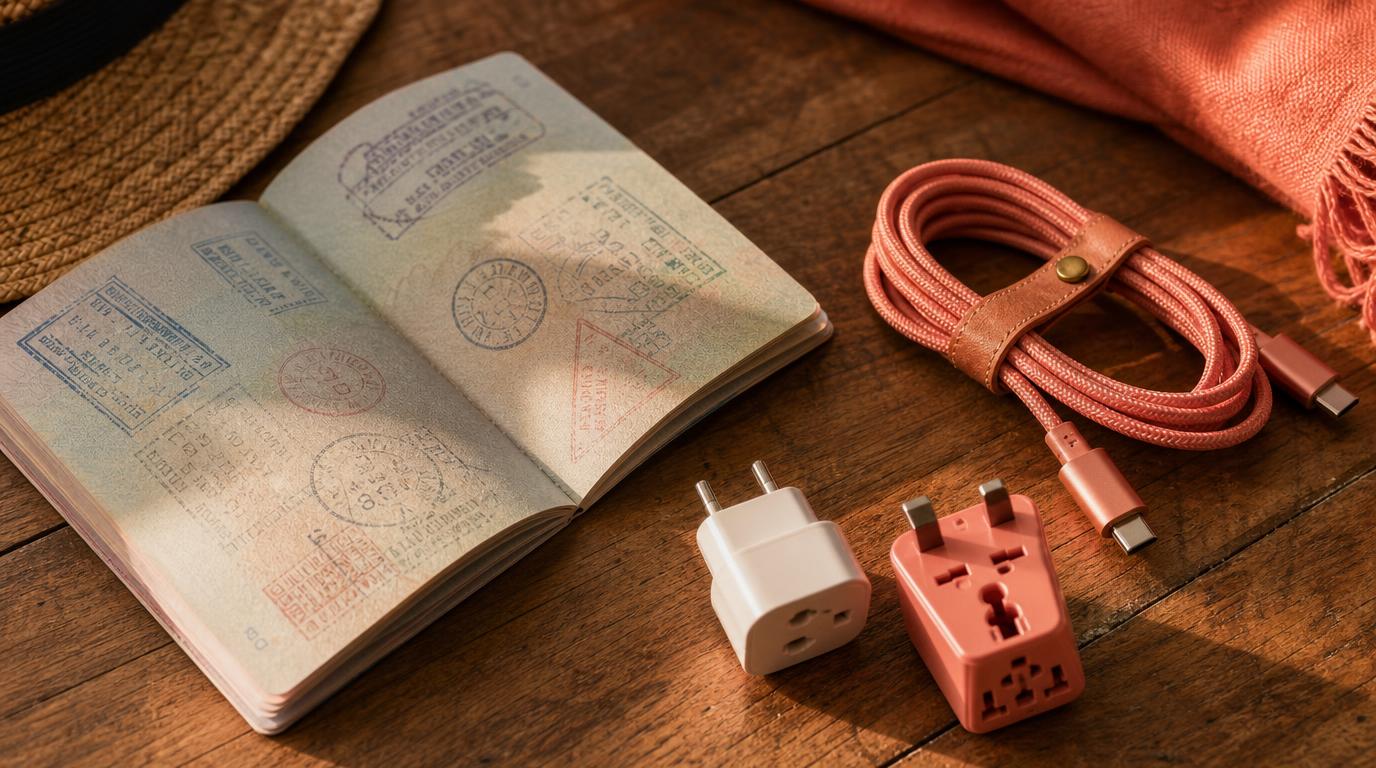
This guide covers the plug shapes and voltage standards you’ll actually run into as a digital nomad, and the specific gear that handles nearly all of them without a drawer full of country-specific adapters. It also covers the power bank rule that decides what actually makes it through airport security.
What This List Filters For
This isn’t a ranked list of gadgets. It’s organized around the three things that decide whether your charger works in a given country: plug shape, voltage, and frequency, then narrows to the gear worth packing so a single setup covers most of a nomad’s route instead of five separate ones.
1. Check the Label Before You Buy Anything
Before buying a single adapter, flip over your laptop, phone, or camera charger and read the fine print stamped on the brick.
- Input rating: most modern chargers read “100-240V ~50/60Hz,” meaning they already accept both major voltage standards worldwide.
- What that means: if your charger shows that full range, you only need a plug shape adapter, never a voltage converter.
- What still needs a converter: single-voltage heating appliances like hair dryers and curling irons, usually built for 120V in the US market.
- Frequency: 50Hz versus 60Hz affects old motor-driven devices, not the switching power supplies inside nearly all laptop and phone chargers.
For most nomads carrying a laptop, phone, and camera, the plug shape is the only real obstacle. Voltage sounds like the scary part, but it’s usually already solved by the device itself.
2. North America and Japan: Type A/B, 100-127V
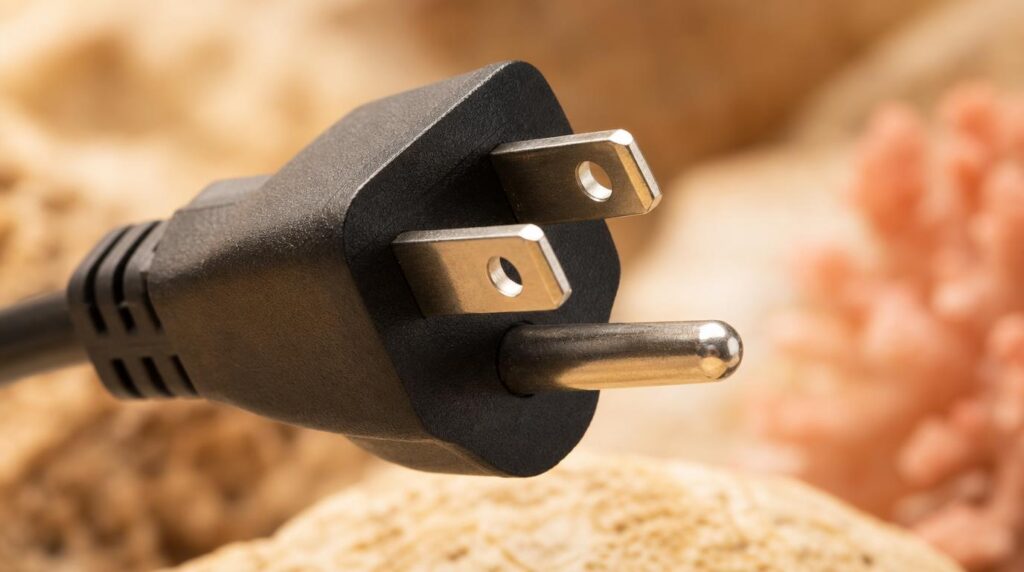
- Countries: United States, Canada, most of Mexico, and Japan.
- Voltage: 120V in the US and Canada, 127V in Mexico, 100V in Japan.
- Frequency: 60Hz in the US, Canada, and Mexico; Japan splits by region, 50Hz around Tokyo and 60Hz around Osaka.
- Plug shape: two flat parallel pins (Type A), sometimes with a third round grounding pin (Type B).
Japan is the outlier here. Its 100V grid and split frequency mean older or voltage-sensitive gear should get a second look before a Tokyo trip, even though the plug shape matches the US.
Best for: bases in the US, Canada, or Mexico, and short-term planning for Japan specifically.
3. Continental Europe, Much of Africa and Asia: Type C/E/F, 220-230V
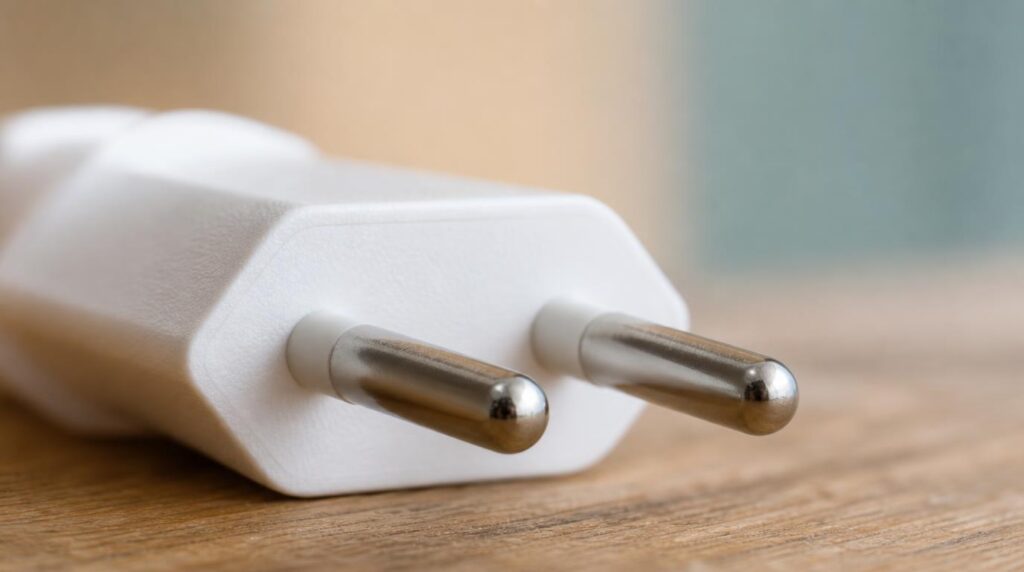
- Countries: France, Germany, most of continental Europe, Indonesia including Bali, and large parts of Africa and Asia.
- Voltage: 220-230V.
- Frequency: 50Hz.
- Plug shape: two round pins (Type C), with Types E and F adding grounding on the socket side.
This is the largest single voltage block a nomad will encounter, which means a charger already sitting in your bag is more likely to fit here than anywhere else.
Best for: longer stints in Bali, Lisbon, or anywhere else sharing this standard.
Related: Lisbon digital nomad guide: cost of living & neighborhoods
4. UK, Ireland, and the Type G Belt: 230V
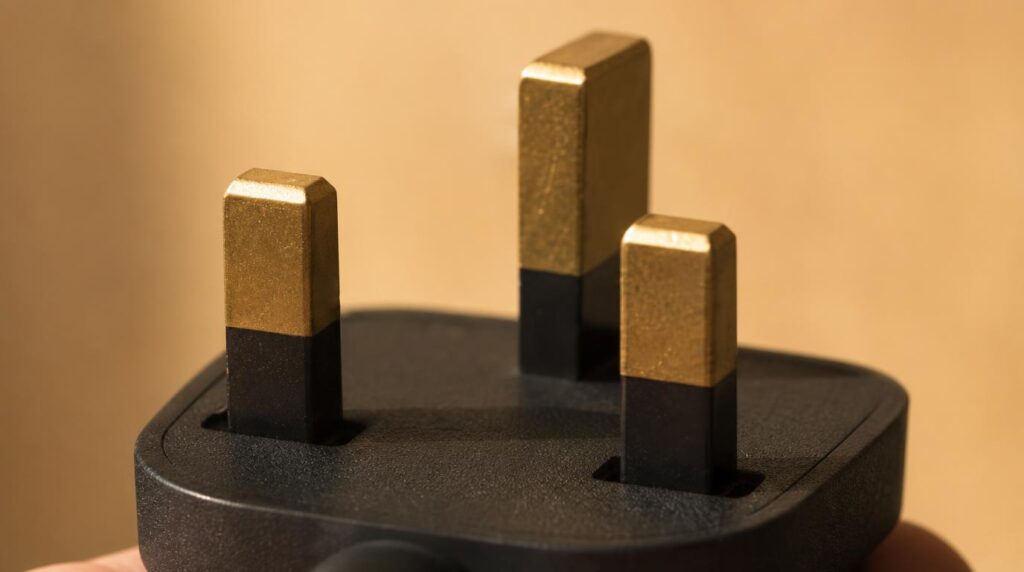
- Countries: UK, Ireland, Hong Kong, Singapore, Malaysia, and the UAE.
- Voltage: 230V, 50Hz.
- Plug shape: three rectangular pins in a triangle (Type G), the largest and heaviest plug in common use.
- Note: Type G sockets rarely accept anything else, so an adapter is mandatory even for devices already wired for 230V elsewhere.
Because the pins are rectangular instead of round, this is the one shape a Europe-only adapter won’t cover, even in countries that otherwise share the 230V standard.
Best for: coworking stretches in London, Dublin, Singapore, or Kuala Lumpur.
5. Australia, New Zealand, and the Type I Family: 230-240V
- Countries: Australia and New Zealand, with visually similar but not identical variants in Argentina and China.
- Voltage: 230V officially in Australia, often measured closer to 240V; 230V in New Zealand.
- Frequency: 50Hz.
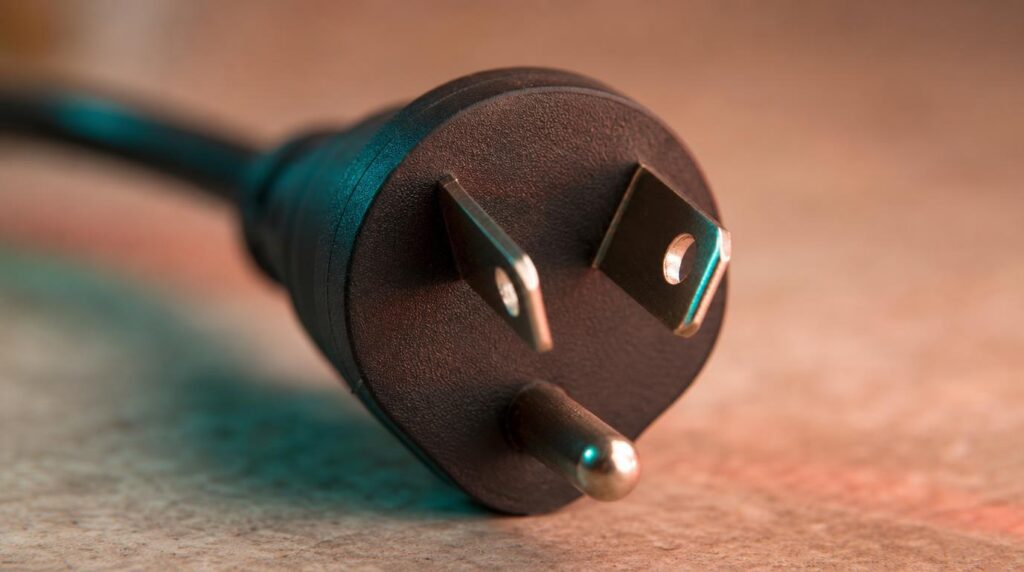
- Plug shape: two flat pins angled in a V, sometimes with a third grounding pin (Type I).
Argentina and China use the same V-shaped pin angle but run their own socket depth and voltage specifics, so don’t assume an adapter bought for Sydney works identically in Buenos Aires.
Best for: Australia and New Zealand bases, with a separate check before reusing the same adapter in Argentina or China.
6. The Outliers Worth Double-Checking: Thailand, South Africa, Brazil, India
- Thailand: sockets accept Types A, B, C, F, and O interchangeably at 220V, 50Hz, so travelers from round-pin, two-prong countries often plug in with no adapter at all.
- South Africa: three plug types in active use, D, M, and the newer N, at 230V, 50Hz, meaning even a “Europe” adapter may not physically seat.
- Brazil: runs both 127V and 220V depending on the city and sometimes the specific outlet, worth confirming on arrival rather than assuming.
- India: Types D and M at 230V, 50Hz, similar in shape to South Africa’s older standard but not interchangeable with it.
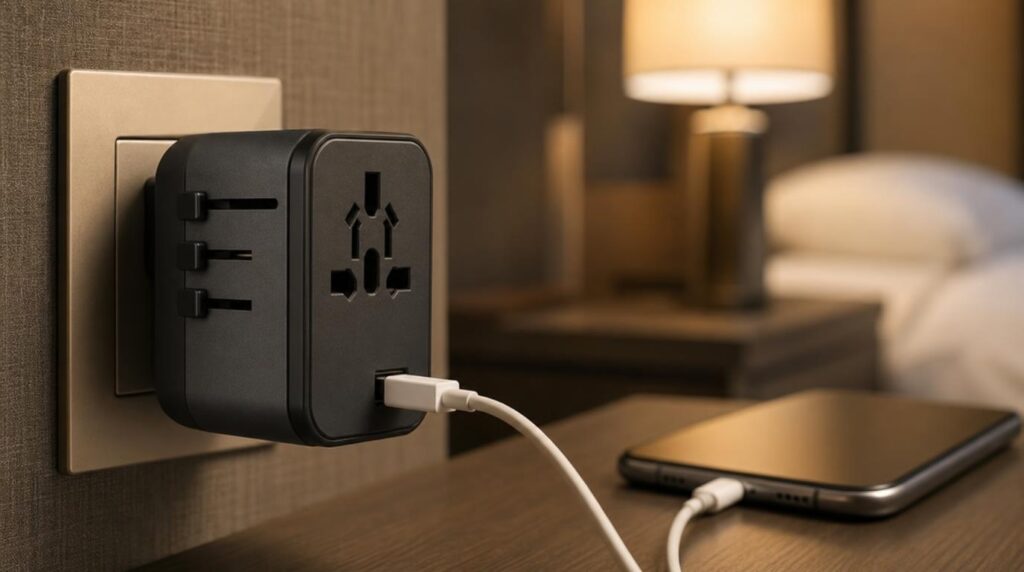
When a country runs mixed standards like this, a universal adapter with slide-out pins earns its keep, since it adjusts on the spot instead of betting on one fixed shape.
Best for: the hubs where “just bring a Europe adapter” advice quietly falls apart.

7. One Universal Adapter Beats a Drawer of Country-Specific Ones
- Model: EPICKA TA-105 Max, built around slide-out pins rather than a fixed shape.
- Ports: 3x USB-C, 2x USB-A, and one AC outlet, with up to 75W total USB-C output, 67W available from a single port.
- Coverage: rated for 200-plus countries rather than sold as a region-locked “EU only” or “UK only” version.
- Safety: 10A replaceable fuse with spares included, CE and FCC certified.
Seventy-five watts is enough to charge a MacBook Air or similar ultrabook straight from the adapter, so it replaces both the plug adapter and a second charger brick for most laptops under 14 inches.
Best for: nomads who want one device in the bag instead of a rotating stack of country-specific ones.
8. GaN Chargers, Surge Protectors, and the Power Bank Number Airlines Check
- GaN chargers: the Anker Prime Charger packs 160W across three ports split between a laptop and two smaller devices, small enough to fit in one palm and rated to bring a MacBook Pro to 50% in about 25 minutes.
- Surge protectors: many travel power strips, including the Anker 521, are built for a single home voltage (120V only). A strip rated 100-240V, like the EPICKA TA-105 Pro, is the one actually safe to use abroad.
- Power banks: the FAA and TSA cap spare lithium batteries at 100Wh with no paperwork, and 101-160Wh with airline approval, capped at two batteries per passenger in that range. Anything higher isn’t allowed on a plane at all.
- Where they travel: carry-on only. Spare lithium batteries aren’t permitted in checked baggage under current rules.
Most nomads size a power bank by capacity alone. A 20,000mAh bank works out to roughly 74Wh, comfortably under the no-paperwork threshold and still good for several phone charges on a long travel day.
Best for: anyone packing a laptop charger, a power strip, and a power bank into the same carry-on.

Pack Once, Plug In Anywhere
Sorting out plug shapes and voltage is a ten-minute task done once, not something to relearn per trip. A dual-voltage charger, one universal adapter, and a power bank under 100Wh cover the overwhelming majority of stops on a nomad’s route, from Lisbon to Bali to Buenos Aires. Once the bag is sorted, the harder part is picking where to plug it in next. Search flights on FlyBibe and start planning the next stretch of work from somewhere new.