
Long flights, coworking floors, and cafes with bad acoustics all compete for a remote worker’s attention. The right pair of noise-cancelling headphones cuts through that and holds a charge across a full day of travel instead of dying halfway through a layover. This list covers seven headphones and earbuds chosen for battery life, packed size, and how they actually perform in loud cabins and open offices, not just quiet living rooms.
What this list filters for
The ranking below weighs battery life for long-haul flights and unpredictable outlets, case or fold size for limited carry-on space, and real noise cancellation in environments like planes and coworking floors rather than lab conditions. Multipoint Bluetooth, the ability to hold a laptop and phone connection at once, mattered too, since most remote workers switch between the two all day. Entries run from an all-around pick through flight-specific ANC, top battery life, and the most packable earbud options, ending with a budget pick for anyone still deciding if the category is worth it.
1. Sony WH-1000XM6
Sony’s flagship over-ear pair is the safest all-around choice for someone who wants one headphone to cover flights, calls, and long focus blocks.
- Battery: 30 hours with noise cancelling on; a 3-minute quick charge adds about 3 hours.
- Weight: 254 grams, folds flat into the included case.
- Connectivity: Bluetooth 5.3 with multipoint, so a laptop and phone can stay connected at the same time.
- Price: $449.99 list, though it regularly turns up closer to $400.
The 12-microphone array handles video calls better than most headphones at this price, and the noise cancelling holds up equally well on planes and in open coworking floors. There’s no IP water resistance rating, though, so it’s not built for humid climates or heavy sweat.
Best for: remote workers who want a single pair that covers flights, video calls, and daily focus work.
2. Bose QuietComfort Ultra Headphones (2nd Gen)
Bose built its reputation on blocking sound, and the second-generation QC Ultra still leads when a plane cabin or a loud office is the main problem.
- Battery: 30 hours with Quiet Mode on, dropping to 18 hours if Immersive Audio stays active; 15 minutes of charging adds 2.5 hours.
- Weight: 250 grams.
- Noise cancelling: Adjustable Quiet Mode plus CustomTune, which maps sound to the shape of your ears.
- Price: $449 list, commonly found between $379 and $429.
CustomTune and the adjustable Quiet Mode make the ANC feel steadier across different environments than most competitors, and the new USB-C lossless mode is a genuine upgrade for wired listening. Like the Sony above, there’s no IP rating, and leaving Immersive Audio on full-time cuts battery life by close to 40 percent.
Best for: frequent flyers who care more about blocking cabin noise than about sound customization.
3. Sennheiser HDB 630
For anyone stringing together multiple flights or working somewhere with unreliable power, the HDB 630’s battery life outlasts nearly everything else here.
- Battery: 60 hours per charge, more than double most rivals; a 10-minute charge adds about 7 hours.
- Weight: 311 grams, the heaviest pair on this list.
- Extras: Ships with a BTD 700 USB-C dongle for aptX Adaptive and hi-res playback, plus a parametric EQ in the app.
- Price: $499.95.
The trade-off for that battery life and audiophile tuning is weight. At 311 grams, it’s noticeably heavier than the Sony or Bose pairs, and its ANC, while solid, doesn’t fully match either one for raw noise blocking. It suits someone who’d rather charge once a week and get detailed sound than chase the single strongest ANC.
Best for: nomads on multi-leg trips who’d rather charge once a week than once a day.
4. Apple AirPods Pro 3
For iPhone and Mac users, the AirPods Pro 3 pack real ANC into the smallest possible carry item.
- Battery: 8 hours per charge with ANC on, 24 hours total with the case; 5 minutes of charging adds about an hour.
- Weight: 5.55 grams per earbud and a 44-gram case, light enough to forget in a pocket.
- Durability: IP57 rated for sweat and water, useful in humid coworking spaces or between meetings.
- Price: $249.
Apple’s ANC now genuinely competes with over-ear headphones at close range, and automatic switching across an iPhone, iPad, and Mac saves real time during a busy day. Android users lose most of that ecosystem integration, though, and there’s still no wired or lossless option if a laptop’s Bluetooth connection gets unreliable.
Best for: iPhone-based remote workers who want the smallest possible headphone to pack.

5. Sony WF-1000XM6
Sony’s flagship earbuds bring most of the WH-1000XM6’s noise cancelling and call quality into a case small enough for a jacket pocket, without locking a user into one phone brand.
- Battery: 8 hours per charge, 24 hours total with the case; a 3-minute quick charge adds about an hour.
- Weight: 6.5 grams per earbud.
- Calls: 8 microphones per earbud with adaptive noise reduction, built for video calls in noisy rooms.
- Price: $329.99.
Isolation in earbud form still trails a good over-ear pair in a genuinely loud cabin, and the price sits close to Sony’s own over-ear flagship. For someone who wants Sony’s noise cancelling and sound without being tied to iOS, though, this is the closest cross-platform match to the AirPods Pro 3.
Best for: Android and multi-device users who want premium ANC and call quality in earbud form.
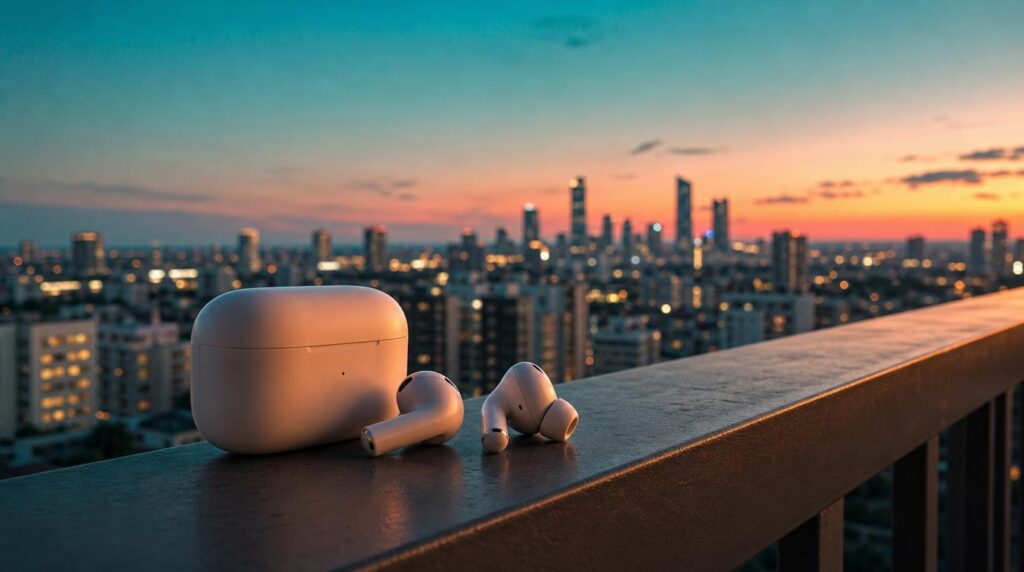
6. Bose QuietComfort Ultra Earbuds (2nd Gen)
Bose’s earbuds carry the same ANC tuning as the over-ear QC Ultra Headphones into a case that disappears into a small bag.
- Battery: 6 hours per charge, up to 24 hours total with the case; a full charge takes about 2 hours.
- Weight: About 7 grams per earbud, with a 60-gram case.
- Water resistance: IPX4.
- Price: $299 list, frequently discounted to $249.
Six hours per charge is the shortest single-charge runtime of any earbud on this list, so it works best with a mid-flight top-up in the case rather than one long uninterrupted sit. For someone who already prefers Bose’s noise cancelling but doesn’t want to carry the full-size headphones, it’s a reasonable trade.
Best for: Bose loyalists who want that noise cancelling in a pocketable earbud instead of full-size cans.

7. Anker Soundcore Space One
For anyone testing whether ANC headphones are worth the investment before spending $300 or more, the Space One covers most of the same bases at a third of the price.
- Battery: 40 hours with ANC on, 55 hours with it off; a 5-minute charge adds about 4 hours.
- Weight: 258 grams, folds flat for a bag.
- Connectivity: Bluetooth 5.3 with LDAC and multipoint, features usually reserved for pricier headphones.
- Price: $99.99, and it often drops closer to $80 on sale.
Call quality lags behind every other pair on this list, and the plastic build makes that price difference obvious in hand. Even so, the ANC performance and battery life hold up well against headphones costing several times as much.
Best for: remote workers who want a reliable backup pair or a low-cost way to try ANC for the first time.
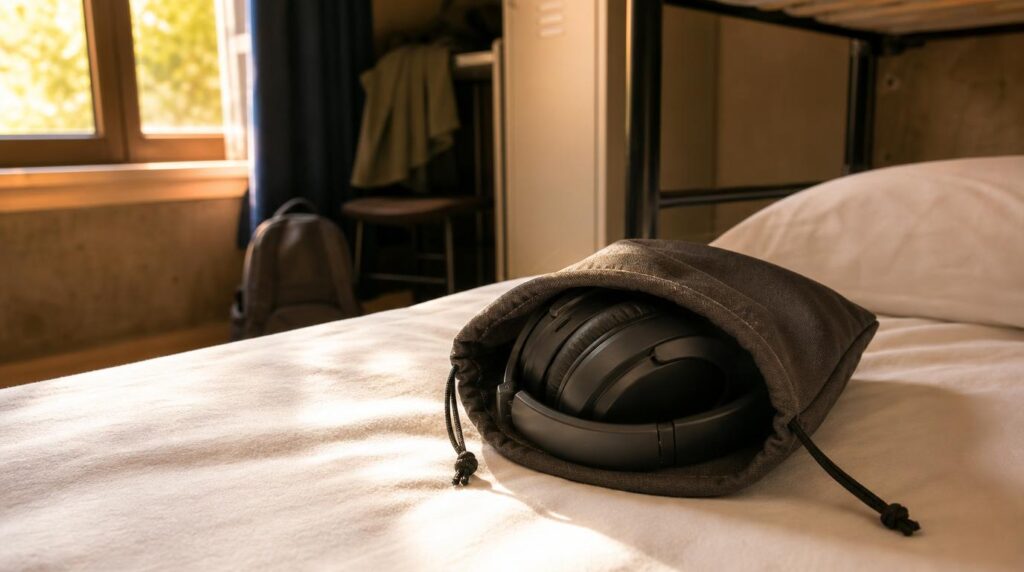
Pack one before your next trip
Battery life and packed size matter as much as noise cancelling once a headphone has to survive a full week of travel. Whether that means the Sony WH-1000XM6 as an all-around pick or the Anker Soundcore Space One as a lower-cost starting point, the right pair should disappear into a bag and hold a charge through a long flight. Search flights on FlyBibe and put one of these to work on the next trip.