

Cafes and coworking spaces solve where you work, not how well you work once you’re there. A loud espresso grinder, a wifi network shared with forty other laptops, and a video call booked in the middle of the lunch rush can turn a productive morning into a wasted one. This guide covers how to pick a spot, protect your focus once you’re seated, and handle calls cleanly, whether you’re on week two in a new city or juggling a ninth cafe this month.
Picking a spot that actually works
Where you sit changes how much you get done before you’ve even opened your laptop. A few checks before committing to a table save you from packing up and moving an hour in.
- Noise level: researchers at the University of Illinois found that around 70 decibels of ambient noise, roughly the hum of a busy coffee shop, improved performance on creative tasks compared with a near-silent 50 decibels. The effect flipped past about 85 decibels, the level of a blender or a loud espresso machine running constantly.
- Seat position: a table near the espresso bar or front door sits well above that 70-decibel sweet spot most of the day. A corner table or a spot near the back tends to land closer to it.
- Wifi check: ask whether the network is the free guest wifi or a separate, faster paid connection before you commit to a multi-hour session. Some cafes offer both, and the difference in speed and reliability can be significant.
- Outlet access: a table within reach of a plug matters more than it sounds. Cafes fill up fast during weekday mornings, and the tables with power tend to go first.
None of this is about finding the perfect cafe. It’s about spending thirty seconds checking before you sit down, since moving your laptop, coffee, and charger cable after an hour costs more time than the checking did.

Protecting your focus once you’re set up
Sitting down is the easy part. Staying on task for three hours with strangers, music, and conversations happening around you takes a bit more structure than working from a quiet home office does.
- Time-block with a timer app: apps like Forest or Toggl Track split work into focused chunks, typically 25 to 50 minutes, with short breaks between. The structure matters more in a cafe than at a desk, since it’s easier to lose track of time when the environment keeps shifting around you.
- Use ambient sound deliberately: if your cafe of the day happens to be quiet rather than bustling, apps like Coffitivity or myNoise can recreate that 70-decibel coffee shop hum through your headphones.
- Keep your phone out of reach: face-down in your bag, not on the table. A UC Irvine study led by researcher Gloria Mark found that office workers were interrupted roughly every 11 minutes on average, and took over 23 minutes to fully return to the same level of focus afterward. A cafe already supplies enough interruptions on its own.
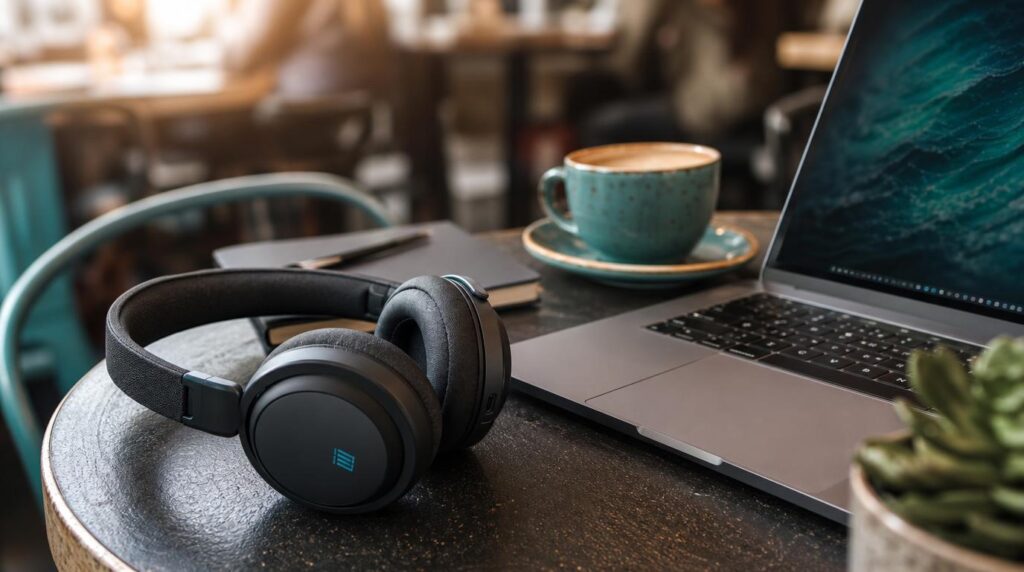
- Wear headphones even when nothing’s playing: it’s a visible signal to baristas and neighboring tables that you’re mid-task, which cuts down on the small talk that eats into a work block.
The goal isn’t total silence. It’s building a routine that holds up even when the table next to you is having a loud conversation about someone’s weekend.
Handling calls without the noise chaos
Video calls are where cafe work usually falls apart. Background noise doesn’t just distract you, it distracts everyone on the other end of the line too.
- Run noise cancellation software: apps like Krisp strip out background chatter, clinking cups, and espresso machine noise from your mic in real time, and do the same for whatever’s happening on the other caller’s end. Krisp offers a free trial and a paid plan starting around $8 to $16 a month depending on billing term, with unlimited noise cancellation included at every tier.
- Use a headset with a boom or in-ear mic, not your laptop’s built-in microphone, which picks up far more of the room than a mic positioned closer to your mouth.
- Move for calls that matter: if you have a call with real stakes, a client pitch or a session with a team nine time zones away, treat it differently than routine work. A coworking day pass buys you a quiet room or phone booth for the hour instead of hoping the cafe stays calm.
- Warn people once, not every call: a quick “I’m working from a cafe today, might be some background noise” at the start sets expectations without needing repeated apologies through the call.
When the cafe isn’t enough: coworking as backup
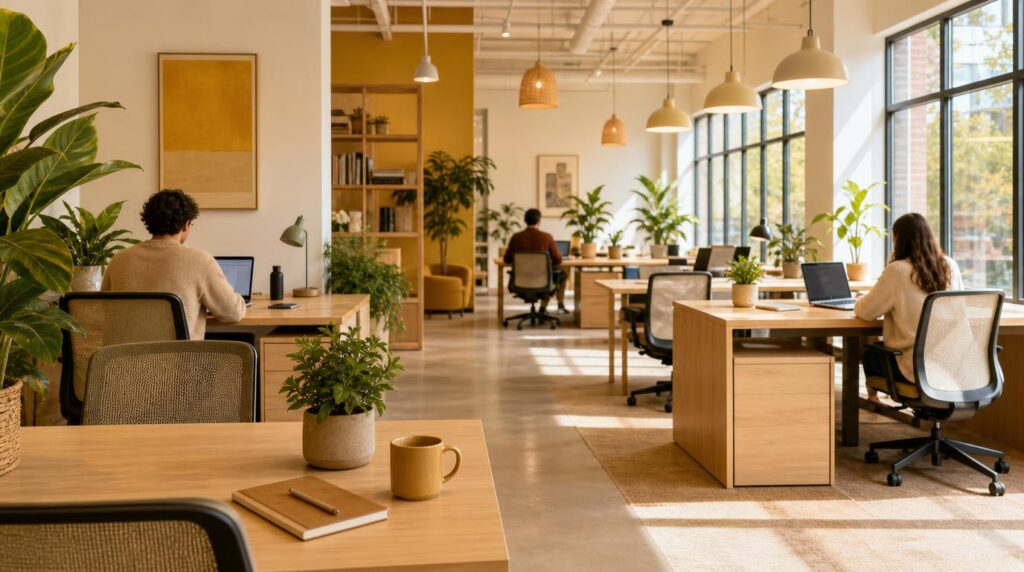
Some days call for more than a table and a coffee. A deadline crunch, back-to-back calls, or a laptop that needs a real desk and a second monitor all point toward a coworking space instead.
- Day passes typically run $20 to $50, with $30 to $40 covering most mid-tier spaces in major cities. Independent local spots usually sit at the lower end, and premium downtown locations push toward the top.
- Deskpass covers more than 290 cities with pay-as-you-go pricing, with hot desks starting around $15 a day in some markets.
- Workfrom lists over 16,900 laptop-friendly spaces worldwide, cafes and coworking spots included, with filters for wifi speed and outlet availability.
- Croissant works on a credit system: you check in when you arrive and use up credits by the hour, which suits a half-day session better than a full day pass does.
None of these need a monthly membership. They work well as an occasional backup for the days a cafe table won’t cut it, not as a full replacement for one.
The mistake that costs you a seat, or your afternoon
The most common misstep isn’t picking a bad cafe. It’s staying at one table for six hours on a single small coffee during peak hours, which annoys staff and other customers looking for a seat. Order something every hour or two, or move to a coworking day pass once a session runs long.
The second common mistake is relying on a single wifi connection for anything time-sensitive. Cafe wifi can drop without warning, especially during busy hours when dozens of devices compete for the same bandwidth. If a call or a submission genuinely can’t slip, keep a phone hotspot or a local eSIM data plan as backup rather than finding out the network failed mid-deadline.
Ready to change your scenery
A good cafe or coworking space can make a work day feel less like a grind and more like part of the trip. The habits matter more than the specific address: check the noise and the wifi before you sit, protect your focus blocks, and keep a coworking day pass in your back pocket for the days that need one. Wherever your next stretch of work takes you, search flights on FlyBibe and get moving.