
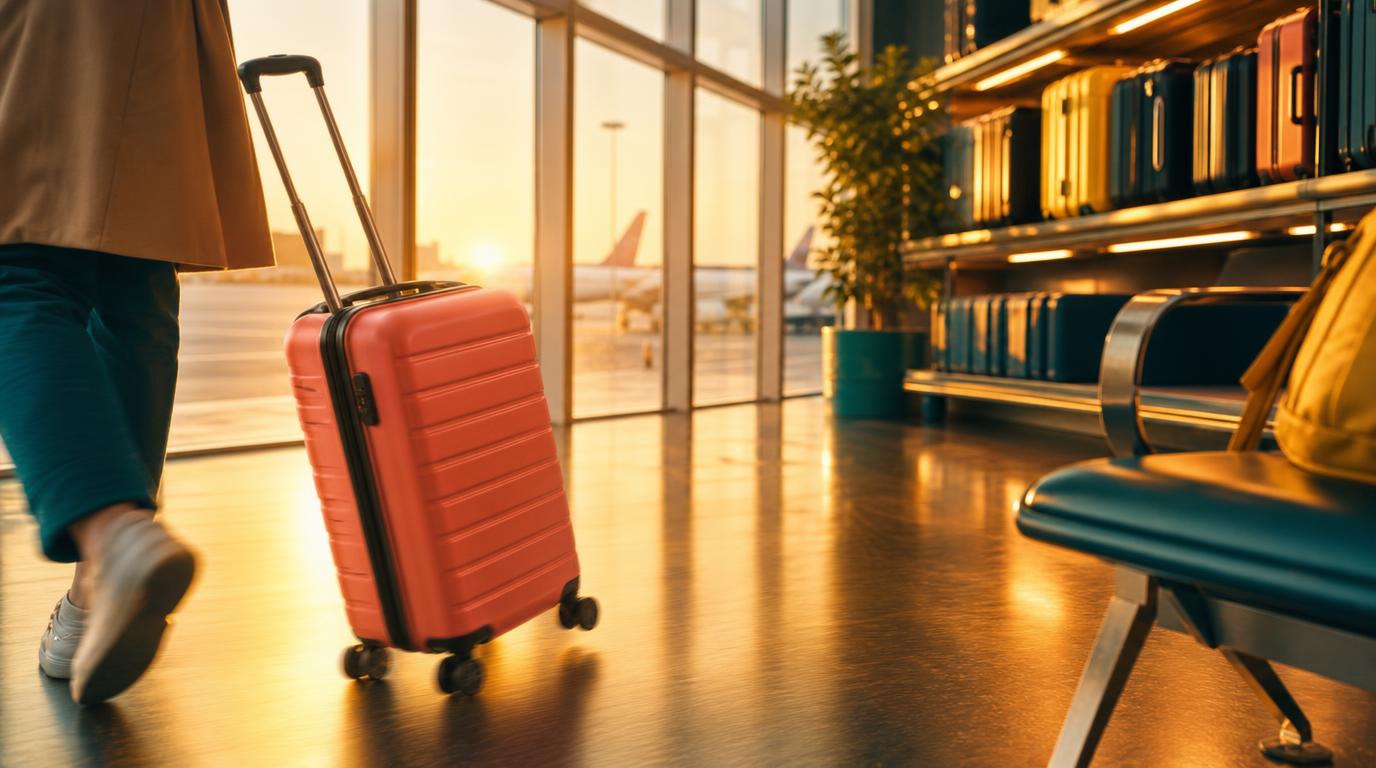
Flying every few weeks changes what you need from a suitcase. A bag built for one vacation a year won’t survive fifty airport transfers. Here are seven carry-on options built for people who live out of them, covering weight, durability, capacity, and what happens when an airline’s size chart doesn’t match what you packed for.
What matters most when you fly this often
Carry-on rules aren’t the same everywhere. Most US and major international airlines allow bags up to 22 x 14 x 9 inches. IATA’s Cabin OK guideline recommends a smaller 21.5 x 13.5 x 7.5 inches instead. Some Asian and European budget carriers enforce limits closer to that smaller number. For someone flying across regions constantly, durability and warranty matter as much as size, since a bag used weekly wears out faster than one used twice a year. The picks below run from the strongest all-around option to the sharpest specialists for weight, ruggedness, and budget.
1. Monos Carry-On Pro
Monos built its Pro line for people who want one hardshell case that looks sharp in a boardroom and survives a decade of gate checks.
- Weight: 7.8 lbs, heavier than ultralight rivals but built for repeated use.
- Dimensions and capacity: 22 x 14 x 9 inches, about 36 liters.
- Material: aerospace-grade polycarbonate shell with a 16-inch laptop compartment built into the front panel.
- Warranty: lifetime coverage on the shell, zippers, wheels, and handles.
The trade-off is weight. Reviewers who fly weekly for work found lighter shells, like Samsonite’s Curv material, save close to four pounds per case. For someone checking a bag through three flights a month, that extra weight matters less than a shell that survives fifty trips through baggage handling. The front laptop pocket also means fewer moments fumbling through a half-unzipped bag at security.
Best for: frequent flyers who want one premium case for both client meetings and city-to-city hops.
2. Nomatic Carry-On Classic
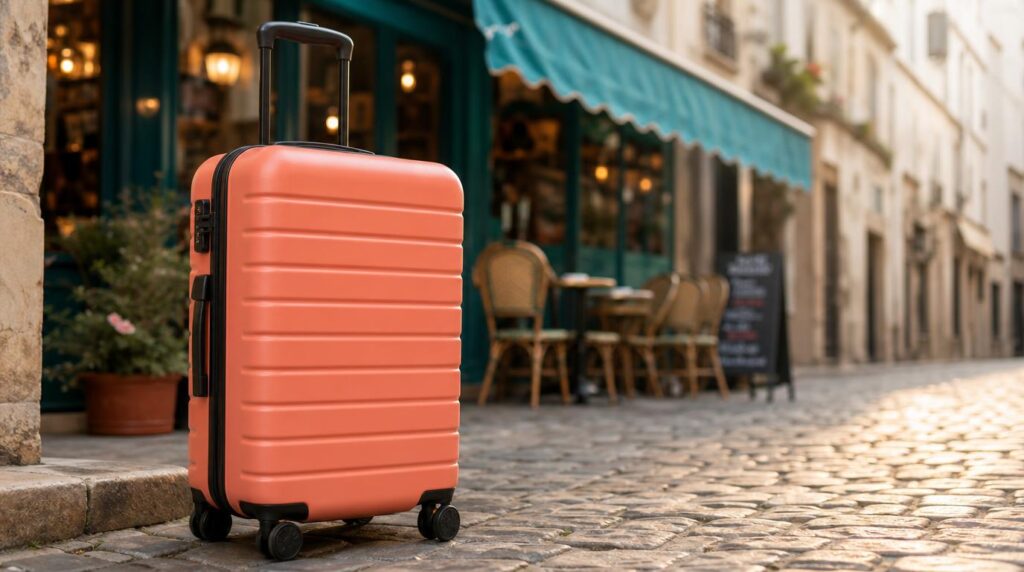
Nomatic’s Classic trades exterior pockets for an interior built around compression, useful for anyone who repacks every few days.
- Weight: 7.44 lbs.
- Dimensions and capacity: 22 x 14 x 9 inches, 30 liters.
- Material: Makrolon polycarbonate shell the brand calls virtually indestructible, paired with silent 360-degree Hinomoto wheels.
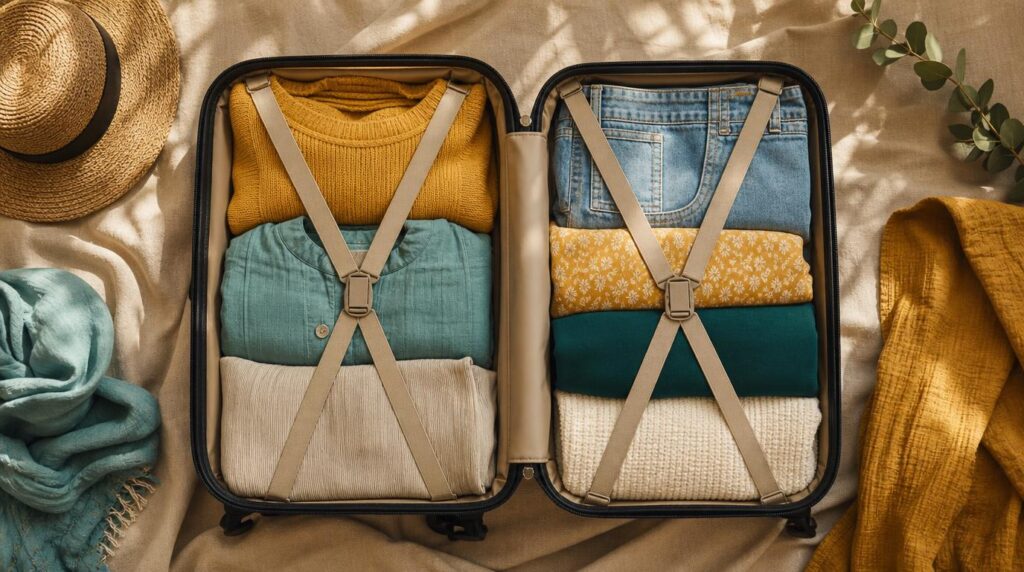
- Organization: magnetic compression straps and a folding panel that reshape how much fits inside.
The 30-liter capacity runs smaller than most bags on this list, so it suits people who pack light rather than those hauling gear for months on the road. There are no exterior pockets, which means pulling out a passport at security means opening the whole case. The lifetime warranty and simple, low-moving-parts design make it a bag that holds up under weekly use.
Best for: nomads who value compression and durability over quick-access pockets.
3. Peak Design Travel Backpack 45L
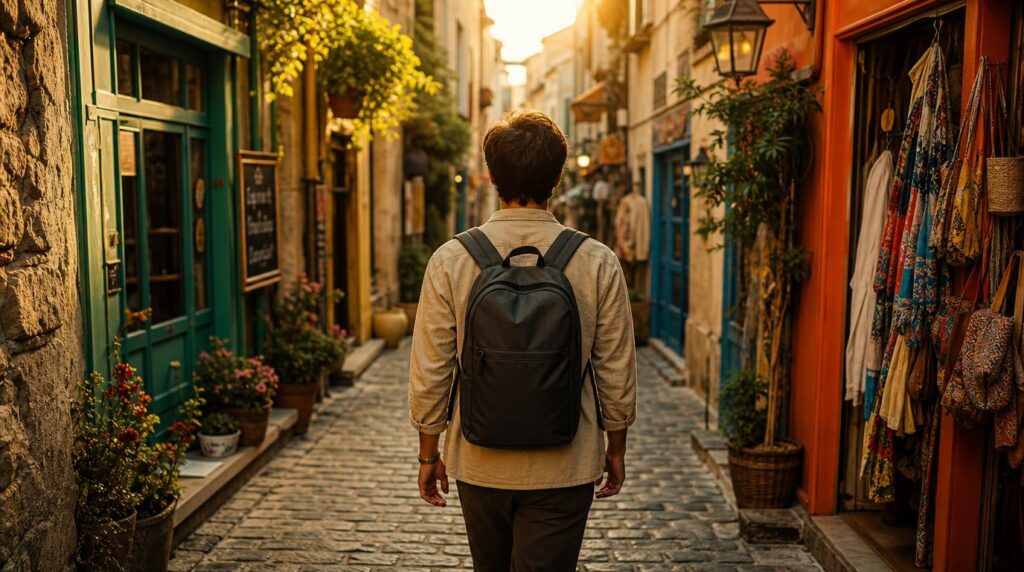
Peak Design’s Travel Backpack skips wheels entirely, built for people who move through cobblestone streets or crowded train platforms more often than smooth airport floors.
- Weight: 4.5 lbs (2.05 kg), light enough to carry all day.
- Capacity: expands from a 35-liter base to 45 liters, or compresses down to 30 liters for shorter trips.
- Material: 400D recycled nylon Versa Shell with a DWR coating and a weatherproof 900D base.
- Laptop compartment: fits up to a 16-inch laptop, accessible from a dedicated top panel.
The lack of wheels is the whole point for some nomads and the dealbreaker for others. On a smooth airport floor, a rolling case wins every time. On a market street with uneven paving or a hill town with no sidewalks, a backpack slung over one shoulder saves the wrists. The expansion system means the same bag works for a three-day trip and a three-week one.
Best for: nomads whose routes involve more uneven ground than smooth terminals.
4. Osprey Farpoint 40
Osprey built the Farpoint 40 for people who want backpack comfort without paying premium prices, and it remains one of the lighter full-size travel backpacks on the market.
- Weight: 3.27 lbs, among the lightest full-size travel backpacks available.
- Dimensions and capacity: 21.7 x 13.8 x 9.1 inches, 40 liters.
- Laptop sleeve: fits laptops up to 16 inches, with a zip-away harness that tucks the straps away for check-in.
- Price: around $200.
At 9.1 inches deep, the Farpoint clears US and most international standard carry-on rules, but it runs past IATA’s Cabin OK depth recommendation of 7.5 inches. That rarely causes problems on major carriers, but it’s worth checking against a strict budget airline before a tight connection. The zip-away harness is the detail that lets this bag double as a suitcase substitute when a trip calls for one.
Best for: budget-conscious nomads who want a genuine backpack rather than a wheeled hybrid.
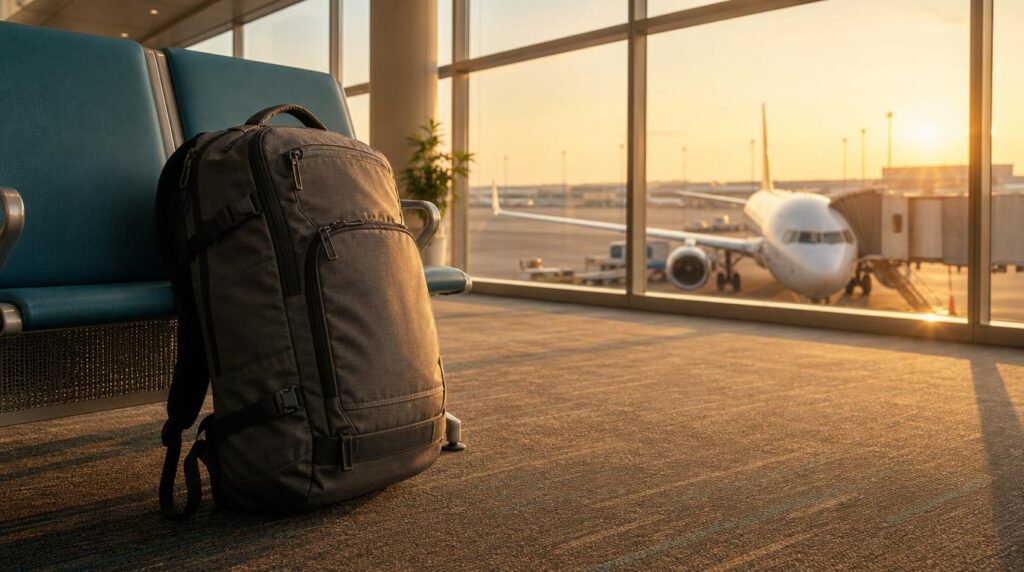
5. July Carry On Light
July built the Carry On Light around one number, 3.9 pounds, making it one of the lightest hardshell carry-ons sold anywhere.
- Weight: 3.9 lbs, roughly half the weight of most hardshell competitors.
- Dimensions and capacity: 21.6 x 14 x 7.8 inches, 38 liters.
- Material: German polycarbonate shell with silent 360-degree double spinner wheels.
- Price: $225, backed by a lifetime warranty on manufacturing faults.
Weight matters more than most nomads expect until they hit an airline that weighs carry-ons at the gate, common across parts of Asia and Latin America. A lighter empty bag leaves more of that weight allowance for what’s actually packed inside. The 38-liter capacity runs smaller than July’s standard Carry On, since the lighter shell leaves less room to work with.
Best for: nomads flying budget carriers with strict carry-on weight limits, not just size limits.
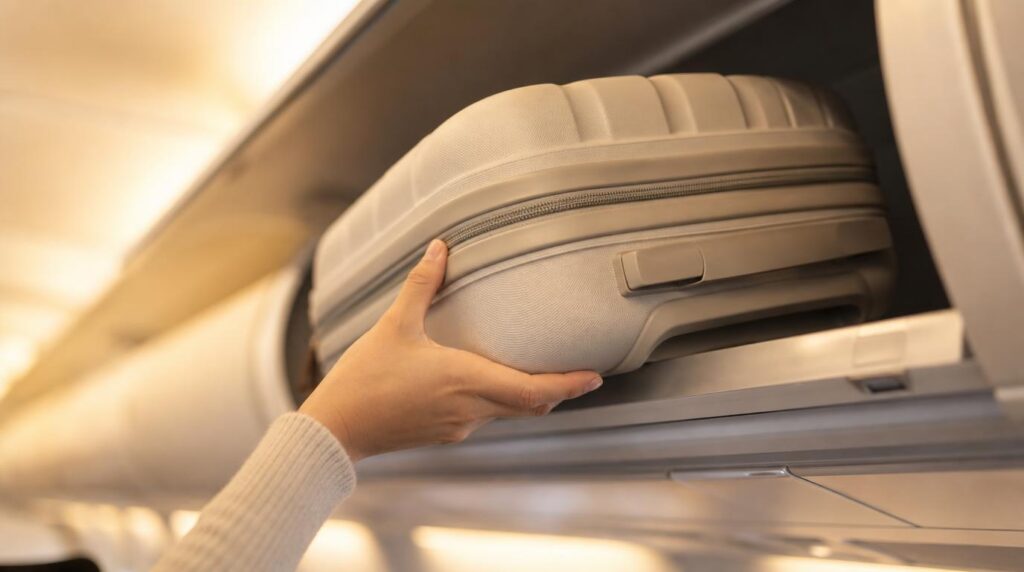
6. Patagonia Black Hole Wheeled Duffel 40L
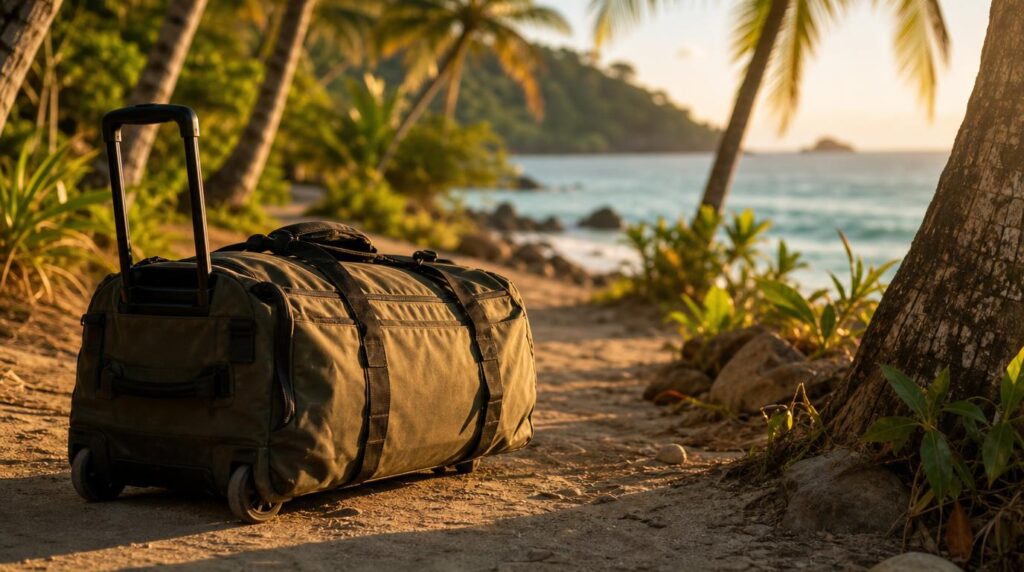
Patagonia’s wheeled duffel trades a rigid shell for a weatherproof soft body, built for nomads headed somewhere sandy, muddy, or generally rougher than a business hotel.
- Weight: 7.76 lbs.
- Dimensions and capacity: 21.75 x 14.5 x 11 inches, 40 liters.
- Material: recycled polyester ripstop with a TPU-film laminate for weather resistance.
- Build: a collapsible internal frame and spare wheel axles included for field repairs.
At 11 inches deep, this duffel runs past the 9-inch depth most airlines allow for wheeled carry-ons, so it’s worth confirming against a specific airline before a tight connection. What it gives up in universal size compliance, it makes up for in resilience. A soft-sided duffel survives being tossed onto a boat, strapped to a scooter, or dragged across sand in ways a hardshell case won’t.
Best for: nomads based in beach towns or destinations where the bag takes more abuse than a typical business trip.
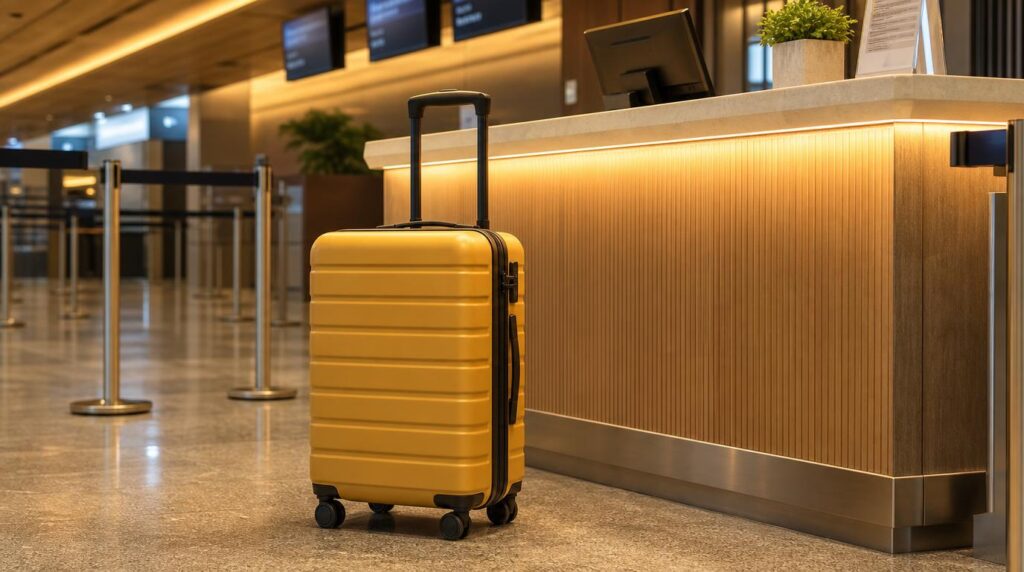
7. Samsonite Freeform Carry-On Spinner
Samsonite’s Freeform line is the budget entry on this list, and it comes with the strongest warranty of any bag here.
- Weight: 5.7 lbs on the standard 21.5 x 14.5 x 9 inch version.
- Material: 100% polypropylene shell with a texture designed to hide scratches.
- Warranty: 10-year limited warranty, longer than every other option on this list.
- Price: typically $190 to $220 depending on the sale and exact size code.
Samsonite sells a few Freeform variants under similar names, and the dimensions and weight shift between them, so confirm the specific SKU before buying rather than assuming every “Freeform” listing matches this one. For nomads buying a first real carry-on, the low price and long warranty offset the fact that it runs heavier than the premium picks above.
Best for: first-time buyers who want the longest warranty at the lowest price.
Find the bag that fits your travel pace
A carry-on built for occasional trips won’t hold up to a life spent moving between cities. Whether that means a hardshell case with a lifetime warranty, a wheel-free backpack for uneven streets, or the lightest shell available for weight-strict airlines, the right bag comes down to how and where you actually travel. Once it’s packed, search flights on FlyBibe and get moving toward the next stop on your route.