
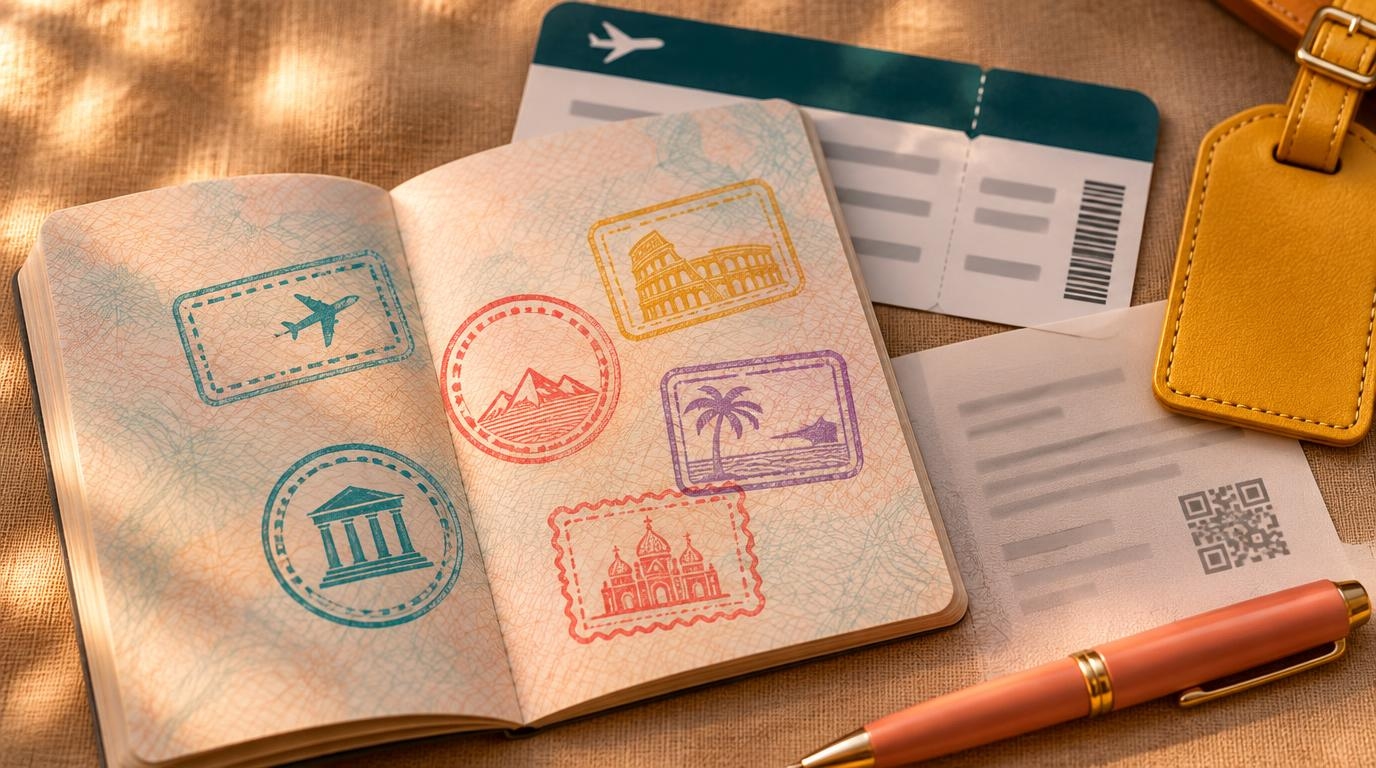
Visa-free entry, visa on arrival, and e-visa are three ways to get permission to enter a country as a visitor. Each one works at a different time, costs a different amount, and brings its own checks at the airport. This guide explains what each term means and compares the three side by side. It also shows how to apply, using current rules for Thailand, Indonesia, Vietnam, the Maldives, and Europe. Details are current as of November 15, 2026.
What Each Entry Type Means
The three labels describe when and where a traveler receives permission to enter.
- Visa-free entry: The country lets holders of listed passports enter without a visa. There is no application. The border officer records the entry, and the passport decides how many days are allowed.
- Visa on arrival: The traveler receives the visa at the border after landing. The process usually involves a counter, a form, a fee, and a line. Some countries also offer an online version that skips the counter.
- E-visa: The traveler applies on a government website before the trip. Approval comes by email as a PDF or QR code, with no embassy visit in most cases.
Most countries use more than one system at the same time, and the passport decides which one applies. Vietnam shows how this works. Under a government resolution extended to March 2028, UK citizens can enter visa-free for up to 45 days. The US State Department says US citizens need a visa, and the e-visa is one way to get it.
Thailand follows the same pattern. According to the Royal Thai Embassies in London and Helsinki, 60 countries and territories receive 30 days visa-free from September 15, 2026. Citizens of three countries can still get a visa on arrival. Other nationalities either have separate bilateral arrangements or apply for a visa, usually through the Thai e-visa website.
How the Three Compare
Where and When You Apply
The main difference is timing.
- Visa-free entry: No visa application is needed. Some countries still ask for a free online arrival form. Thailand requires its Thailand Digital Arrival Card from all foreign travelers, including visa-free ones, according to the Royal Thai Embassy in London. In the Schengen area, the Entry/Exit System needs no advance application and records a face photo and fingerprints at the border, according to the European Commission.
- Visa on arrival: The work happens after landing. Indonesia’s immigration directorate describes two routes, paying at a bank counter in the airport inspection area or buying the e-VoA online before the trip.
- E-visa: The work happens before the trip. The Royal Thai Embassy in New Delhi says all visa applicants must use thaievisa.go.th. The US State Department says Vietnam’s e-visa usually takes three to five working days after the application and fee arrive.
Visa-free entry needs the least planning, and an e-visa needs the most lead time. A booking made a few days before departure may not leave enough time for an e-visa. Visa on arrival sits in the middle, and an online option can move the paperwork from the airport to home.
Cost
- Visa-free entry: Free.
- Visa on arrival: Indonesia charges IDR 500,000 (about USD 28) for 30 days, according to its immigration directorate. The Maldives issues a free 30-day visa on arrival to all nationalities, according to the Maldives High Commission in London. Thailand’s visa on arrival, now limited to three countries, costs 2,000 baht.
- E-visa: Vietnam’s e-visa is reported at USD 25 for a single entry and USD 50 for multiple entries. Both last up to 90 days.
Government fees are small. Copycat websites can add their own charges, and the UK government warns that other websites may charge more than the official ETA fee. Vietnam guides give the same warning for e-visas.
A proposal reported by VisasNews in August 2026 would raise Indonesia’s fee to IDR 1,000,000 on arrival and IDR 750,000 online. No start date has been announced, and the official fee remains IDR 500,000 as of the date checked.
How Long You Can Stay
- Visa-free entry: Thailand allows 30 days, down from 60 days before September 15, 2026. Vietnam allows 45 days for listed passports. Georgia allows up to 365 days for citizens of about 98 countries, according to Georgian tourism sources. A separate guide explains Georgia’s one-year visa-free stay in detail. The Schengen area allows 90 days in any 180-day period, according to the European Commission.
- Visa on arrival: Indonesia grants 30 days and allows one extension of 30 days. The Maldives grants 30 days and allows an extension of up to 60 more days if the traveler applies before the first period ends.
- E-visa: Vietnam’s e-visa lasts up to 90 days and cannot be extended inside the country, according to the US State Department. Thailand’s single-entry tourist e-visa allows 60 days with one 30-day extension, according to the Royal Thai Consulate-General in Los Angeles.
A longer stay can be a reason to pick an e-visa. After September 15, 2026, a US citizen heading to Thailand can stay 30 days visa-free or apply for a tourist visa that allows 60 days. Some travelers leave and re-enter to restart the clock, which is often called a visa run. Thailand limits land-border entries under the exemption to two per calendar year, according to the Royal Thai Embassy in London.

What Airlines and Border Officers Check
- Visa-free entry: Officers can ask for proof of onward travel and enough funds. Thailand requires proof of a ticket out within 30 days for visa-exempt arrivals, according to the Royal Thai Embassy in Helsinki. Legal ways to meet this rule are covered in a guide to proof of onward travel.
- Visa on arrival: Indonesia asks for a passport valid for at least six months and a return or onward ticket. The Maldives asks for a ticket out within 30 days of arrival, and other guides list a confirmed booking and proof of funds.
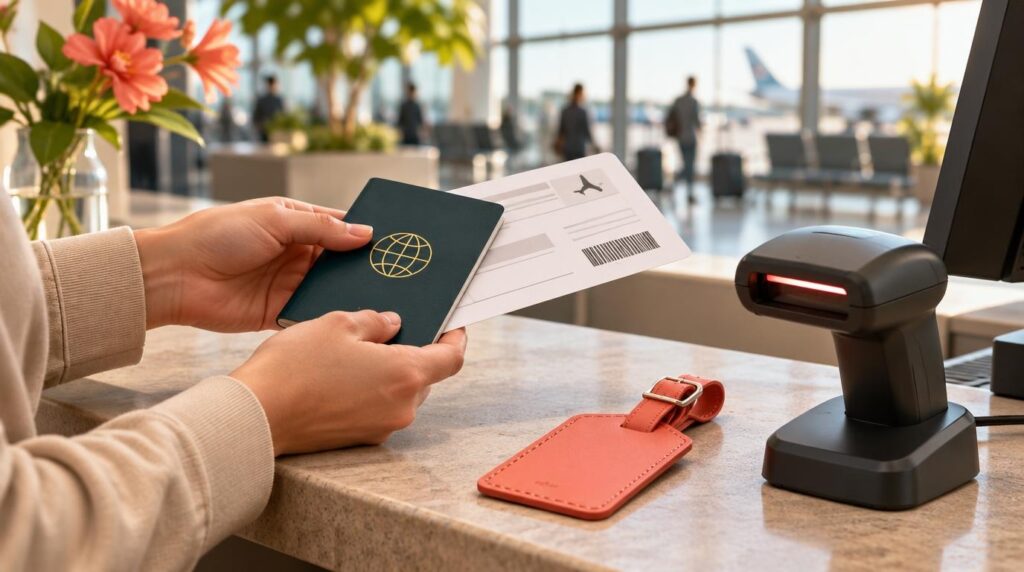
- E-visa: Airlines check documents before boarding. IATA says the duty to confirm valid documents falls on airlines. VisasNews reports that proof of an e-visa can be an email, a PDF, or a QR code. The US State Department says travelers to Vietnam must show the printed e-visa with the passport.
Travelers can run their own route through the IATA Travel Centre, which gives passport and visa advice based on personal details and the itinerary. The tool draws on the same Timatic database that many airlines use, so the result gives a useful preview of the check-in desk.
Whether You Can Work
All three types are tourist-style entries in most cases, and each country sets its own limits on work.
- Visa-free entry: Thailand’s exemption covers tourism only from September 15, 2026, according to the Royal Thai Embassy in London. Some other embassy pages also mention short-term business, so the wording differs between sources. In the Schengen area, an EU Delegation FAQ says most member states require a visa and a work permit even for work under 90 days.
- Visa on arrival: Indonesia’s official B1 page says holders may not sell goods or services or receive pay from people or companies in Indonesia.
- E-visa: Thailand’s tourist visa is issued for tourism, according to the Royal Thai Embassy in Washington. Other visa categories exist for work.
Whether remote work for a foreign employer fits a tourist entry depends on the country, and the pages above do not settle the question. A guide to the digital nomad visa vs tourist visa choice explains the difference. Thailand and Indonesia both offer longer-stay routes, including the Destination Thailand Visa and the E33G remote worker visa. The information here is general and not legal advice.
How to Apply for Each Type
Visa-Free Entry
- Check the passport list. Open the destination’s foreign ministry or embassy page and look for the passport. Thai embassy pages list the 60 eligible countries and territories.
- Check passport validity. Many countries want at least six months, and Indonesia and Vietnam both do.
- Book a ticket out. The ticket should leave within the allowed stay, such as 30 days for Thailand.
- File any arrival form. Thailand’s TDAC is filed online, and guides say to submit it within 72 hours before landing.
- Keep proof ready. An onward ticket, the first night’s address, and proof of funds are items officers may ask about. EU rules list sufficient means of subsistence as an entry condition for short stays.
Visa on Arrival
- Confirm the passport is eligible. Indonesia publishes an eligible country list on its immigration site. The Maldives issues the visa to all nationalities.
- Apply online first if possible. Indonesia’s e-VoA is requested on evisa.imigrasi.go.id. The form asks for the passport photo page, a recent color photo, and a return or onward ticket. Payment is by debit or credit card, and the visa arrives by email within 24 hours.
- Or pay at the airport. The traveler pays at the bank counter in the inspection area and shows the passport. The voucher then goes to the visa counter for the sticker.
- Check the dates. The e-VoA is valid for 90 days from issue, and the 30-day stay starts on arrival.
- Extend on time. One 30-day extension is possible. Holders of an e-VoA can extend online, and holders of the airport version go to the nearest immigration office.

E-Visa
- Find the official portal. Thailand uses thaievisa.go.th. Vietnam’s Immigration Department runs its own e-visa portal, which guides list at evisa.gov.vn. Typing the address directly can help avoid look-alike sites.
- Prepare the documents. Most portals ask for a passport scan, a recent photo, travel dates, and a first address.
- Pay by card. Fees are listed on the portal, and sources report that Vietnam’s fee is not refunded if the application is refused.
- Wait for approval. Vietnam usually takes three to five working days. Thai processing depends on the embassy that handles the application, so a few weeks of lead time can help.
- Check the details and print a copy. The US State Department warns that errors on a Vietnam e-visa can lead to denial of entry. A printed copy goes with the passport.
A Fourth Label: Travel Authorizations
Some countries ask visa-free travelers for a short online authorization before the flight. A travel authorization is a different document from a visa, and it sits on top of visa-free entry.
- UK ETA: The fee is £20, and it covers visits of up to six months. Applications go through gov.uk/eta/apply, and the UK government notes that an ETA does not guarantee entry. Each traveler needs one, including children.
- ETIAS: The system is planned for visa-free travelers to 30 European countries. According to the European Commission, an approval will last three years or until the passport expires. As of November 15, 2026, applications are not open. The Commission said in April that the start would fall in the last quarter of 2026, and reports since then disagree on timing. The fee is reported at EUR 20.
- EES: Europe’s Entry/Exit System has been fully operational since April 10, 2026. The system records a face photo and fingerprints at the first entry, and the 90 days in any 180 days rule stays the same. A guide to the Schengen 90/180 day rule explains how the count works.
Applications for the ETA and ETIAS should go through official government sites only, since look-alike sites charge extra.
Which Option Fits Your Trip
Travelers rarely choose the entry type, since the passport usually decides.
- Stays under 30 days: Visa-free entry is the simplest when the passport is on the list, because no application is needed. Visa on arrival works in places like Indonesia and the Maldives, and an online version can save time at the airport.
- Stays of 30 to 90 days in one country: An e-visa may allow more days. Vietnam’s e-visa gives up to 90 days, compared with 45 days visa-free for UK citizens. Thailand’s tourist visa allows 60 days, compared with 30 days visa-free.
- Stays beyond 90 days or work abroad: A long-stay visa is the usual route, although a few countries have long visa-free periods. A list of visa-free destinations for remote workers covers places where no application is needed.
Official Sources Checked on November 15, 2026
- Indonesia: Directorate General of Immigration, B1 visa on arrival
- Thailand: Royal Thai Embassy pages in London, Helsinki, Los Angeles, Washington, and New Delhi, plus the Thai e-visa portal
- Vietnam: US State Department, Vietnam country information
- Maldives: Maldives High Commission in London and the Maldives mission tourist visa page
- Europe: European Commission, EES and ETIAS differences
- United Kingdom: GOV.UK, Electronic Travel Authorisation
- Airline checks: IATA Timatic and Travel Centre
Check the Entry Type Before You Book
The right entry type depends on the passport, the length of the trip, and the plan for work. Visa-free entry needs the least effort, visa on arrival moves the paperwork to the border, and an e-visa asks for planning before the flight. After checking the official page for the destination, search flights on FlyBibe, where results are filtered by visa rules as well as price.
Immigration and tax rules change. Confirm current requirements with the relevant embassy or a qualified professional before making plans. Staying many months in one country on any entry type can raise tax residency questions. This article is general information, reflects what was found on November 15, 2026, and is not legal or tax advice.