

Proof of onward travel is a booking that shows you plan to leave a country before your permitted stay ends. Airlines often check it at check-in, and border officers may ask for it on arrival. This guide explains who asks, what several popular countries say in writing, and the legal ways to meet the rule. The rules were checked on November 15, 2026.
Who Asks for Proof of Onward Travel, and Why
Two groups can ask. The airline asks first, at check-in or at the gate, and a border officer may ask again at the immigration desk.
- Airlines: Check-in staff use IATA’s Timatic database to check passport, visa, and health rules. IATA says Timatic supports more than 700 million passenger document checks each year. Airlines have a reason to be careful, because a carrier can be required to take a refused traveler home under the Schengen rules.
- Border officers: Officers decide whether you enter. The UK government page for visitors, for example, says you may be asked questions at the border about your eligibility and your plans.
- IATA Travel Centre: Travelers can enter a passport and itinerary to get personal passport, visa, and health advice. The tool runs on Timatic, the same database airline staff use, so a result can show what a check-in agent may see.
Costa Rica’s tourism board names three situations in which non-residents must hold a ticket for return or onward travel. The first is arriving on a one-way ticket. The second is holding a return ticket dated more than 90 days after arrival. The third is flying to Costa Rica and flying out of a different country. These situations may draw questions in other countries as well.
What Popular Destinations Say in Writing
The entries below come from government or official tourism pages, checked on November 15, 2026. Requirements can differ by passport, so the page for your nationality has the final word.
- Schengen area: Article 6 of the Schengen Borders Code asks travelers to justify the purpose of the stay. The code also asks for enough money to cover the stay and the return home, or the trip to a third country where entry is guaranteed. Annex I lists a return or round-trip ticket as one example document for tourism, and the list is not complete. The ticket should also fit inside your Schengen 90/180 day allowance.
- Thailand: The Bangkok Post reported that the Royal Gazette set a 30-day limit on visa-free stays for visitors from 60 countries, starting September 15, 2026. The Royal Thai Embassy in Chicago lists a flight itinerary into and out of Thailand among the documents for a tourist visa application. The pages found for this article did not state a ticket rule for visa-exempt arrivals in plain words. The Thaiger reports that airlines enforce onward-travel rules more strictly than Thai immigration does. A ticket out within 30 days only makes sense if you plan to leave by then. Longer stays need a matching visa, such as the Destination Thailand Visa.
- Philippines: A Department of Foreign Affairs consulate page covers visa-free stays of 30 days or less. The page lists valid tickets for return to the port of origin or onward to the next port of destination. It also lists a passport valid at least six months beyond the planned stay.
- Indonesia: The immigration FAQ lists a return ticket or a ticket to continue to another country for visa on arrival, e-VOA, and visa-free visits. All three also list a passport valid for at least six months.
- Costa Rica: The tourism board accepts a bus ticket bought in advance, a flight bought in advance, or passage on a cruise ship. The board also lists proof of at least US$100 for each month or part of a month of stay.
- United States: The Visa Waiver Program rules in 8 CFR Part 217 set out what counts as a return trip ticket for arriving travelers.
- United Kingdom: The GOV.UK Standard Visitor page says visitors must be able to pay for a return or onward journey, or have someone else fund it. The page words this as an ability to pay, and it adds that officers may ask questions at the border.
Even where an official page does not list a ticket, an airline desk may still ask for one. A booking in hand can prevent a missed flight.

Legal Ways to Get Proof of Onward Travel
Each option below is a real booking or a real refund right. The best fit depends on how firm your plans are.
- A flight you plan to take: A one-way flight to the next stop on your route, dated inside the permitted stay, is one of the cleanest forms of proof. The booking is genuine. Our guide to one-way versus round-trip tickets covers booking for open-ended trips.
- A refundable or flexible ticket: A fully refundable fare costs more up front, and the money returns after you cancel. Airlines set their own fare rules, so the refund terms are worth confirming before payment.
- The US 24-hour rule: Under 14 CFR 259.5(b)(4), carriers must let a customer hold a reservation at the quoted fare without payment, or cancel it without penalty, for at least 24 hours after booking. The rule applies to bookings made one week or more before departure. Each airline chooses whether to offer the hold or the free cancellation. Refunds go to the original form of payment, and the carrier may not keep a processing fee. Other countries and airlines set their own refund terms.
- A bus, train, or ferry ticket out: Costa Rica accepts a bus ticket bought in advance. Other countries may accept only flights, so the country’s own page is the place to check.
- A visa that matches a longer stay: A ticket dated inside a 30-day exemption does not match a plan to stay three months. A visa for the real length of stay solves the mismatch honestly. Our guide to digital nomad visas versus tourist visas helps with that choice. Leaving and re-entering to reset a stay has its own rules, covered in our post on what a visa run is and how nomads use one legally.
A booking only counts as proof while it is active. Showing a reservation that was already canceled would misrepresent your plans, and an officer may be able to look it up.
Why Edited or Invented Bookings Cause Trouble
A real reservation can be found on the airline’s website with the booking code and the passenger surname. A document that fails that check is not a booking. The Philippine Bureau of Immigration has warned that misstating the details of a trip can lead officers to doubt it. The Philippine Daily Inquirer also reported a case in which 13 passengers bound for Hong Kong were stopped at Manila’s airport. Their self-printed boarding passes were not in the airline’s manifest. The Manual warns that forged tickets can lead to fines, deportation, and entry bans.
What to Do If You Are Asked and Have No Proof
Plans change, and a question at the check-in desk can catch a prepared traveler off guard. These steps help.
- Ask which rule applies. Airline staff can look up the entry rule in their document-check system, and a polite request to see the text on screen is reasonable.
- Run the same itinerary in the IATA Travel Centre. Then compare the result with the destination government’s own page.
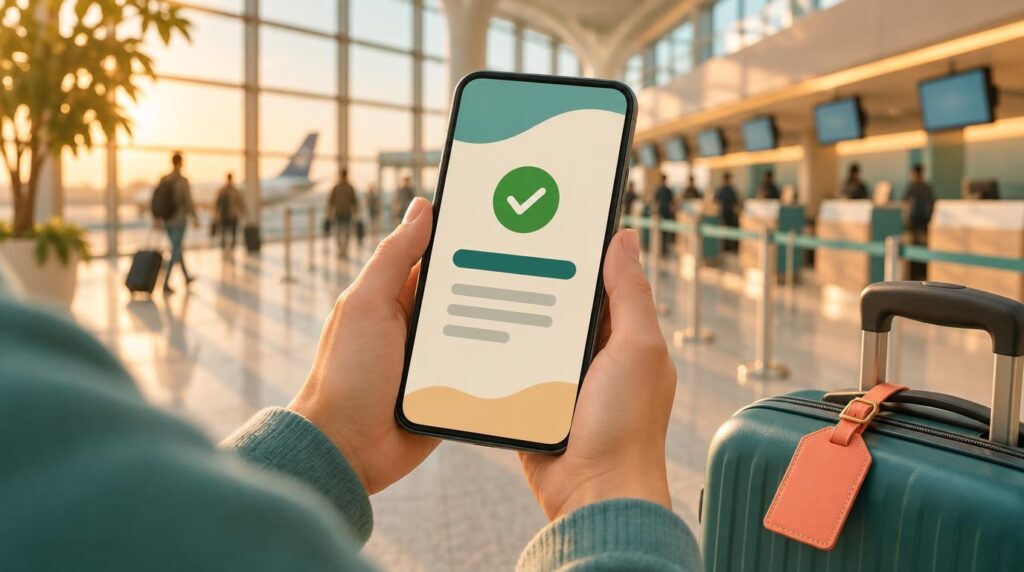
- Book a flexible onward ticket on your phone. Choose a date inside the permitted stay and keep the confirmation and the receipt.
- Save the booking offline. A screenshot with the booking code and the passport name protects against weak airport wifi.
- Answer plainly at the border. If asked, show the booking, the first night of accommodation, and proof of funds.
If entry is refused in the Schengen area, Article 14 of the Schengen Borders Code requires a written decision with the precise reasons on a standard form. An appeal is possible under national law, but an appeal does not suspend the refusal.

A Common Mistake: A Ticket Dated Outside the Permitted Stay
A booking only helps when its date fits the stay the officer can grant. Costa Rica’s list of trigger cases includes a return ticket dated more than 90 days after arrival for this reason.
Recent rule changes make the mistake easier to repeat. A traveler who planned around Thailand’s older 60-day exemption might book an exit date that is now too late under the 30-day limit. Advice from older forum posts and videos can fall behind the law in the same way.
The UK adds a different wrinkle. Its page asks about the ability to pay for the journey, so the proof there may be money and plans rather than a ticket. Each border has its own wording, which is why checking the official page before each trip is worth the few minutes.
Book Your Flight Out
Proof of onward travel is easiest to manage when it is a real booking made before you reach the airport. The IATA Travel Centre and the official page for your destination show what applies to your passport. Once the rule is clear and your next stop is chosen, search flights on FlyBibe and compare fares with visa rules and cost in view.
General information only, not legal or immigration advice. Immigration and tax rules change, and this article reflects information checked on November 15, 2026. Please confirm current requirements with the relevant embassy or a qualified professional before making plans.