

Tbilisi, Yerevan, Batumi, and Baku are four Caucasus cities where remote workers can base themselves. The ranking compares the cities on visa rules, internet speed, monthly cost, coworking options, and safety advisories, using sources checked in November 2026. All four share one time zone, which suits clients in Europe more than clients in the United States.
How the Four Cities Are Ranked
The ranking weighs five factors. Visa clarity and safety carry the most weight, because they decide whether a long stay is practical.
- Visa and stay length: how long a passport holder can stay and work legally.
- Internet: national and city speeds from the Ookla Speedtest Global Index, where available.
- Cost: one-bedroom rent and coworking prices from named sources, converted at stated rates.
- Community: documented coworking spaces and nomad hubs.
- Safety: the current US State Department advisory level.
Tbilisi ranks first because it combines the longest visa-free stay with one of the deepest sets of documented coworking spaces. Yerevan follows with faster national internet, and Batumi ranks third as a smaller coastal option. Baku ranks last because of its advisory level and because its nomad visa is not open yet. Readers who want cheaper options beyond the Caucasus can see this list of digital nomad cities under $1,500 a month.
The Four Cities, Ranked
1. Tbilisi, Georgia

Tbilisi offers the longest visa-free stay of the four cities and a large coworking scene. Georgia also changed its work and insurance rules in 2026, so the details below matter.
- Internet: Georgia averaged 44.73 Mbps on fixed broadband in March 2026, according to the Ookla Speedtest Global Index as reported by report.az. Median speeds are lower, at 20 Mbps in July 2024 in a World Bank figure cited by Georgia Today. Mobile connections may be faster, so a SIM card with a large data plan can serve as a backup.
- Cost: A July 2026 snapshot from armenian-lawyer.com lists a city-centre one-bedroom at about $680 a month. Numbeo’s Tbilisi page shows data last updated in January 2023, so this article does not use it.
- Visa: Citizens of many countries, including the United States, can enter without a visa. The stay can last up to 365 days, according to the US State Department. Georgia has no digital nomad visa. Sources disagree on whether the 365 days count per entry or per calendar year, so the official government pages are worth checking. The explainer on Georgia’s visa-free stay covers the rule in more detail.
- Coworking: Impact Hub (inside Fabrika), Terminal, and Lokal are the names that appear most often in local guides. Hot desks run about 250 to 450 GEL a month, according to Georgia Expats (February 2026). At 2.6 GEL per dollar, the range is about $96 to $173, and day passes cost 25 to 50 GEL. Regus lists hot-desk plans from $99 a month. For short stays, this post on coworking spaces with day passes lists more options.
- Safety: The US State Department rates Georgia at Level 1, “Exercise normal precautions,” in the most recent advisory found, issued 13 March 2025. The advisory rates Abkhazia and South Ossetia at Level 4, “Do not travel.”
Two 2026 changes affect planning. Embassy notices describe mandatory health insurance for foreign visitors from 1 January 2026, and a guide to travel insurance for remote workers covers the options. The US State Department also says a right to work permit applies from 1 March 2026. Some law firm summaries say fully remote work for foreign clients is exempt. The sources do not agree on the details, so the current rule should be confirmed with Georgian authorities.
Law firm summaries also describe a territorial tax system, with tax residency starting at 183 days in a 12-month period. They describe an individual entrepreneur regime that taxes turnover at 1% up to GEL 500,000. These points need checking against official sources.
Spring and autumn are the most comfortable seasons. July highs average 87°F (31°C) and January lows average 28°F (-2°C), according to WeatherSpark. The city also works as a launch point for weekend trips for working nomads, and the full Tbilisi digital nomad guide covers neighborhoods and budgets.
Best for: Remote workers who want a long visa-free stay, a large coworking scene, and the lowest advisory level of the four.
2. Yerevan, Armenia

Yerevan pairs faster national broadband than Georgia with a visa-free stay of up to 180 days per year. The coworking scene is well documented.
- Internet: Armenia averaged 84.16 Mbps on fixed broadband in March 2026, according to the Ookla Speedtest Global Index as reported by report.az. The national figure is almost double Georgia’s. A city-level figure for Yerevan was not found from a primary source.
- Cost: Two sources give a range of about $740 to $790 for a city-centre one-bedroom. The armenian-lawyer.com snapshot from July 2026 lists $787. Numbeo (2 November 2025) lists 283,311 AMD in the centre and 204,369 AMD outside it. At 382 AMD per dollar, the Armstat average for November 2025, those figures come to about $742 and $535.
- Visa: US citizens can stay up to 180 days per year without a visa, according to the US State Department. Other nationalities should check the Armenian foreign ministry. Armenia has no digital nomad visa. Residence permits are possible, for example by registering as a sole trader. Residence rules are being updated, so official sources should be checked before applying.
- Coworking: Impact Hub Yerevan, 256 HUB, and Hero House are the main names in local guides. Armenian-lawyer.com lists hot desks at about $65 to $80 a month at Impact Hub and $75 to $95 at 256 HUB. Day passes cost $12 to $20. Those prices are undated, so each space’s own site is the better check.
- Safety: The US State Department rates Armenia at Level 2, “Exercise increased caution,” in an advisory issued 5 September 2025. The advisory rates the border region with Azerbaijan at Level 4, “Do not travel.”
The 180-day limit applies per year, so a stay longer than six months needs a residence permit or time spent elsewhere. Readers comparing other long visa-free stays can see this list of visa-free destinations for remote workers.
Summers are hot, with July highs averaging 91°F (33°C), and January lows average 19°F (-7°C), according to WeatherSpark. Late spring and early autumn are usually the most comfortable. The Yerevan digital nomad guide covers neighborhoods and monthly budgets.
Best for: Remote workers who want fast national internet and up to 180 visa-free days, and who can handle hot summers and cold winters.
3. Batumi, Georgia
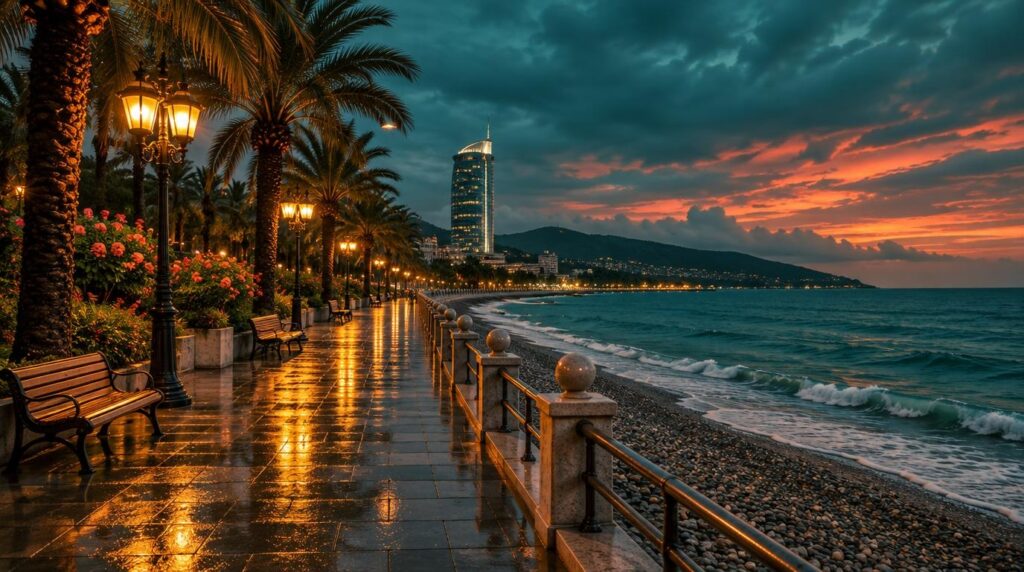
Batumi is a Black Sea city that follows the same visa rules as Tbilisi. The city has fewer documented coworking spaces than the capital and a much rainier climate.
- Internet: A reliable city-level speed figure for Batumi was not found. The national Georgia average of 44.73 Mbps (Ookla, March 2026) is the closest available figure. Speed tests from a host or coworking space before booking could confirm the real number.
- Cost: Numbeo (27 October 2025) lists a city-centre one-bedroom at 1,312 GEL and 945 GEL outside the centre. At 2.716 GEL per dollar, the October 2025 average, those figures come to about $483 and $348. Numbeo also puts a single person’s monthly costs, excluding rent, at about $525.
- Visa: The rules match Tbilisi, with up to 365 days visa-free for many nationalities and no nomad visa. The insurance and work permit points covered under Tbilisi apply here too.
- Coworking: Terminal Batumi (7a Akhmeteli Street) lists a dedicated desk at 600 GEL a month, about $231 at 2.6 GEL per dollar. LendSpace and LOCUS also appear in local guides. The Madloba catalog lists more than 20 coworking places in Batumi, against more than 50 in Tbilisi (checked 10 November 2026).
- Safety: Batumi falls under the same Level 1 advisory as the rest of Georgia.
Rain shapes daily life here. November is the wettest month at 4.8 inches, and May is the driest at 1.4 inches, according to WeatherSpark. The average January temperature is 7.8°C (46°F), according to ClimatesToTravel. Climate normals from Population Review list May, June, and July as the most comfortable months.
Coworking choices are narrower than in Tbilisi, so a one-month trial before a longer commitment could help.
Best for: Remote workers who want a seaside base under Georgia’s 365-day rule and can accept a wet winter and fewer coworking options.
4. Baku, Azerbaijan
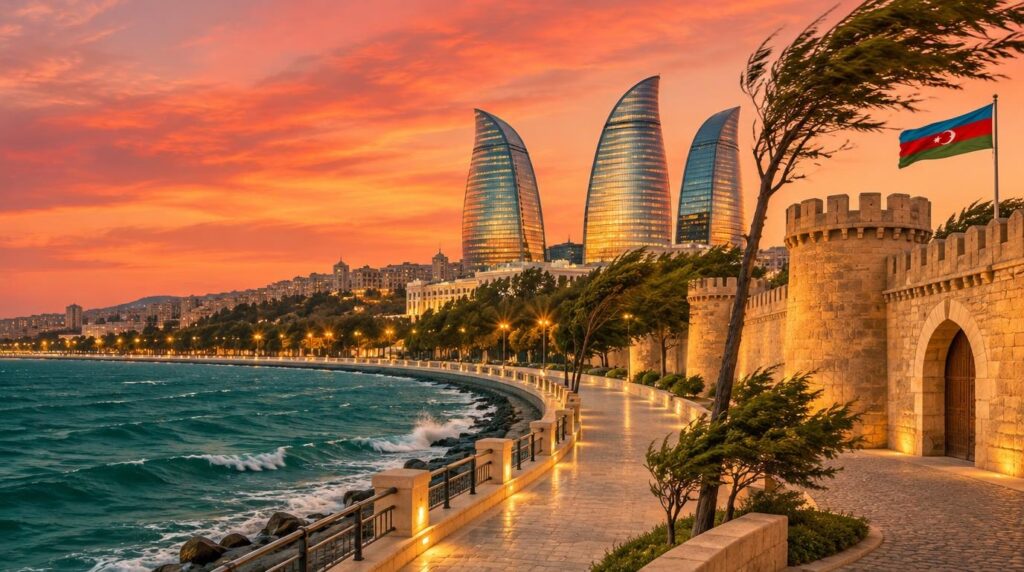
Baku posts the highest internet speeds in the Ookla figures used here. Baku ranks last because of its current US advisory level and the lack of an open nomad visa.
- Internet: Azerbaijan averaged 91.37 Mbps on national fixed broadband in March 2026. Baku averaged 91.45 Mbps on fixed connections and 115.92 Mbps on mobile, according to the Ookla Speedtest Global Index as reported by report.az.
- Cost: Numbeo (13 November 2026) lists a city-centre one-bedroom at 921 AZN and 536 AZN outside the centre. At the fixed rate of about 1.7 AZN per dollar, those figures come to about $542 and $315. A meal at an inexpensive restaurant costs 15 AZN, about $8.80.
- Visa: The ASAN e-visa costs $20 with a three-working-day wait. Urgent service costs $50 and takes three hours, according to the Azerbaijani foreign ministry. The e-visa is single entry, allows a 30-day stay, is valid for 90 days, and cannot be extended. Azerbaijan has announced a digital nomad visa in its 2026 to 2030 tourism programme, with a target of 2027 to 2028. The visa is not open, and its rules were not published when this article was checked.
- Coworking: Regus lists centers in Baku, with hot-desk plans from AZN 235 a month (about $138) and day coworking from AZN 59 (about $35). Spaces also lists Baku locations. Independent coworking spaces aimed at nomads were harder to verify, so documented supply looks thinner than in Tbilisi or Yerevan.
- Safety: The US State Department rates Azerbaijan at Level 3, “Reconsider travel,” in an advisory reissued 10 September 2026. The advisory cites terrorism, armed conflict, landmines, and a regional missile and drone threat linked to Iran. Areas under a do-not-travel warning are also listed.
Because the e-visa allows only 30 days with no extension, a longer stay would involve leaving and applying again. Some travel insurance policies limit cover in places with high advisory levels, so the policy wording is worth reading before booking.
Baku is windy, with a cold north wind called the khazri and a warm south wind called the gilavar, according to ClimatesToTravel. July highs average 88°F (31°C) and January lows average 36°F (2°C), according to WeatherSpark. April to June and September to October are usually the most comfortable months.
Best for: Short stays by remote workers who need very fast internet, have read the current advisory, and accept the entry limits.
Time Zone Overlap With Clients
All four cities use UTC+4 all year with no clock changes, according to the US State Department’s pages for Georgia, Armenia, and Azerbaijan. The figures below assume a local workday from 10:00 to 19:00 and a client workday from 9:00 to 17:00. Winter figures use standard time in the client’s region, and summer figures use daylight saving time.
- UK: 4 hours ahead in winter and 3 in summer. Overlap is 6 hours in winter and 7 in summer.
- Central Europe: 3 hours ahead in winter and 2 in summer. Overlap is 7 hours in winter and 8 in summer.
- US Eastern: 9 hours ahead in winter and 8 in summer. Overlap is 1 hour in winter and 2 in summer, in the early evening.
- US Pacific: 12 hours ahead in winter and 11 in summer. A 9:00 to 17:00 Pacific day falls between 21:00 and 05:00 local time in winter, so no overlap exists with a regular local day.
European clients fit these cities well. Clients on US Eastern time usually mean calls in the early evening. Clients on US Pacific time usually mean calls late at night or very early in the morning. A post on managing client meetings across time zones covers ways to schedule them.
Pick a City and Book Your Trip
This article gives general information on visas, work permits, and tax, so confirm current rules with official sources or a qualified adviser before you travel.
Tbilisi offers the longest visa-free stay, and Yerevan has faster national internet than Georgia. Batumi gives you a seaside base under the same Georgian rules, and Baku suits short stays for people who accept its advisory level. Once you have chosen a city, search flights to the Caucasus on FlyBibe and filter by wifi, visa rules, and cost. FlyBibe handles the booking, so you can compare fares to Tbilisi, Yerevan, Batumi, and Baku in one place.