
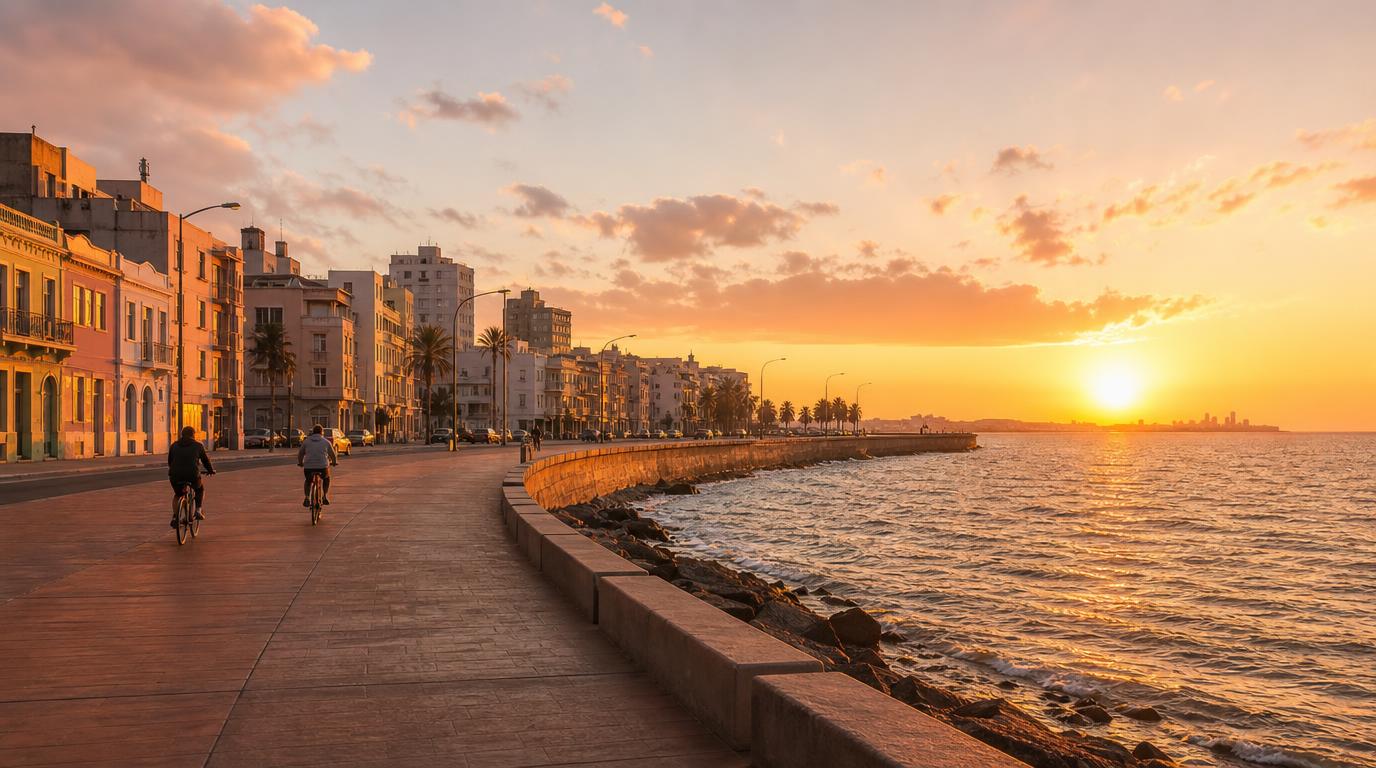
Montevideo is Uruguay’s capital and the quiet alternative to Buenos Aires and Rio for remote workers who want stable infrastructure without the security headaches that come with bigger South American capitals. This guide covers what it actually costs to live there, how fast the internet runs, what visa options exist, and which neighborhoods to base yourself in.
Internet in Montevideo
Uruguay built out state-owned fiber earlier and more thoroughly than most of its neighbors, and it shows in the numbers.
- Average fixed broadband: 151.9 Mbps download, 38.9 Mbps upload, 23ms ping (12-month average through mid-2026).
- Fastest provider: Antel, the state telecom, averages 166.3 Mbps download and 41.6 Mbps upload on its network.
- Mobile coverage: Uruguay regularly ranks among the fastest mobile internet markets in Latin America, and 4G coverage is close to universal in Montevideo proper.
Those broadband numbers put Montevideo ahead of most regional capitals, and coworking spaces and apartment buildings in the city center almost universally run on fiber. Video calls, large file transfers, and simultaneous household streaming are a non-issue here in a way they still aren’t in parts of Brazil or Argentina.
Cost of living
Montevideo isn’t the cheapest base in South America, but it’s realistic for anyone earning a US or European remote salary.
- 1-bedroom apartment, city center: around $760/month (Ur$30,700).
- 1-bedroom apartment, outside center: around $595/month (Ur$23,900).
- Groceries and daily living, single person: roughly $970/month excluding rent.
- Inexpensive restaurant meal: around $15.
- Mid-range dinner for two: around $62.
- Monthly public transport pass: around $75.
- Home broadband: around $45/month.
Add it up and a single remote worker renting outside the immediate center, cooking most meals, and using public transit lands around $1,400 to $1,600 a month. Staying in Pocitos or Ciudad Vieja and eating out more pushes that toward $2,000. That’s higher than Medellin or Chiang Mai, but Montevideo also skips the bargaining, informal fees, and price volatility that come with some cheaper destinations. What you pay is close to what’s advertised.
Visa and entry
Uruguay makes this straightforward, whether you want a short stay or a real base.
- Tourist entry: 90 days visa-free for passport holders from the US, UK, all EU member states, and roughly 80 other countries.
- Extension: an additional 90 days is available from within Uruguay, giving tourists up to 180 days total without switching visa categories.
- Digital nomad permit: introduced in 2023, valid for an initial 180 days with one renewal for another 180 days (12 months maximum). Requires a clean criminal record declaration, private health insurance, and a sworn statement of financial self-sufficiency, generally understood to mean roughly $1,500 to $2,000/month in verifiable income.
- Cost: no standard government visa fee, though a minor administrative charge of roughly $10 to $15 applies during processing.
You have to be physically in Uruguay to apply for the nomad permit, so most people enter as a tourist first and file once they’ve decided to stay. Between the 180-day tourist option and the 12-month nomad permit, there’s no reason to overstay or work under the radar here.
Timezone fit
Montevideo runs on UTC-3 year-round. Uruguay dropped daylight saving time in 2015, so the offset doesn’t shift with the seasons the way it does against US and European clocks.
- US Eastern: 1 hour ahead of Montevideo (2 hours during US daylight saving). A full workday overlap with East Coast teams.
- US Pacific: 4 hours ahead of Montevideo (5 hours during US daylight saving). Overlap is limited to Montevideo’s afternoon and Pacific’s morning.
- UK: 3 to 4 hours behind Montevideo depending on the season. Workable overlap in the UK afternoon.
- Central Europe: 4 to 5 hours behind Montevideo. Overlap window is Montevideo’s morning against the European afternoon.
For anyone billing US East Coast hours, this is close to ideal. European teams are workable but require an earlier start on the Montevideo side.
Coworking and community
The coworking scene is smaller than Buenos Aires or Sao Paulo but genuinely functional, concentrated around the Ciudad Vieja and Cordon districts.
- Cowork18, on Avenida 18 de Julio, offers day and monthly desks with air conditioning and kitchen access.
- La Fabrica, on Avenida Agraciada, has a lounge setup and free coffee alongside standard desk space.
- Nexo Work, near Costa Rica street, includes printing and parking, useful for anyone doing occasional in-person client meetings.
- Regus at World Trade Center III covers the corporate end, with private offices and meeting rooms for anyone needing a more formal address.
- Selina Montevideo combines coworking with hostel-style accommodation, the default first stop for nomads who haven’t picked a neighborhood yet.
The community is smaller and quieter than the bigger nomad hubs in Colombia or Mexico. Expect a handful of regulars at each space rather than a rotating scene, which suits people who want to actually work rather than network constantly.

Safety
Montevideo consistently rates as one of the calmer capitals in South America, though “calm” doesn’t mean risk-free.
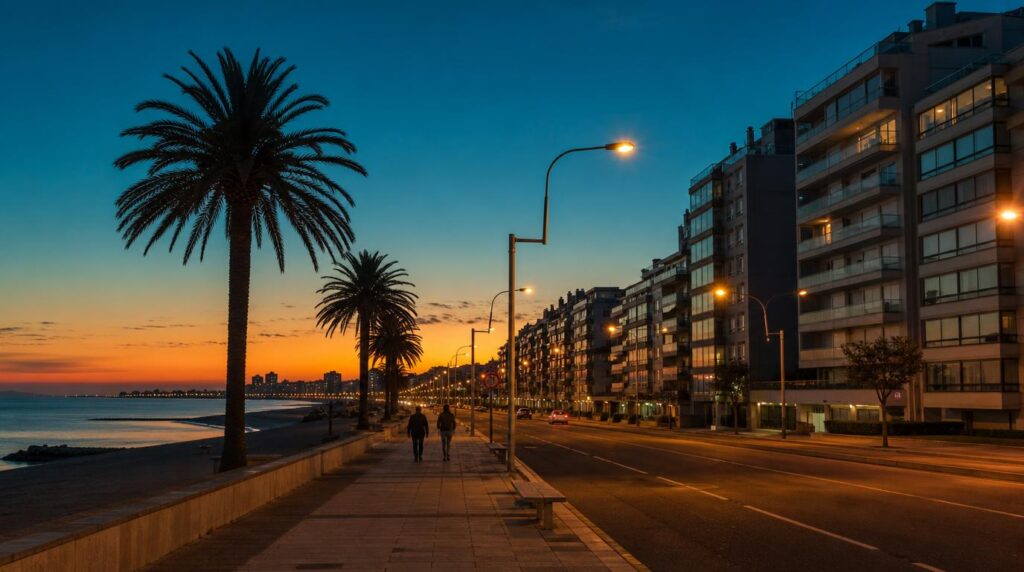
- Safe, nomad-friendly areas: Pocitos (beachside, walkable, popular with expats), Punta Carretas (upscale, good restaurants), and Carrasco (quieter, residential, near the airport).
- Use caution after dark: Ciudad Vieja and the area around Plaza Independencia are fine during the day but get riskier at night.
- Avoid: Cerro, Cerro Norte, Casavalle, Marconi, Borro, and Bella Italia, all flagged consistently as higher-crime zones with little reason for a visitor to go there anyway.
- Common risks: pickpocketing in busy central areas and opportunistic theft or mugging at night in low-traffic zones, not violent crime aimed at tourists specifically.
The standard precautions apply: use a registered taxi or rideshare app after dark, keep your phone out of sight on the street, and withdraw cash from ATMs inside banks during daylight hours rather than street-side machines at night. If you’re ever confronted, hand things over rather than resisting.
Who Montevideo is for
Montevideo works well for remote workers on US East Coast hours who want reliable infrastructure and a slower pace than Buenos Aires or Rio. It also suits anyone prioritizing safety and predictability over nightlife and a large nomad scene.
- Good fit: people who want fast, stable internet without hunting for it, US-hours freelancers and employees, anyone burned out on louder, more chaotic nomad hubs.
- Skip it if: you’re chasing a tight budget under $1,000/month, want a dense, highly social nomad community, or need heavy European-hours overlap.
Book the flight
Montevideo delivers what a lot of flashier nomad destinations only promise: internet that works every time, a visa path that doesn’t require guesswork, and streets you can walk at night without constantly checking over your shoulder. It costs more than the region’s budget favorites, but for what you get, that’s a fair trade. Search flights to Montevideo on FlyBibe and start planning your stretch of work by the Rio de la Plata.