
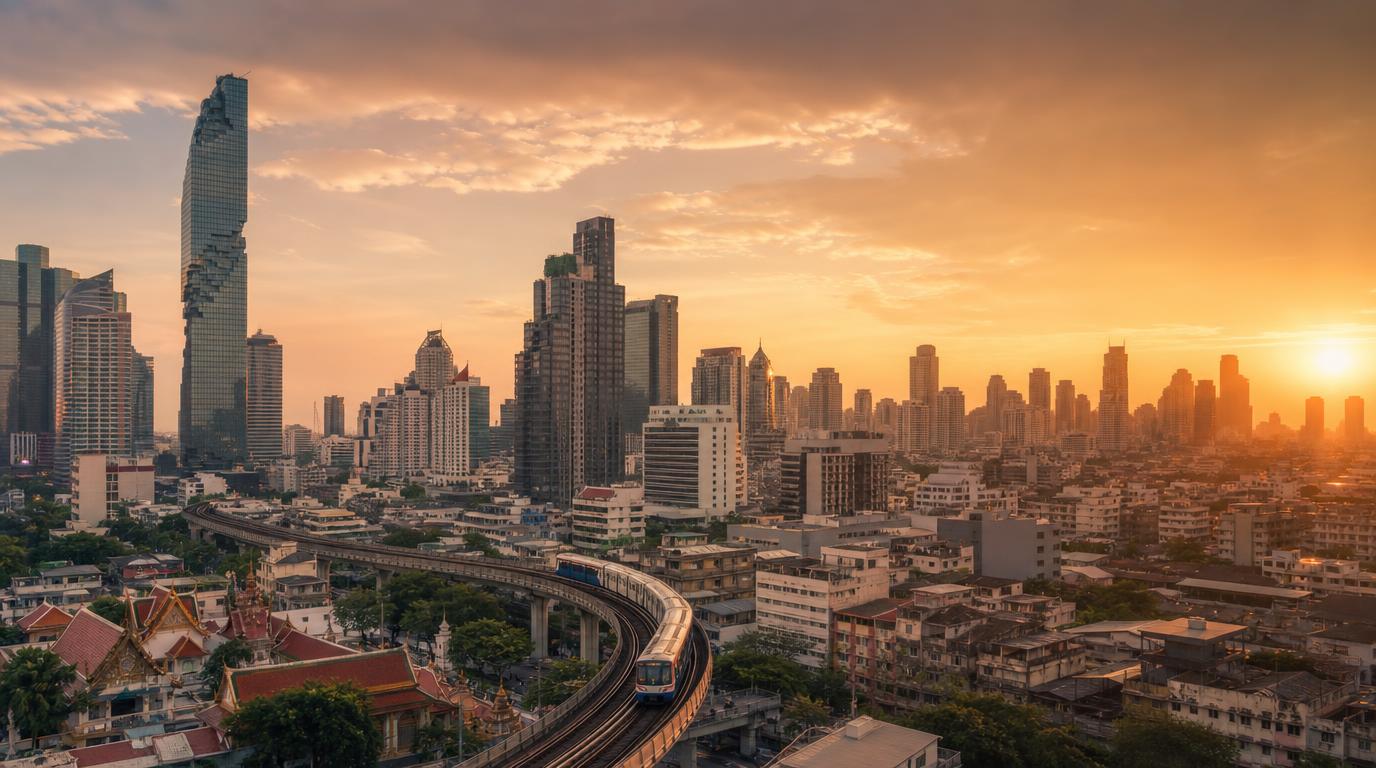
Bangkok packs fast internet, cheap coworking, and a functioning BTS Skytrain into a city where a remote salary still stretches far. The catch is that the city is huge, and the wrong neighborhood means a longer commute or higher rent than necessary. This guide covers the five neighborhoods remote workers actually settle in, plus the visa rules, timezone fit, and safety details that matter for a working stay rather than a week of sightseeing.
Visa and entry for remote workers
Thailand’s entry rules for remote workers are changing this year, so the timing of a trip matters as much as the destination.
- Visa exemption: Cut from 60 to 30 days starting September 15, 2026, for roughly 60 passports, including the US, UK, Canada, and Australia. A one-time 30-day extension is available through Thai immigration.
- Destination Thailand Visa (DTV): A 5-year multiple-entry visa built for remote workers under its “Workcation” category. Each entry allows a 180-day stay, extendable once to a continuous 360 days.
- DTV financial requirement: THB500,000 (roughly $14,000) held in a bank account for at least three months before applying, at most embassies.
- DTV fee: THB10,000 at most Thai embassies, though this varies by location, for example around $400 in Washington, D.C.
- DTV processing: Typically 3 to 7 business days through the official eVisa portal.
For anyone planning more than a month in Bangkok, the DTV is the better route. The 30-day exemption suits a short scouting trip, but it’s tight for testing a neighborhood before signing a lease. Some embassies, including London, added extra document requirements in August 2026, so confirm the current list before applying.

Timezone fit for remote work
Bangkok runs on Indochina Time, UTC+7, with no daylight saving, which puts it on the opposite side of the clock from North America.
- US Eastern: 12 hours ahead in winter, 11 during US daylight saving. Live overlap is limited to very early Bangkok mornings.
- US Pacific: 15 hours ahead in winter, 14 during daylight saving, with almost no shared working hours.
- UK: 7 hours ahead in winter, 6 during British summer time. A Bangkok afternoon lines up with a UK morning.
- Central Europe: 6 hours ahead in winter, 5 in summer, the closest overlap of the four, with Bangkok’s early afternoon matching a European mid-morning.
Bangkok suits a European client base, or a US role that runs mostly async, far better than a US role built around daily live meetings. Anyone on Pacific time should expect very early mornings or very late nights to catch a call.
Internet speed and cost of living
Bangkok’s internet is fast enough that connectivity rarely decides which neighborhood to pick. Rent is the bigger swing.
- Fixed broadband: Averages 146.5 Mbps citywide, based on data from July 2025 to June 2026.
- Mobile data: Averages 67.2 Mbps over the same period, reliable enough for video calls from a cafe or a taxi.
- Home broadband: Around THB604 (about $17) a month for a 60+ Mbps plan.
- Coworking day passes: Run THB300 to THB600 (about $9 to $17) across most of the city.
- Single-person living costs: Around THB24,000 (about $720) a month before rent, covering food, local transport, and a phone plan, per Numbeo’s August 2026 figures.
None of Bangkok’s popular neighborhoods have a meaningfully worse connection than another. The real decision is how much rent buys where.
Best neighborhoods for remote workers
A one-bedroom runs from about THB11,800 (roughly $335) outside the center to THB23,000 (roughly $650) or more in the most central pockets, per Numbeo. Here’s where that money goes furthest for a working stay.
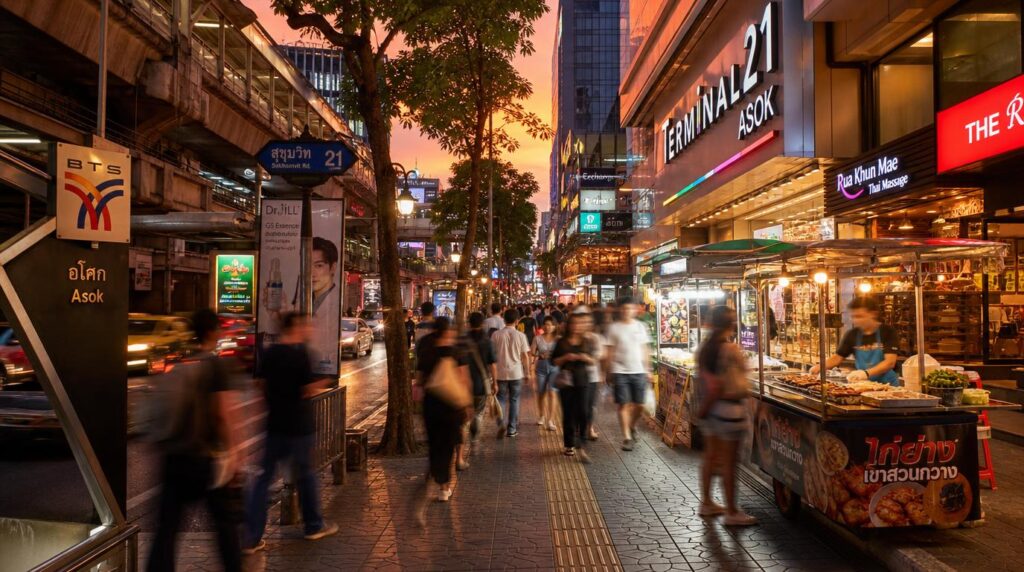
1. Sukhumvit (Asok and Nana)
The BTS Skytrain runs the length of Sukhumvit, and it’s usually the first neighborhood a new arrival tries.
- Best for: First-timers who want everything within a short walk.
- Amenities: Malls, gyms, street food, and coworking spots including The Urban Office, with day passes around THB300.
- Transit: The BTS Sukhumvit line runs the entire corridor, with easy access to the airport rail link.
It’s convenient rather than characterful, and rent sits close to the city-center average. A solid base for a first month while scouting somewhere quieter.
2. Thonglor and Ekkamai
Bangkok’s trendiest stretch, popular with young professionals and long-stay expats who want a social scene after work.
- Best for: Anyone who wants nightlife and work-life balance in the same zip code.
- Coworking: The Hive Thonglor, with day passes around THB400 and hot desks near THB4,500 a month.
- Rent: Above the city-center average, one of the pricier options on this list.
The tradeoff is simple. Pay more, get a livelier neighborhood with better food and bars within walking distance.
3. Ari
Ari trades Thonglor’s polish for a quieter, more local feel, without losing the cafes and coworking spots remote workers rely on.
- Best for: Anyone who wants a working neighborhood without a tourist crowd.
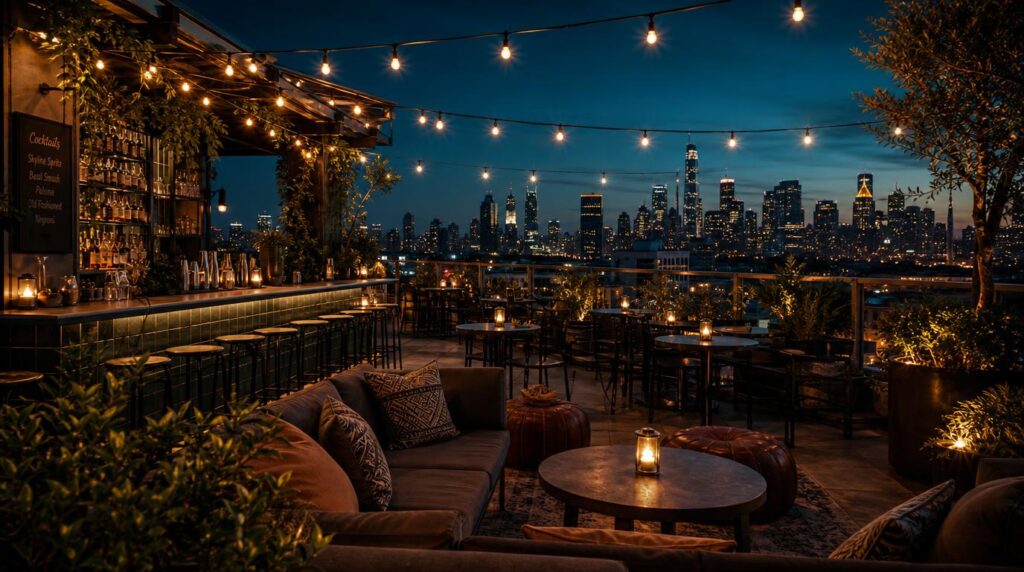
- Character: A mix of young Thai professionals and longer-term expats, with community markets and rooftop bars.
- Transit: On the BTS Skytrain’s northern stretch, a short ride from Siam and Sukhumvit.
It’s less flashy than Thonglor but easier to settle into for a longer stay, and rent tends to run below the Sukhumvit average.
4. Sathorn and Silom
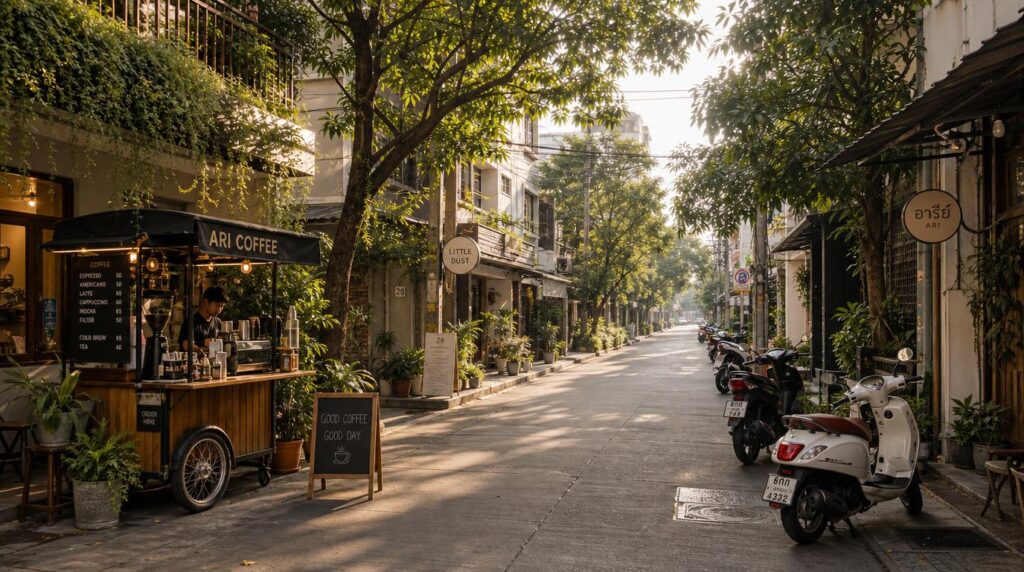
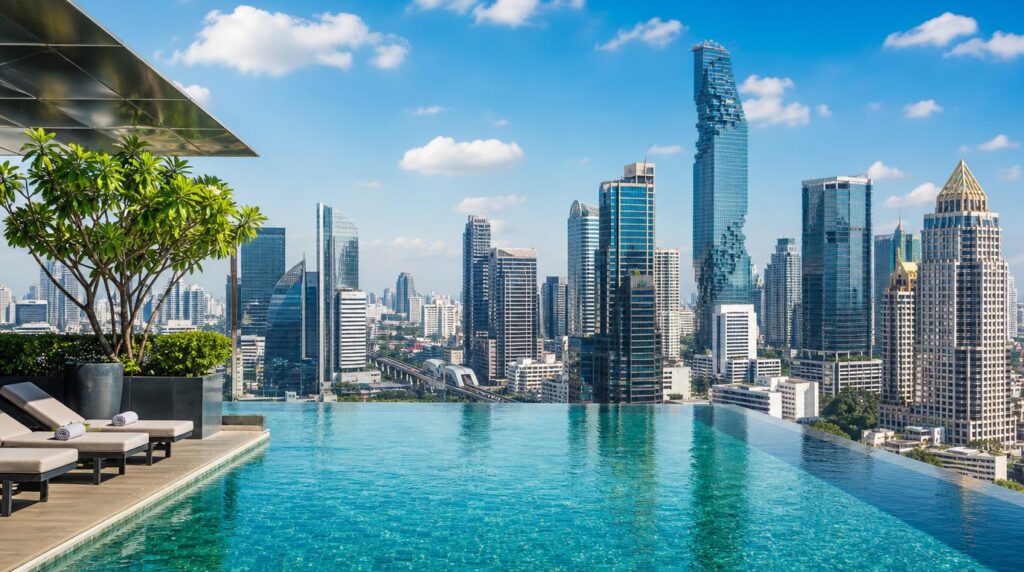
Bangkok’s business district, and it reads that way: high-rises, rooftop pools, and hybrid cafe-coworking spaces aimed at professionals.
- Best for: Remote workers who want a polished, corporate-adjacent environment.
- Coworking: Glowfish Sathorn and The Work Loft Silom, both with day passes under THB500.
- Safety: Rated among Bangkok’s safest tourist corridors, with good lighting and infrastructure.
- Green space: Walking distance to Lumpini Park for a break from the concrete.
It fits someone coming from an office job who wants that same structure, less so anyone chasing Bangkok’s more freewheeling street life.
5. On Nut and Punnawithi
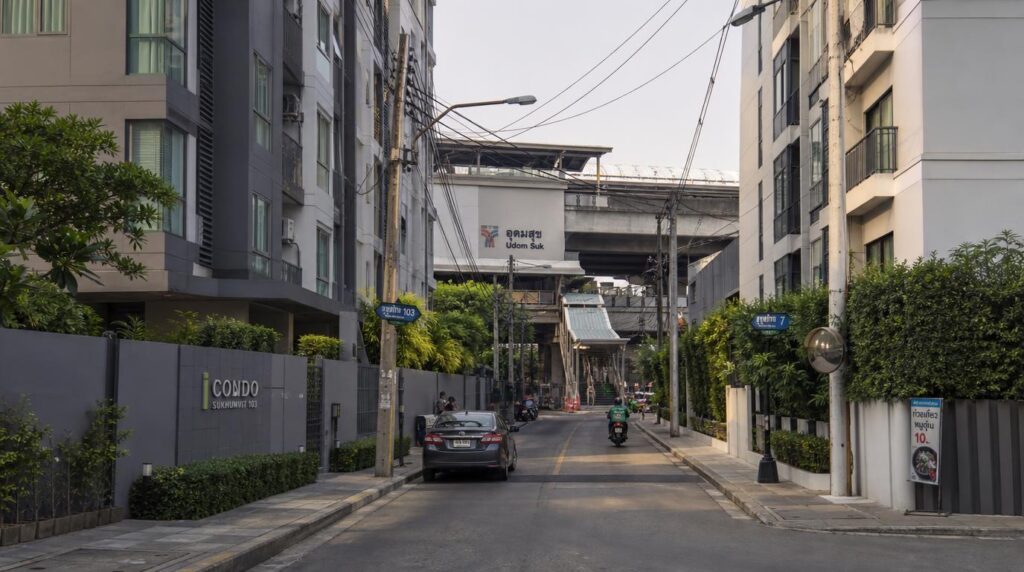
Further down the Sukhumvit line, this stretch trades some buzz for noticeably lower rent.
- Best for: Budget-conscious nomads planning a longer stay.
- Coworking: True Digital Park in Punnawithi, a large campus with monthly memberships under THB4,000.
- Transit: Still on the BTS, just 15 to 20 minutes further from the Sukhumvit core.
Fewer rooftop bars, more modern condos at reasonable prices. Worth it for anyone staying three months or longer and treating Bangkok as a base rather than a scene.
Safety notes for remote workers
Bangkok scores well on violent crime and poorly on scams, and that pattern is what most remote workers actually run into.
- Overall risk: Violent crime against foreigners is rare. The real risks are scams, petty theft, and traffic.
- Common scams: Strangers claiming a temple or palace is “closed” to redirect visitors to a commission shop, and suspiciously cheap tuk-tuk tours that end at overpriced gem stores.
- Areas to flag: Khao San Road and the Old City see heavy scam activity despite being generally safe, and Klong Toei is worth avoiding after dark.
- Practical fix: Use Grab instead of hailing tuk-tuks, and ignore anyone approaching unsolicited near major tourist sites.
None of this is specific to remote workers, but a longer stay means more exposure to it, so the habits are worth building early.
Best time to visit
Bangkok’s climate runs on three seasons, and only one of them makes outdoor breaks genuinely pleasant.
- Cool season (November to February): The most comfortable stretch, with daytime highs typically in the high 20s to low 30s Celsius and lower humidity.
- Hot season (March to May): Peak heat, often above 35°C, when most work happens indoors or in air-conditioned coworking spaces.
- Rainy season (June to October): Humid, with frequent afternoon downpours, though mornings are often clear.
None of the seasons make Bangkok unworkable indoors, but November through February is when the city is actually pleasant to walk around in between calls.
Who Bangkok is for, and who should skip it
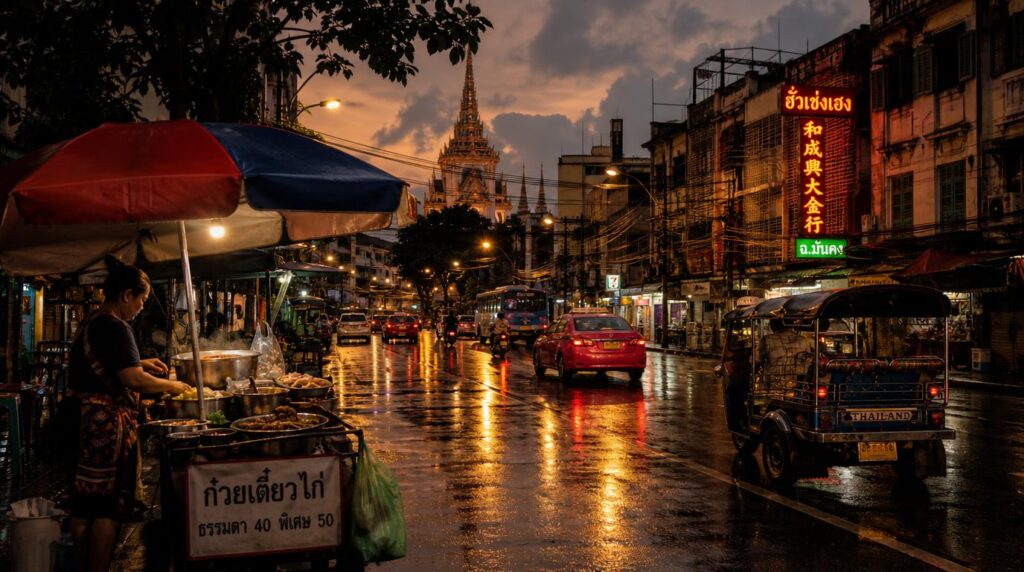
Bangkok works best for remote workers on European hours, or on US hours that don’t require daily live meetings. It also suits anyone who wants solid infrastructure without paying for it, who doesn’t mind a big, loud, traffic-heavy city.
- Good fit: Freelancers and remote employees serving European clients, first-timers to Southeast Asia who want an easy landing, anyone budgeting for a multi-month stay.
- Skip it if: Your job needs daily live calls with a US Pacific team, you want a quiet or nature-focused base, or Bangkok’s traffic and heat are dealbreakers.
Sukhumvit gets you moving fast, Ari and On Nut save money, and Sathorn brings office-level polish without the office. Wherever you land, check the visa timeline first, especially the September 2026 exemption change. Search flights to Bangkok on FlyBibe and start narrowing down a neighborhood.