
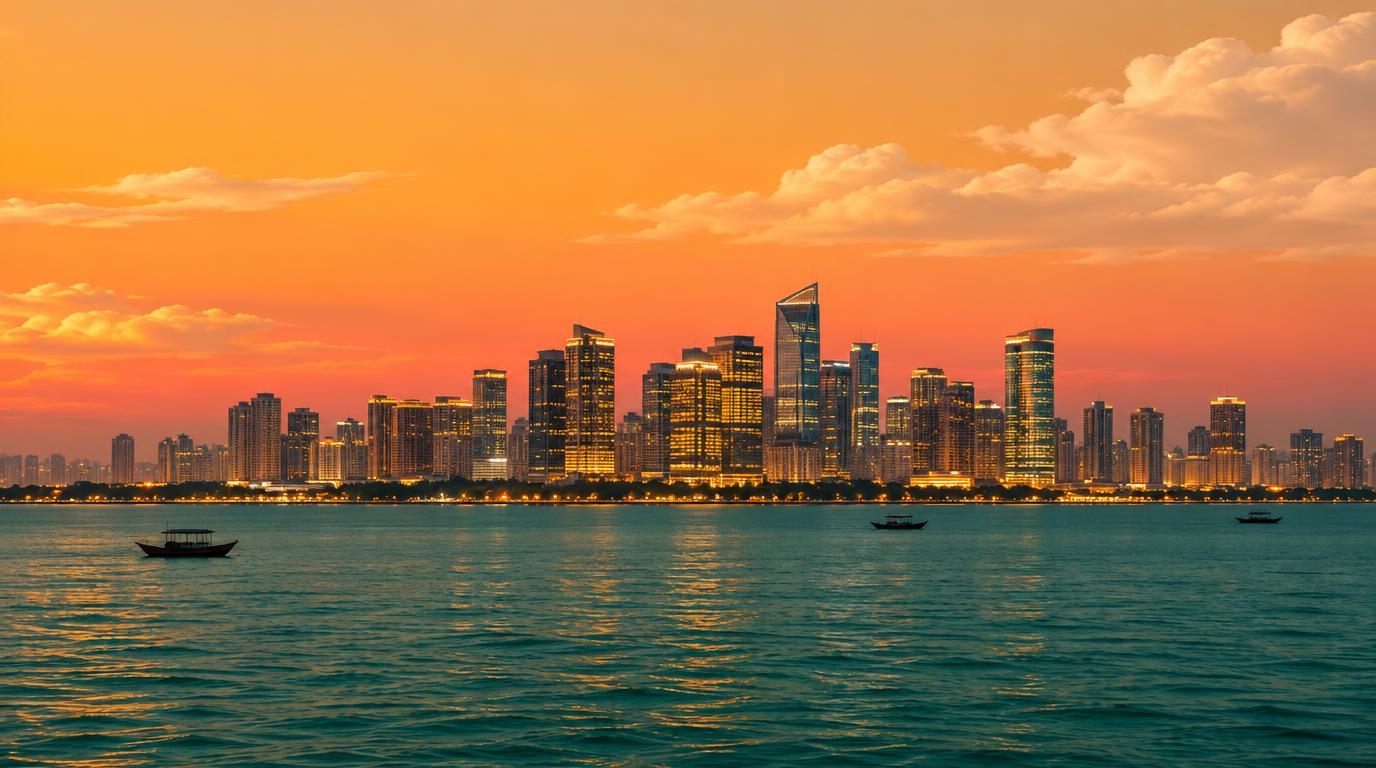
Manila gives remote workers a big city and fiber internet in Makati and BGC. A single person can budget about $870 to $1,250 a month. The Philippines signed a Digital Nomad Visa order in 2025, yet sources disagree on whether anyone can apply today. The guide covers the visa status as of November 12, 2026, then costs, neighborhoods, internet, time zones, coworking, safety, and weather.
Where the Philippines visa rollout stands
As of November 12, 2026, the Digital Nomad Visa has legal backing but no published way to apply. Some sites say otherwise, so the details below separate what is confirmed from what is still missing.
- Confirmed in the order: Executive Order No. 86 was signed on April 24, 2025 and published in the Official Gazette on May 5, 2025. The order lets the Department of Foreign Affairs issue the visa to foreigners who work remotely for clients or employers outside the Philippines.
- Conditions in the order: Applicants must be 18 or older and show proof of remote work. They must also show enough income earned outside the Philippines. A clean criminal record is required, and applicants cannot be employed in the Philippines.
- Insurance and nationality: The order requires health insurance valid for the visa period. Applicants must also hold a passport from a country that offers nomad visas to Filipinos and has a Philippine foreign service post.
- Length: The visa runs up to one year, can be renewed for a similar period, and allows multiple entries.
- Still unpublished: The implementing guidelines, the income threshold, the fee, the forms, and the list of eligible countries have not appeared. The order itself sets no income figure, fee, or processing time. Its 30-day guideline deadline and 60-day pilot window both passed in 2025.
- The $24,000 figure: Many sites cite $24,000 a year as the income rule. The order does not contain it, so treat it as unconfirmed.
- Where sources disagree: LiveinPH (checked October 15, 2026) and Genki Guide (October 26, 2026) say the e-Visa portal has no nomad option. A few visa agencies say the visa is live or in processing. The evisa.gov.ph portal did not mention a Digital Nomad Visa when checked.
- Who counts as eligible: No official country list exists. One outlet reads the reciprocity rule as excluding the US, the UK, and Germany. Another says US, UK, and EU citizens may apply.
The official sources are the Department of Foreign Affairs and the Bureau of Immigration. Check both before paying anyone who offers to file for you. A separate post follows the current status of the Philippines digital nomad visa in more detail.
What you can do today
Most remote workers in Manila right now stay on a visitor status and extend it.
- Visa-free entry: The DFA Philippine Embassy in Bangkok says Executive Order 408 nationals get up to 30 days without a visa. The passport must be valid for six months beyond the stay. You also need a return or onward ticket.
- Arrival registration: Travel guides say to register on eTravel within 72 hours before arrival.
- Long-Stay Visitor Visa Extension: This extension covers six months in one transaction. The DFA embassy page lists a total of ₱11,500 for nationals who need no visa and ₱13,900 for those who do. At ₱63 per dollar, the totals are roughly $183 and $221.
- Maximum stay: The same page lists 36 months for nationals who need no visa and 24 months for those who do.
- ACR I-Card: A Bureau of Immigration rule summary says the card is required after 59 days. The card can be valid for up to a year.
- Fee differences: Third-party sites list first-extension fees of ₱3,030 to ₱3,840 and ACR I-Card fees of ₱2,100 to ₱4,000. The embassy fee schedule is undated, so confirm current fees with the Bureau of Immigration.
- Work rules: Visitor status does not cover working for Philippine employers or clients.
A digital nomad visa versus a tourist visa comparison explains the trade-offs of staying on visitor status.
On tax, KPMG’s Philippines guide says an alien, resident or not, is taxed only on Philippine-source income. Home-country rules apply separately, so ask a tax professional about your own case. The tax note above is general information only.
Immigration and tax rules change. Confirm details with the Philippine embassy, the Bureau of Immigration, or a qualified professional. The information here is as of November 12, 2026.
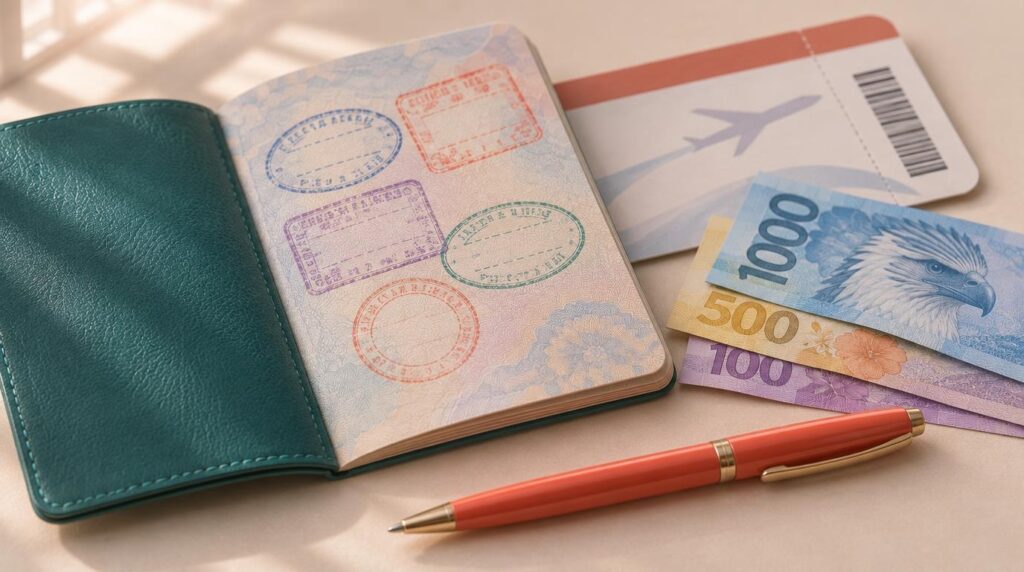
Cost of living in Manila
Numbeo’s Manila entries were updated on November 12, 2026, and rest on 73 contributors. Treat them as rough guides. The peso traded near ₱63 per US dollar in early November, according to GMA News, and the conversions below use that rate.
- One-bedroom in the city centre: ₱33,775 a month (range ₱25,000 to ₱50,669), about $536.
- One-bedroom outside the centre: ₱18,583 a month (range ₱10,000 to ₱23,200), about $295.
- Utilities for 85 square metres: ₱7,160 a month, about $114.
- Home broadband at 60 Mbps or more: ₱1,538 a month, about $24.
- Meals: An inexpensive restaurant meal costs ₱325 (about $5). A mid-range meal for two costs ₱1,600 (about $25).
- Transport: A monthly pass costs ₱800 (about $13), a one-way ticket ₱25, and a taxi starts at ₱50.
- Everything except rent: Numbeo estimates ₱36,241 a month for one person.
Adding rent to that last figure gives four sample months:
- City-centre rent: ₱70,016, about $1,111.
- Outside-centre rent: ₱54,824, about $870.
- City-centre rent plus a ₱9,000 hot desk: ₱79,016, about $1,254.
- Outside-centre rent plus a ₱9,000 hot desk: ₱63,824, about $1,013.
PHExpats gives wider ranges. A budget life runs ₱35,000 to ₱55,000 a month ($556 to $873). A comfortable single expat life runs ₱80,000 to ₱110,000 ($1,270 to $1,746).
Rent figures vary by source. Expat.com listed ₱20,000 to ₱46,770 in December 2025, and a March 2025 Tribune report cited a far lower ₱17,160. Prices are also moving. The Philippine Statistics Authority reported 7.8% inflation for October 2026, the highest since February 2023, driven by fuel and transport. Housing, water, and electricity rose 9.3%. The central bank raised its policy rate to 5.5% in October, and its next meeting is on December 17, 2026. Budgets built today may need a margin.
Where to live in Manila
Asia Lifestyle (May 2026) names five expat zones: Makati, BGC in Taguig, Ortigas and Pasig, Alabang, and Quezon City. Most remote workers pick Makati or BGC over the City of Manila itself. The rent ranges below come from PHExpats and RentScout and carry no date.
- Makati: The financial centre, with Makati Medical Center nearby. One-bedrooms run ₱18,000 to ₱35,000.
- BGC: One-bedrooms run ₱35,000 to ₱70,000, the highest range on this list. Rush-hour traffic is heavy.
- Malate and Ermita: One-bedrooms run ₱18,000 to ₱40,000.
- Mandaluyong: Studios and one-bedrooms run ₱9,000 to ₱18,000.
- Cubao and Eastwood: Studios and one-bedrooms run ₱7,000 to ₱15,000.
TomTom’s 2023 data put the drive for 10 kilometres in Metro Manila at 25 minutes and 30 seconds. Choose a home near your coworking space or on a train line.
Expat.com says landlords typically ask for two months of deposit plus one month in advance. One-year leases are typical, so ask about shorter terms before you commit.
Internet and mobile data
Ookla’s Speedtest Global Index for August 2026, reported by BusinessWorld, covers the whole country. The Philippines had a median fixed speed of 114.34 Mbps, ranking 62nd of 149 countries. The global median was 129.68 Mbps.
Mobile speeds trail further. The country’s median was 66.33 Mbps, ranking 71st of 102, against a global median of 109.05 Mbps.
Ookla data for the second quarter of 2026, reported by Walastech, covers Metro Manila mobile only. Manila’s median mobile download was 75.57 Mbps, which ranked 10th of 13 Southeast Asian nomad destinations. Cebu posted 55.48 Mbps, Bangkok 167.27 Mbps, and Ho Chi Minh City 115.21 Mbps. No Manila fixed figure turned up.
Converge and the Philippine Star cite Ookla data naming Converge FiberX the fastest fixed provider for the first half of 2026. Ask your landlord which provider serves the building before you sign. Pair a fixed line with an eSIM as backup, and read the eSIM versus local SIM versus hotspot comparison to choose one.
Time zone fit
Manila runs on UTC+8 all year with no daylight saving. The list below converts a 9:00 to 17:00 workday in other regions to Manila time. US and European clocks change on different dates, so offsets shift for a few weeks each spring and autumn.
- US Eastern: Manila is 13 hours ahead in winter and 12 in summer. Your client’s day is 22:00 to 06:00 in Manila in winter. Overlap with a Manila 9-to-5 is zero.
- US Pacific: Manila is 16 hours ahead in winter and 15 in summer. A client day runs 01:00 to 09:00 in winter. Overlap is zero.
- United Kingdom: Manila is 8 hours ahead in winter and 7 in summer. A client day runs 17:00 to 01:00 in winter. Overlap is zero in winter and one hour in summer.
- Central Europe: Manila is 7 hours ahead in winter and 6 in summer. A client day runs 16:00 to 00:00 in winter. Overlap is one hour in winter and two in summer.
Manila suits work for Asia-Pacific clients and European afternoons. People with US clients need to work evenings or nights.
Coworking and community
Listed prices come from each operator and were checked in November 2026.
- The Executive Centre, Ayala Triangle Gardens Tower 2, Makati: A City Pass hot desk starts at ₱9,000 a month (about $143). A Global Pass starts at ₱11,700. A dedicated desk at its Six/NEO centre starts at ₱20,000. Listed prices reflect discounted rates tied to a 12-month commitment, so ask for the rate without one.
- Regus Manila: A hot desk starts at ₱890 a day. Memberships start at ₱4,050 a month for 5, 10, or unlimited days. Dedicated desks cost ₱5,650 to ₱17,950 per person per month on 24-month contracts.
- Spaces: It lists locations in Makati and BGC. No price was published.
No regularly updated, Manila-specific nomad community turned up in the research for this guide. The operators above are corporate coworking brands, and each runs its own member events. Expect to build a network through those spaces rather than through a large nomad scene.

Safety
The US State Department issued its Philippines advisory on May 8, 2025, and it was still current when checked. The advisory sets the country at Level 2, “Exercise increased caution.” Level 4 applies only to the Sulu Archipelago, the Sulu Sea, and Marawi City. Parts of Mindanao sit at Level 3.
The advisory describes violent crime, pickpocketing, internet scams, and ATM and card fraud as common. Two warnings apply to Manila in particular:
- Airport arrivals: Robberies have followed taxi and private vehicle pickups after people left Ninoy Aquino International Airport. Airport taxis also overcharge. The advisory suggests ride-share apps or the official airport shuttle.
- Social invitations: Solo travelers have been drugged and robbed after accepting invitations from people they just met.
Best time to go
PAGASA, the national weather service, sets the rainy season from June to November and the dry season from December to May. The dry season splits into a cool stretch from December to February and a hot stretch from March to May. Some local governments, including Mandaluyong, describe the dry season as November to April.
PAGASA, via Panahon.TV, says tropical cyclones usually peak from July to September. The MMDA and the Manila Bulletin reported heavy flooding in Metro Manila on August 17, 2026. The Tribune reported more on August 29, 2026. MRT-3, LRT-1, and LRT-2 kept running during the flooding.
December to February is the cool dry stretch and suits a first stay. Ask any landlord about the building’s flood history before you sign a lease.

Who Manila suits and who should skip it
Manila suits remote workers whose clients sit in Asia-Pacific or Europe. People who want city services, hospitals, coworking brands, and fiber in one area will also find it useful. The sample budgets above put a single person at about $870 to $1,250 a month.
Skip Manila if your clients need daytime overlap with the US. Skip it if you want a beach or a slower pace, because Cebu offers an island option. Also skip it if you need a visa path today, since the Digital Nomad Visa has no published application. Heavy traffic and rainy-season flooding can wear on some people. Compare other bases in the best digital nomad cities in Southeast Asia.
Plan your Manila stay
Manila works best for people who match their work hours to its time zone and live close to their desk. If the cool dry months from December to February fit your plans, search flights to Manila on FlyBibe and FlyBibe handles the booking. Check the latest entry rules with the Philippine embassy before you fly, because the visa picture may change.