
Families who worldschool often live far from the grandparents. In a 2019 AARP survey, more than half of grandparents said at least one grandchild lives more than 200 miles away. Worldschooling adds time zones and frequent moves on top of the distance. The six steps below use ideas from grandparent support groups and traveling families. They cover call times, apps, activities, small touches, visits, and family rituals.
How to stay close to grandparents from anywhere
1. Pick call times that work in both time zones
The time difference decides when calls can happen, so it helps to work it out first. Three examples show how much it can vary.
- Bali and New York: Bali stays on UTC+8 all year. While the US is on summer time, 8 a.m. in Bali is 8 p.m. the evening before in New York. After the US clocks change on 1 November 2026, the same call falls at 7 p.m.
- Medellín and New York: Colombia stays on UTC-5 all year. Medellín shares New York’s time in winter and is one hour behind it in summer.
- Mexico City and New York: Mexico ended daylight saving time in 2022, so Mexico City stays on UTC-6. The city is one hour behind New York in winter and two hours behind in summer.
Families with grandparents in the US may want to look at a base in Latin America, where the time difference stays small. Families based in Asia often need one early-morning or evening slot.
A few habits make the schedule easier to keep.
- Convert the times for them. Send the grandparents a list of call times in their own time zone, with nap times and bedtimes marked.
- Show two time zones. The web version of Google Calendar can display your time zone and one more side by side.
- Reuse work habits. Parents who already schedule client meetings across time zones can use the same tools for family calls.
- Watch the clock changes. Europe changes its clocks on 25 October 2026 and the US follows on 1 November. For about a week, the usual time difference between the two is off by one hour.
A fixed weekly slot gives children something to look forward to. Tinybeans notes that a set time suits some children, and that unplanned calls can be fun too.
2. Choose one tool the grandparents can open easily
Grandparents are more likely to join calls when the app is easy to open. Setting it up before the family leaves home helps, and one test call can catch most problems.
- WhatsApp: Video calls are free, and group calls allow up to 32 people. Aunts, uncles, and cousins can join the same call.
- FaceTime, Zoom, or Google Meet: Any of them works well when the grandparents already use it.
- Backup connection: Video calls need steady wifi, so it helps to check the wifi speed before booking a stay. An eSIM can serve as a backup on mobile data.
- Phone fallback: Some people feel uneasy with video. Many of the ideas below also work on a voice call.
One app is easier for grandparents than three. Kerry Byrne, who founded The Long Distance Grandparent in 2019, offers a free video call cheat sheet written for grandparents.
3. Give each call a job to do
Video calls suit adult conversation more than children’s play, according to the founders of the Caribu app. A shared activity keeps a child interested for longer.
- Toddlers and preschoolers: Call during a meal or snack. A stuffed animal can act as a special guest, and grandparents can read a picture book while the child shows off toys.
- Reading and drawing: Caribu lets both people read the same book and draw on the page during a video call. The app is free to download, with paid access to the full library. The June 2026 App Store listing shows Unlimited at $9.99 a month or $79.99 a year. Common Sense Media says the books cover ages 0 to 12.
- School time: A California family wrote about a five-month trip to Europe with their six-year-old. They set up video calls with the grandparents for two hours, three times a week. The grandparents played math games and watched typing practice, and the calls gave the parents some time to themselves.
- Older children: Tinybeans suggests that older children prepare show and tell for the call, and that a time limit can help them stay engaged. Teenagers can try the free StoryCorps app, which groups interview questions by theme, including one for parents and grandparents.
Giving grandparents a role in lessons makes the call part of the school week. Parents decide which subjects to share.

4. Add small touches between calls
Calls may last only a few hours a week. Small touches fill the days between them.
- Photo frame: Aura added a Text to Frame feature in December 2025. Invited contacts can text photos to the frame without an app, and Aura reports no fee and no photo limit. Aura frames in retail listings cost about $199 to $323, depending on the model. Skylight and Nixplay frames accept photos by email, according to retail listings. The grandparents need wifi at home and one person to set up the frame.
- Private photo album: Tinybeans shares photos only with invited family, and grandparents can follow updates by email without installing another app. The free plan allows 20 photo or video uploads a month. Tinybeans+ costs $7.99 a month or $74.99 a year on the US App Store.
- Recorded stories: When time zones block a live call, grandparents can record themselves reading a bedtime story. The child follows along with the same book. Voice messages work in a similar way.
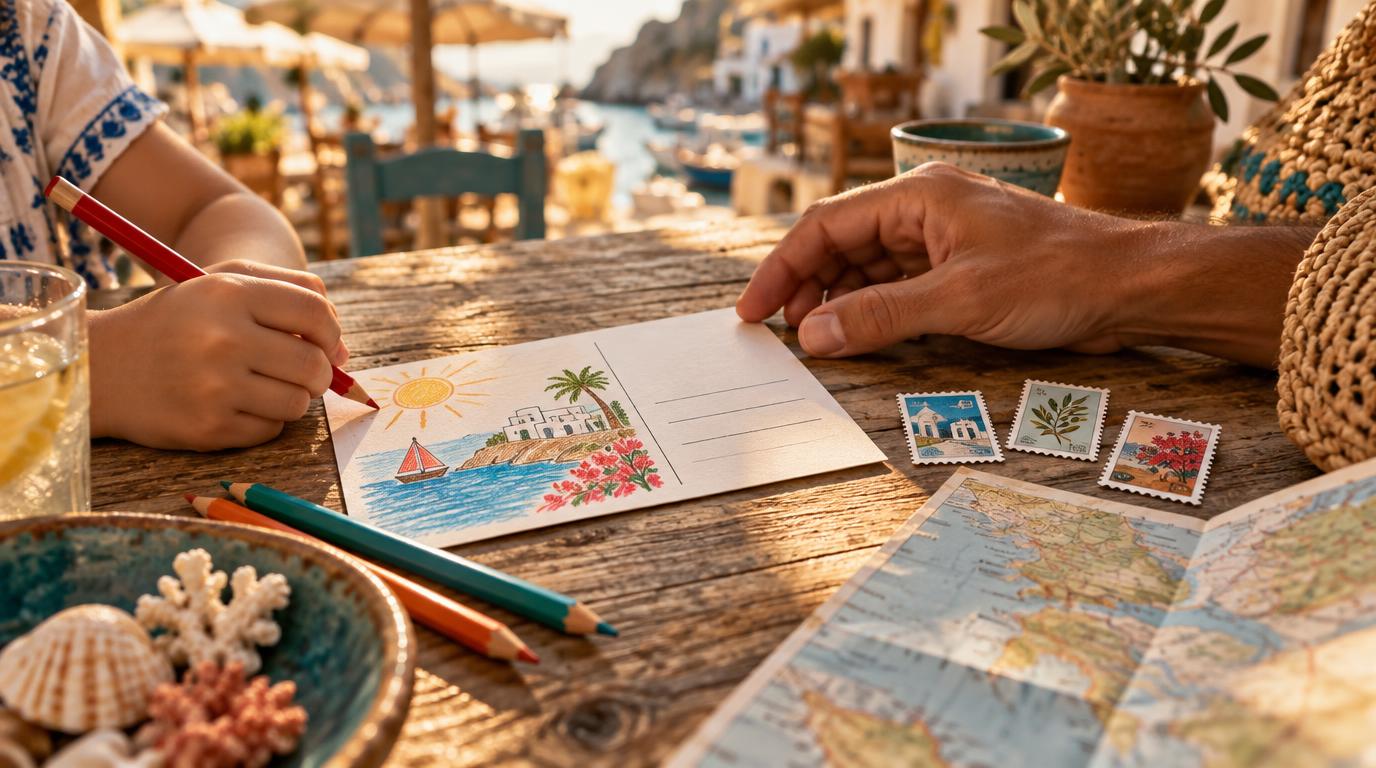
- Postcards: Children can write or draw postcards from each stop. International mail can take weeks, so postcards work as a slow extra. Grandparents can send one back to the family’s next address.
Photos and recordings show grandparents ordinary days, which helps when calls are short.

5. Plan visits around where the family will be
Visits can build memories that calls cannot. A blogger who writes about staying connected with grandparents describes in-person contact as one of the strongest ways to make and keep memories.
- Stay longer in one place. Staying a full school term in one city gives grandparents a fixed address to plan around. So does joining one of the worldschooling hubs for traveling families.
- Book early. Grandparents can book tickets months ahead. A guide on when to book international flights can help them choose dates.
- Allow time alone. Kerry Byrne suggests giving visiting grandparents plenty of one-on-one time with the grandchildren.
- Travel home too. One expat parent wrote that having children led to more trips in both directions.
- Check entry rules. Grandparents need their own entry rules for the destination, and the rules depend on their passport. The destination’s official immigration site is the place to check.
A family that moves monthly may find it easier to meet the grandparents in one agreed city once or twice a year. A family with a term-long base can host them for a full week.

6. Build small rituals the children can keep
Byrne describes shared rituals as small acts that make grandchildren feel special. Rituals travel well because they need no equipment and no fixed address.
- A goodbye gesture: The grandparent and child agree on a private sign for “I love you.” They repeat it on calls and in person.
- A yearly project: Older children and grandparents can do the same kind of task on one day each year, each in their own community. Cleaning up a local park is one example.
- A costume item: Byrne suggests that grandparents wear something memorable, such as giant sunglasses, for video peekaboo with little ones.
- Shared interests: For older children, grandparents can learn a few facts about a team or band the child likes.
The most common mistake: leaving the grandparents to guess
Byrne hears from grandparents who worry that the children will not know them and who feel they should be doing more. Many do not know what to ask or what the child is learning.
Parents can reduce the guesswork with a short monthly note. The note can list what the child is studying, favorite topics, the call times, and how to join. Byrne’s framework has five parts, which are plan, partner, prepare, play, and preserve. Parents are the main partners.
Some calls will end early because of an interruption or a shy child. Byrne writes that even a short, messy call helps a grandparent stay in the child’s thoughts.
The ideas here come from grandparent support groups, family blogs, and app listings. They are general ideas and do not replace parenting or child-development advice.
Next step: put the next visit on the calendar
Regular calls, small touches between them, and a visit on the calendar help grandparents stay part of daily life in any country. Once the next visit is set, search flights on FlyBibe and compare routes that fit the family’s base. The same search works whether the family flies to the grandparents or they fly out to the family. A trip home or a first trip abroad for the grandparents is easier to plan once the dates are booked.