
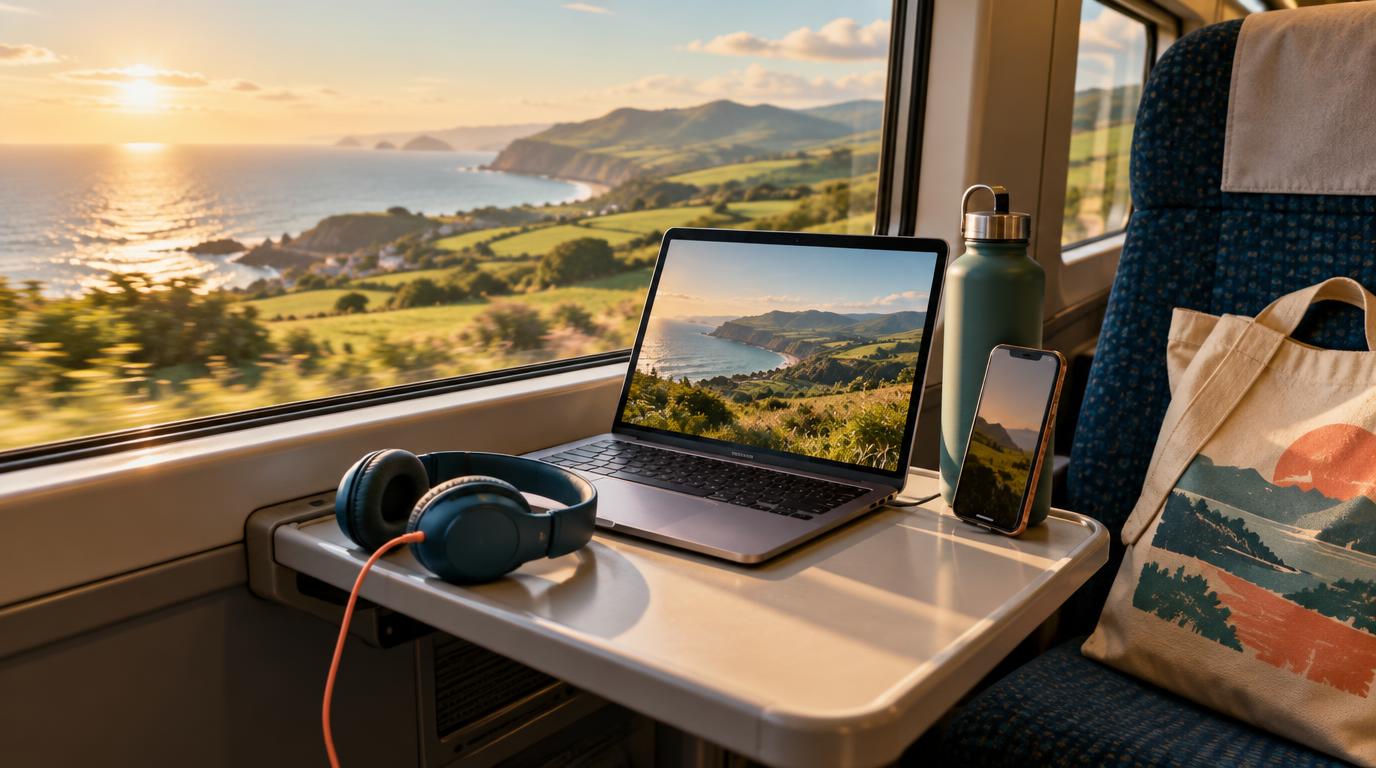
A remote job interview checks how a person works as much as what the person knows. The guide below covers tech setup, the questions remote employers ask, location and time zone topics, and fake recruiters. It is written for people who plan to work while they travel. Readers still looking for openings can start with the best remote job boards for location-independent work.
Test Your Connection and Keep a Backup
Connection problems cause many of the stumbles travelers have in video interviews. A day or two of testing ahead of time can prevent most of the stress, according to the University of Cincinnati’s remote interview guide.
- Speed: Zoom’s published guidance says a one-to-one HD call at 720p needs about 1.2 Mbps up and down. A 1080p call needs about 1.8 Mbps each way. Upload speed matters because your video travels in both directions.
- Same device: Using the laptop and app planned for interview day helps. Zoom, Teams, or Google Meet should be updated, and a friend can help test the camera and microphone.
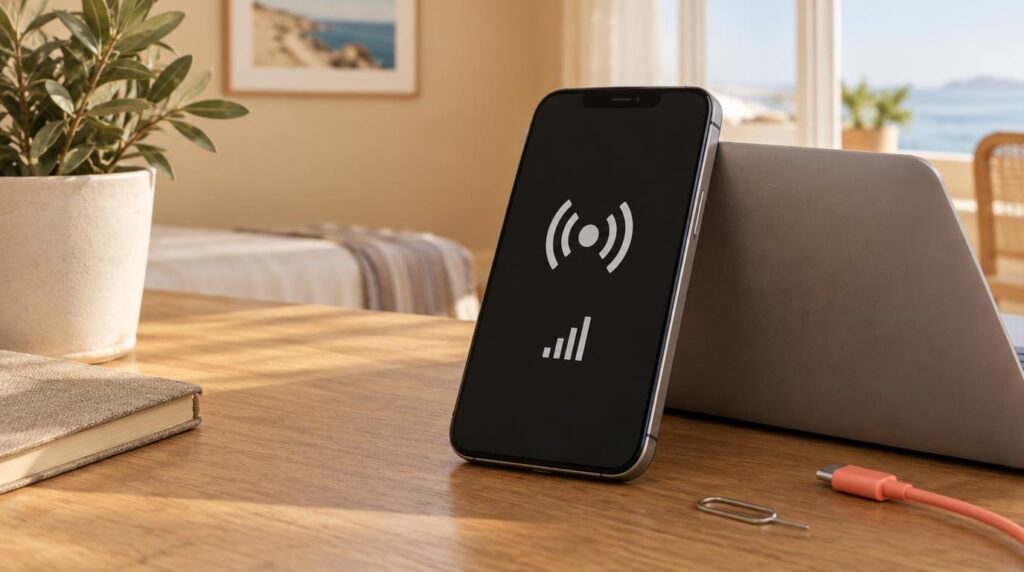
- Backup connection: A phone hotspot works as a second route if the wifi drops. An eSIM or portable wifi hotspot can serve as a longer-term backup. Keeping the phone charged and the interviewer’s email or phone number nearby also helps.
- Stay choice: Interviews often fall in the first days at a new base. Checking wifi speed before booking a stay removes one risk early.
Interviewers also notice how smoothly the tech runs. A stable call suggests the candidate can handle remote work without an IT desk nearby.
Choose a Quiet, Well-Lit Space
Light, sound, and background all change how an interviewer reads you on screen.
- Light: Facing a window or lamp keeps the face clear. A bright window behind the chair leaves the face in shadow.
- Sound: A room with a door that closes and little echo works best. Background noise that goes unnoticed in person can distract on a call.
- Background: A plain wall or tidy corner is one of the least distracting choices, according to career guidance from Wake Forest University.
Some rentals and hostels lack a good spot for calls. A simple mobile home office setup can fix lighting and framing. Some coworking spaces also sell day passes for a quiet desk on interview day.

Prepare Answers That Show You Can Work Remotely
Remote roles use most of the same questions as office roles. A few extra questions cover working alone. According to the University of Cincinnati, common remote-specific questions include these:
- Why this remote role and this company
- How you stay organized and manage time without supervision
- A time you worked with teammates online
- How you stay in touch with a manager or team
- Which challenges remote work brings and how you would handle them
Specific stories answer these better than general claims. A hiring template from FirstHR advises interviewers to ask for past examples. One example is a project delivered with little oversight, which says more than a claim of being self-motivated.
Three story types are worth preparing:
- Self-management: A project finished with little oversight, and the system used to track deadlines.
- Written communication: A time a clear written update kept work moving, plus the async work apps the team relied on.
- Time zones: A project with teammates in different zones, and how handoffs worked.
Each story can follow the STAR format, which covers the situation, the task, the action, and the result. MIT Career Advising and Professional Development recommends preparing three to five stories that fit several themes and using first-person statements to show personal contribution. The University of Cincinnati suggests answers of about 60 to 90 seconds.
For example, a freelance editor could describe a client project delivered across a nine-hour time difference, with daily handoff notes keeping both sides current.
Handle Location and Time Zone Questions Plainly
Location is an important topic in an interview for a location-independent role. According to Asanify, employers must handle work permits, payroll taxes, and employment law where an employee lives. Playroll reports that some employers use an Employer of Record to hire in countries where they have no local entity.
- Eligible countries: Some roles accept candidates from only certain countries. Asking early where the company can hire saves time on both sides.
- Visa status: Rules about working during a short visit differ by country. The difference between a digital nomad visa and a tourist visa can affect what an employer is able to approve.
- Time zone overlap: Employers often name hours when the team must be online together. A short plan for how you manage meetings across time zones answers the question before it is asked.
- Interview scheduling: Greenhouse is a hiring platform used by many companies. According to its support pages, candidates pick interview times based on the computer’s current time zone when a recruiter requests availability. A laptop clock still set to the last city can show the wrong slots. Confirming the time zone in the invitation avoids the mix-up.
- Pay: Some employers adjust pay by location, and others do not. A guide on how to negotiate a remote salary when moving to a lower cost-of-living country covers that conversation.
Plain answers work best here. Stating where the work will happen, and for how long, lets the employer check its own rules.
Ask Questions That Show You Understand Remote Work
Good questions show preparation. According to the University of Cincinnati, saying there are no questions can suggest a lack of interest in the team. Questions already answered on the company website tend to land poorly, so these focus on team habits.
- Communication: How does the team stay connected across time zones, and how often do managers check in?
- Success: What does success look like in the first three months?
- Onboarding: What does onboarding look like for new remote hires?
- Location rules: Which countries can the company hire in, and are there required overlap hours?
- Equipment: Does the company provide a laptop or an equipment budget?
Know How One-Way Video Interviews Work
Some employers begin with a one-way video interview. The candidate records answers to preset questions, and a recruiter reviews them later.
- Deadline: The employer sets the due date, according to Spark Hire. Finishing early leaves room to handle tech problems.
- Format: Questions can appear as text or video, and many platforms also work on a phone.
- Camera: Looking at the camera lens reads as eye contact. Looking at the screen can read as looking away, according to Wake Forest University.
- Practice: Recording a practice answer first helps with pace and filler words, according to the University of Cincinnati.
With no live interviewer, nobody reacts during the answer. Preparing the opening line of each story helps keep the answer steady.
Fake Recruiters Can Run a Full Interview
Remote roles attract fake offers. According to the FTC, reports about job scams tripled from 2020 to 2024, and reported losses rose from $90 million to $501 million. The agency also says scammers have invited people to interviews of about 45 minutes to build trust.
- Personal email: Real recruiters usually write from a company address, so a personal address is a warning sign.
- Requests for money: A fake invoice for equipment or training points to a scam. Payment through an app such as Cash App, Zelle, or PayPal is a common request.
- Early ID requests: Asking for ID documents or a bank account number before sharing job details is another warning sign.
- Chat-only hiring: Scripps News reported that interviews held only by text or chat are a red flag. An immediate offer through WhatsApp or Telegram is another.
Calling the company at a number from its own website works better than using the number the recruiter supplied, according to the FTC. Honest employers do not ask candidates to pay to get a job.
Follow Up After the Interview
Follow-up matters more after a remote interview, according to the University of Cincinnati. The interviewer may not meet the candidate in person.
- Within 24 hours: A short thank-you email to each interviewer, naming one topic from the conversation.
- After about a week: A brief check-in is reasonable when no timeline was given. When a date was given, waiting until it passes is the usual approach.
Plan Your Next Move After the Offer
Interviews are easier to handle when travel plans are settled. Once a role is confirmed and the next base is chosen, search flights to your new location on FlyBibe. Pick dates that leave a few days to test the wifi and set up a workspace. Arriving early also gives time to adjust to the new time zone before the first team meeting. A spare day allows a practice call from the new workspace if a final-round interview is still ahead.
This article gives general information and is not legal, tax, or financial advice. Work authorization and tax rules depend on citizenship and country of residence, so a qualified professional can help with individual cases.