

Slow wifi ends a client call faster than any visa problem does. This list ranks seven European cities with fast, consistent internet, backed by current speed data, visa options, real coworking spaces, and what a month there actually costs.
What this list is filtering for
Every city gets ranked on the same things: measured internet speed rather than a host’s claim, a monthly budget that holds up beyond a one-week trip, a visa path a remote worker can actually use, a workable overlap with major client time zones, and at least one active coworking space. Places with no real nomad infrastructure or unclear visa status got cut.
1. Lisbon, Portugal
Lisbon leads because it pairs fast infrastructure with the most established visa path on this list. Fiber rollout has been aggressive here for years, and it shows in the numbers.
- Internet: 211 Mbps average fixed broadband, 137 Mbps mobile (SpeedGEO, 2025-2026).
- Cost: About $5,080/month total, with a center one-bedroom around $1,692/month.
- Visa: D8 digital nomad visa needs roughly €3,280/month in foreign income, grants a 2-year residence permit renewable for 3 more.
- Timezone: UTC+0/+1, same clock as the UK, 5 hours ahead of US Eastern.
- Coworking: Second Home and Heden Rossio, both active and well-reviewed.
Rent has climbed sharply since the pandemic nomad boom, and reviewers now rate the price-to-space ratio as poor compared to five years ago. It’s still worth the premium for visa clarity and connection quality, but budget like a major European capital. Best for: nomads who want the most proven visa route and don’t mind capital-city rent.

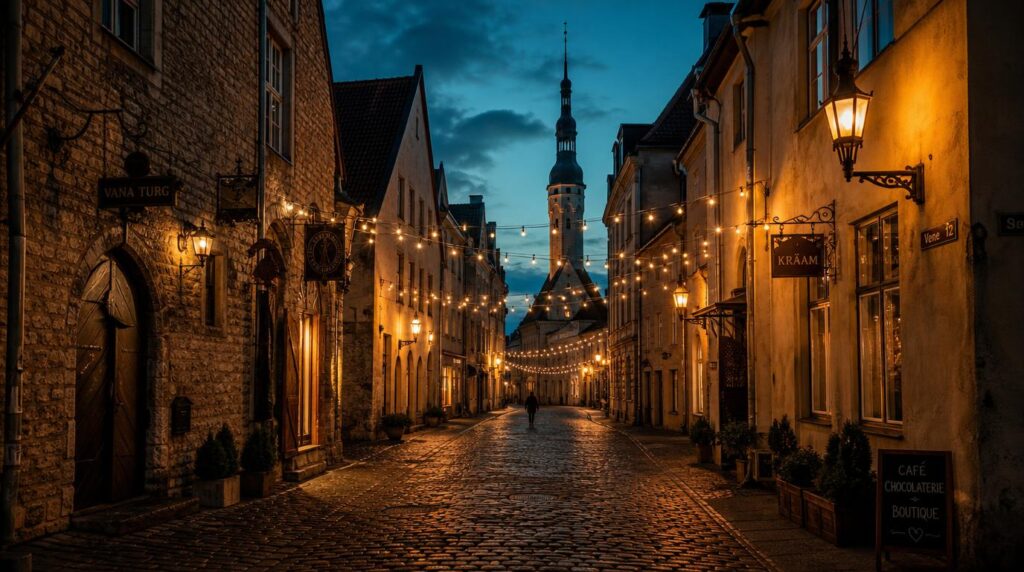
2. Tallinn, Estonia
Estonia has topped global broadband speed rankings for years, and Tallinn concentrates that infrastructure in one compact, walkable city with Europe’s most digitally native government behind it.
- Internet: 75 Mbps average fixed broadband nationally, 101 Mbps mobile, peaking above 135 Mbps on Telia (SpeedGEO, 2025-2026).
- Cost: Roughly $3,243/month total, one-bedroom around $609/month.
- Visa: Requires €4,500/month gross income, the highest bar here, valid up to a year with a possible 6-month extension.
- Timezone: UTC+2/+3, 2 hours ahead of the UK, 7 ahead of US Eastern.
- Coworking: Lift99 and Palo Alto Club, both long-running startup hubs with real community programming.
The income threshold filters out most freelancers just starting out, so this fits established earners better than newcomers. For that audience, the connection reliability is close to unmatched in Europe. Best for: salaried remote employees and consultants who clear the income bar.
3. Valencia, Spain
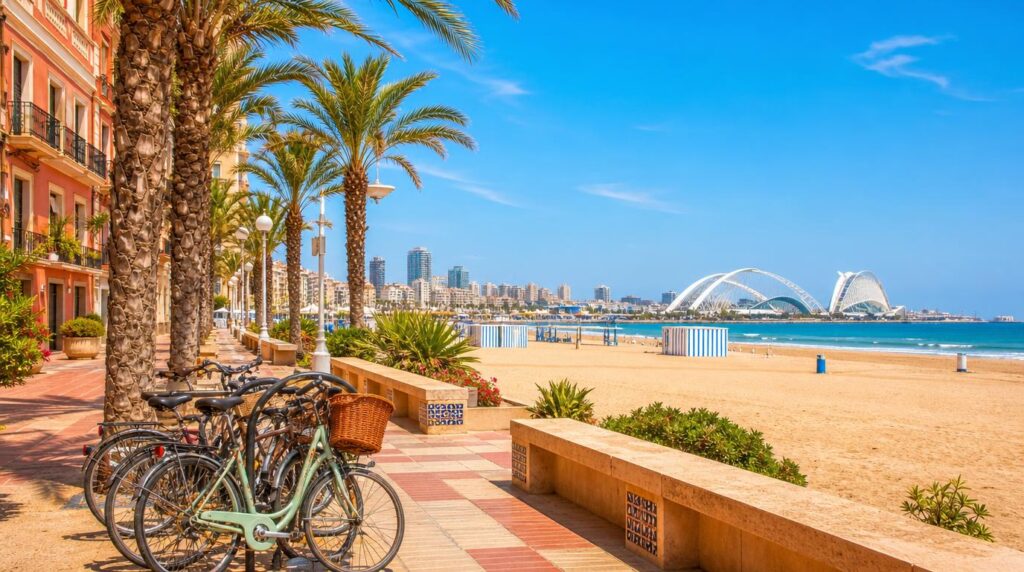
Valencia has the Mediterranean climate people associate with Spain’s coast, plus faster fixed broadband nationally than most expect, and the lowest income bar of any visa on this list.
- Internet: 225 Mbps average fixed broadband nationally, among the fastest in Europe, 103 Mbps mobile (SpeedGEO, 2025-2026).
- Cost: Around $5,261/month total, one-bedroom studio near $1,536/month.
- Visa: Needs about €2,850/month non-Spanish income, valid 1 year, renewable to 3. The Beckham Law can flatten employment income tax to 24% for up to 6 years, generally not available to freelancers.
- Timezone: UTC+1/+2, matching Central Europe, 1 hour ahead of the UK.
- Coworking: La Terraza and Valencia Hub, both running active desk memberships downtown.
This is the most accessible entry point into Spain specifically. The tax benefit is real but don’t plan around it unless your income is structured as employment rather than freelance contracts. Best for: nomads who want beach access without Barcelona’s price tag or crowds.
4. Budapest, Hungary
Budapest is the cheapest capital on this list by a wide margin, and its broadband speeds don’t reflect that price at all. Hungary has quietly built fiber and 5G that outperforms several wealthier neighbors.
- Internet: 183 Mbps average fixed broadband, 144 Mbps mobile, reaching 338 Mbps on Yettel (SpeedGEO, 2025-2026).
- Cost: €1,500-2,000/month comfortably, one-bedroom €500-800.
- Visa: White Card needs roughly €3,000 net monthly income, valid 1 year, renewable once to a 2-year maximum. Decisions typically arrive in 2-4 weeks.
- Timezone: UTC+1/+2, matching Central Europe.
- Coworking: Impact Hub Budapest, plus a growing scene across the Jewish Quarter.
The 2-year cap means this isn’t a long-term base the way Portugal or Croatia can be. For a shorter stretch, the value is hard to match anywhere in the EU. Best for: nomads on a tighter budget who want fast internet without Western Europe’s prices.
5. Split, Croatia
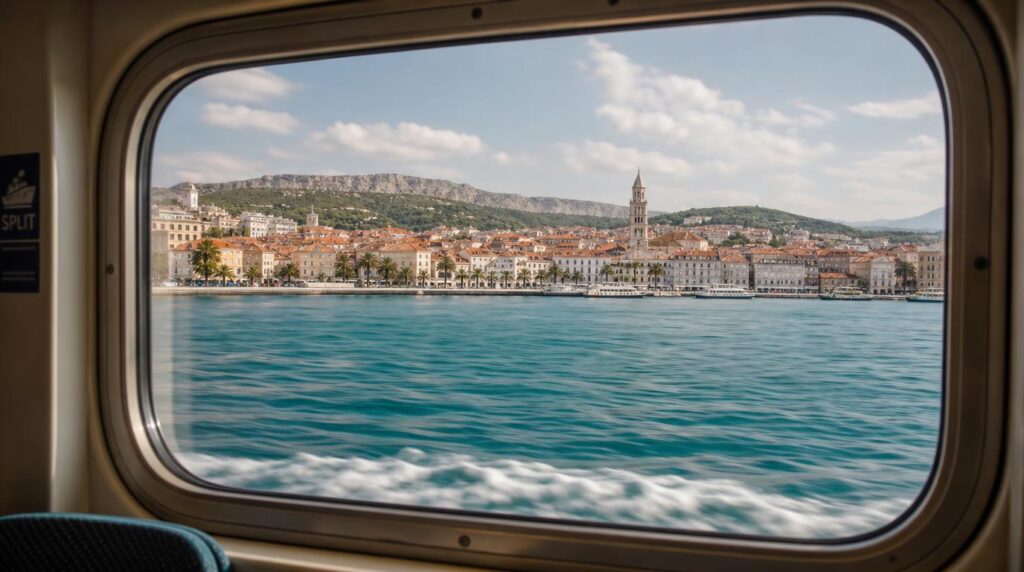
Split pairs coastal Adriatic living with genuinely fast fiber, much of it laid specifically to serve the growing remote-work population along the Dalmatian coast.
- Internet: 91 Mbps average fixed broadband nationally, though most Split coworking spaces report fiber between 100-500 Mbps, with strong citywide 5G.
- Cost: €1,200-1,800/month outside peak season, one-bedroom rent €700-1,200 by neighborhood.
- Visa: Needs about €3,295/month or equivalent savings, valid up to 18 months, the longest single stay here, with foreign income tax-exempt during the stay.
- Timezone: UTC+1/+2, matching Central Europe.
- Coworking: Saltwater Nomads near Bačvice Beach, The Works Coworking near Diocletian’s Palace.
Prices swing hard by season, with summer crowds pushing rents well above the ranges above. Shoulder season, April-June or September-October, is when value and weather both peak. Best for: nomads who want Europe’s longest single visa runway and don’t mind planning around tourist season.
6. Ponta do Sol, Madeira
Madeira runs its own Digital Nomad Village in Ponta do Sol, a small town built around remote workers rather than one that adapted to them. As part of Portugal, the D8 visa above applies here too.
- Internet: Island-wide fiber is standard, with the Digital Nomad Village built around a fast shared connection for calls.
- Cost: Around $2,584/month total, one-bedroom near $552/month, coworking hot desk around $93/month.
- Visa: Same D8 visa as Lisbon, roughly €3,280/month in income required.
- Timezone: UTC+0/+1, same as mainland Portugal and the UK.
- Coworking: The Digital Nomad Village’s own coworking space, plus Outsite’s coliving-coworking setup in Ponta do Sol.
This trades big-city density for island pace, ocean views and weekend hikes over a packed social calendar. Rent has been climbing fast as the program grows, so book housing further ahead than on the mainland. Best for: nomads who want built-in community and island scenery without leaving Portugal’s visa terms.

7. Bansko, Bulgaria
Bansko is the cheapest city on this list by a clear margin, built almost entirely around one thing: a coworking and coliving scene engineered for remote workers in a ski town.
- Internet: Coworking Bansko runs WiFi 6 throughout with symmetric speeds up to 300 Mbps, plus wired LAN ports for calls that can’t drop.
- Cost: Around $2,687/month total, one-bedroom studio near $535/month, coworking hot desk around $151/month.
- Visa: Bulgaria fully joined the Schengen Area on January 1, 2025, so most nomads enter under the standard 90-days-in-180 Schengen allowance, since Bulgaria doesn’t run its own nomad visa.
- Timezone: UTC+2/+3, 2 hours ahead of the UK, 7 ahead of US Eastern.
- Coworking: Coworking Bansko anchors the scene, running coliving alongside workspace with a pool, sauna, and gym on site.
Without a dedicated nomad visa, longer stays mean working within the 90/180 Schengen rule, so this suits short-to-medium stints better than a full-year base. Best for: budget-conscious nomads who want Europe’s lowest cost of living alongside a genuinely fast, purpose-built workspace.

Which one to book
Lisbon and Tallinn sit at opposite ends of the visa-and-infrastructure spectrum, established and pricier versus fast and income-gated, while Valencia, Budapest, and Split fill the middle on cost and climate. Madeira and Bansko round it out for anyone prioritizing built-in community or the lowest monthly spend. Whichever fits, search flights on FlyBibe to get the routing sorted before locking in a lease.