

Istanbul puts Europe and Asia within walking distance of each other, and it’s building a real case as a remote work base. This guide covers internet speeds, costs, visa options, timezone fit, coworking spaces, safety, and the best months to go.
Internet speed
Istanbul’s fiber and coworking connections are solid. Public cafe wifi is a different story.
- Fixed broadband: Turkey averages 49.11 Mbps download and 14.36 Mbps upload nationally, per Speedtest Global Index data from January 2025. Istanbul posts the fastest city-level speeds in the country, at roughly 47.81 Mbps download.
- Mobile data: The national mobile average sits at 66.04 Mbps. Turkcell tends to be the fastest carrier for eSIM and local SIM users.
- Coworking spaces: Fiber at spaces like Kolektif House and Impact Hub beats the national average and holds up fine on video calls.
- Cafe wifi: Slower and less consistent. Some cafes require a Turkish phone number to log on, so a local eSIM is worth setting up on arrival.
There’s a real gap between the official infrastructure numbers and what remote workers report from cafe tables. Community reviews on nomad-tracking sites often cite speeds well under 20 Mbps for public wifi, far below the national fixed-broadband average. Anyone doing video-heavy work should test an apartment’s connection before signing a lease. A coworking membership works well for calls that can’t drop.
Cost of living
A single remote worker can live comfortably here without reaching for luxury. The lira’s volatility is the bigger variable than any single price.
- Rent: A furnished one-bedroom in a central, foreigner-friendly neighborhood runs $600 to $1,400 a month. Kadıköy, on the Asian side, tends to run cheaper than Beşiktaş or Şişli on the European side.
- Utilities: Electricity, water, and internet together add roughly $100 to $180 a month, more in winter with heating.
- Food: Home cooking and local markets keep grocery bills low. A restaurant dinner runs about $10, and a cafe coffee about $4.
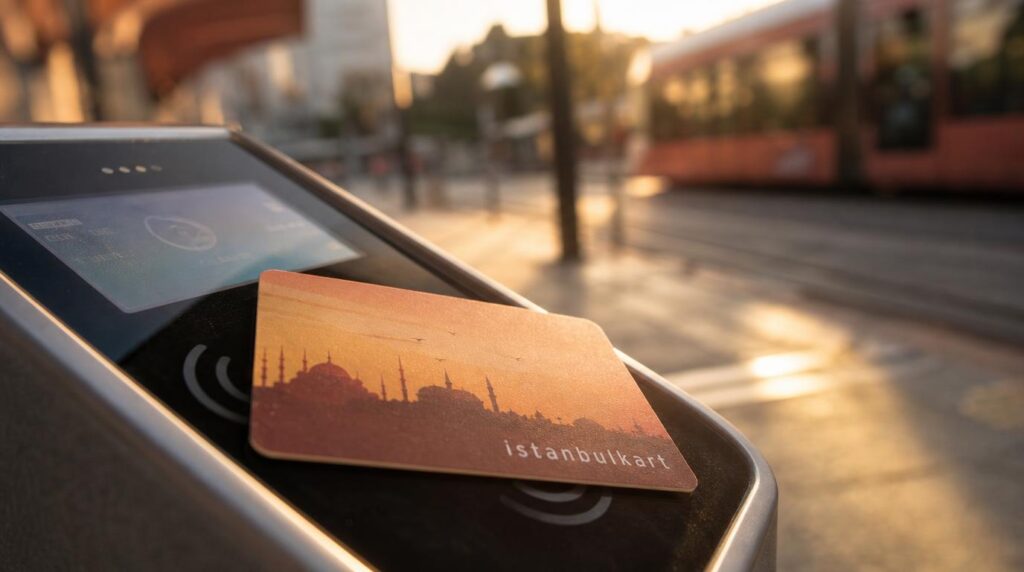
- Transport: An Istanbulkart covers metro, tram, bus, and ferry rides at roughly $0.85 a trip. A monthly unlimited pass costs $45 to $65.
- Coworking: Hot-desk memberships range from about $60 to $270 a month, depending on the space and plan.
Cost estimates for Istanbul vary widely by source, from around $1,200 to $2,500 a month for a single person. The range depends heavily on neighborhood and lifestyle assumptions. A realistic comfortable budget for most nomad-friendly areas lands between $1,200 and $2,000 a month. The lira has run high inflation in recent years, so budget in dollars or euros rather than lira. Expect quoted lira prices to shift over a multi-month stay.
Visa and entry
Short stays are simple for most passports. Longer stays now have a defined, income-based path.
- Tourist entry: UK and EU/Schengen passport holders enter visa-free for 90 days within any 180-day period. US, Canadian, and Australian citizens apply for an e-visa online at evisa.gov.tr for the same 90/180 allowance.
- Digital Nomad Identification Certificate: Turkey’s GoTürkiye platform issues this to remote workers aged 21 to 55 with a university degree. Applicants also need foreign-sourced income of at least $3,000 a month ($36,000 a year).
- Eligible nationalities: The program covers a specific list of roughly 36 countries, including EU member states, the UK, the US, and Canada. Confirm current eligibility on GoTürkiye before applying.
- What it leads to: Certificate holders use it to support a renewable one-year residence permit application. It isn’t an instant standalone visa, so budget time for the residence-permit step after arrival.
Marketing around this program often calls it “Turkey’s digital nomad visa.” In practice, the certificate is a pre-approval step feeding into a residence permit. That distinction matters for anyone planning exact dates. Income thresholds and eligible-country lists change, so verify details directly with GoTürkiye or a Turkish immigration lawyer before booking a one-way flight.
Timezone fit
Istanbul sits at UTC+3 year-round, since Turkey ended its use of daylight saving time in 2016. That makes scheduling simpler than in places that shift twice a year.
- UK and Central Europe: Istanbul runs 2 to 3 hours ahead, so mornings overlap well with London, Paris, and Berlin business hours.
- US Eastern: Istanbul is roughly 7 to 8 hours ahead. A 9am Eastern call lands in Istanbul’s late afternoon.
- US Pacific: The gap widens to 10 to 11 hours, leaving almost no live overlap during standard weekday hours.
- Best fit: European and Middle Eastern clients see near-full-day overlap. US West Coast teams will need async workflows or early-morning Istanbul calls.
For anyone serving European or Gulf clients, Istanbul is one of the easier nomad bases for keeping normal hours. For a team based on US Pacific time, the gap makes daily live meetings a real strain. It’s worth confirming a client’s actual meeting cadence before committing to a long stay.
Coworking and community
Istanbul’s startup scene has built a genuine coworking network, concentrated on the European side but expanding onto the Asian side too.
- Kolektif House: Three locations, in Şişhane/Beyoğlu, Levent, and Ataşehir on the Asian side. Membership tiers include day-pass, nomad, and dedicated-desk options, plus a busy events calendar.
- Impact Hub Istanbul: A community-focused space in Kağıthane with meeting rooms and a full events schedule. Memberships start around €77 a month.
- Workinton: Multiple locations across Levent, Nişantaşı, Galata, Maslak, and Kozyatağı, aimed at freelancers and small teams who want a quieter, corporate-style setup.
- Community size: Nomad-tracking sites count several thousand remote workers passing through Istanbul at any given time, concentrated around Kadıköy, Cihangir, and Beşiktaş.
The coworking scene here skews more corporate than laid-back nomad hubs like Chiang Mai or Canggu. That suits people who want a dedicated desk and a serious work environment more than a beach-town social scene.

Safety
Istanbul is generally safe for remote workers, including solo travelers. The real risks are practical rather than dramatic.
- Main risk: Petty theft and tourist-targeted scams, particularly pickpocketing around Taksim Square, Sultanahmet, the Grand Bazaar, and crowded trams.
- Taxi scams: Meter avoidance and route padding are common complaints. Use Uber or BiTaksi with the in-app fare estimate instead of hailing a street taxi.
- Alcohol: Stick to licensed bars and restaurants. A 2025 methanol-tainted bootleg alcohol outbreak in Istanbul and Ankara killed over 160 people, and counterfeit spirits still circulate.
- Earthquakes: Istanbul sits in an active seismic zone. Choosing housing built after 2000, when stricter building codes took effect, is a reasonable precaution.
- Border regions: Areas near the Syrian and Iraqi borders carry a much higher risk rating. They sit hundreds of kilometers from Istanbul and don’t affect a normal city stay.
None of this is unusual for a city of 15 million people. Most remote workers who stay for months report feeling safe once they learn the common scam patterns.
Best time to visit
Istanbul’s shoulder seasons deliver the best mix of mild weather and manageable crowds for a work-focused stay.
- April to May: Highs around 17 to 20°C, blooming parks, and lighter rain than winter.
- September to October: Highs around 20 to 24°C, clear skies, and fewer tourists than peak summer.
- July and August: Hot and humid, with highs near 29 to 33°C and heavy crowds at major sights.
- December to February: Cold and the wettest stretch of the year, with highs around 7 to 9°C and frequent rain.
A remote worker on a flexible schedule gets the most out of Istanbul by anchoring a stay to April-May or September-October. The mild weather supports long walks between work sessions instead of fighting rain or heat.
Who it’s for, and who should skip it
Istanbul works well for remote workers who want a walkable, historic city with strong coworking infrastructure. It also suits anyone who doesn’t need daily live overlap with US West Coast clients.
- Anyone serving European, UK, or Middle Eastern clients who wants near-full overlap without an early alarm.
- Remote workers who want real coworking infrastructure and a serious work culture over a beach-town social scene.
- Budget-conscious nomads who still want a major-city skyline and food scene.
Skip Istanbul, or keep the stay short, if a client base sits entirely on US Pacific hours. The same goes if navigating scam patterns sounds exhausting rather than manageable.
The bottom line
Istanbul delivers fiber-backed coworking and a genuine income-based path to a longer stay. Its cost of living beats most of Western Europe. The tradeoffs are real too: patchy cafe wifi, a volatile currency, and a city that rewards street smarts. For a remote worker balancing European client hours with a lower budget, it’s one of the more practical bases on the map. Search flights to Istanbul on FlyBibe and start planning the move.