
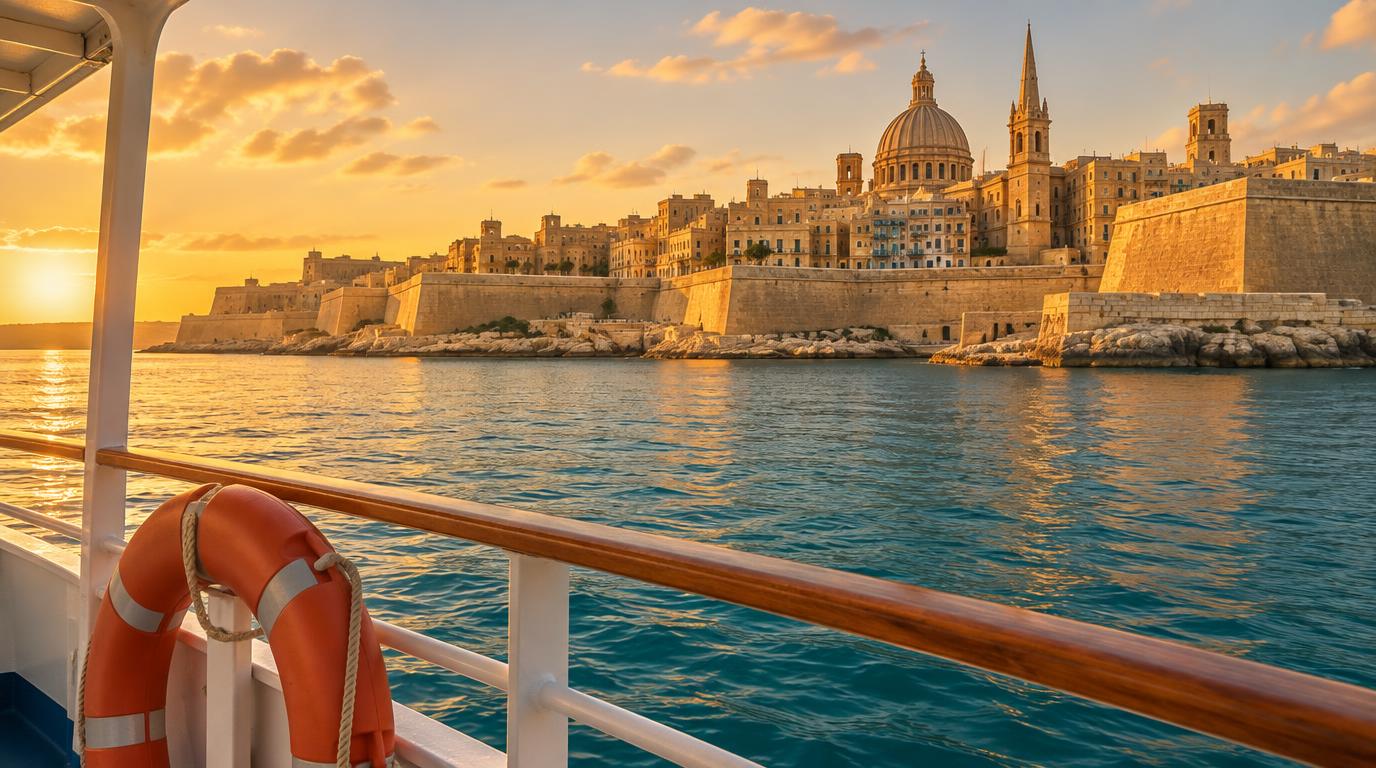
Valletta and Sliema face each other across a harbor, and a ferry between them takes about 5 to 10 minutes. Both suit remote workers, and they differ in rent, community, and daily routine. The guide covers internet speed, monthly costs, visa rules, time zones, coworking, safety, and weather for both places. Figures come from sources checked in October 2026, and each one is named.
How Fast Is the Internet in Malta?
No city-level speed figures were available for Valletta or Sliema, so the numbers below describe Malta as a whole. The sources differ a little, so each one is named with its date.
- Fixed broadband (Ookla, March 2026): a median download speed of 209.61 Mbps, based on the Ookla ranking listed on Wikipedia.
- Fixed broadband (Ookla, May 2026): 207.60 Mbps download, which ranks 37th, and 48.25 Mbps upload, according to worlddata.info.
- Fixed broadband (DataReportal, 2026): a median of 182.33 Mbps.
- Mobile (Expat Focus): about 76.86 Mbps, which ranks 39th.
- Valletta and Sliema: speeds depend on the building and the provider. Asking the landlord which provider serves the unit, and running a speed test before signing, is a sensible step.
All three fixed-line figures sit above 180 Mbps, which is usually enough for video calls and large downloads. Upload speed is lower, at about 48 Mbps, and still works for most calls. A local SIM or eSIM can serve as a backup, and the guide to eSIM vs local SIM vs portable wifi compares the options. Readers weighing other cities can also look at fast wifi cities in Europe.
What Does It Cost to Live in Valletta and Sliema?
Numbeo, updated on 20 October 2026, gives side-by-side figures for both places. Numbeo uses submissions from users, so its numbers are estimates, and other sources differ.
- Sliema rent: a one-bedroom in the center costs €1,564 a month. Outside the center it costs €1,086.67.
- Valletta rent: a one-bedroom in the center costs €1,262.50, with a range of €1,100 to €1,500. Outside the center it costs €993.33.
- Other rent sources: rozie.app lists furnished one-bedrooms in Sliema or Valletta at €1,100 to €1,600. FreeMalta lists €1,050 to €1,400 in nearby Gżira and Msida.
- Agency fee: tenants usually pay 50% of one month’s rent.
- Living costs for one person, without rent: €945.40 in Sliema and €881.20 in Valletta.
- Utilities: €91.63 in Sliema and €138.75 in Valletta.
- Broadband and mobile: €38.42 and €22.80 in Sliema, and €26.25 and €27.91 in Valletta.
- Eating out and gym: an inexpensive meal costs €17.50 in Sliema and €20 in Valletta. A cappuccino costs €2.42 and €2.84. A gym costs €66.70 and €55.93.
Adding rent to the living costs gives these monthly totals before a coworking desk:
- Sliema, center: about €2,510.
- Sliema, outside the center: about €2,030.
- Valletta, center: about €2,140.
- Valletta, outside the center: about €1,870.
A desk at the coworking spaces named below adds about €250 in Sliema or €291 in Valletta. The central totals then rise to about €2,760 and €2,430.
Rent in the center is about €300 lower in Valletta, and the monthly total is about €365 lower once living costs are added. The permit described below requires a one-year lease. At these central rents, that means a commitment of about €15,150 in Valletta or €18,770 in Sliema.
What Are the Visa and Entry Rules?
The rules depend on citizenship. People from outside the EU, the EEA, and Switzerland can apply for the Nomad Residence Permit. Visa-exempt visitors can also stay up to 90 days in any 180-day period, according to the UK government. Europe’s Entry/Exit System now operates across the Schengen area.
The details below come from the Residency Malta FAQ, version 14.1, last updated on 17 April 2026.
- Who can apply: non-EU, non-EEA, and non-Swiss citizens.
- Income: gross income of at least €42,000 a year, which is €3,500 a month. Older sources show €32,400, and that lower amount applied only to applications made before 1 April 2024.
- Fees: €300 per person, plus €100 for the card.
- Processing time: about 30 working days.
- Length: one year, renewable up to three times, which allows up to four years.
- Health insurance: at least €100,000 for the EU and the UK, prepaid for one year. Travel insurance does not count.
- Housing: a one-year lease. Hostels, boats, and caravans do not qualify.
- Limits: the permit does not allow work for Maltese clients, and it offers no path to permanent residency.
The income line is the main hurdle for many applicants. Comparing the figure with current earnings before paying for a lease is a sensible step. The Malta nomad residence permit guide covers the application steps. The Schengen 90/180 day rule explains how short stays are counted. For cover options, see health insurance plans for digital nomads. A comparison with other countries sits in visa income requirements by country.
Tax rules for permit holders are set out in S.L. 123.210 and in Malta Tax and Customs guidance. The tax details here are general information, and a tax adviser can confirm a personal case.
Which Time Zones Work From Malta?
Malta uses Central European Time, with summer time in the warmer months. Malta matches Berlin and runs one hour ahead of the UK.
- UK: Malta is 1 hour ahead.
- Central Europe: the same time.
- US Eastern: Malta is 6 hours ahead.
- US Pacific: Malta is 9 hours ahead.
The US and Europe change their clocks on different dates. For a few weeks each year, the US offsets drop to 5 hours (Eastern) and 8 hours (Pacific).
Overlap depends on the working day. For a client working 9:00 to 17:00 in their own zone, a Malta day of 9:00 to 18:00 gives these shared hours:
- UK: 8 hours.
- Central Europe: 8 hours.
- US Eastern: 3 hours.
- US Pacific: 0 hours.
A later Malta day of 11:00 to 20:00 gives more shared time with the US. The overlap becomes 5 hours with US Eastern and 2 hours with US Pacific. The UK gives 7 hours and Central Europe gives 6 hours.
Malta fits UK and European clients with no change to the day. US Eastern clients work with a later start. US Pacific clients leave only a short window, so a flexible schedule helps.
Coworking Spaces and Community
Both places have coworking options. The prices below come from public listings and may change, so each space is worth confirming before a visit.
- Valletta, Grand Central: on Strait Street and Archbishop Street, with desks from about €291 a month and a roof terrace.
- Valletta, Spaces Malta: a day pass costs €29. Spaces Malta also has locations in Sliema and St Julian’s.
- Sliema, The Factory Space: desks from €250 a month.
- Gżira and St Julian’s, SOHO Office: listed at about $46.90 a day on Hubble.
Desk prices are close, so rent and daily routine are likely to decide the area more than the desk does. Short stays suit coworking day passes. Longer stays may suit coworking memberships for frequent travelers.
Valletta or Sliema: Which Area Fits You?
According to Residency Malta, the largest nomad community lives in Sliema, St Julian’s, and Gżira.
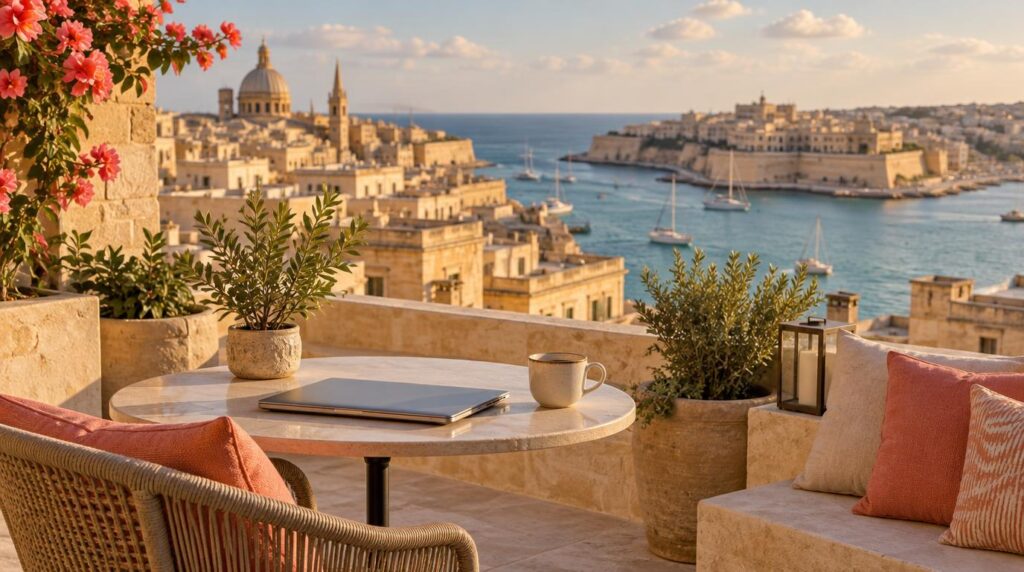
- Valletta: lower central rent, a coworking space with a roof terrace, and the Barrakka Lift nearby.
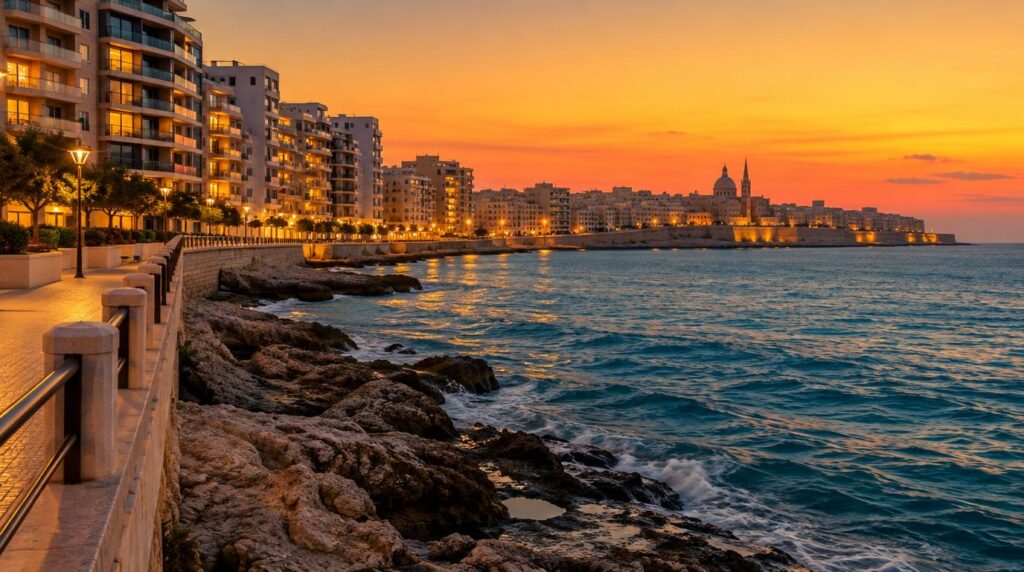
- Sliema: a larger nomad community nearby, two coworking options, and higher rent.
- Gżira and Msida: one-bedrooms listed at €1,050 to €1,400, which is cheaper than central Sliema.
- Getting between them: the ferry takes 5 to 10 minutes.
Malta Public Transport says a personalised Tallinja card gives free travel on buses and on the Sliema to Valletta ferry. The card also covers the Three Cities ferry and the Barrakka Lift. Whether a nomad permit holder qualifies was not confirmed. The ferry fare for visitors was not confirmed either, so Malta Public Transport is the place to check.
The Malta Public Transport fare page was last modified on 19 October 2026. A day fare costs €2.00 in winter (18 October 2026 to 12 June 2027) and €2.50 in summer. Night routes cost €3.00, and traveling without a ticket carries a €50 fine.
Valletta suits a worker who wants lower rent and a desk with a roof terrace. Sliema suits a worker who wants to meet other nomads and does not mind paying more for rent.
Is Malta Safe for Remote Workers?
- Government advisory: the US State Department lists Malta at Level 1, the lowest level, in an advisory issued on 9 July 2026. The advisory describes crime rates as very low.
- Driving: vehicles drive on the left.
- Public wifi: cafes and shared spaces carry the usual risks, and cybersecurity tips for public wifi cover the basics.
The advisory suggests normal care is enough. The sources checked did not separate Valletta from Sliema, so no area-level crime comparison is available.
When Is the Best Time to Go?
The figures below are UK Met Office averages for the Luqa station, showing the average daily high.
- December to March: 15.5 to 17.2 °C.
- April and May: 19.9 °C and 24.5 °C.
- June to August: 29.0 to 32.1 °C.
- September and October: 28.3 °C and 24.8 °C.
- November: 20.7 °C, at the start of the wetter months.
November to January are the wettest months, and the swimming season runs from May to October. April, May, and October bring mild highs of 19.9 to 24.8 °C. Highs above 31 °C in July and August may make midday work outdoors hard.
Who Fits Valletta, Who Fits Sliema, and Who Should Skip Malta
- Choose Valletta if lower rent matters. Central rent is about €300 a month less, and Grand Central offers a desk with a roof terrace.
- Choose Sliema if meeting other nomads matters. Residency Malta places the largest community in Sliema, St Julian’s, and Gżira, and the ferry reaches Valletta in minutes.
- Skip the permit if a non-EU worker earns under €42,000 a year, works for Maltese clients, or wants permanent residency. The permit does not cover those cases.
- Think twice about Malta if most clients are on US Pacific time. The overlap is short.
Readers who prefer a larger city can compare Malta with the Lisbon digital nomad guide.
Choosing Your Base in Malta
Valletta offers lower central rent and a desk with a roof terrace. Sliema offers a larger nomad community and a short ferry ride across the harbor. Both places have fast internet and a mild climate for much of the year. Once the base and the dates are set, search flights to Malta on FlyBibe and compare routes that fit the work schedule.