
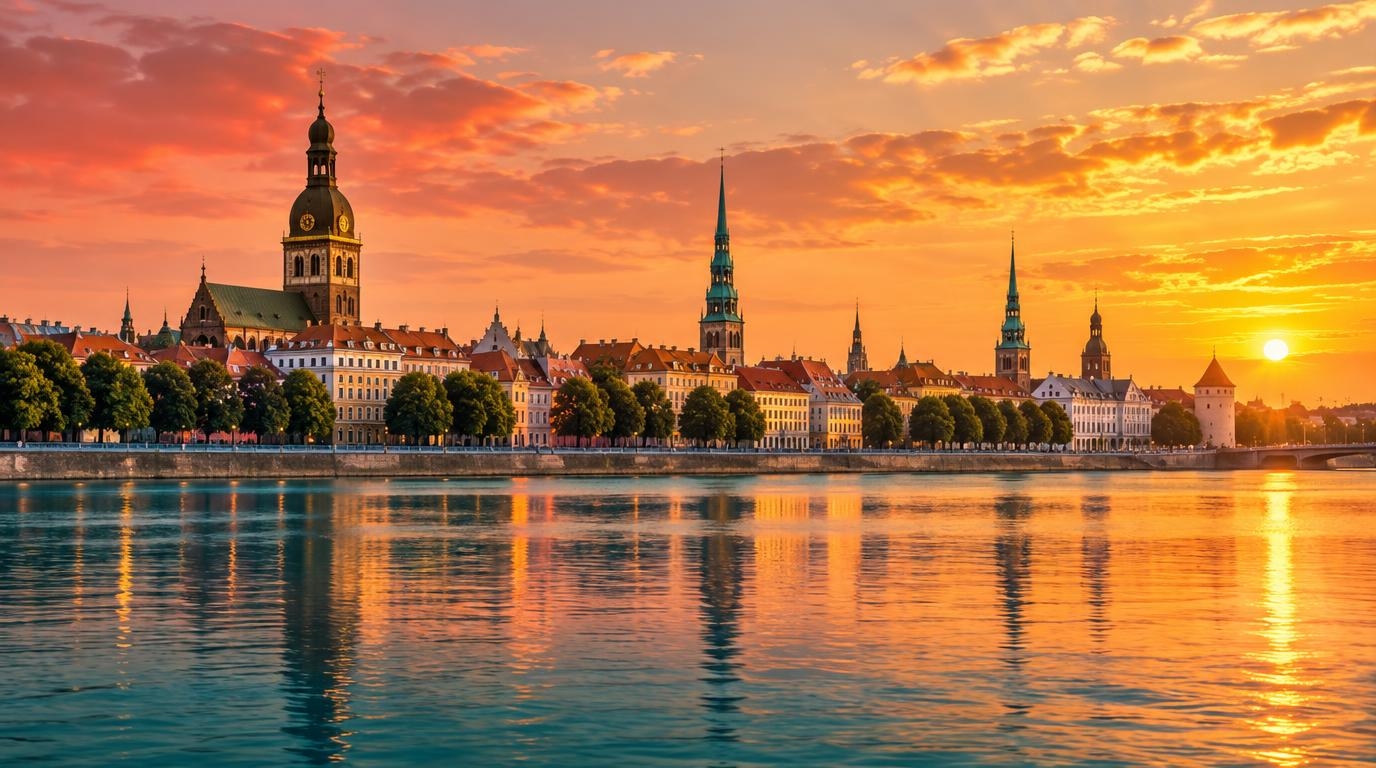
Riga is the capital of Latvia and one of the three Baltic capitals. The sections below cover wifi speeds, monthly costs, visa rules, time zone overlap, coworking spaces, safety, and when to visit. All figures were checked on November 6, 2026, and the text notes where sources disagree.
How Fast Is the Wifi in Riga?
Home broadband in Latvia looks fast on paper, although the sources do not agree on the exact figure.
- National fixed broadband: About 147 Mbps median download speed in the first quarter of 2026, calculated from Ookla’s Starlink comparison as reported by TelecomLead.
- A much lower figure: The site speedof.me lists a median of 18.1 Mbps for Latvia, based on about 1,000 browser tests. A sample that small is probably less reliable than Ookla’s larger dataset.
- Price: According to Numbeo, unlimited broadband at 60 Mbps or faster costs about €16.85 a month. A mobile plan with 10 GB or more costs about €17.46.
- Coworking spaces: The spaces listed below advertise high speed internet, although none of their pages publish a speed figure.
Fixed broadband in a rented flat should handle video calls in most cases. A speed test during a viewing, or a question to the host before booking, removes most of the risk. The guide on how to find reliable wifi speed before booking a stay covers the steps. The comparison of eSIMs, local SIMs, and portable hotspots covers backup data.
How Much Does Living in Riga Cost?
Numbeo updated its Riga page on November 6, 2026, using 1,234 entries from 126 contributors. Its typical prices are listed below.
- One-bedroom flat in the city centre: €554.50 a month, with a reported range of €400 to €758.
- One-bedroom flat outside the centre: €363.24 a month.
- Eating out: €15 for a meal at an inexpensive restaurant and €3.32 for a cappuccino.
- Local transport: €1.50 for a single ticket and €30 for a monthly pass.
- Gym: €45.73 for a monthly membership.
- Airport transfer: Bus 22 takes about 30 minutes to reach the centre. The fare is listed as €1.50 in the Rīgas Satiksme app and about €2 from the driver, so sources differ on the current price.
Numbeo estimates €869.20 a month for one person before rent, which is about $971. Its basic utilities line of €331.76 is for a 915 square foot apartment, so a smaller flat could cost less.
Adding rent and a desk gives the monthly totals below. Dollar figures use the exchange rate implied by Numbeo’s own numbers.
- Outside the centre, no desk: about €1,232 ($1,377).
- City centre, no desk: about €1,424 ($1,591).
- City centre with an OraculeTang non-fixed desk: about €1,557 ($1,739), after adding the €110 desk fee plus 21% VAT.
- City centre with a Coworking Riga fixed desk: about €1,684 ($1,881), after adding €215 plus 21% VAT.
A budget between €1,200 and €1,700 a month looks realistic for one person, depending on the district and the desk. Numbeo figures come from user submissions, so real listings and quotes may differ. Readers comparing Baltic capitals can also read the Tallinn guide on e-Residency and cost of living.

What Visa Does a Remote Worker Need for Riga?
Visa-exempt travelers can stay in Latvia for short periods, and a separate one-year visa exists for longer stays.
- Short stays: Latvia is in the Schengen Area. Citizens of visa-exempt countries, including the United States and the United Kingdom, can stay up to 90 days in any 180-day period. The Schengen 90/180 rule guide explains how the days are counted.
- EU citizens: The 90-day limit does not apply under EU free movement rules.
- Passports that need a visa: Nigerian citizens, for example, need a Schengen visa even for short stays. The guide to digital nomad visas for Nigerian and other non-Western passport holders covers the options.
- ETIAS: Visa-exempt travelers will need this authorization once it starts. According to a Navan timeline guide, the official EU portal gives no confirmed start date. The portal removed its “last quarter of 2026” target in July 2026, although some sites still repeat it.
For stays longer than 90 days, Latvia offers a one-year long-stay visa for remote work. The main conditions come from the Latvian immigration agency, PMLP.
- Who qualifies: Citizens of third countries who work for an employer registered in an OECD member state, or who are self-employed and registered in one.
- Income test: At least 2.5 times Latvia’s average gross monthly wage from the previous year. A PMLP page updated on February 11, 2026 lists €4,213. An older PMLP page still shows €3,192.50, and some secondary sites report €4,538 from mid-2026. Confirm the current figure with PMLP before applying.
- Work history: Employees need a statement showing at least six months with the employer. Self-employed applicants need tax records for the last six months of income.
- Insurance: Health insurance valid in Latvia and the Schengen states, with cover of at least €42,600.
- State fee: €90 for a national long-stay (type D) visa.
- Limits: The visa does not allow work for Latvian employers. Reports on the Saeima vote also say Latvia changed its Immigration Law to stop issuing this visa to Russian citizens.
The income test is the main hurdle. At €4,213, the threshold is roughly 2.7 times the monthly budget estimated above for a city-centre flat with a desk. The guides on income requirements by country, the application documents checklist, and health insurance for nomads cover the paperwork. Long stays can also raise tax residency questions, which the guides on EU tax residency rules and US tax filing while working abroad address.

Does Riga’s Time Zone Work With US and European Clients?
Riga runs on UTC+2 in winter and UTC+3 in summer, so the offsets from other zones stay mostly steady. The overlap figures below assume a 9:00 to 17:00 workday on both sides.
- Central Europe: 1 hour ahead all year, with 7 hours of overlap (10:00 to 17:00 in Riga).
- United Kingdom: 2 hours ahead all year, with 6 hours of overlap (11:00 to 17:00 in Riga).
- US Eastern: 7 hours ahead for most of the year. The offset drops to 6 hours for about four weeks in March and October, when clocks change on different dates. Overlap is 1 hour (16:00 to 17:00 in Riga).
- US Pacific: 10 hours ahead, or 9 hours for the same four weeks. A standard workday has no overlap.
Shifting the working day later improves the US overlap. Working from 12:00 to 20:00 in Riga gives about four hours with US Eastern clients, which is 9:00 to 13:00 their time. Working from 16:00 to midnight gives about five hours with US Pacific clients, which is 9:00 to 14:00 their time. The guide to managing client meetings across multiple time zones offers scheduling ideas.
Which Coworking Spaces and Communities Are in Riga?
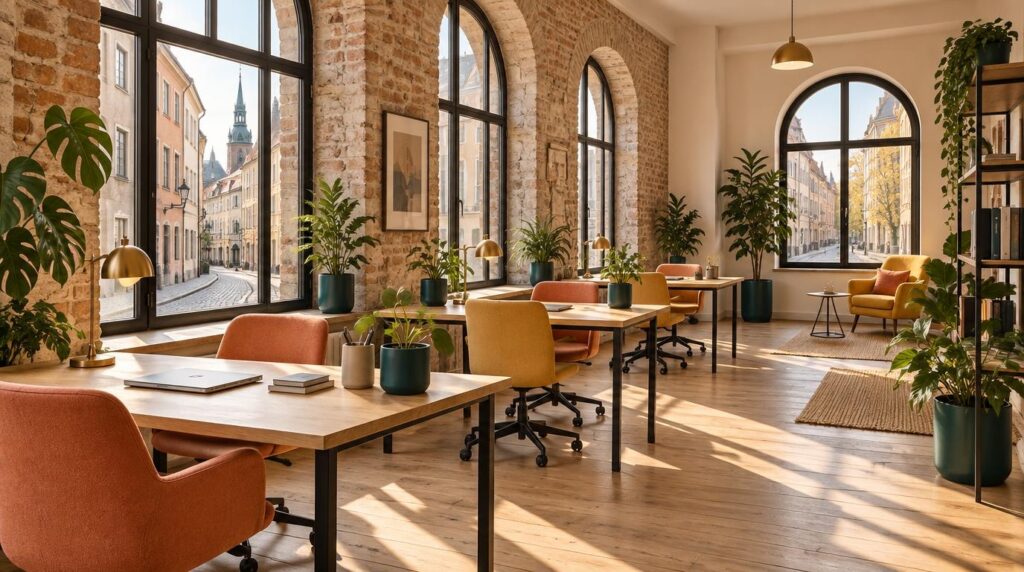
Riga has several coworking spaces, and prices change a lot with contract length. The list below uses each space’s own website where one was available.
- OraculeTang Space (Doma laukums 2, Old Town): A day pass costs €15 and a non-fixed desk €110 a month. A fixed desk costs €130, and a desk in a private office €160. Memberships list high speed internet, coffee, tea, a kitchen, a meeting room, a printer, a phone booth, and lockers. The site also offers a trial day. A LiveRiga guide lists the non-fixed desk at €133.10, which equals €110 plus 21% VAT, so VAT may be added at checkout.
- Coworking Riga (Artilērijas iela 3): A fixed desk costs €215 a month plus VAT. The minimum term is two months, and 10 hours of meeting room time are included. Tenants get 24/7 access, a kitchen, quiet booths, and a small gym. Private offices cost €250 per workstation plus VAT.
- Workland (Galleria Riga and Verde): Hot desks, dedicated desks, private offices, and meeting rooms. According to LiveRiga, the Verde location at Roberta Hirša iela 1 takes online bookings for a single hot desk day. The pages checked did not publish prices.
- SPARK Coworking (Skanstes iela 52): Private offices, fixed desks, and flex desks in the Skanstes City office quarter, according to LiveRiga. The space has room for up to 90 people.
- Hamann Coworking (Slokas iela 41A): Desks and private offices in a restored heritage building, according to LiveRiga.
Eight day passes at OraculeTang add up to €120, which is more than the €110 monthly desk. A monthly desk therefore starts to cost less after about eight days of use. Coworking Riga’s two-month minimum suits long stays better than short ones. The guide to coworking spaces offering day passes for short stays helps with shorter trips.
The community side is smaller and leans toward startups.
- Startup House Riga: A nonprofit coworking and community hub for startups, with meetups, office hours, mentoring sessions, and workshops.
- Open Coffee Club Riga: Informal networking events for entrepreneurs, professionals, and students.
- Nomads.com: Showed no upcoming Riga meetups on November 6, 2026.
The nomad social scene appears smaller than in larger hubs, so most connections may come from coworking spaces and startup events.
Is Riga Safe for Remote Workers?
Official guidance and user reports both point to a generally safe city.
- US State Department: Level 1, “Exercise normal precautions,” issued April 1, 2026. The department also recommends buying travel insurance.
- Numbeo Crime Index: 37.18, with a Safety Index of 62.82, updated August 24, 2026 from 374 contributors.
- Walking alone: 82.20 in daylight (very high) and 57.27 at night (moderate).
- Concerns: Worry about being mugged or robbed scores 31.97 (low). Corruption and bribery score 66.15 (high).
Night walking scores lower than daytime walking, so usual city precautions after dark make sense. Numbeo scores reflect user opinions and are not police statistics.
When Is the Best Time to Go to Riga?
Riga has cold winters and mild summers with long days.
- Late May to September: The warmest weather and longest daylight. Summer averages near 18°C with highs up to 22°C, and June can bring up to about 18 hours of daylight, according to travel weather guides.
- December to February: Temperatures around 0°C. January is the coldest month, with highs near -1°C, lows near -5°C, frequent snow, and about eight hours of daylight.
- March and October: March has roughly 12 hours of daylight and fewer visitors. October brings limited daylight and chilly winds.
For a first stay, late May through August offers the longest evenings after work. A winter stay suits people who are comfortable with snow and about eight hours of daylight.

Who Should Choose Riga, and Who Should Skip It?
Riga fits remote workers on European or UK hours and people who want a lower-cost Schengen base. Riga fits less well for people tied to US West Coast clients or those who want a large nomad scene.
- UK and Central European clients: Six to seven hours of overlap makes a standard workday simple.
- Long stays: Monthly desks from €110 to €215 plus VAT work well for stays of two months or more.
- Visa applicants who qualify: Workers with an OECD-registered employer or business and income above the PMLP threshold can consider the one-year visa.
- US Pacific clients: A standard workday has no overlap, so a late shift is needed.
- Nomad meetups: Nomads.com showed none on November 6, 2026, so people who want a large nomad scene may prefer another city.
- Russian passport holders and lower earners: The remote work visa is closed to Russian citizens, and applicants below the income threshold cannot use it.
Plan Your Stay in Riga
Riga offers fixed broadband around 147 Mbps and a monthly budget of roughly €1,200 to €1,700. Coworking desks start at €110 a month before VAT. The time zone suits European clients well and takes some planning for US ones. If those numbers fit your plans, search flights to Riga on FlyBibe and pick dates that match the season you want. Checking the current visa income figure with PMLP before booking can help avoid surprises.