
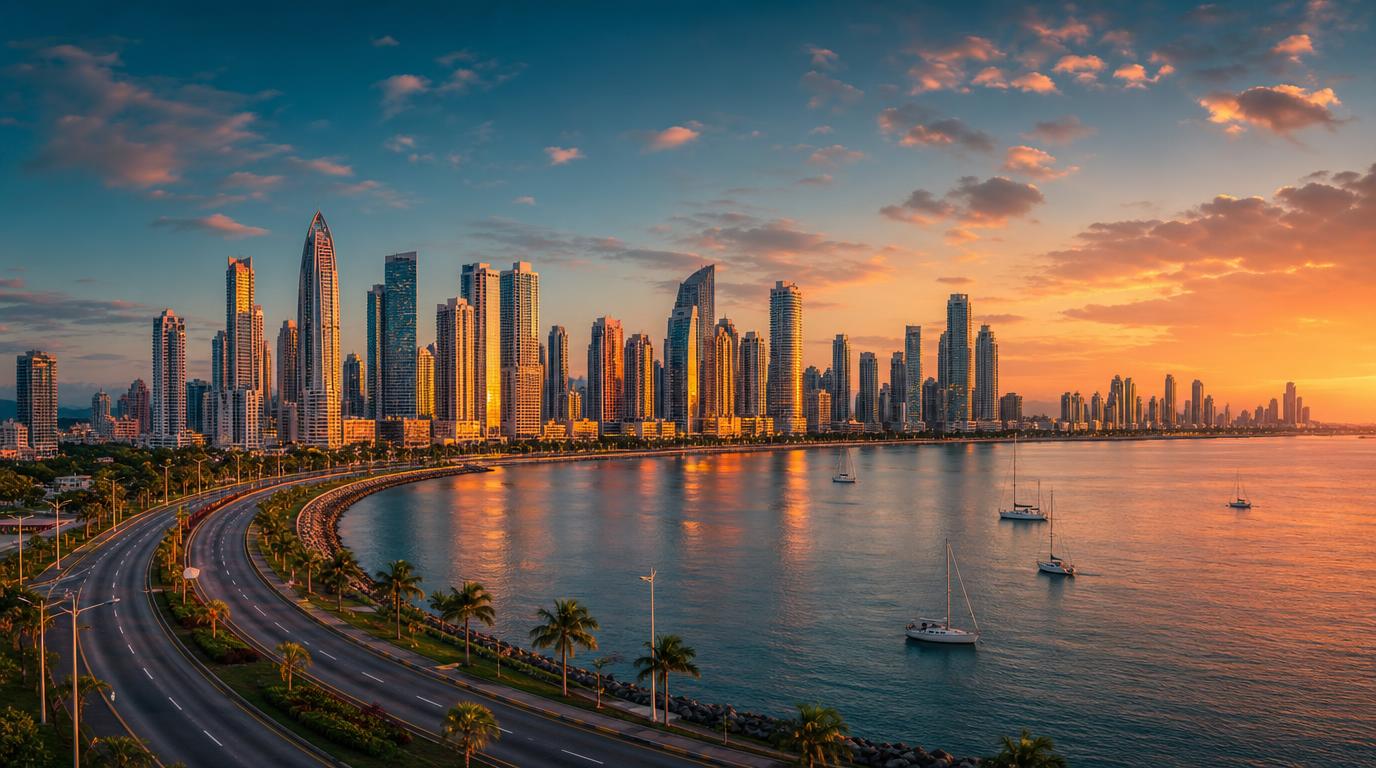
Panama City runs on the US dollar, sits close enough to US business hours to skip most jet lag, and offers two separate legal paths for remote workers to stay long-term. This guide covers what it actually costs to live there, how the visa options compare, and whether the internet and community hold up for someone working full-time rather than passing through.
Internet and wifi reliability
Panama’s national connection speeds trail the global average, dragged down heavily by mobile testing. The country ranks near the bottom half of global rankings (87th of 119 measured), though fixed and desktop connections perform far better than the headline number suggests.
- Overall median download: around 16.9 Mbps, versus a global median near 34 Mbps
- Fixed/desktop median: around 46 Mbps, workable for video calls and large files
- Mobile median: around 9 Mbps, noticeably weaker
- Fastest local ISP: Tigo Panama, averaging close to 29 Mbps in independent testing
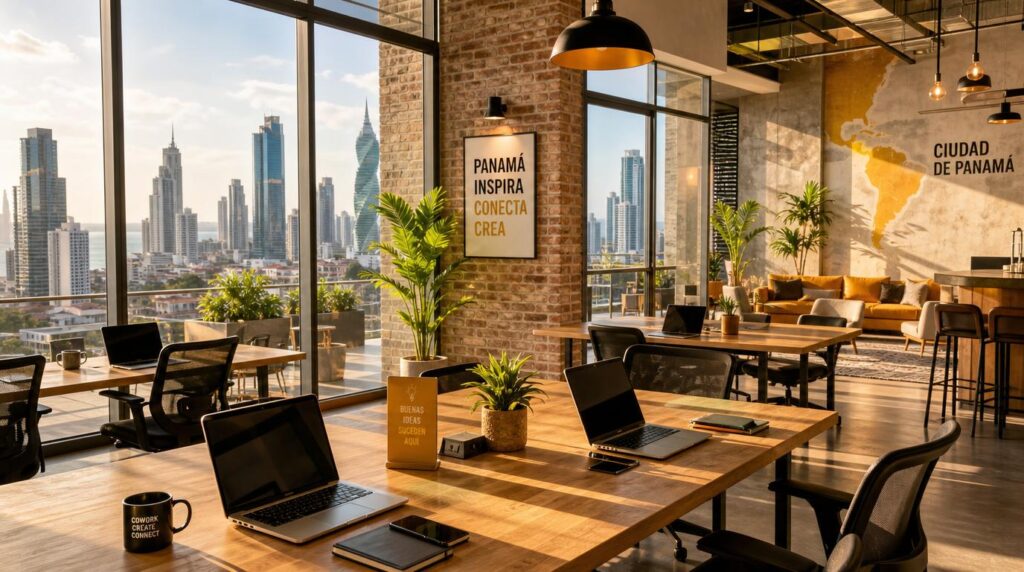
Home wifi quality varies a lot by building and provider. Anyone on daily video calls should treat a coworking membership as part of the budget rather than an optional extra.
Cost of living in Panama City
Panama City runs meaningfully cheaper than most US or Western European cities, though it sits above the cheapest nomad hubs in Southeast Asia. The US dollar is the official currency, so there’s no exchange rate to track.
- 1-bedroom rent, city centre: around $1,290/month, typically ranging $1,000-$1,870
- 1-bedroom rent, outside centre: around $918/month, typically ranging $750-$1,600
- Groceries and daily expenses: roughly $850/month for a single person, excluding rent
- Basic utilities: around $131/month for a typical apartment (electricity, water, garbage)
- Public transport: a monthly pass runs about $21; single rides on the Metro or bus cost $0.35
- Eating out: an inexpensive meal runs about $10; a mid-range dinner for two runs closer to $47
A realistic all-in monthly budget for a single remote worker living comfortably, renting outside the priciest core neighborhoods and eating out a few times a week, lands somewhere between $1,800 and $2,600 including rent. That’s higher than nomad hubs in Southeast Asia, but it buys a functioning metro, reliable pharmacies, and direct flights across the Americas.
Visa options for remote workers
Panama gives remote workers three realistic ways to stay: a short tourist stamp, a dedicated remote-worker visa, or the longer-term Friendly Nations Visa. Which one makes sense depends entirely on how long the plan is to stay.
Tourist entry is the simplest option for a short stint. US and Canadian passport holders typically get 180 days on entry, while UK and EU passport holders usually get 90 days. The exact number is whatever the immigration officer stamps, not a guaranteed default, and Panama has been cracking down on people doing repeated border runs to reset the clock. Anyone planning to stay past their stamped date should look at one of the two visas below rather than gamble on re-entry.
The Short Stay Visa for Remote Workers is Panama’s actual digital nomad visa, built for employees of foreign companies, freelancers, and business owners running an operation based outside Panama.
- Income requirement: at least $36,000 a year from non-Panamanian sources, shown through three months of bank statements or an employer letter
- Cost: roughly $400-800 total, including a $250 government fee and a $50 immigration card fee, plus translation and optional legal costs
- Processing time: typically 30-45 business days after filing with Panama’s National Immigration Service
- Validity: an initial 9 months, with one extension of 9 more months, for a maximum stay of 18 months
- Restriction: holders cannot work for a Panamanian employer or local client while on this visa
The Friendly Nations Visa is a heavier commitment aimed at people who want an actual residency path, not just a temporary work stamp. It’s open to citizens of around 50 eligible countries, including the US, Canada, the UK, and most of the EU, and requires proof of an economic tie to Panama through one of three routes: a work contract with a Panamanian company, a real estate purchase of at least $200,000, or a three-year fixed bank deposit of the same amount. Total costs for a single applicant, including legal and government fees, typically run $4,500-9,700, well above the remote-worker visa. In exchange, applicants get two years of provisional residency, a route to permanent residency after that, and eventual eligibility for citizenship after five years as a permanent resident.
For most remote workers testing out Panama City, the Short Stay Visa is the more proportionate option. The Friendly Nations Visa makes sense mainly for people already planning to buy property or build a long-term base. Visa rules shift periodically, so confirm current terms with Panama’s National Immigration Service or a licensed immigration attorney before filing.

Timezone fit for client work
Panama sits at UTC-5 year-round and does not observe daylight saving time, which simplifies scheduling more than most nomad destinations manage.
- US Eastern: matches exactly during US winter months, one hour behind during US daylight saving
- US Central: one hour ahead
- US Pacific: two to three hours ahead, still a workable overlap for most of the US workday
- UK: five hours behind GMT, six behind British Summer Time
- Central Europe: six to seven hours behind
That makes Panama close to ideal for US-based work, full overlap without early mornings or late nights. European clients are workable too, but only in the morning, since European afternoons land around 9-11am Panama time.
Coworking spaces and community
Panama City has a real, growing coworking scene rather than one or two token spaces, concentrated mostly in El Cangrejo, Casco Viejo, and Punta Pacifica.
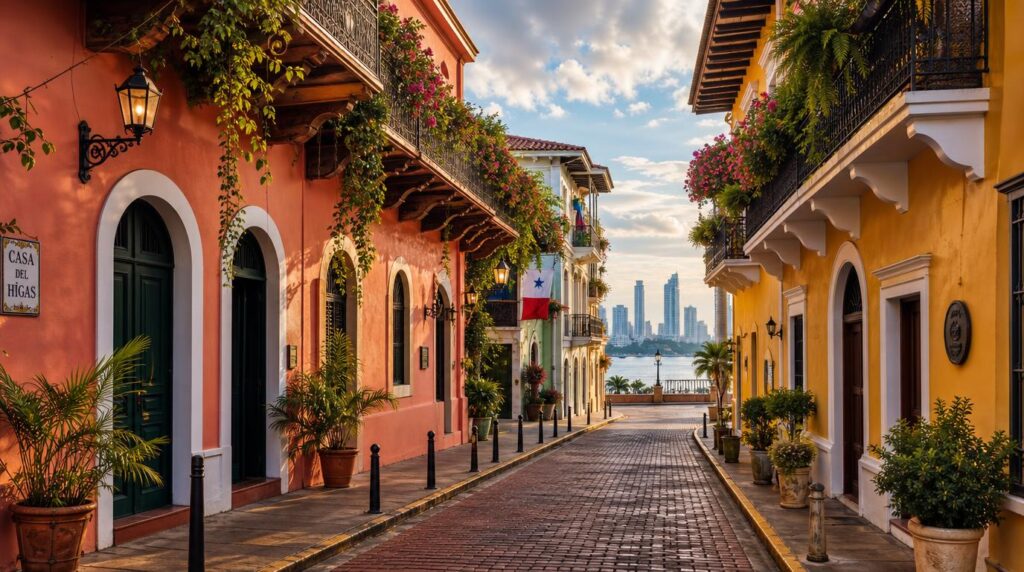
- Selina Casco Viejo: $10/day, inside a restored historic building with a rooftop terrace in the old town
- The Cube Coworking: $15/day or $60/month, near Via España and the Iglesia del Carmen metro stop
- Be Productive Workspaces: $15/day or $90/month in Dorado City Center, known for a tight community and regular events
- My Office Panamá: private offices from $99/month in a downtown tower on Calle 50
The nomad community is smaller than Mexico City or Medellín, but active enough to find regular meetups around Casco Viejo and El Cangrejo, and it keeps growing as more workers use the Short Stay Visa to base here for a few months at a time.
Safety in Panama City
Panama is generally regarded as one of the safer countries in Latin America for expats and remote workers, with petty crime as the main concern rather than violent crime.
- Main risks: pickpocketing and bag snatching in crowded markets and on public transport, plus taxi overcharging and occasional ATM scams
- Safer neighborhoods: Casco Viejo (patrolled by dedicated tourist police), El Cangrejo, Costa del Este, and Punta Pacifica
- Areas to avoid: El Chorrillo, Curundú, San Miguelito after dark, and Colón City, all outside the typical expat routes
- Basic precautions: use ride-hailing apps or agree on a fare before getting in a taxi, keep phones and jewelry out of sight in crowds, and be wary of unsolicited help at ATMs
None of this is unusual for a Latin American capital, and it’s noticeably calmer than several other major cities in the region.
Best time to work from Panama City
Panama runs on two seasons rather than four. The dry season runs mid-December through mid-April, with daytime temperatures climbing past 30°C (86°F) by March and April. The wet season covers May through November, typically bringing short, heavy afternoon downpours rather than all-day rain.
For remote workers, the shoulder months of April through September tend to work best: lower prices than peak dry season, manageable afternoon showers instead of sustained rain, and fewer tourists competing for apartments. October and November bring the cheapest rates but also the heaviest rainfall.
Who Panama City is for
Panama City suits remote workers who want US-adjacent time zones, dollar-denominated pricing with no currency conversion, and a legitimate visa path without the paperwork of European-style long-stay programs. It’s a strong fit for anyone serving US clients, freelancers who can clear the $36,000 income bar, and people who want reliable infrastructure over the cheapest possible cost of living.
- Good fit: US-hours freelancers and remote employees, people who want dollar pricing and no currency risk, anyone testing Latin America before a longer-term move
- Skip it if: the budget is under $1,500/month all-in, the priority is a large built-in nomad community from day one, or the work is heavily reliant on fast home mobile data
Search flights to Panama City
Panama City delivers on the fundamentals that matter for actually working somewhere: real visa options, dollar pricing, workable timezones, and a safety profile better than most people expect. If the $36,000 income threshold and the Short Stay Visa timeline line up with the plan, search flights to Panama City on FlyBibe and get the trip booked.