
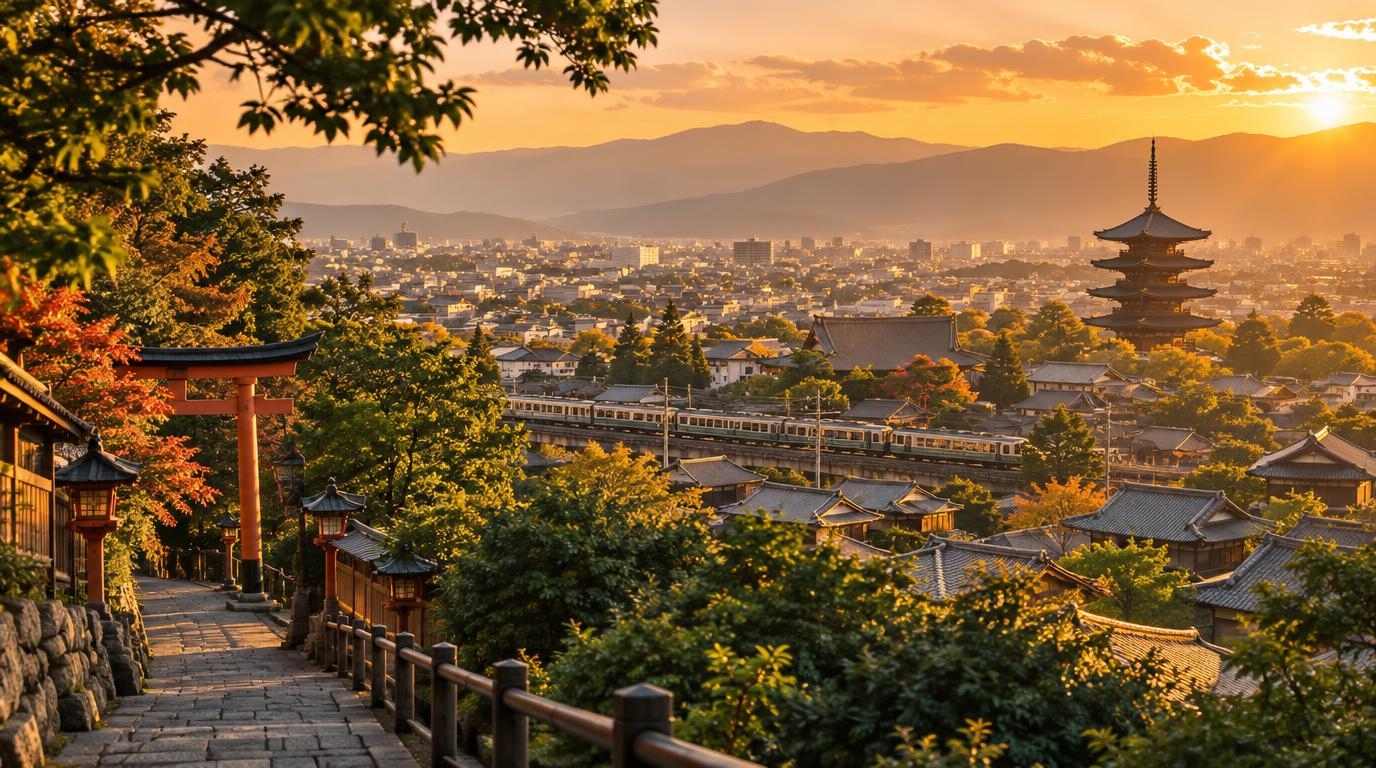
Kyoto offers quiet streets, fast internet, and one-bedroom rent that runs about half of Tokyo’s. The guide covers wifi, monthly costs, visa rules, timezone fit, coworking spaces, safety, and the best time to go. The guide also compares six neighborhoods so remote workers can choose a base. Dollar amounts use a rate of about ¥158 per US dollar, close to the 158.27 rate on October 11, 2026.
Internet and wifi in Kyoto
Japan has fast home fiber, and mobile data in Kyoto is solid. Speed figures change with the test method, so each number below names its source.
- Home fiber: In Ookla’s first-half 2026 review, So-net was the fastest Japanese provider. Its median speed was 357.71 Mbps down and 240.55 Mbps up, with 11 ms latency.
- Mobile data: Ookla’s Japan Connectivity Report for the first half of 2026 put Kyoto Prefecture’s median mobile download speed at 79.36 Mbps. Osaka measured 93.66 Mbps and Tokyo 80.95 Mbps.
- Coworking wifi: Japan Dev’s May 2026 review describes high-speed wifi at several Kyoto spaces but does not publish speed tests.
The So-net figure covers one provider across all of Japan, so it shows what fiber can deliver. Real speeds in a rental depend on the building’s line, and asking which provider serves a unit before signing is a sensible check.
Cost of living in Kyoto
Rent drives most of the difference between Kyoto and Tokyo. Sources vary on exact prices, so each figure below names where it comes from.
- One-bedroom, Kyoto versus Tokyo: April 2026 Numbeo and Expatistan data, as reported by Cities Insider, lists ¥89,342 (about $565) in Kyoto. Tokyo’s 23 wards come in at ¥180,557 (about $1,143). The same source puts Kyoto about 19% cheaper overall.
- Rent by ward: Yahoo! Real Estate averages for September 2026, reported by A-Realty, show single-person units at ¥85,000 in Shimogyo, ¥81,000 in Nakagyo, and ¥54,000 in Sakyo.
- Furnished apartments: Best-Estate lists furnished 1K units in urban Kyoto at ¥70,000 to ¥130,000 ($443 to $823) a month.
- Share houses: Best-Estate lists ¥30,000 to ¥70,000 ($190 to $443) a month.
- Getting around: A monthly bus and subway pass costs ¥5,000 to ¥10,000 ($32 to $63), according to Stampednomad, and many residents ride bicycles.
- Move-in costs: Standard rentals ask for four to six months of rent upfront. Furnished rentals ask for one to two months, and share houses ask for ¥10,000 to ¥30,000, according to Best-Estate.
The rent difference with Tokyo is large enough to change a budget. The Tokyo digital nomad guide has matching Tokyo costs for a side-by-side look.
The example below adds up one month for a single remote worker in a furnished studio. Rent, coworking, and transport come from the figures in this guide. The last line is an assumption made for the example.
- Furnished rent: ¥70,000 to ¥100,000 ($443 to $633)
- Coworking: ¥10,000 to ¥19,800 ($63 to $125)
- Transport: ¥5,000 to ¥10,000 ($32 to $63)
- Food, utilities, phone, and extras: ¥120,000 to ¥145,000 ($759 to $918)
- Total: ¥205,000 to ¥274,800 ($1,297 to $1,739)
Other estimates run higher. Nomada puts a mid-tier month at $1,970, and World Cost of Living estimates about $1,999. A comfortable budget with frequent restaurant meals and weekend trips could reach $2,000.
Visa and entry for remote workers
Japan offers a visa-free short stay and a separate six-month visa for remote workers. The Ministry of Foreign Affairs of Japan is the main source for both.
- Short visits: Citizens of the United States, the United Kingdom, Canada, Australia, New Zealand, and many other countries can enter without a visa. The usual stay is 90 days.
- Digital nomad visa: The six-month visa began in March 2024. Applicants need an annual income of ¥10 million or more (about $63,000). They also need private insurance covering at least ¥10 million for death, injury, and illness. The passport must come from one of 49 eligible countries and territories.
- Eligible passports: The list includes the United States, the United Kingdom, Australia, Singapore, South Korea, Taiwan, and all EU countries. India is not on it.
- Extensions: The stay cannot be extended. Holders can apply again after six months outside Japan.
- Residence card: The Embassy of Japan in Finland states that visa holders do not receive one. Some third-party guides describe this differently, so the embassy page is the source used here.
Short-term visitor status is meant for tourism and brief business trips. A remote worker planning a longer stay should check the rules for their own situation with Japan’s Immigration Services Agency. The Japan digital nomad visa guide covers the application steps.
The ¥10 million income level will rule out many remote workers. The visa also affects housing, because A-Realty lists a residence card among the documents for a standard rental application. Furnished and serviced apartments may suit a visa holder better.
Timezone fit
Japan Standard Time is UTC+9 all year, with no daylight saving. The offsets below shift by an hour when US and European clocks change. Overlap means both sides fall inside a 9 am to 6 pm workday.
- US Eastern: Kyoto is 14 hours ahead in winter and 13 in summer. Standard hours do not overlap. In winter, evening calls from 7 pm to 9 pm Eastern match 9 am to 11 am in Kyoto.
- US Pacific: Kyoto is 17 hours ahead in winter and 16 in summer. The overlap is two hours in winter and one hour in summer. In winter, Kyoto 9 am to 11 am matches 4 pm to 6 pm Pacific the day before.
- UK: Kyoto is 9 hours ahead in winter and 8 in summer. Winter has no overlap, since 5 pm in Kyoto is 8 am in London. Summer has one hour, from 5 pm to 6 pm in Kyoto.
- Central Europe: Kyoto is 8 hours ahead in winter and 7 in summer. The overlap is one hour in winter (Kyoto 5 pm to 6 pm) and two hours in summer (Kyoto 4 pm to 6 pm).
Kyoto fits clients in Asia and the Pacific with almost no scheduling work. Europe works with a late-afternoon call window. A nomad on a fixed US schedule would likely work early mornings or evenings in Kyoto. Long stays on that routine may get tiring.
Coworking and community
Kyoto has a good spread of coworking spaces, mostly in the central wards. Prices below come from Japan Dev’s May 2026 review and may have changed.
- Impact Hub Kyoto: An old townhouse in Kamigyo Ward with tatami rooms and a garden. Memberships start at ¥3,000 a month ($19), and the space runs events and workshops.
- .andwork Kyoto: A Kawaramachi space five minutes on foot from four stations. Drop-in rates start at ¥600 an hour, and monthly plans start at ¥15,000 ($95). Sound-isolating booths help with calls, though the room gets noisy after 5 pm.
- GROVING BASE: A quiet space in Shimogyo Ward with phone rooms. A day pass costs ¥1,500 ($9), and monthly plans start at ¥19,800 ($125).
- Space Kante: A plant-filled room in Nakagyo Ward. Drop-ins cost ¥1,500 ($9) and monthly plans start at ¥10,000 ($63). The room can get noisy.
- Common Room Shijo Karasuma: A small Shimogyo Ward space with 24-hour access. A full membership costs ¥14,300 ($91), and a night-only plan costs ¥5,500 ($35). The meeting rooms are not soundproof.
- Sights Kyoto: A renovated house in Higashiyama Ward. A day pass costs ¥2,970 ($19), and monthly plans start at ¥19,800 ($125). The space hosts events with local craftspeople.
A-Realty describes Kyoto’s foreign community as academic-skewed, with a broader mix in Osaka. The sources reviewed for this guide did not document a large nomad meetup scene. Impact Hub Kyoto and Sights Kyoto both host events, which makes them likely places to meet people.
Safety
The US State Department rates Japan at Level 1, “Exercise Normal Precautions,” the lowest of its four advisory levels. The advisory was reissued after periodic review without changes.
- Crowds: A-Realty lists tourist crowds as part of daily life in Kyoto. Buses and popular streets can feel busy in peak seasons.
- Hotel tax: Kyoto raised its accommodation tax on March 1, 2026. The top rate is ¥10,000 per person per night, for rooms of ¥100,000 or more. Lower tiers apply to cheaper rooms, according to Japan Specialist.
- Insurance: The nomad visa requires ¥10 million in medical cover. Short-stay visitors may want travel insurance too.
Normal city habits, such as watching bags in crowds, fit a Level 1 rating. The hotel tax matters mainly for the first weeks of a stay, before a rental begins.
Best time to go
Seasons shape both the weather and the crowds in Kyoto.
- Spring and autumn: World Travel Guide names March to May and September to November as the best times to visit. Nomada lists March, April, October, and November as the best months.
- Summer: August is normally the hottest month, with an average daytime high of 33.7°C. The annual mean is 16.2°C. Both figures use Japan Meteorological Agency data for 1991 to 2020.
- Autumn color: The Japan Meteorological Corporation’s October 1 forecast put peak red leaves in Kyoto around December 11, 2026.
Peak blossom and peak color weeks likely bring heavy crowds. A stay in the weeks just before or after them may feel calmer.
Getting to Kyoto
Kyoto has no airport, so air travelers fly into Kansai International or Osaka Itami.
- Kansai International Airport: The Haruka limited express takes about 75 minutes to Kyoto Station. Trains run about twice an hour in the morning and evening.
- Osaka Itami Airport: An airport limousine bus takes about 55 minutes.
- From Tokyo: The Nozomi bullet train takes about 140 minutes.
- From Osaka: The train takes roughly 15 to 30 minutes, depending on the service.
The short trip from Osaka makes weekend visits easy in both directions. The Osaka digital nomad guide covers the larger city for anyone weighing the two.
Best neighborhoods for remote workers
Kyoto has only two subway lines, so the station often matters more than the ward, according to A-Realty. Rents below are single-unit averages from Yahoo! Real Estate for September 2026, as reported by A-Realty.
Nakagyo: Kawaramachi and Karasuma Oike
Nakagyo is the commercial center, with the densest mix of shops, restaurants, and offices.
- Rent: ¥81,000 for the ward ($513) and ¥88,000 at Karasuma Oike station ($557).
- Transit: Karasuma Oike sits on both subway lines.
- Workspaces: .andwork Kyoto, Space Kante, and Share Lounge Kyoto Mamori, which charges ¥3,300 a day ($21).
A-Realty calls the area the most convenient and the most expensive. The area suits short stays and people who want to walk to everything.
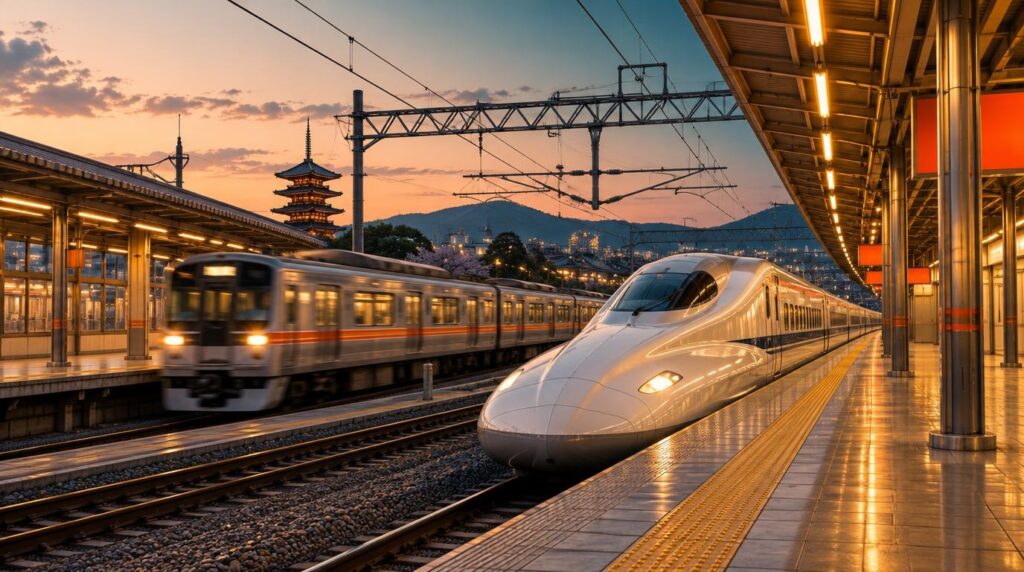
Shimogyo: Shijo-Karasuma and Kyoto Station
The area links Kyoto’s rail lines, which helps anyone who travels often.
- Rent: ¥85,000 for the ward ($538), ¥83,000 at Shijo-Karasuma ($525), and ¥79,000 at Kyoto Station ($500).
- Transit: Kyoto Station has JR, Kintetsu, and the Karasuma subway line, plus bullet trains. Shijo-Karasuma has the Hankyu line direct to Osaka.
- Workspaces: GROVING BASE and Common Room Shijo Karasuma.
A base here suits nomads who plan regular trips to Osaka or Tokyo.
Sakyo: Demachiyanagi and Kyoto University
Sakyo is a residential area near the Kamo River with a large student population.
- Rent: ¥54,000 for the ward ($342) and ¥59,000 at Demachiyanagi station ($373). Older student apartments pull the ward average down.
- Transit: Keihan and Eizan lines.
- Workspaces: None of the spaces in Japan Dev’s list sit inside Sakyo, so coworking means a bus, bike, or train ride.
A-Realty notes that landlords here have long experience with international students and researchers. The area suits longer, quieter stays on a tighter budget.
Higashiyama: historic streets
The ward covers the old districts near Gion and Kiyomizu.
- Rent: ¥71,000 for the ward ($449).
- Transit: Keihan line access.
- Workspaces: Sights Kyoto.
Atmosphere is the draw, and tourist crowds are the cost. The area suits nomads who value the setting and accept the foot traffic.
Kamigyo: Nishijin and the Imperial Palace side
The ward sits north of the center, near Doshisha and the Imperial Palace.
- Rent: ¥67,000 for the ward ($424).
- Workspaces: Impact Hub Kyoto, which Japan Dev describes as community-oriented.
The area suits freelancers who want a calmer base and an active coworking community.
Fushimi, Yamashina, Saiin, and Nijo: value picks
Fushimi, Yamashina, Saiin, and Nijo sit on fast rail lines and cost less than the center.
- Rent: ¥65,000 in Fushimi ($411), ¥62,000 in Yamashina ($392), ¥74,000 at Saiin station ($468), and ¥70,000 at Nijo station ($443).
- Transit: Saiin has the Hankyu line to Osaka. Yamashina has JR, Tozai subway, and Keihan lines.
A-Realty calls Saiin, Nijo, and Yamashina sweet spots, since each sits ¥10,000 to ¥25,000 below Karasuma Oike with fast rail links. Anyone who splits time with Osaka may prefer this group.
Who Kyoto is for and who should skip it
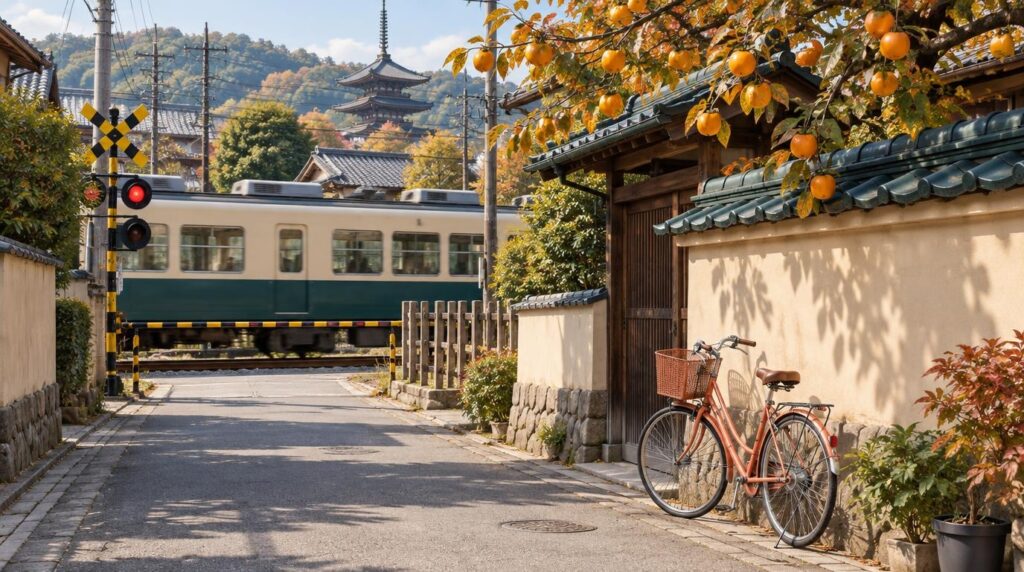
Kyoto suits remote workers who value calm, walkable streets and want lower rent than Tokyo.
- Good fit: Nomads with clients in Asia, the Pacific, or Europe, and anyone who fits the visa income level or 90-day stays.
- Good fit: Remote workers who like cycling, quiet neighborhoods, and a small-city pace.
- Consider skipping: Nomads who need US business-hour overlap on a long stay.
- Consider skipping: Anyone who wants a large nomad meetup scene. Osaka has a broader mix of foreign residents, according to A-Realty.
- Consider skipping: Travelers who dislike tourist crowds, especially around blossom and leaf season.
Plan your Kyoto stay
Kyoto has no airport of its own, so most trips begin with a flight into Kansai International and a 75-minute train ride. If the timezone, rent, and neighborhoods here fit your plans, search flights to Kansai on FlyBibe and compare dates around your work schedule. A month or more in one neighborhood leaves time to test a coworking space and settle into the city.