
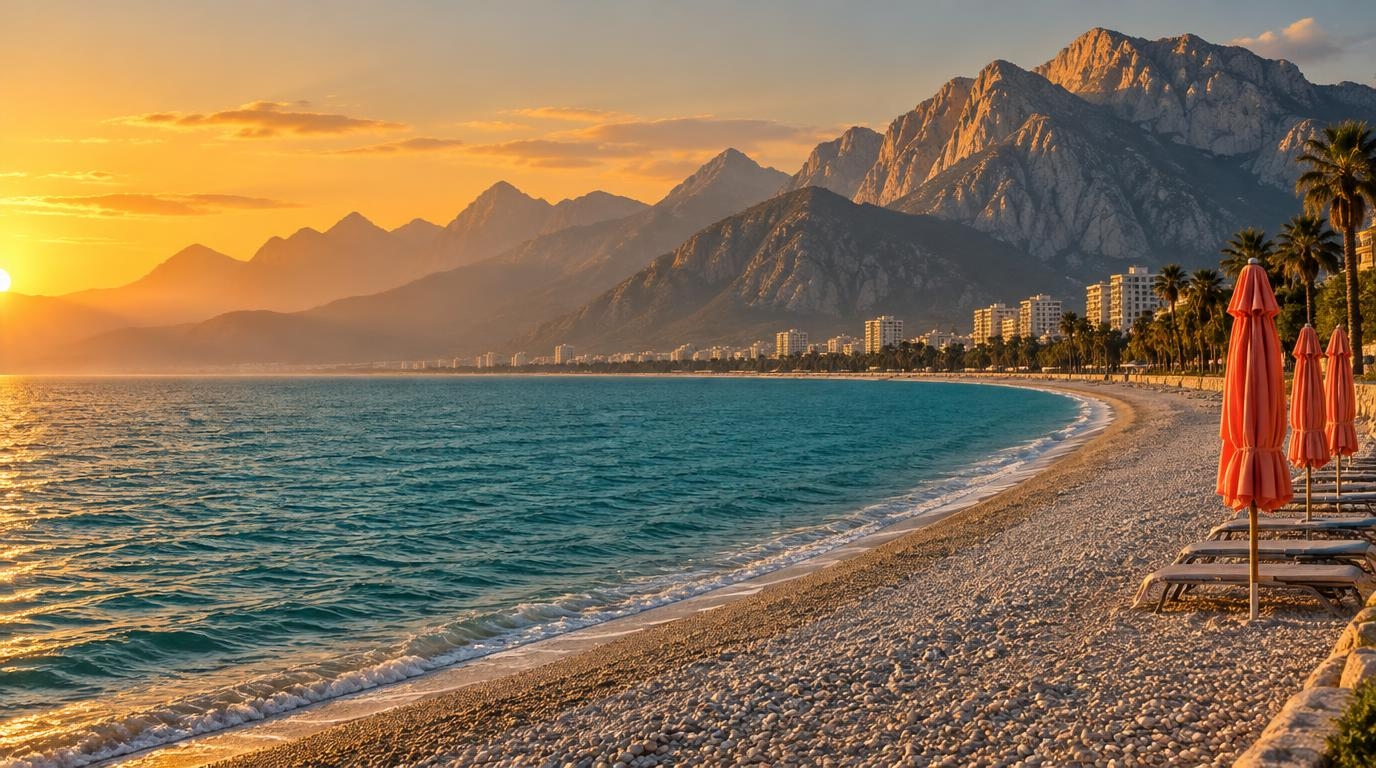
Antalya is a Mediterranean city of about 1.3 to 1.4 million people, with a long beach and a Roman-era old town. Remote workers can live there on a moderate budget, and flights run all year. Average internet speeds are low, and rents are rising in lira. The sections below cover costs, visa routes, wifi, time zones and the coastal neighborhoods, with sources and dates for the figures.
Wifi and internet in Antalya
Internet is the weakest point in the Antalya case, so a speed test before signing a lease is worth the effort.
- City average. Nomads.com lists an average of 12 Mbps for Antalya and rates it slow (checked October 31, 2026). No current city-level Ookla Speedtest figure turned up during research, so 12 Mbps is a rough guide from nomad reports.
- Rentals. Nomads.com reviewers mention occasional drops. A speed test screenshot taken inside the unit helps, and the guide on checking wifi speed before booking explains how to ask for one.
- Mobile backup. A second connection on a local plan covers outages. The comparison of eSIM, local SIM and hotspot options shows the trade-offs.
- VPN. Some reviewers say certain tools needed a VPN in Turkey. Installing a VPN for digital nomads before arrival saves time on the first workday.
A 12 Mbps average is usually enough for email and video calls. Large video uploads will feel slow on a weak connection, so a mobile backup is useful.
Cost of living in Antalya
Sources disagree on Antalya prices because they use different data, and the lira has been weakening against the dollar.
- Rent. Expat.com (updated December 2025) lists one-bedroom rents of USD 400 to 600 in Konyaaltı and USD 500 to 800 in Lara. Kepez runs USD 300 to 500. LifeIndexed lists TRY 36,352 for 2026, about USD 750, and reports rents up 28% in lira over 2025. Nomads.com lists USD 604 for a central one-bedroom.
- Food. LifeIndexed puts groceries at TRY 13,087 a month, about USD 270, and a restaurant meal at TRY 436, about USD 9. Nomads.com lists a cafe coffee at USD 4.
- Transport and utilities. LifeIndexed lists a monthly transit pass at TRY 1,272, about USD 26, and utilities at TRY 3,635, about USD 75.
- Coworking. The Work-C price page lists a flexible membership at TRY 8,500 a month, about USD 175. Nomads.com lists a hot desk at USD 244.
- Health insurance. Expat.com includes USD 50 to 100 a month for private insurance in its single-person budget. The roundup of best health insurance for digital nomads compares international plans.
- Monthly total. Expat.com adds up a single-person budget at USD 885 to 1,350, covering rent, utilities, groceries, transport, insurance and dining. A coworking desk lifts the range to roughly USD 1,060 to 1,600.
- Short-term stays. Nomads.com shows USD 3,078 a month for a nomad. Its median Airbnb price is USD 3,037 a month, about five times its one-bedroom rent figure.
The sources above support a planning range of USD 1,100 to 1,600 a month for one person, including a coworking desk. Short bookings cost far more than monthly leases. Lira figures here use roughly 48.5 lira per dollar, in line with October 2026 rate pages, and the rate moves often.

Visa and residence for remote workers
Turkey offers a visa-free tourist stay, a digital nomad certificate and a residence permit. The right route depends on the length of stay.
- Tourist stay. Expat Arrivals reports that UK, US and Canadian citizens can enter visa-free for up to 90 days in any 180-day period. Many European citizens have the same allowance. Other passports may need an e-visa, and the Ministry of Foreign Affairs lists the rules by nationality. The guide on digital nomad visa versus tourist visa explains when each route fits.
- Digital Nomad Identification Certificate. The first step is an online application on the GoTürkiye platform. The official requirements page lists a passport valid for at least six months from arrival and a university degree. It also asks for a work or business contract with a company outside Turkey and a biometric photo. Proof of income must reach USD 3,000 a month or USD 36,000 a year. The post on visa income requirements by country shows how other countries set theirs.
- Age range. Hürriyet Daily News reported an age range of 21 to 55, but the official requirements page does not list one. A check with GoTürkiye before applying avoids surprises.
- Validity and next step. EY reported the launch in April 2024, and other summaries describe a one-year visa that can be renewed. The official page covers both the visa and the short-term residence permit that follows, and the short-term residence permit guide walks through the steps.
- Closed neighborhoods. Since 2022, some Antalya neighborhoods have been closed to new foreign residence permit applications because of foreign population quotas. A Turkish law firm reported that Istanbul’s restrictions ended on June 5, 2026, and it found no public announcement. Antalya’s current list is unclear, so a lawyer or the migration office should confirm any address before a lease is signed.
Stays under 90 days need no application for many passports. Longer stays call for the certificate or a residence permit, and the address check matters at the permit step.
Time zone fit
Antalya runs on UTC+3 all year with no clock change, so overlap with other regions shifts when their clocks change. The figures below compare a 9:00 to 18:00 workday in Antalya with a 9:00 to 17:00 client day.
- UK. Antalya is 3 hours ahead in winter and 2 hours ahead in summer. The shared workday is 6 hours in winter and 7 in summer.
- Central Europe. Antalya is 2 hours ahead in winter and 1 hour ahead in summer. The shared workday is 7 hours in winter and 8 in summer.
- US East Coast. Antalya is 8 hours ahead in winter and 7 in summer. The shared time is 1 hour in winter and 2 in summer, in the late Antalya afternoon.
- US West Coast. Antalya is 11 hours ahead in winter and 10 in summer. Standard hours do not overlap, so calls land in the Antalya evening.
Clients in the UK and Europe fit well. The guide on managing client meetings across time zones covers scheduling for the harder cases.
Coworking and community
Nomads.com ranks Antalya 135th overall, with a 3.6 out of 5 score from 572 reviews. The ranking suggests a smaller scene than the best-known hubs.
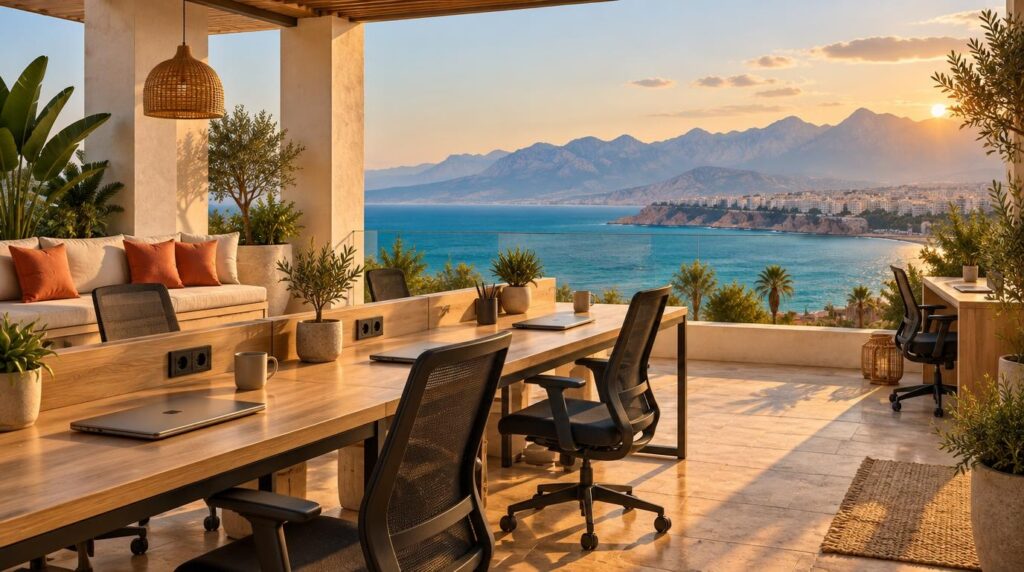
- Work-C. Nomads.com lists it as the best coworking space in Antalya. Its price page lists high-speed internet, unlimited tea and coffee, printing and events with the flexible plan.
- Coworking Antalya. Nomads.com reviews from two years ago and earlier praise its events and sea-view terrace, and some call it overpriced. Its current status was not confirmed, so a quick check is wise before planning around it.
- Other options. InstantOffices lists a dedicated desk from TRY 4,870 a month, about USD 100, at a Muratpaşa workspace. For short stays, the post on coworking spaces offering day passes explains what to look for.
- Community. Expat.com estimates 80,000 to 100,000 expats, mainly Russian, German, Ukrainian, Kazakh and British. Nomads.com lists an average trip length of 12 days, which suggests a mostly short-stay crowd.
- Language. Nomads.com rates English speaking as bad, so a few Turkish phrases help in shops and taxis.
Safety
Ratings for the city are mostly positive, with caveats that depend on the traveler.
- Official advice. The US State Department rates Turkey at Level 2, exercise increased caution, in its advisory updated March 8, 2026. Level 4 applies to southeast Türkiye, which is far from Antalya. The full advisory has the details.
- City ratings. Nomads.com rates general safety and safety for women as good. It rates safety for LGBTQ+ people as bad, and some of its safety scores come from national statistics.
- Wildfires. A wildfire tracker reported a flare-up from July 29 to August 2, 2026 across Muğla, Antalya and other provinces. Hundreds of people were evacuated, and all listed fires were contained within days. A July 22 fire near Antalya city was controlled the same day. The UK Foreign, Commonwealth and Development Office (FCDO) notes that summer wildfires are frequent in Türkiye.
- Earthquakes and health. The FCDO advice also covers earthquake risk. Nomads.com rates hospitals as okay and gives annual air quality a moderate score of 94 US AQI.
General safety draws good ratings. Summer fires and heat call for planning ahead.
Best time to visit
Antalya has a hot-summer Mediterranean climate, with dry summers and wetter winters. Climate-Data.org lists about 1,081 mm of rain a year.
- Spring and autumn. Nomads.com reviewers favor these seasons. Weather2Travel lists sea temperatures of 24°C in June, 27°C in September and 25°C in October.
- Summer. Reviewers report highs that often reach 40°C. The sea peaks at 29°C in August, and wildfire risk is highest in these months.
- Winter. Sea temperatures sit between 16°C and 19°C from December to April, and rain is more frequent.
- Crowds. Visitor counts differ by source, from about 6.5 million a year on Nomads.com to over 15 million on Expat.com.
Spring and autumn combine warm water with lower heat. Winter suits people who prefer cooler weather, and flights continue.

Coastal living in Antalya
The sea is the main reason to choose Antalya, and each waterfront area has a different feel and price.
- Konyaaltı. A 7 km pebble beach runs below the Taurus Mountains, and Expat.com calls it the most popular district among foreign residents. Modern complexes often have pools and gyms. Reports name Liman, Hurma and Sarısu as closed to new foreign residence permits, so the address needs checking.
- Lara. Softer sand, resort hotels and beach clubs give Lara an upscale feel. Expat.com lists one-bedrooms at USD 500 to 800 and larger apartments at USD 900 to 1,400.
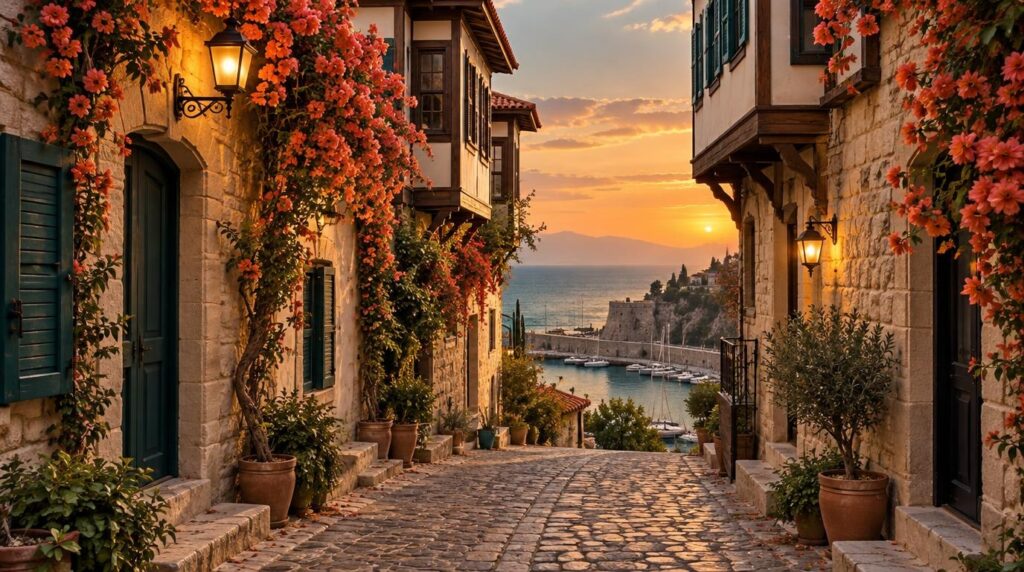
- Kaleiçi. The old town has Ottoman-era houses, a Roman harbor and Hadrian’s Gate, built in 130 AD. Expat.com notes that parking and modern amenities can be limited in the restored houses.
- Kepez. This inland district has the lowest rents, at USD 300 to 500 for a one-bedroom, and good public transport links. It is further from the beach.
- Getting around. Expat.com says the AntRay tram links Antalya Airport with the city center and bus terminal. It runs from 6:00 to midnight at intervals of 10 to 20 minutes. Dolmuş minibuses reach Kemer, Belek and Side. Nomads.com rates walkability as great.
- Flights. Antalya Airport served 39.16 million passengers in 2025, according to Turkish state airport data, and more than 1 million in December alone. Winter flights are available.
- Day trips. Perge is 18 km from the city, and the Aspendos theater is 47 km away. The Düden Waterfalls drop into the sea.
- Daily details. Nomads.com lists type C plugs at 230V and says tap water is not drinkable. Migros, CarrefourSA and A101 supermarkets are common, and weekly neighborhood markets sell fresh produce.
Konyaaltı suits a beach and work routine, Lara suits comfort and resort services, and Kaleiçi suits short stays in a historic setting.
Who Antalya suits and who should skip it
Antalya works best for certain work styles and stay lengths.
Antalya suits
- Clients in Europe and the UK. The shared workday runs 6 to 8 hours.
- Short to medium stays. Nomads.com reviewers suggest one to two weeks up to a month, and visa-free stays run up to 90 days.
- Foreign-currency earners. An older Nomads.com review calls Antalya reasonably affordable for people paid in euros or dollars despite inflation.
Antalya may not suit
- Heavy uploads. A 12 Mbps city average is tight for large files.
- Pacific-time clients. Calls land in the evening.
- Social nomad scenes. The community is small and the average trip is 12 days.
- Heat-sensitive travelers. July and August bring highs near 40°C.
- LGBTQ+ safety priorities. Nomads.com rates this category as bad, so other destinations may fit better.
Remote workers who want a larger city with a bigger tech scene can compare the Istanbul digital nomad guide.
Plan your Antalya trip
Antalya Airport has flights all year, so the main choices are when to go and how long to stay. FlyBibe is a travel booking platform for remote workers, and its flight search filters routes by wifi reliability, visa rules and cost. It also shows the cheapest days to fly. Search flights to Antalya on FlyBibe to compare dates, then use the sections above to plan the first month.