
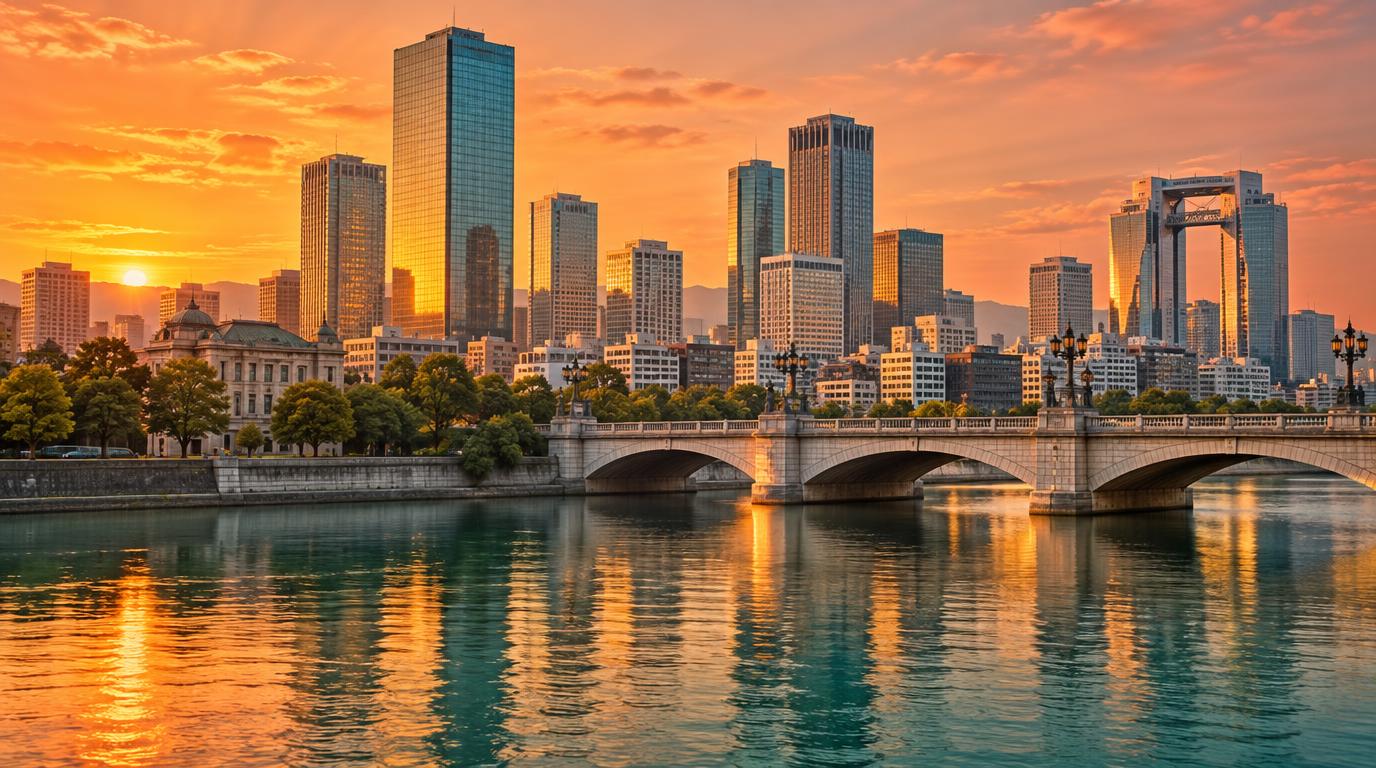
Osaka offers fast internet, lower rents than Tokyo, and a food scene that keeps weekends busy. This guide covers monthly costs, internet speeds, visa rules, time zones, safety, weather, and the neighborhoods that suit remote workers. Figures come from named sources and carry dates where possible. Prices and rules can change, so they are worth checking again before you book.
What Does It Cost to Live in Osaka as a Remote Worker?
Osaka usually costs less than Tokyo, although sources give different numbers. The figures below are estimates from cost-of-living sites, so they work best as rough ranges.
- Rent in dollars: According to worldcostofliving.com, the citywide median for a one-bedroom is about $788 per month in Osaka and $1,175 in Tokyo. In the city centers the figures are about $1,050 and $1,500.
- Rent in yen: Expat Exchange (2024) lists ¥80,000 to ¥120,000 per month for a central one-bedroom. Outside the center it lists ¥50,000 to ¥80,000.
- Mid-range monthly total: nomada.tools estimates about $2,050 per month (updated May 2026). Rent is $1,000, groceries $280, eating out $320, transport $80, utilities and internet $130, and coworking $240.
- Eating out: Expat Exchange puts a meal at an inexpensive restaurant at ¥800 to ¥1,000.
- Transport: Osaka Metro fares range from ¥190 to ¥390 per ride, depending on distance.
A remote worker who cooks some meals and uses a hot desk could spend close to $2,000 per month. Coliving rooms may lower the rent line, as covered below. Readers weighing both cities can also read our Tokyo digital nomad guide.
How Fast Is the Internet in Osaka?
Japan has high national speeds, although public data for Osaka alone is limited. The numbers below cover the whole country.
- Fixed broadband: Ookla’s Speedtest Global Index shows a national median download speed of 255.27 Mbps for March 2026.
- Mobile: The same index shows a national median of 70.28 Mbps for mobile downloads.
- Top fixed provider: Ookla’s H1 2026 assessment found So-net at a median of 357.71 Mbps for downloads.
Fiber connections and coworking spaces should handle video calls without trouble. On travel days, an eSIM can keep you online until an apartment connection starts. Our guide to eSIM vs local SIM vs portable wifi compares the options. For rentals, the steps in finding reliable wifi before booking help confirm the speed first.
Visa and Entry for Remote Workers in Japan
Japan runs a digital nomad visa, and the full steps are in our Japan digital nomad visa guide. The main points below come from the Immigration Services Agency and were checked on 24 October 2026.
- Income: Annual income of at least ¥10 million.
- Insurance: Private medical cover of at least ¥10 million. Our list of health insurance plans for nomads may help here.
- Length of stay: Up to 6 months, with no extension and no residence card.
- Work allowed: Remote work for employers or clients outside Japan only.
- Reapplying: Possible after 6 months outside Japan.
- Eligibility: Passport holders from visa-exempt countries that also have a tax convention with Japan.
- Visa-free entry: US citizens can enter for up to 90 days, according to travel.state.gov. Working for the local economy is not allowed.
Remote work on a tourist entry sits in a grey area. The Immigration Services Agency or a Japanese embassy can give a firmer answer than a blog post.
Does Osaka Work for Your Time Zone?
Japan Standard Time is UTC+9 all year, and Japan does not use daylight saving time. The offset to other regions shifts by one hour when those regions change their clocks. The times below were calculated for mid-January and mid-July 2027.
- US Eastern: Osaka is 14 hours ahead in winter and 13 in summer. A 7:00 am start in Osaka matches 5:00 pm Eastern the day before in winter and 6:00 pm in summer.
- US Pacific: Osaka is 17 hours ahead in winter and 16 in summer. In winter, 7:00 am to 10:00 am in Osaka matches 2:00 pm to 5:00 pm Pacific the day before.
- UK: Osaka is 9 hours ahead in winter and 8 in summer. In winter, 6:00 pm to 10:00 pm in Osaka matches 9:00 am to 1:00 pm in the UK.
- Central Europe: Osaka is 8 hours ahead in winter and 7 in summer. In winter, 5:00 pm to 10:00 pm in Osaka matches 9:00 am to 2:00 pm.
A standard 9-to-5 day in Osaka overlaps with a standard day in these regions by one hour at most. Nomads with clients in Europe or the US West Coast may need a split schedule or a late shift. Our guide to managing client meetings across time zones covers ways to plan around it.
Coworking and Community
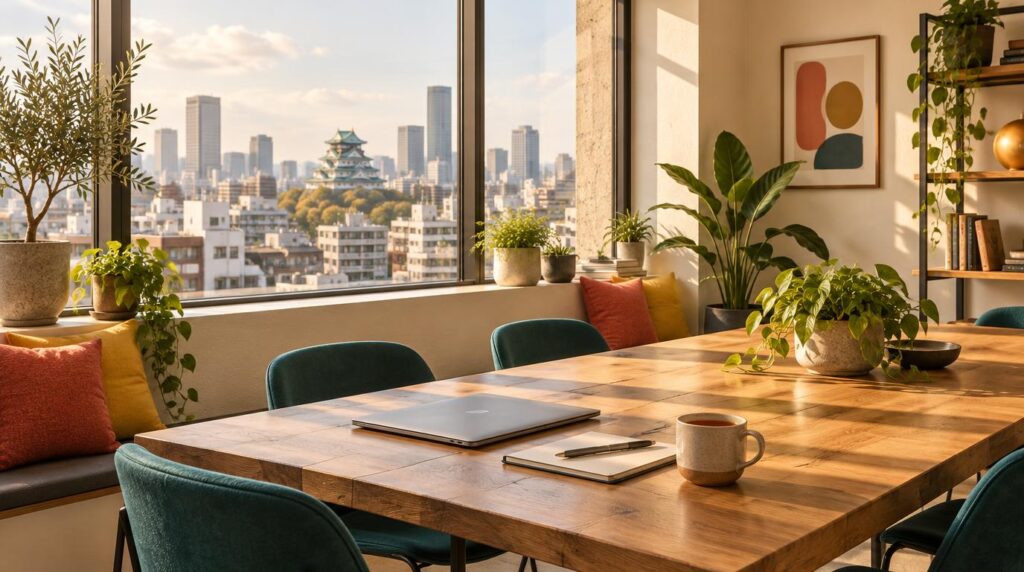
Osaka has several coworking spaces with day passes, and a few host events. Prices below come from thedigitalnomad.asia (updated December 2025) and may have changed.
- FUTRWORKS (Umeda): ¥2,750 per weekday pass. The space hosts international events.
- The DECK (Minami-Honmachi): ¥2,500 per day or ¥16,500 per month, with a 3-month minimum. Staff speak English.
- Osakan Space (Honmachi): ¥2,200 per day or ¥16,500 for 4 weeks. The space regularly hosts meetups and workshops.
- .andwork Osaka (Minami-Honmachi): ¥2,000 per day or ¥34,000 per month. Free coffee is included, and monthly members can join a daily happy hour from 5:30 pm.
- Common Room (Umeda and Nakatsu): Day passes cost ¥2,200 in Umeda and ¥1,650 in Nakatsu. Monthly plans cost ¥17,600 and ¥13,200.
For longer stays, share houses are another option. The same source lists dorm rooms from about ¥20,000 per month and private rooms from about ¥50,000. One operator, Kizunaya, runs a house called SHELF about 7 minutes from Umeda and asks for a 3-month minimum. Our guide to choosing a coliving space over a hotel explains how to compare the two. Anyone planning to hop between cities may also like coworking memberships for frequent travelers.
Best Neighborhoods for Digital Nomads in Osaka
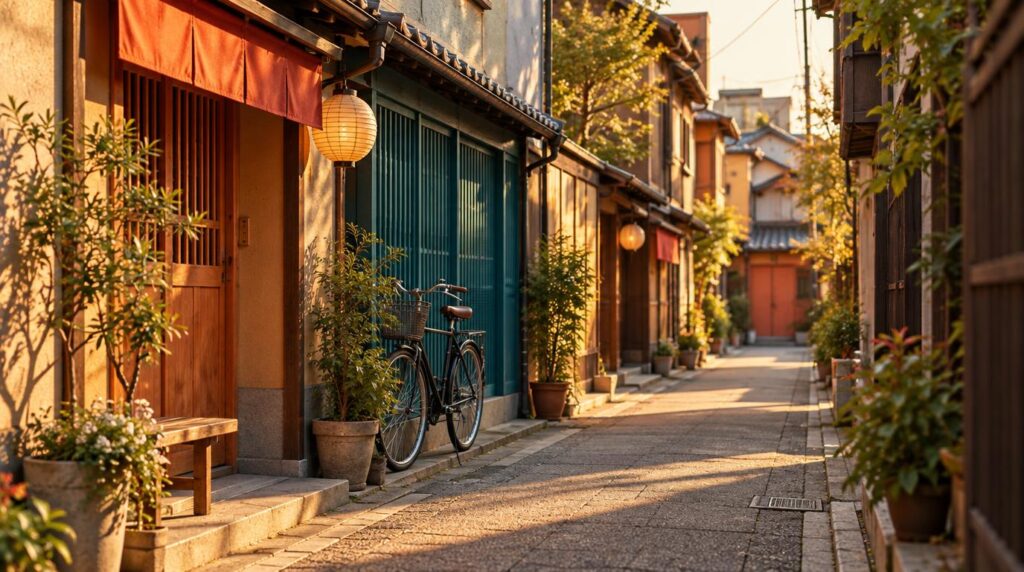
Osaka splits into Kita in the north and Minami in the south, with Honmachi sitting between them. Each area suits a different working style.
Umeda and Kita
Umeda is Osaka’s main transport hub and a large business district, with plenty of shops and restaurants.
- Best for: First-time visitors who want easy transit and coworking close by.
- Work options: FUTRWORKS and Common Room Umeda are both in the area.
- Watch for: Crowds at the station during peak hours.
Umeda is likely the easiest place to start a first stay.
Nakazakicho
This small, artsy neighborhood sits just next to Umeda. One expat housing guide says rooms here can cost less than in the main business districts.
- Best for: Nomads who prefer small cafes and a quieter pace.
- Work options: Umeda coworking spaces are a short ride away.
- Watch for: Fewer large coworking choices inside the neighborhood itself.
Honmachi
Honmachi is a business area in the middle of the city. One local guide describes it as surprisingly quiet in the evenings after office workers leave.
- Best for: Focused workers who want a central base.
- Work options: The DECK, Osakan Space, and .andwork are all nearby.
- Watch for: Fewer nightlife choices close by. Namba and Umeda are both a short subway ride away.
Namba and Minami
Namba is the lively southern core, packed with restaurants, shops, and crowds around Dotonbori.
- Best for: Nomads who want food and nightlife right outside the door.
- Work options: None of the coworking spaces listed above sit in Namba, so a short subway ride may be needed.
- Watch for: Noise at night and pickpocketing, covered in the safety section below.
Tennoji
Tennoji mixes modern amenities with history, including the Abeno Harukas tower and Tennoji Zoo. The area feels more traditional and relaxed than Namba.
- Best for: Remote workers who like a calmer pace and smaller crowds.
- Work options: None of the coworking spaces listed above sit here, so cafes or a short ride to Honmachi may be needed.
- Nearby: Shinsekai, a retro district with street food, is within walking distance.
Umeda or Honmachi will probably be the easiest places to settle. Namba or Tennoji could work as a second base for variety.
Is Osaka Safe?
Local travel guides describe petty theft and nightlife scams as the main concerns. One of them, explore.osaka, publishes the following advice but cites no crime statistics, so it works best as practical guidance.
- Pickpocketing: The guide names Dotonbori and Namba after dark, plus Umeda and Namba stations at peak hours. A zipped bag helps.
- Touts and bills: Touts in Shinsaibashi and Soemon-cho may offer all-you-can-drink deals that lead to bars with inflated bills.
- Areas to approach with care: The guide advises caution around Kamagasaki in Nishinari ward. The guide suggests most visitors skip Tobita Shinchi.
- Late nights: Most train lines stop around midnight. Licensed taxis carry a rooftop sign.
- Emergency numbers: Police is 110, and ambulance and fire is 119.
Earthquakes are the other topic worth knowing. In January 2025, Japan’s Earthquake Research Committee estimated a roughly 80 percent chance of a magnitude 8 to 9 Nankai Trough quake within 30 years. The earlier estimate was 70 to 80 percent. The risk is discussed for much of Japan’s Pacific coast, including the Kansai region. Learning the evacuation route for your building and downloading the Japan Tourism Agency Safety Tips app are sensible steps.
Best Time to Go: Osaka Weather by Season
Osaka has four distinct seasons. The numbers below come from Japan Meteorological Agency data for 2023, as summarized by Tsunagu Japan.
- Spring (March to May): Cherry blossoms usually last one to two weeks from late March into early April. April highs average 20.9°C.
- Summer (June to August): The rainy season starts in early June and lasts until about mid-July. June is among the wettest months at 262 mm. August highs average 35.2°C.
- Autumn (September to November): October highs average 24.0°C. Autumn leaves peak in November, and typhoons are a risk in August and September.
- Winter (December to February): January is the coldest month, with a high of 10.3°C and a low of 3.1°C. December is the driest month at 19.5 mm.
Spring and autumn are likely the most comfortable seasons for a longer stay. July, August, and early September can be hot and humid, and June brings the most rain.
Who Osaka Suits and Who Should Skip It
Osaka tends to suit remote workers who want Japanese infrastructure at lower rents than Tokyo.
- Good fit: Nomads who enjoy food culture and are comfortable with a 6-month visa limit.
- Good fit: Workers with clients in Europe or the US West Coast who can meet in the evening or early morning.
- Good fit: People who want quiet business districts and lively entertainment areas a short subway ride apart.
- Consider skipping: Anyone who needs a full workday overlap with the US or Europe.
- Consider skipping: Anyone who struggles with summer heat and humidity.
- Consider skipping: Nomads who want a large, established community. Events appear to come mostly from individual coworking spaces.
Ready to Plan Your Osaka Stay?
Osaka offers strong internet, lower rents than Tokyo, and neighborhoods to match different work styles. If a stay of a few weeks or months fits your plans, search flights to Osaka on FlyBibe. Then compare dates against the seasons and time zones covered above. Spring and autumn offer the mildest weather for a longer stay, and a base in Umeda or Honmachi keeps coworking and transit close.