
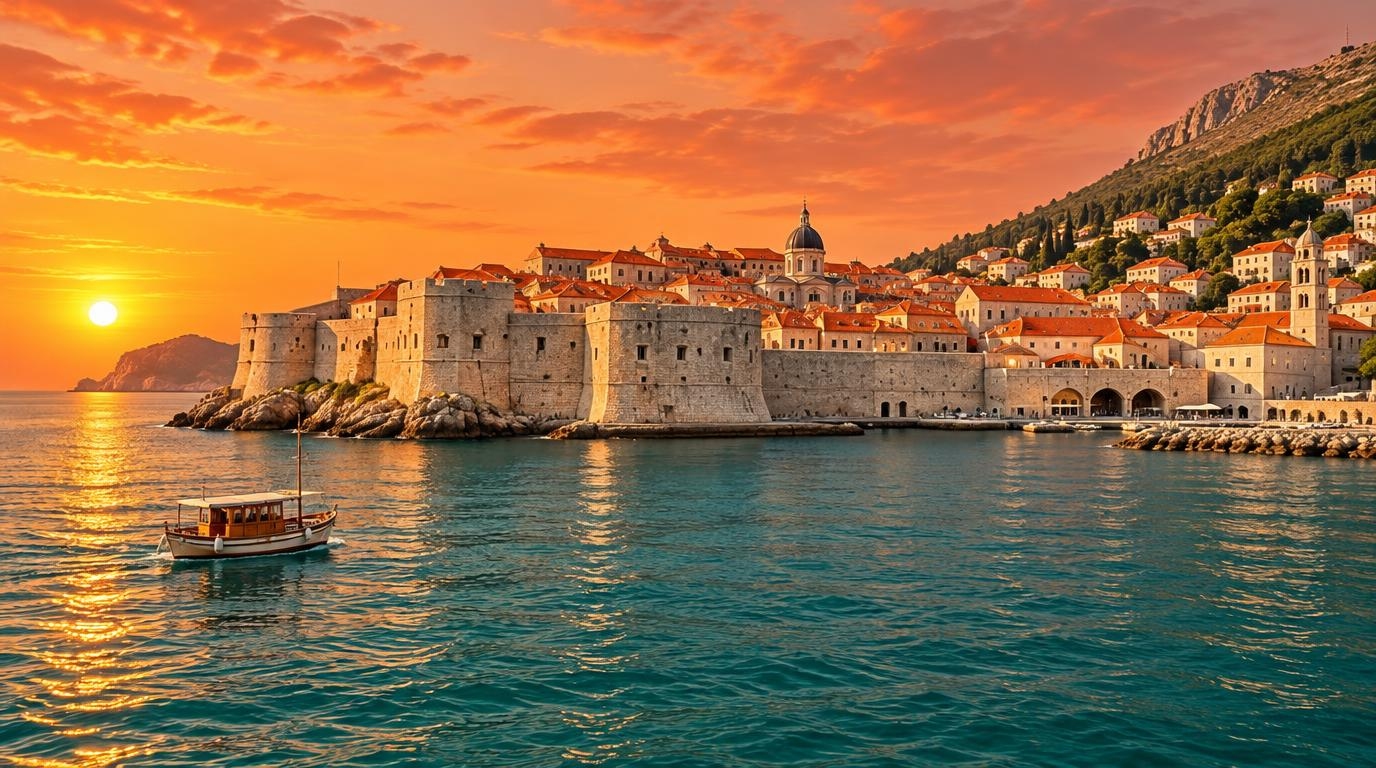
Dubrovnik is a walled Adriatic city with a digital nomad permit that allows stays of up to 18 months. The guide covers internet speeds, monthly costs, entry rules, time zone fit, coworking, safety, and the best months to go. A coastal living section explains swimming season, island ferries, and how the tourist season changes daily life. Figures come from Numbeo, the Croatian Ministry of the Interior, and other sources checked on November 1, 2026.
How Fast Is the Internet in Dubrovnik?
No reliable speed test covers Dubrovnik on its own, so the best available figures describe Croatia as a whole. Two national sources give different numbers because they measure in different ways.
- Ookla (May 2026): Fixed broadband in Croatia averaged 131.72 megabits per second (Mbps) for downloads and 65.51 Mbps for uploads, according to data cited by worlddata.info.
- DataReportal (Digital 2026): The median fixed connection ran at 79.56 Mbps, and the median mobile connection ran at 103.22 Mbps.
- Providers: Opensignal’s October 2026 report found that A1 had the fastest fixed download speeds, while Hrvatski Telekom had the most consistent service.
- Home plan price: Numbeo lists home internet at about €40.97 per month.
A median can describe a typical connection better than an average, so about 80 Mbps is a reasonable planning figure for a home. Before signing a lease, a host can usually send a screenshot of a recent speed test. The guide on how to find reliable wifi speed before booking a stay covers other checks worth making.
What Does It Cost to Live in Dubrovnik?
Numbeo, updated on October 31, 2026, bases its Dubrovnik prices on 32 contributors over 18 months, and some figures are estimates. Rent swings widely with the season and the neighborhood.
- 1-bedroom apartment outside the center: €821 per month, with a reported range of €600 to €1,200.
- 1-bedroom apartment in the center: €1,310 per month, with a range of €800 to €1,800.
- 3-bedroom apartment: About €1,280 outside the center and about €1,788 in the center.
- Utilities: €161.21 per month.
- Mobile plan: €20 per month.
- Public transport pass: €48 per month.
- Gym membership: €61.67 per month.
- Eating out: €17.50 for an inexpensive meal, €70 for a mid-range meal for two, and €3.70 for a cappuccino.
Sample Monthly Budget for One Person
A sample budget for one person in a 1-bedroom apartment outside the center adds the Numbeo figures to two assumptions. The first is €300 for groceries, a figure chosen for this guide. The second is eight inexpensive restaurant meals per month.
- Rent: €821
- Utilities, internet, and mobile: €222
- Transport pass: €48
- Groceries (assumed): €300
- Eight inexpensive meals out: €140
- Total: about €1,531 per month
A desk at Desk & More, which starts at €249 per month, would raise the total to about €1,780. Renting in the center instead would bring the total to about €2,020, or about €2,269 with the desk.
Numbeo comments say restaurant prices are often higher than the listed averages, so a cushion for dining out is sensible. The visa income threshold of €3,622.50 per month sits well above this budget, so the permit sets a higher floor than daily life requires. Reports from 2024 also describe a city policy that limits new tourist apartments and favors local long-term rentals, which can make furnished long-term options harder to find.
For comparison with other cities, the guides to Split and Zagreb cover the same costs. A side-by-side look at a second coastline is in the comparison of the Albania Riviera and the Croatia coast.
Digital Nomad Visa and Entry Rules for Croatia
According to the Croatian Ministry of the Interior (page checked on November 1, 2026), citizens of countries outside the EU, the EEA, and Switzerland can apply for a temporary stay permit for digital nomads.
- Length: Up to 18 months. A permit granted for less than 18 months can be extended by up to 6 months.
- Income or savings: €3,622.50 per month, or savings of €43,470 for a 12-month stay or €65,205 for an 18-month stay.
- Other requirements: Health insurance, a clean criminal record, and an address in Croatia.
- Application: Online at digitalnomadscroatia.mup.hr. The ministry lists fees of €46.45, €9.29, and €31.85 for the police route.
- After arrival: The address must be registered within 3 days of entry.
- Work limits: The permit does not allow work for Croatian employers.
- Family: Family members can join through family reunification after approval, and the ministry page covers informal partners.
- Reapplying: A new application can be made only after a 6-month wait.
Older articles list a 12-month stay and lower income figures such as €2,540 or €3,295. The ministry page gives the figures above, so they are used here. The full process is covered in the guide to Croatia digital nomad visa requirements and how to apply.
Tax, Insurance, and Short Stays
- Tax: According to KPMG and other tax advisers, Croatia’s Personal Income Tax Act, Article 9, has exempted income from work for an employer not registered in Croatia since January 1, 2021, for people with nomad status. The exemption covers earned income only, and home country rules still apply. US citizens can read about filing taxes while working remotely abroad, and UK citizens can read the UK tax rules for digital nomads.
- Health insurance: The permit requires it, and the guide to the best health insurance plans for digital nomads compares options.
- Stays without a permit: Visitors from visa-free countries fall under the Schengen limit of 90 days in any 180. The guide to the Schengen 90/180 rule explains how it works.
- Entry system: The EU Entry/Exit System has been fully operational since April 10, 2026, according to the European Commission, as reported by VisaVerge and France’s foreign ministry. ETIAS sources conflict. Some still say the last quarter of 2026, while others report that the EU portal dropped that target in July 2026. No start date is confirmed, and the portal says a date will be announced months ahead.
The permit suits remote workers who can show steady income from clients or employers outside Croatia. Stays beyond 90 days would need the permit for visa-free visitors, so the fees and income threshold become part of the planning.
Time Zone Fit From Dubrovnik
Dubrovnik uses Central European Time, which is UTC+1 in winter and UTC+2 in summer.
- UK: Dubrovnik is one hour ahead, so working days overlap almost fully.
- Central Europe: Dubrovnik shares the same time zone.
- US Eastern: Dubrovnik is six hours ahead. A shared window runs from about 3 pm to 6 pm in Dubrovnik, which is 9 am to noon Eastern.
- US Pacific: Dubrovnik is nine hours ahead. A shared window runs from about 6 pm to 9 pm in Dubrovnik, which is 9 am to noon Pacific.
Clock changes in the US and Europe happen on different dates. The difference can shrink by one hour for a few weeks in March and in late October. A nomad on a US Eastern schedule might do focused work in the morning and take calls in the afternoon. A Pacific schedule means evening calls, which can make for long days.
Coworking and Community in Dubrovnik
Dubrovnik has few dedicated coworking spaces, and the details below come from listings and local guides.
- Lazareti Hub: A coworking space in the historic quarantine complex near Ploče Gate. In Your Pocket calls it the only dedicated coworking space in the city. Current prices were not confirmed, so contacting the hub directly is the safest way to get rates.
- Desk & More: Located at Lopudska ul. 2b in Gruž, with dedicated desks from €249 per person per month, according to instantoffices.com.
- Regus: Lists a Dubrovnik location.
- Community: A nomad-in-residence report on the Croatian Ministry of Tourism and Sport website says nomads flagged long-term accommodation and coworking as problems.
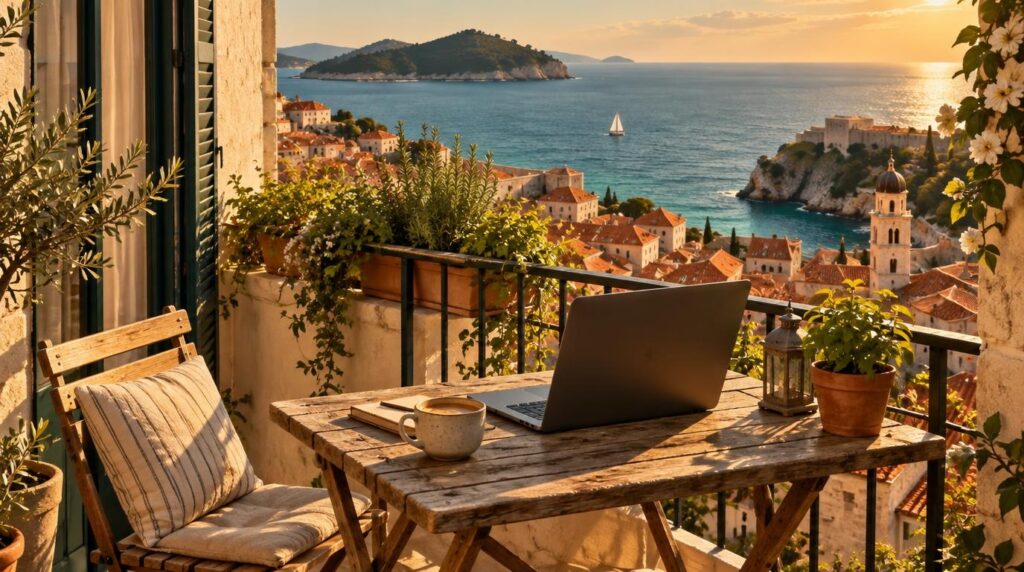
The listings suggest a small coworking scene compared with a larger city. A home workspace with a good chair and a reliable connection may matter more here than in Zagreb or Split.
Which Neighborhood Fits Remote Work?
Most nomads choose between four areas, and each has a different feel.
- Lapad: A residential peninsula northwest of the Old Town, with beaches, a seaside promenade, and restaurants.
- Babin Kuk: At the western end of the same peninsula, with many hotels and a resort feel.
- Gruž: The port area, with the ferry terminal for island sailings, a produce market, and the Desk & More coworking space.
- Ploče: East of the Old Town, close to Ploče Gate and Lazareti Hub.
Gruž may suit people who plan regular island trips and want a desk nearby. Ploče may suit those who want to walk to the Old Town and the hub. Lapad may suit people who want beaches and a quieter residential feel.
Coastal Living in Dubrovnik
Daily life on this coast depends on the season, the weather, and the ferry timetable.
Swimming Season and Weather
- Swimming season: May to October.
- Sea temperature: Typical monthly tables show about 18 to 19°C in May and 22 to 23°C in June. July reaches 24 to 25°C, August 25°C, September 23°C, and October 21°C. Winter water stays around 14°C from January to March.
- Air temperature: WeatherSpark lists an average July high of about 29°C (85°F). January averages a low of about 6°C (43°F) and a high of about 12°C (54°F).
- Rain: The wettest months run from November to January.
- Wind: The bura, a strong, cold northeasterly wind, can disrupt flights and ferries.
Swimming is realistic for about six months of the year. Winter days are mild enough for walking. Some expat guides say many homes lack central heating, so a heating check before signing a lease is worth making.
Islands and Ferries
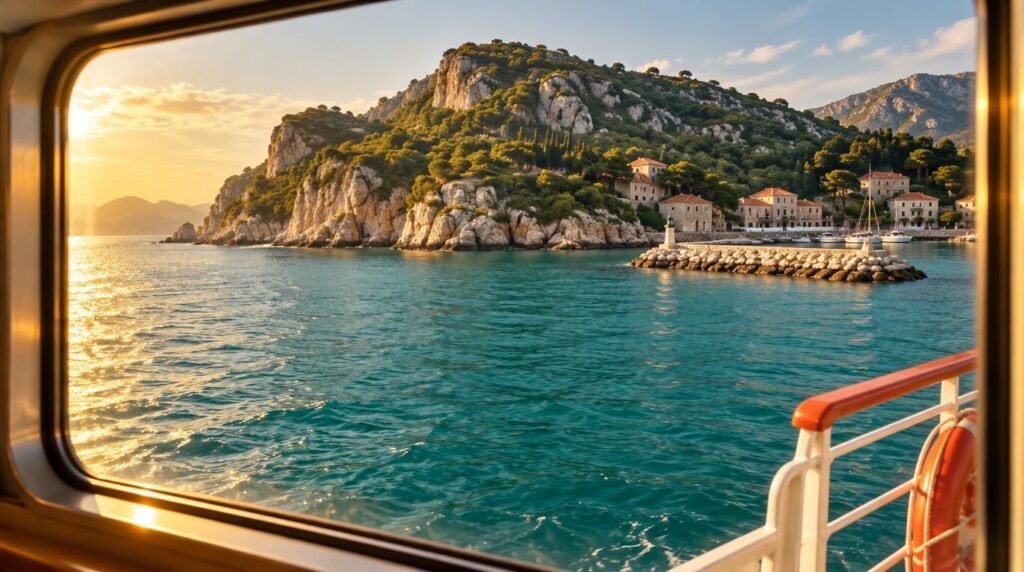
- Elaphiti islands: Jadrolinija line 807 runs from Gruž to Koločep, Lopud, and Šipan (Suđurađ). The trips take about 30 minutes, 1 hour, and 1 hour 15 minutes.
- Fares: The adult fare is €3.40 in the off-season and €5.40 in the high season, according to kompas.hr and Jadrolinija’s tariff.
- Schedule: Four sailings run each day, and two run on Sundays. A Jadrolinija notice from October 21, 2026 lists lines 807 and 831 as suspended, so current sailings should be confirmed before planning a trip.
- Lokrum: An official ferry leaves the Old Port and takes about 15 minutes. The adult ticket costs between €27 and €30 depending on the source, and 2026 sources list €30. Summer hours run from about 9 am to 7 pm, service is limited or suspended in winter, and overnight stays are not allowed. Current details are on lokrum.hr.
Getting Around the City
- Bus fares: A Libertas single ticket costs €1.73 according to kompas.hr and €2.50 according to Numbeo. A 24-hour pass costs €5.31.
- Monthly pass: Numbeo lists €48.
- Dubrovnik Pass: €40 for one day, €50 for three days, and €60 for seven days, with bus rides included.
The bus network covers the main neighborhoods, and the ferries cover the islands. Because sources disagree on the single fare, a monthly pass is the simpler number to budget with.
Is Dubrovnik Safe for Remote Workers?
Dubrovnik scores well on safety indexes, though the data has limits.
- Numbeo Crime Index: 17.77, with a Safety Index of 82.23. The data comes from 32 contributors and was last updated on December 30, 2024.
- Walking alone: Index scores of 88.60 during the day and 86.18 at night.
- Corruption: Contributors rated it a problem at 70.69, which Numbeo labels High.
- Travel advisory: Secondary sources report that the US Department of State rates Croatia at Level 1, Exercise Normal Precautions, in an advisory reissued on May 18, 2026. The official page can be confirmed on travel.state.gov.
- Emergency numbers: 112 for general emergencies and 192 for police, according to OSAC.
Numbeo scores come from surveys of residents and visitors and measure perception. The data is also about 22 months old.
When Is the Best Time to Go to Dubrovnik?
Dubrovnik changes a great deal between summer and winter, so the month chosen affects price, weather, and crowds.
- May and June: Sea temperatures rise from about 18°C to 23°C, and swimming becomes possible.
- July and August: The hottest months, with sea temperatures of 24 to 25°C. CruiseMapper estimates 461 ship calls and about 661,094 passengers for 2026. Under the “2+1” system, two ships can berth at the main port and one near the Old City. According to Wego (July 2026), that brings about 8,000 passengers on the busiest days.
- Visitor limits: Interreg Europe reports an Old Town cap of 8,000 visitors since 2017, while one blog gives 4,000. Sources disagree, so the cap should be treated as unconfirmed.
- September and October: Sea temperatures of 23°C and 21°C keep swimming possible until the season ends in October.
- November to March: Few cruise ships arrive, the weather is wettest from November to January, and many restaurants close for the winter. Some rental guides report 1-bedroom rents of €500 to €800 in Lapad and Gruž in winter and €1,500 or more in summer. The figures come from smaller sites and are less reliable than Numbeo.
- Flights: Winter service from Dubrovnik Airport is thin. Croatia Airlines flies all year to Zagreb and Frankfurt and flies to Rome twice a week in winter. Discover Airlines serves Frankfurt, and Ryanair has a base, though many routes are seasonal.
Late spring and early autumn may balance swimming weather with lower prices, though month-by-month cruise schedules were not checked for this guide.
Who Dubrovnik Suits and Who Should Skip It
Dubrovnik suits nomads who value sea access and work with clients in the UK or Central Europe. The cost of a tourist city also needs to fit the budget.
- Good fit: Remote workers with income above €3,622.50 per month, flexible work hours, and plans to stay for several months.
- Good fit: People who want to swim from May to October and take weekend island trips.
- Poor fit: Nomads who need a large coworking community or a busy winter social scene.
- Poor fit: Budgets well below €1,500 per month, or work schedules tied to US Pacific hours.
Planning a Stay in Dubrovnik
Dubrovnik offers a swimmable coast, UK and Central European hours, and a permit that allows stays of up to 18 months. Costs rise in summer, and the coworking scene is small, so a good home setup can matter. Readers who want the coast for part of the year could search flights to Dubrovnik on FlyBibe and pick a month that fits their budget and schedule.