
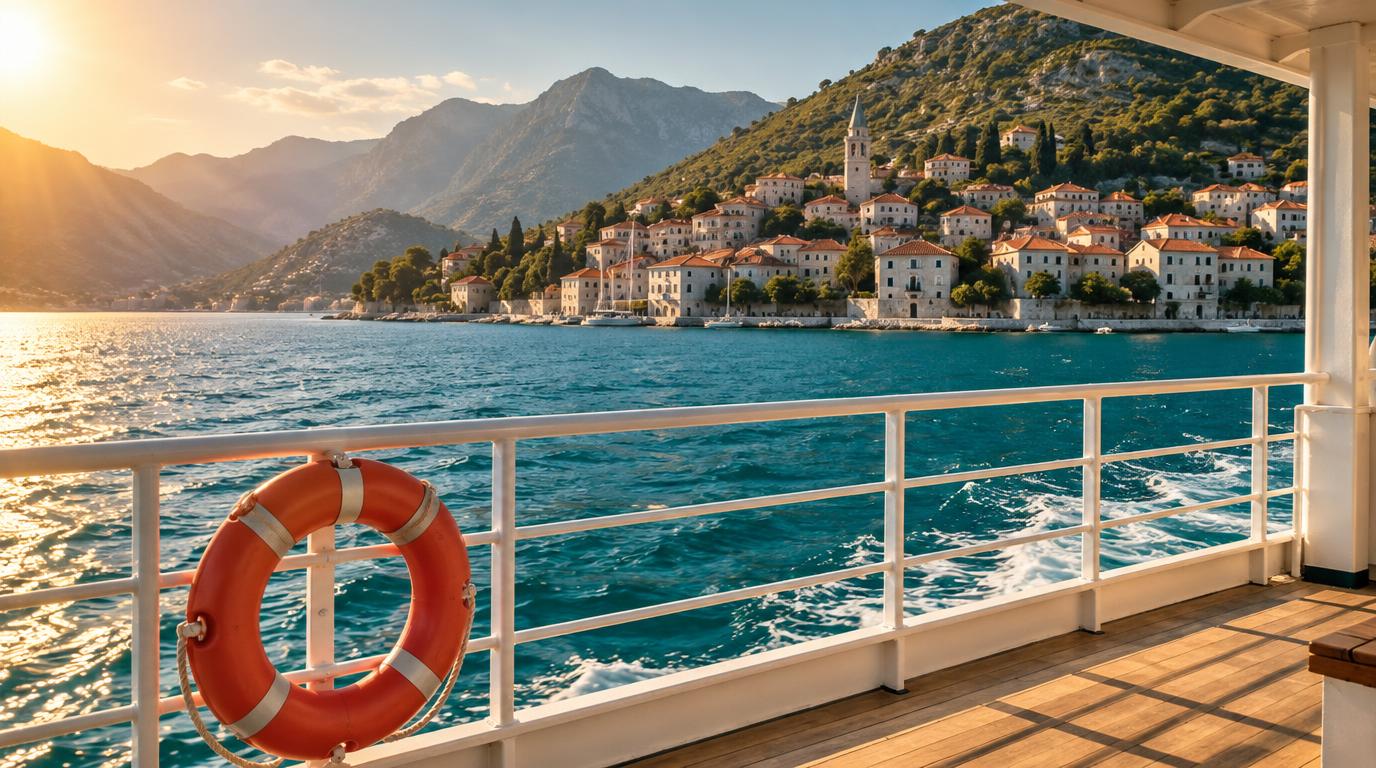
The Albanian Riviera and the Dalmatian coast of Croatia both offer sea views, mild winters, and a European base for remote work. Their prices, visa rules, and work setups differ a lot. This comparison uses October 2026 cost data, March 2026 internet speeds, and official visa pages. It covers rent, monthly budgets, wifi, coworking, visas, safety, and seasons.
Which towns this comparison covers
Both coastlines are long, so the numbers come from specific towns.
- Albanian Riviera: Vlora, Saranda, and Himara. Vlora is the northern gateway, and Saranda is a larger town in the south. Himara is a small town of about 3,000 permanent residents, according to a local Himara guide.
- Croatian coast: Split and Zadar, two Dalmatian cities with enough price data to compare. Split is the larger of the two.
The cost figures use Vlora and Saranda for Albania. Numbeo marks the Saranda and Zadar numbers as estimates from few contributors, so they work best as rough guides.
Cost of living side by side
Prices come from Numbeo’s October 2026 pages. Lek prices are converted to euros at about 92 lek per euro, the rate implied by Numbeo’s own currency figures.
Rent for a one-bedroom apartment
- Split: about €643 outside the centre and €902 in the centre.
- Zadar: about €614 outside the centre and €796 in the centre.
- Vlora: about €375 outside the centre and €484 in the centre.
- Saranda: about €338 outside the centre and €754 in the centre.
Outside the centre, rent in Vlora and Saranda is roughly 40 to 47 percent lower than in Split. In the centre the difference is smaller, and Numbeo’s range for central Saranda is wide, from about €273 to €995. These are year-round averages, and the seasons section below shows how much summer can change them.
Monthly budget for one person
- Split: about €814 for living costs without rent, plus €643 for rent outside the centre, for roughly €1,457 a month.
- Vlora: about €587 for living costs without rent, plus about €375 for rent outside the centre, for roughly €962 a month.
The Vlora total is about a third lower than the Split total. Both totals leave out health insurance, coworking, and flights.
Utilities, internet, and eating out
- Utilities for an 85 m2 apartment: Split €187, Zadar €161, Vlora about €54, and Saranda about €88.
- Home internet at 60 Mbps or more: Split €37, Zadar €36, Vlora about €15, and Saranda about €17.
- Meal at an inexpensive restaurant: Split €15, Zadar €13, and about €9 in both Vlora and Saranda.
- Cappuccino: Split €2.48, Zadar €2.21, Vlora about €1.70, and Saranda about €1.95.
Small daily costs follow the same pattern as rent. Numbeo ranks Vlora first among 230 European cities for the lowest basic utility bills.
Work setup
Internet speed
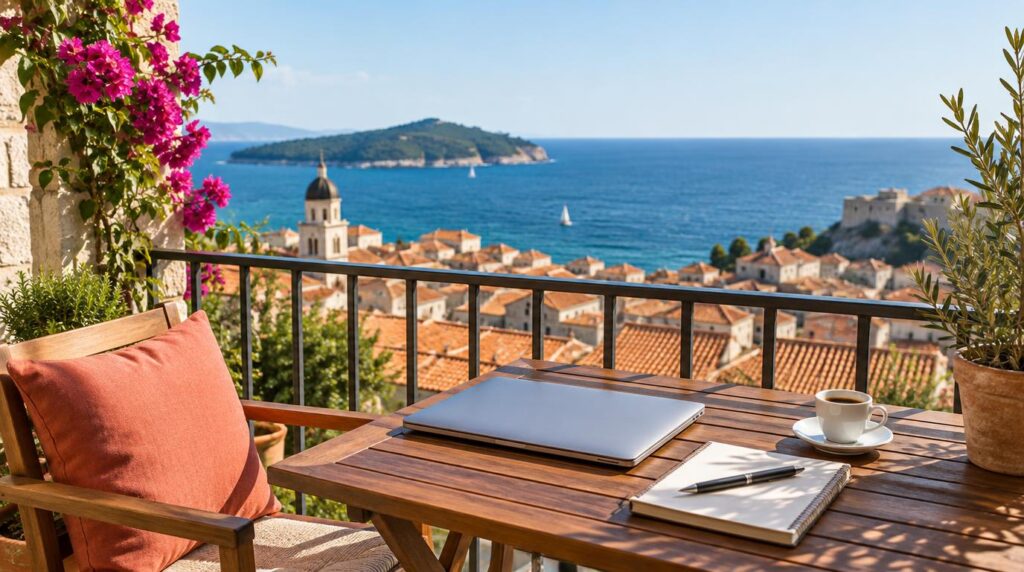
- Croatia: median fixed broadband of 136.75 Mbps and mobile of 138.90 Mbps in Ookla’s March 2026 data.
- Albania: median fixed broadband of 93.64 Mbps in the same data.
- Himara: a local Himara guide reports cafe wifi near 18 Mbps and 4G between 30 and 40 Mbps.
These are national medians, so coastal towns can differ. The Albanian figure is enough for video calls, but small Riviera towns may run slower. A host can run a speed test, which is a simple way to confirm the wifi speed before booking. A local SIM or eSIM can serve as a backup when the wifi drops.
Coworking and community
- Split: Saltwater Nomads, The Works, and Amosfera appear in 2026 nomad guides. Monthly hot desks run about €150 to €200 and day passes about €15 to €25, though guides list different prices.
- Zadar: Digital Nomad Valley Zadar, a curated nomad village in the Borik area, opened in 2021, according to Remote Work Europe.
- Himara: a local guide says the town has no dedicated coworking space, so cafes serve as workspaces.
- Saranda: sources disagree. One guide lists a small coworking space, while another says Saranda has no established one yet.
Established Albanian coworking spaces, such as Dutch Hub and Coolab, are in Tirana, about five hours by bus from Saranda. Split offers far more choice for people who want a desk and a community.
Timezone fit
- Both coasts: Central European Time, which is 6 hours ahead of US Eastern, 9 hours ahead of US Pacific, and 1 hour ahead of the UK.
A 9 a.m. call in New York happens at 3 p.m. on either coast, so timezone does not separate them. The offset can shrink by an hour for a short time when the US and Europe change clocks on different dates.
Visa and entry
The rules below were checked on October 16, 2026. Immigration rules can change, so official sources are the best place to confirm details before booking.
Short stays without a permit
- Croatia: the country joined Schengen and the euro in 2023. US citizens need no visa for 90 days or less, according to the US State Department. Those days count toward the Schengen 90/180 rule.
- Albania: the country is outside Schengen, so days there do not count toward that limit. US citizens can stay up to 365 days without a visa, while EU citizens and several other passports get 90 days in any 180 days, according to summaries of the Albanian foreign ministry rules.
Albania can serve as a place to spend time while the Schengen count recovers.
Permits for longer stays
- Croatia: the Croatia digital nomad visa is a temporary stay of up to 18 months. According to Croatia’s Interior Ministry, applicants need €3,622.50 per month in income, or €43,470 in savings for 12 months and €65,205 for 18 months. Applicants also need health insurance, a legalised criminal record check, and work for a company outside Croatia. The police-station fee is €46.45, and a new application can follow six months after the previous stay ends.
- Albania: there is no visa labeled digital nomad. Remote workers use the Unique Permit under Law 79/2021, applied for through the e-Albania portal, with a Type D visa first for nationalities that need one. Published guides describe an initial permit of one year that can be renewed. They disagree on the income bar, which ranges from about €450 to about $817 a month, so the Albanian authorities are the best source for the current figure.
Croatia states its income bar and fees on one official page. Albania’s permit may be easier to meet, but it is documented less clearly. Legal summaries also say foreign employment income is exempt from Croatian income tax during the Croatian permit, though the exemption is narrower than many guides claim, so a tax adviser can confirm the details.

Safety
- Croatia: the US State Department rates Croatia Level 1, its lowest level, as of May 18, 2026. It describes violent crime as rare and petty theft as a problem in busy tourist areas. Wildfires and heatwaves are common on the coast in summer.
- Albania: the State Department rates Albania Level 2, increased caution, because of crime, in an advisory issued August 26, 2026. A July 2026 report from the US government’s OSAC adds that local police may have limited ability to respond to serious crimes.
Ratings cover whole countries, so a specific town can feel different. The State Department recommends travel insurance for both countries, and medical evacuation cover for Croatia.
Seasons and getting there
Seasons
- Split: summer rents rise sharply. Expat.com puts a one-bedroom in a good area at €500 to €800 off-season and €1,200 to €2,000 or more in summer. Long-term leases usually run from October to June.
- Albanian Riviera: June to August is the busiest and most expensive period. By December most beach clubs, boat tour operators, and seasonal restaurants close, according to Champion Traveler. The local Himara guide says most Himara hotels close from November to March and that Saranda has more year-round services.
Albania Spirit reports that remote workers favor Saranda in May, June, September, and October. For a winter stay, Split or Saranda is a safer choice than Himara.
Getting there
- Albanian Riviera: Tirana airport operates year round, and the bus from Tirana to Saranda takes about five hours. Vlora’s new airport had no scheduled passenger flights as of October 2026, according to the local guide. Flying into Corfu and taking a ferry works mainly from May to October.
- Croatian coast: Split has its own airport, and ferries link the city to islands such as Hvar, Brač, Vis, and Korčula.
Reaching the Riviera usually involves a bus or ferry after landing, while Split takes fewer steps.
Verdict by traveler type
- On a tight budget: the Riviera is about a third cheaper per month in Numbeo’s data, roughly €962 against €1,457. A quiet town and a rental with confirmed wifi suit this traveler, because winter closures and thin coworking limit the choices.
- On US or UK client hours and in need of coworking: both coasts share the same timezone, but Split has faster national internet, named coworking spaces, and a Level 1 safety rating.
- Staying a year or longer: US citizens can stay in Albania for 365 days without a permit, which avoids Croatia’s €3,622.50 monthly income bar. EU citizens can live in Croatia under free movement rules. Most other passports need a permit in either country after the short visa-free stay.
Conclusion
The Albanian Riviera costs about a third less each month, and US citizens can stay a year there without a permit. Split and the Dalmatian coast offer faster internet, named coworking spaces, and a Level 1 safety rating. Either coast suits a remote worker who plans around the season. Search flights to Split or Tirana on FlyBibe to compare fares for your dates, then test a month on each coast.