

Da Nang is a central Vietnam beach city that has become one of Southeast Asia’s more practical digital nomad bases. This guide covers what a month actually costs, which neighborhoods suit which kind of nomad, and the internet, visa, and timezone details that decide whether a long stay works for your job.
Internet speed and reliability
Da Nang’s internet infrastructure outperforms most of its price tier. City-wide wifi averages 132 Mbps download and 68 Mbps upload, and the city consistently posts the fastest 5G speeds of any Vietnamese city, averaging 677 Mbps download in early 2026 data from the national i-Speed platform. Home fiber runs $7 to $20 a month.
- Coworking and hotel wifi: often well above the city average. One popular An Thuong cafe tested at 509 Mbps down, and a mid-range hotel near the beach held a steady 223 Mbps.
- Mobile coverage: strong 4G citywide with growing 5G availability.
- Outages: rare outside the wet season, usually tied to storm activity or a localized fault rather than a citywide problem.
For video calls, large file transfers, or streaming while you work, this is more than enough headroom. The bigger variable is your building’s own wiring, not the city’s network.
Cost of living
A solo digital nomad can live comfortably in Da Nang for $900 to $1,500 a month. A lean budget, eating mostly local food and renting a modest studio away from the beach, runs $750 to $900.
- Rent: a one-bedroom near the beach runs $250 to $550/month; an inland studio drops to $250 to $350. Book direct through a local agent or Facebook expat group rather than Airbnb-style platforms, which often charge 50 to 100% more for the same unit.
- Food: street food and local restaurants run $1 to $3 a meal; a sit-down meal at a mid-range restaurant runs $5 to $10.
- Coworking: hot desk memberships run $70 to $100/month.
- Transport: motorbike rental costs $60 to $100/month; Grab rides across the city run $1 to $3.
- Utilities: $16 to $24/month with light AC use, climbing to $40 to $60 during the hot summer months when most residents run AC daily.
That puts Da Nang meaningfully below Bali, Chiang Mai, or Bangkok for comparable quality of life, with a beach that’s a short ride from most nomad-friendly neighborhoods.

Best areas to live in Da Nang
Where you base yourself changes your daily costs and your social life more than almost any other decision.
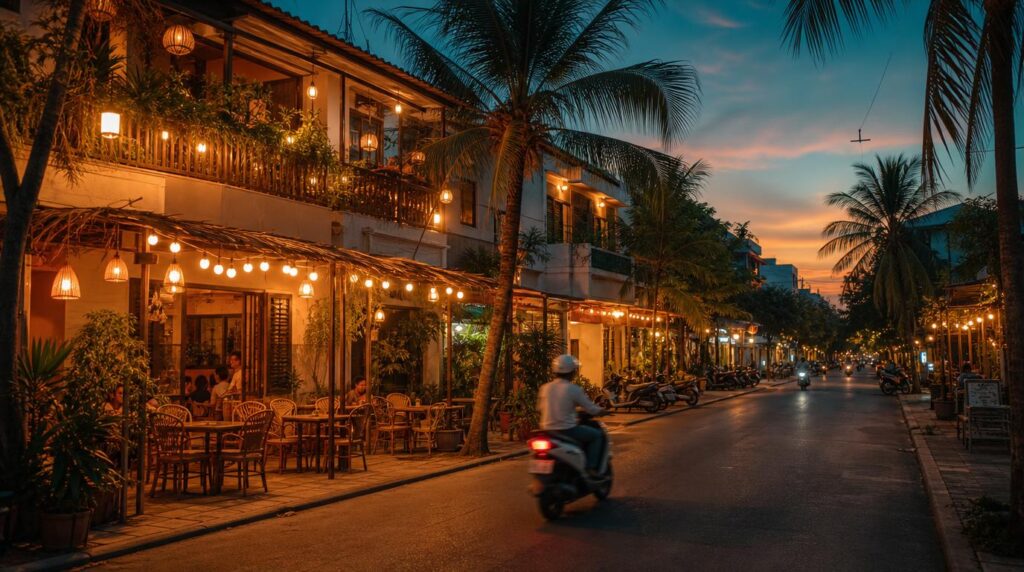
- An Thuong (My Khe Beach): the established nomad hub, with the highest concentration of coworking spaces, cafes, and expat restaurants within walking distance of the beach. It’s also the noisiest and most expensive option, with one-bedrooms running $300 to $550/month.
- My An: a quieter beachside alternative just south of An Thuong, with modern apartment buildings and similar access to cafes and the beach at a slightly lower price, roughly $300 to $500/month.
- Hai Chau (city center): Da Nang’s administrative core on the west side of the Han River. Rent runs 25 to 40% lower than An Thuong for a comparable apartment, transit links are the city’s best, and the tradeoff is sitting 10 to 15 minutes further from the beach.
- Son Tra Peninsula: residential and local, with traditional markets and a less developed beach. Cheaper than My Khe or An Thuong, and a longer ride to the main coworking cluster.
- Ngu Hanh Son: the most space for the money, better suited to longer stays or anyone wanting a quieter, more residential base.
If your routine depends on walking to a coworking space and a cafe scene, An Thuong or My An earn the higher rent. If you’re optimizing for a lower monthly budget and don’t mind a motorbike commute, Hai Chau is the stronger deal.
Visa and entry
Vietnam has no dedicated digital nomad visa as of 2026. Most remote workers enter on the standard 90-day e-visa, available online to citizens of more than 80 countries.
- Cost: $25 for single entry, $50 for multiple entry.
- Processing: apply at the official portal, upload a passport photo and photo page, and expect approval within 3 to 5 working days.
- Multiple entry: lets you exit to a neighboring country like Thailand or Cambodia and return without reapplying, a common move for nomads extending past 90 days.
- Working online: technically a gray area, since the e-visa doesn’t formally authorize employment. In practice, enforcement targets people working for Vietnamese employers without a permit, not remote workers earning income from clients abroad.
For a single stretch under 90 days, the e-visa is straightforward. Planning to stay longer means budgeting for a visa run or looking into a sponsored business visa.
Timezone fit for remote work
Vietnam sits at UTC+7. That offset is workable for European clients and difficult for US-based ones.
- UK: 6 to 7 hours ahead, depending on daylight saving.
- Central Europe: 5 to 6 hours ahead.
- US Eastern: 11 to 12 hours ahead.
- US Pacific: 14 to 15 hours ahead.
A Da Nang morning overlaps with a European afternoon, which makes standing meetings realistic. Syncing with a US team means working very early morning or late at night, so this base suits async US roles better than ones requiring daytime overlap.
Coworking spaces and community
Da Nang’s coworking scene is smaller than Ho Chi Minh City’s but clusters conveniently around the beach.
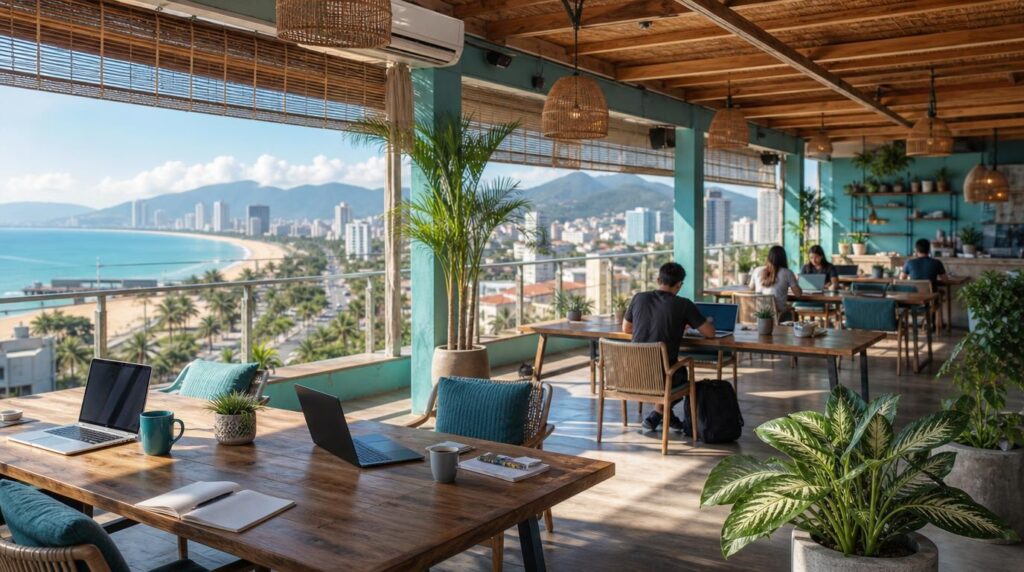
- Enouvo Space: the nomad favorite, with locations in An Thuong and An Nhon. Day passes cost around 30,000 VND (about $1.20); monthly hot desks run $50 to $100.
- DNC Danang Coworking: centrally located, popular for networking and events.
- Toong and Base Coworking: additional options within the An Thuong cluster.
- Cafes for working: Cong Ca Phe and La Ca in An Thuong, plus Highlands Coffee locations citywide for reliable AC and outlets.
The scene is compact enough that regulars recognize each other within a few weeks, which makes it easier to build a routine than in a larger, more anonymous hub.
Safety
Da Nang has a low violent crime rate and is regularly cited as one of the safer cities in Southeast Asia, including for solo travelers.
- Petty theft: bag and phone snatching happens occasionally, more often in tourist-dense An Thuong than elsewhere.
- Traffic: motorbikes are the city’s real daily hazard. Use marked crossings and stay alert.
- Taxi scams: stick to Grab or a reputable metered company rather than flagging cabs off the street.
- Wet season risk: typhoons and flooding are possible from September through December, with October typically the worst month.
None of this is unusual for the region, and most of it is avoidable with normal caution.
Best time to visit
March through August is the reliable window for a work-focused stay, with dry weather and calm seas. June and July run hot, regularly above 35°C, though the beach offsets the heat well. September through December brings the rainy season, with October the riskiest month for heavy rainfall and possible typhoon disruption. February to May offers a good balance of pleasant weather and fewer crowds if you’re planning your arrival date around comfort rather than just avoiding storms.
Who Da Nang works for
Da Nang suits remote workers who want fast, cheap infrastructure and don’t need daytime overlap with US clients. It’s a strong fit for freelancers and async workers on a budget who want beach access without Bali-level prices.
- Good fit: European-hours workers, budget-conscious nomads, anyone who wants an established but still small nomad community.
- Worth skipping: anyone needing real-time overlap with US business hours, or anyone who wants a clean, dedicated visa category rather than the 90-day e-visa workaround.
Search flights to Da Nang
Da Nang delivers on wifi, cost, and a genuine nomad community without the price tag of Southeast Asia’s bigger hubs. If the numbers and neighborhoods above line up with what you need for your next stretch of work, search flights to Da Nang on FlyBibe and start planning the move.