
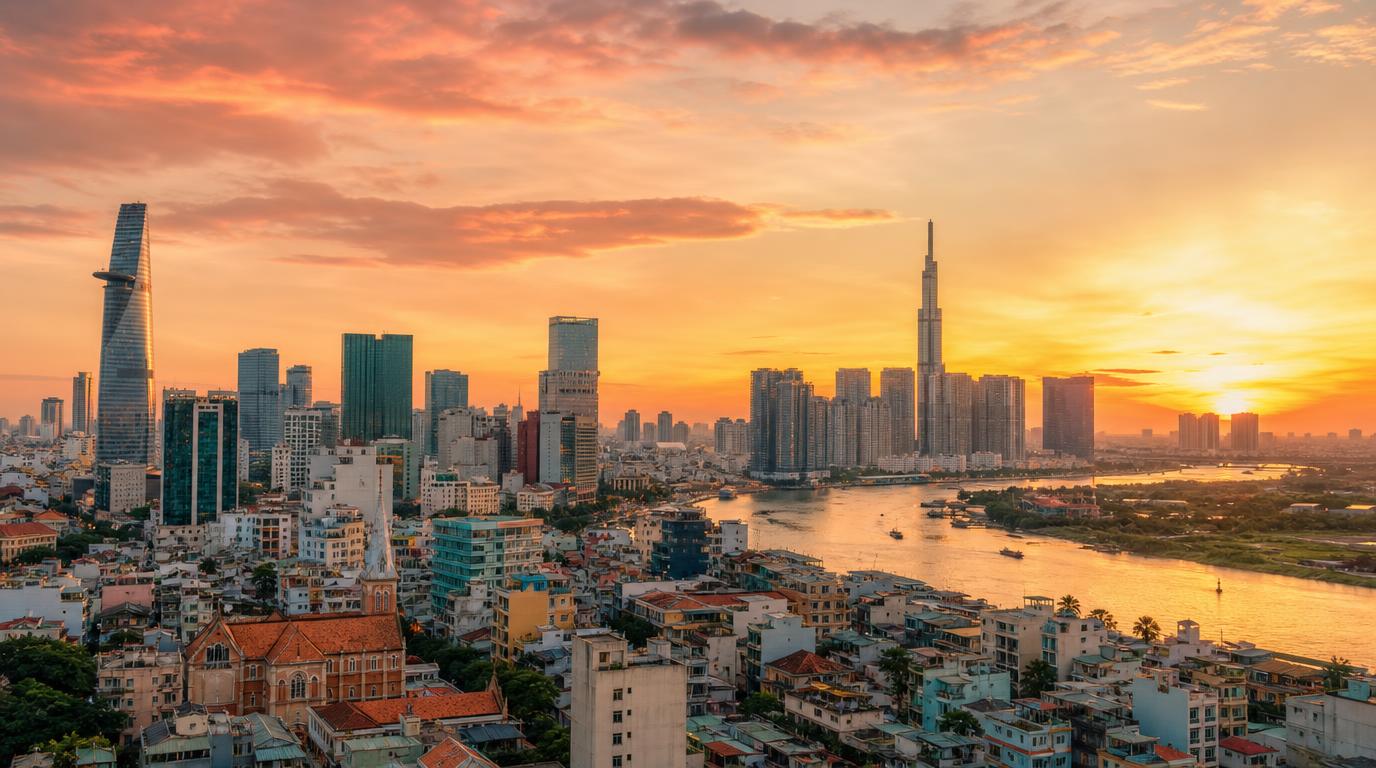
Ho Chi Minh City is Vietnam’s biggest, fastest, and most connected base for remote work. This guide covers what a remote worker actually needs to know: real internet speeds, a realistic monthly budget, visa options, timezone overlap, and where to work and stay safe. Every figure below comes from 2026 data, not guesswork.
Wifi and internet speed in Ho Chi Minh City
Vietnam’s internet infrastructure has scaled up fast, and Ho Chi Minh City sits near the top of the country’s speed rankings. This isn’t a place where a nomad needs to worry about the basics.
- Fixed broadband: city-wide averages land between 113 and 152 Mbps download, depending on the measurement source (SpeedGEO and TestMy.net, early 2026 data).
- Home fiber cost: a 300 Mbps line runs about $7.50 to $10 a month, plus a one-time installation fee of roughly $12.
- Mobile data: 4G coverage is dependable citywide and 5G is expanding fast. Vietnam ranked among the world’s top tier for mobile speed in Ookla’s early 2026 index.
- Coworking wifi: most spaces advertise 50 Mbps or faster as a floor, and several premium venues clear 100+ Mbps.
Sources disagree on the exact average by a wide margin, largely because fixed-line and mobile speeds get measured differently across providers. What doesn’t change is that every measurement sits well above what a video call needs. The real risk isn’t the city’s infrastructure, it’s an individual apartment’s line. Ask a landlord to run a speed test on the unit’s actual wifi before signing anything.
One caveat worth flagging: Telegram is blocked in Vietnam. If your team runs on it, set up a VPN before you land.
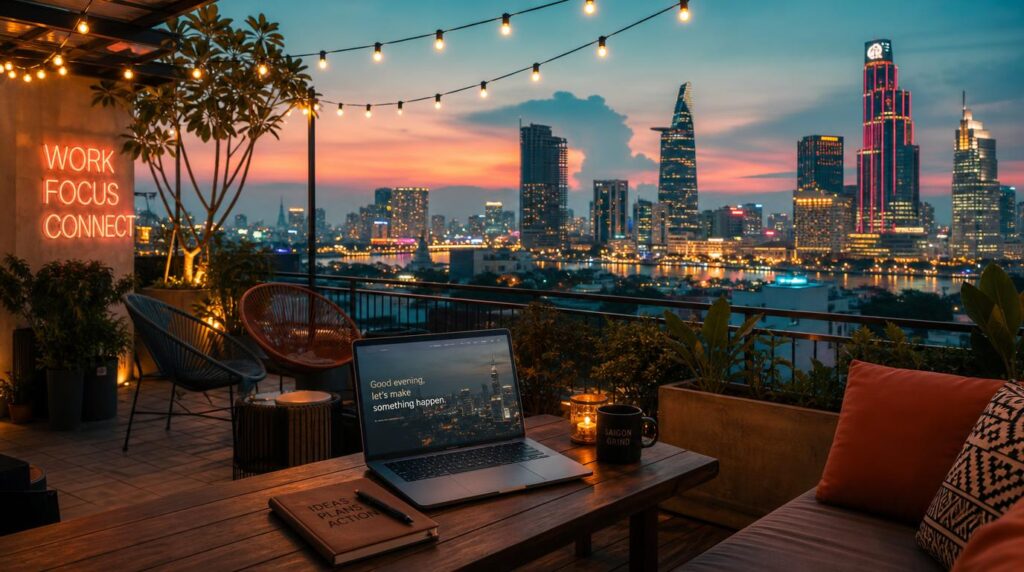
Cost of living for a remote worker
Ho Chi Minh City can run cheap or expensive, and the gap comes down almost entirely to which district you pick and how often you eat out.
- Rent, central districts: roughly $400 to $700 a month for a one-bedroom, with reports ranging from $230 for a basic serviced studio to $675+ for a newer building in District 1 or Thao Dien.
- Rent, outside the center: $160 to $300 a month in quieter areas like Phu Nhuan or Binh Thanh.
- Daily costs excluding rent: Numbeo puts a single person’s non-rent monthly costs around $480, covering food, transport, and utilities.
- Coworking membership: $60 to $150 a month for a dedicated desk, or $6 to $11 for a single day pass.
- All-in monthly budget: $1,000 to $1,500 covers a comfortable single life in a decent district with regular meals out and a coworking membership. $2,000+ adds Western-chain groceries, private health insurance, and a nicer apartment.
The spread between a bare-bones budget and a comfortable one is wider here than in most Southeast Asian nomad hubs. Where you live matters more than what you buy day to day.
Visa options for remote workers
Vietnam still has no dedicated digital nomad visa as of 2026, so most remote workers stitch together one of two entry types.
- Visa-free entry: citizens of the US, UK, most EU countries, Canada, and Australia can stay up to 45 days without a visa. This period cannot be extended.
- 90-day e-visa: available online at evisa.gov.vn to over 150 nationalities. The multiple-entry version costs $50, single-entry costs $25, and processing takes 3 to 5 business days.
- The visa run: most long-stay nomads exit to a neighboring country like Thailand or Cambodia every 90 days, then re-enter on a fresh e-visa.
- Apply through the official site only. Look-alike e-visa portals overcharge for “VIP processing” or collect passport data. The real site is evisa.gov.vn.
- Tax residency trigger: more than 183 days in Vietnam in a calendar year can make you a local tax resident. Worth a conversation with a tax advisor before committing to a long stay.
None of this technically authorizes local employment, but enforcement in practice targets people working for Vietnamese companies without a permit, not remote employees paid from abroad. This is general information, not legal advice, and rules here change without much notice.
Timezone fit for client calls
Vietnam sits at UTC+7 all year, with no daylight saving adjustments to track.
- US Eastern: 11 to 12 hours ahead. Nearly opposite, with live overlap only if someone on one end is working very early or very late.
- US Pacific: 14 to 15 hours ahead. Essentially no shared waking hours.
- UK: 6 to 7 hours ahead. HCMC’s late afternoon lines up with the UK’s late morning.
- Central Europe: 5 to 6 hours ahead. HCMC’s afternoon overlaps with Central Europe’s morning, the best window of the four.
This city works well for anyone on UK or European client hours who can shift their workday slightly earlier. It works poorly for a role that needs daily live US meetings, though async-heavy US work still fits fine.
Coworking spaces and nomad community
District 1 has the largest concentration of coworking spaces in Vietnam, and Ho Chi Minh City’s nomad community is the biggest in the country.
- Dreamplex: the premium brand, with locations in District 1, Binh Thanh, and District 7. $80 to $150/month for a dedicated desk.
- CirCO: a favorite with creative professionals, based in District 3. $60 to $120/month.
- Toong: multiple locations across Districts 1, 3, and Binh Thanh, a solid general-purpose pick.
- XÓM: in District 7, known for a strong community feel and hot desk rates under $7 a day.
- The Hive: locations in District 1 and District 3, with six coworking floors and a rooftop city view at the District 1 site.
District 1 is the easiest base for a first stay, dense with cafes, restaurants, and coworking options within walking distance. Districts 3 and Binh Thanh offer a quieter, more residential alternative a short ride from the center.

Safety in Ho Chi Minh City
Vietnam sits at the US State Department’s lowest travel advisory tier, and violent crime against foreigners is uncommon.
- What actually happens: pickpocketing and phone or bag snatching by passing motorbikes, concentrated around Ben Thanh Market, Bui Vien Walking Street, and the riverside promenade.
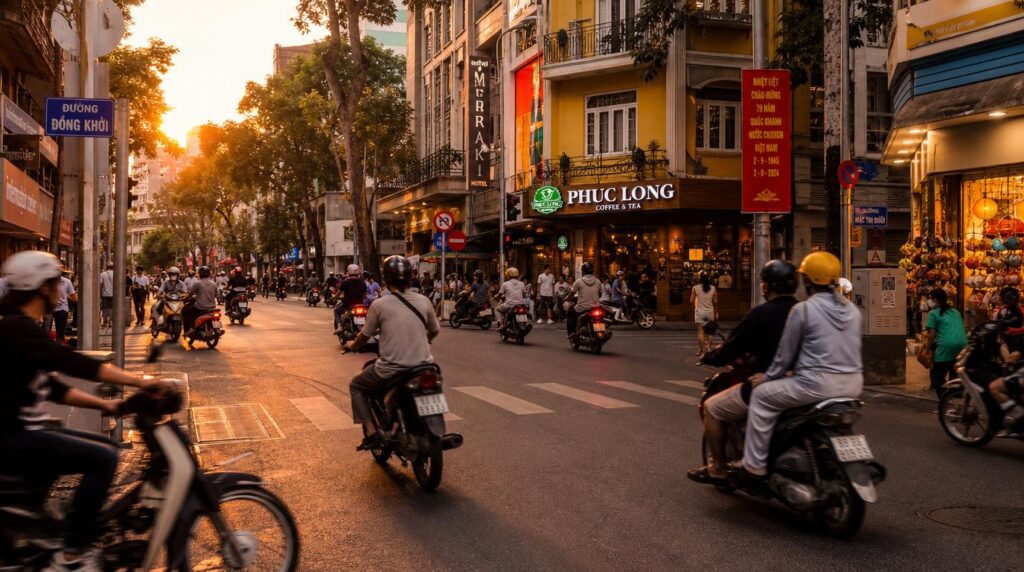
- Traffic, not crime, is the daily hazard. Cross streets at a slow, steady pace rather than trying to time gaps in the motorbike flow.
- The e-visa scam: fake portals mimic the official government site and overcharge or steal passport data. Apply only at evisa.gov.vn.
- Basic precautions: a cross-body bag, phone kept away from the curb, and valuables left in a hotel or apartment safe cover most of the real risk.
None of this is unusual for a large Southeast Asian city. The standard precautions handle it, and most visitors report no incidents at all.
Best time to visit
Ho Chi Minh City runs warm year-round, so timing a visit is mostly about rain tolerance rather than temperature.
- Dry season, December to April: sunny, lower humidity, and the most comfortable stretch for daily errands and weekend trips.
- Rainy season, May to November: short, heavy afternoon downpours rather than all-day rain, plus lower accommodation prices and fewer tourists.
- Hottest stretch: March and April, with highs near 35°C (95°F) and high humidity.
- Tet Lunar New Year: falls in late January or February most years. Much of the city closes for several days, so plan around it if you need services running.
Unlike Hanoi, this city has no real cool season, so the dry-versus-wet call matters more than picking a specific month. A coworking desk makes the rainy season’s afternoon downpours a non-issue for actual work.
Who Ho Chi Minh City is for
This city rewards someone who wants Southeast Asia’s biggest urban energy without a big budget, and who doesn’t need daily live overlap with US clients.
- Good fit: UK or European client hours, a first Southeast Asia base with strong infrastructure, or the deepest coworking and nomad community in Vietnam.
- Skip it if: your role needs live US business hours every day, you want a quieter or greener base, or you’re sensitive to heat and traffic for months at a stretch. Da Nang or Chiang Mai fit that profile better.
Search flights to Ho Chi Minh City on FlyBibe
Ho Chi Minh City delivers fast, cheap internet, a real coworking scene, and a workable visa path, at a monthly cost most nomad hubs can’t match. The tradeoffs are heat, traffic, and a tough overlap with US hours. If the rest of the picture fits your work, search flights to Ho Chi Minh City on FlyBibe and start planning the move.