
Tirana is Albania’s capital and the country’s main year-round base for remote workers, backed by fast broadband, a small but solid coworking scene, and one of the longest visa-free allowances in Europe for US passport holders. This guide covers what a month here actually costs, how the internet and coworking scene hold up, and what to check before booking. Every figure below comes from Albanian rental data, cost-of-living trackers, and current visa rules, checked in September 2026.
Internet and Wifi Speed in Tirana
Tirana’s broadband has improved fast over the past few years, and most providers now clear the bar serious remote work needs.
- Average fixed broadband speed: 115.8 Mbps download and 41.7 Mbps upload across all providers, based on a 12-month sample from April 2025 to March 2026.
- Fastest provider: Abissnet, averaging 210.9 Mbps download and 90.1 Mbps upload.
- Average latency: 29 ms, low enough for video calls without noticeable lag.
- Coworking wifi: Fast and stable at spaces like Innospace and ARC Coworking, though individual venues don’t publish official speed numbers.
That average sits well above the 25 Mbps most video calls need, even allowing for slower connections outside the city center. A backup mobile hotspot is still worth having, since speeds vary more between providers here than in Western Europe.
Cost of Living for Remote Workers
Tirana remains one of the cheapest capitals in Europe, though 2026 has brought real upward pressure on rent.
- 1-bedroom apartment, city center: roughly €500 to €700 a month. A June 2026 local report put the citywide average rent at €721 a month, nearly matching the average Albanian salary.
- 1-bedroom apartment, outside center: €280 to €400 a month.
- Groceries: around €200 a month cooking roughly half your meals at home.
- Dining out: €150 to €200 a month for regular restaurant meals, with a full dinner at a good spot running €8 to €15 per person.
- Local transport: €15 to €20 a month for buses. Bolt rides across the city run €2 to €4.
- Coworking hot desk: €60 to €130 a month.
- Utilities and home internet combined: roughly €100 a month.
A realistic monthly budget for a single remote worker renting centrally and keeping a coworking membership lands around €1,100 to €1,300. Some cost-of-living trackers still quote €400 to €500 for a central one-bedroom, but that figure is dating fast. Short-term tourist rentals have been eating into long-term housing supply through 2026, pushing prices up, so budgeting toward the higher end is the safer call.
Visa and Entry Rules
Albania offers one of the most generous entry setups in Europe for remote workers, though the details depend heavily on your passport.
- EU, UK, and Schengen passport holders: visa-free entry for up to 90 days within any 180-day period.
- US citizens: visa-free entry for up to 1 year, the longest allowance of any European country. Travelers must then leave and stay outside Albania for 90 days before re-entering.
- Formal digital nomad visa: the Unique Permit for Digital Mobile Workers, established under Albania’s 2021 Law on Foreigners, covers remote work for up to 1 year and can be renewed for up to 5 years total.
- Income requirement: roughly €817 a month, or about $9,800 a year, in verifiable foreign income.
- Application: filed online through Albania’s e-visa portal, with processing reported at up to 12 weeks.
Some older guides describe the Unique Permit as stalled or never formally approved, while current legal and visa-service sources describe it as an active, functioning program. Confirm the latest status directly with an Albanian consulate or immigration lawyer before counting on it. For most people staying under a year, the standard visa-free allowance already covers the stay without needing the formal permit at all.
Timezone Fit for Remote Work
Tirana runs on Central European Time, which lines up cleanly with the rest of the EU but leaves a real gap with North America.
- UK: 1 hour ahead.
- Central Europe (Berlin, Paris, Rome): same time zone.
- US Eastern: 6 hours ahead.
- US Pacific: 9 hours ahead.
European teams get a full overlapping workday. US-based teams get a workable window in the Albanian afternoon, roughly 3pm to 7pm local time, but Pacific-hours nomads will need to log on before dawn to catch a US Eastern morning meeting.
Coworking and Community
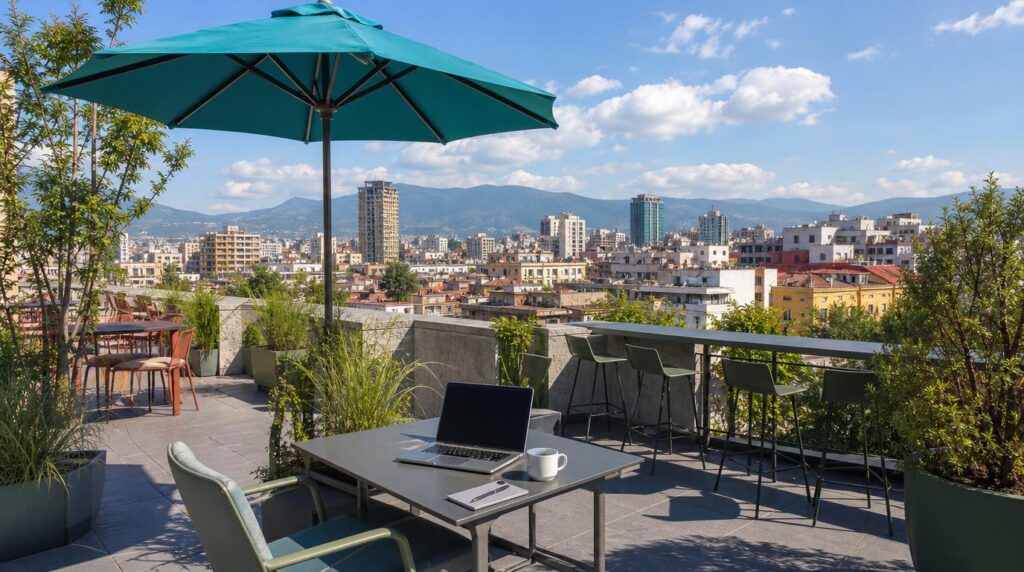
The coworking scene is compact but genuinely good, concentrated in the city center and the Blloku neighborhood.
- Innospace Tirana: central location with a panoramic terrace, frequently cited by members for its community and reliable wifi.
- ARC Coworking: lounge, phone booths, and an outdoor terrace, built around remote workers and freelancers.
- Destil Creative Hub, Ofisin, and Tirana Coworking: additional options for hot desks and private offices.
- Cafes: Mon Cheri and Mulliri i Vjeter in Blloku both double as informal offices for laptop work.
The nomad community here is smaller than in Lisbon or Chiang Mai, so networking happens more through coworking spaces and cafes than through a dedicated meetup circuit. Worth knowing if a built-in social scene is part of what you’re looking for.
Safety in Tirana
Tirana is broadly safe by European standards, with the usual big-city precautions mattering more than any unusual risk.
- US State Department rating: Level 2, “exercise increased caution,” the same tier as France, Italy, Spain, and Germany.
- Main risk for visitors: pickpocketing in crowded areas like markets and public transport, plus occasional card fraud.
- Driving: road conditions and accident rates lag EU norms, so extra caution applies if renting a car or crossing on foot.
- Organized crime: present in Albania but rarely involves foreign visitors or residents.
A US Embassy alert in April 2026 urged extra vigilance in malls, restaurants, and clubs, tied to broader regional security concerns rather than a specific threat inside Albania. Check current embassy guidance before a trip rather than relying on this guide alone.
Best Time to Visit
Albania runs a Mediterranean climate, so timing affects both the weather and how the city feels to live in day to day.
- Spring (March to June): mild, 15 to 25°C, the most comfortable stretch for working outdoors and exploring.
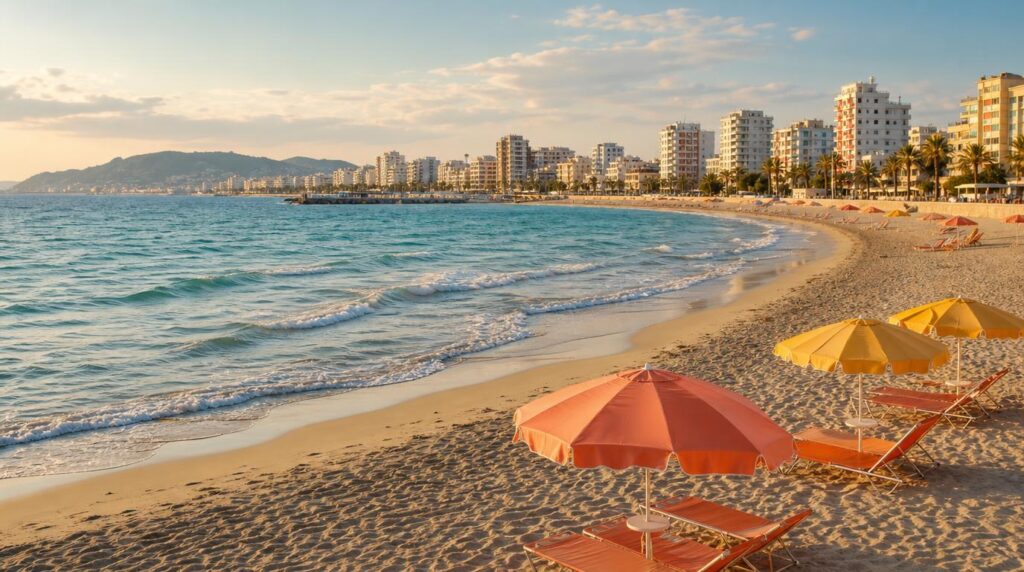
- Summer (July to August): hot, 30 to 38°C, with the coast at Durres about 40 minutes away for a heat escape.
- Autumn (September to October): similar to spring, averaging around 16°C.
- Winter (December to February): mild and wet, averaging around 7°C in January, cooler than most people expect from a Mediterranean country.
Spring and early autumn give the best balance of livable temperatures and lighter tourist traffic, which also tends to mean better rental availability ahead of the summer crunch.
Who Tirana Is For
Tirana suits remote workers who want an inexpensive, low-key European base without needing to track the Schengen 90/180 clock. It fits people working European hours better than anyone relying heavily on early US Eastern or Pacific overlap.
- Good fit: budget-conscious nomads on European client hours, Americans wanting a full year in one place, anyone drawn to an affordable capital that isn’t yet overrun with other nomads.
- Consider elsewhere: nomads who need a large built-in community, deep Pacific-hours overlap, or English spoken everywhere, since Albanian is the default and English proficiency is moderate outside coworking spaces and tourist areas.
Search Flights to Tirana
Tirana pairs a genuinely low cost of living with fast enough internet, a small but solid coworking scene, and one of the longest visa-free stays in Europe for US passport holders. Rents are climbing, so lock in a lease early and budget toward the higher end of the ranges above. If Albania’s mix of affordability and Mediterranean pace fits your next stretch of work, search flights to Tirana on FlyBibe and start planning the move.