
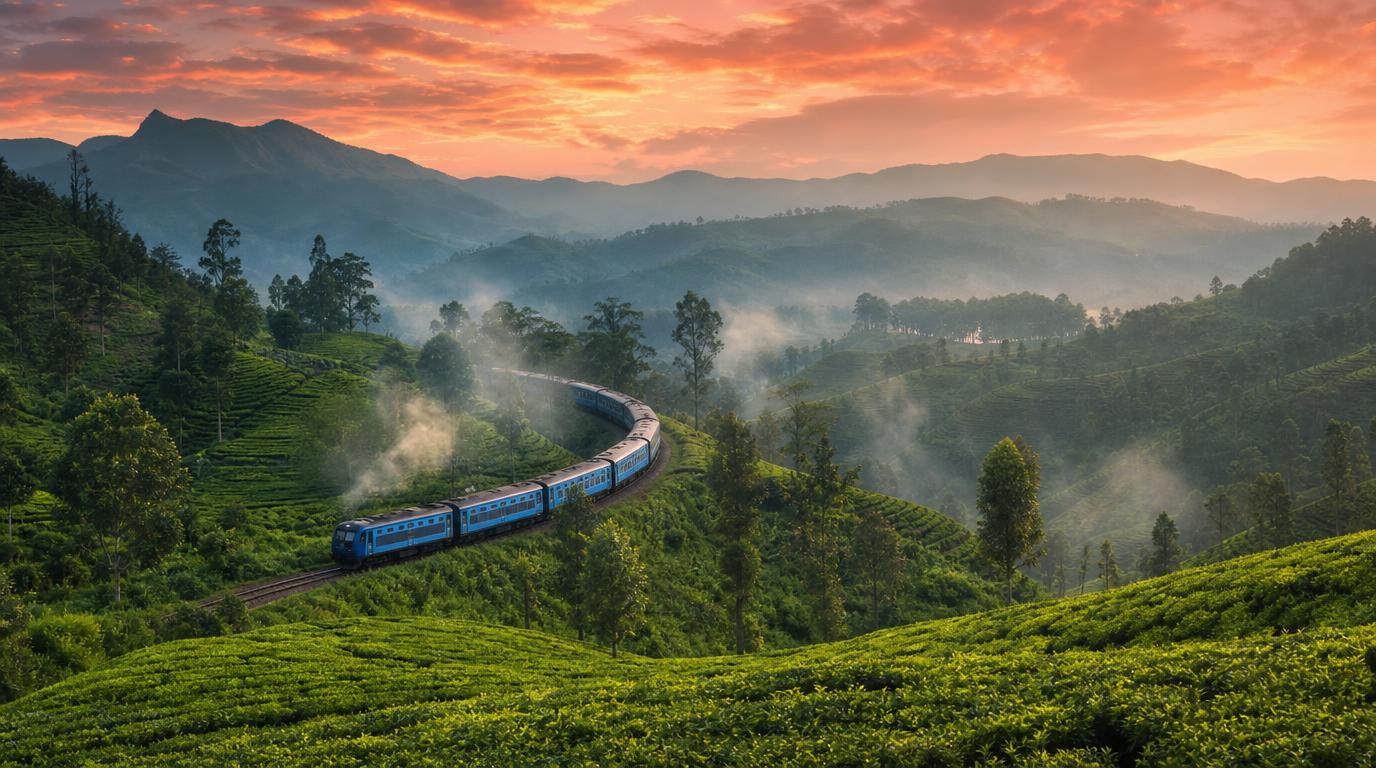
Sri Lanka’s new digital nomad visa opened the island to remote workers in February 2026. Two very different bases have emerged as the obvious contenders: Ella, a misty hill town in tea country, and Colombo, the coastal capital. This guide breaks down the visa rules, wifi realities, costs, and coworking options for each. Pick the base that actually fits how you work.
Sri Lanka’s digital nomad visa and entry rules
The Digital Nomad Visa launched in February 2026 and lets remote workers live in Sri Lanka for up to 12 months, renewable annually. It works the same way in Ella or Colombo, since it’s a national program run by the Department of Immigration and Emigration.
- Minimum income: $2,000/month for the main applicant, plus $500/month per dependent beyond the first two.
- Visa fee: around $500 per applicant, covering a spouse and dependents on the same application.
- Duration: 12 months, renewable annually. Proof of Sri Lankan tax registration is required after year one.
- Work rule: income must come from outside Sri Lanka. Local employment isn’t permitted.
- Documents: 3-6 months of bank statements, proof of health insurance, and a clean criminal record check.
One source reports a lowered $1,500 threshold paired with a new five-year visa option. That figure isn’t confirmed by the Department of Immigration’s own published rules, or by outlets like CNBC and Forbes. Treat $2,000 as the reliable figure, and confirm directly with the department before applying, since visa rules shift with little notice.
A full application can feel like overkill for a shorter stint. Sri Lanka’s tourist ETA works too. Nationals of 40 countries, including the US, UK, and most of the EU, get a free 30-day ETA as of May 2026. It’s extendable to 270 days total across three stages, which is enough runway to test Ella or Colombo before committing to the nomad visa.
Timezone fit for remote work
Sri Lanka runs on Sri Lanka Standard Time, a fixed UTC+5:30 with no daylight saving to track. That offset plays out differently depending on who you’re calling.
- US Eastern: roughly 9.5 to 10.5 hours ahead, so a Sri Lankan evening lines up with a US morning.
- US Pacific: 12.5 to 13.5 hours ahead, close to opposite. Early mornings or late nights are the only real overlap.
- UK: about 4.5 to 5.5 hours ahead, giving a solid overlap between Sri Lankan afternoons and UK mornings.
- Central Europe: roughly 3.5 to 4.5 hours ahead, the easiest fit of the four for a normal working day.
Clients in Europe barely notice the time difference. Clients on the US West Coast will need you to shift your schedule around them.
Colombo: fast internet, real infrastructure, less scenery
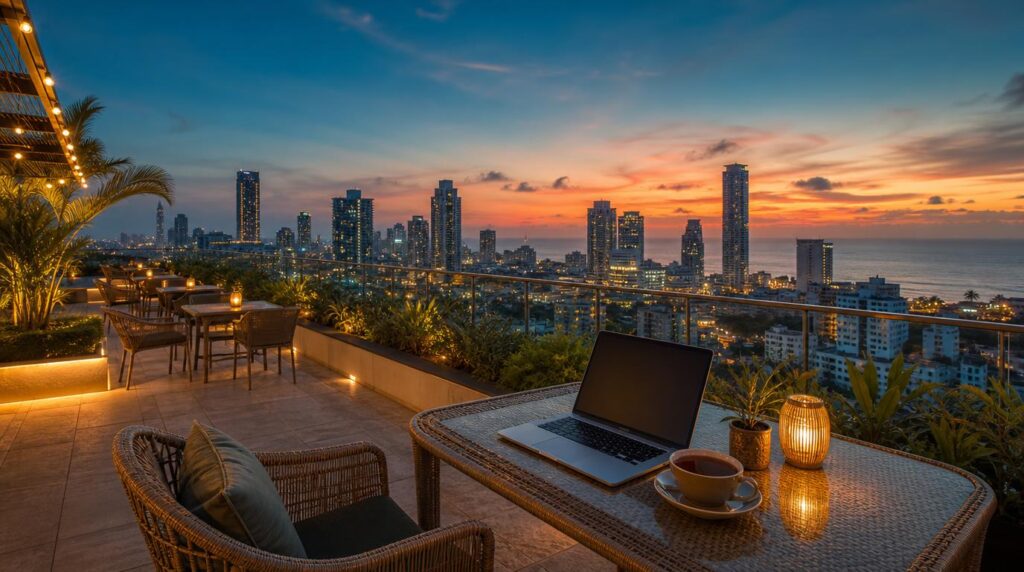
Colombo is Sri Lanka’s commercial capital and its most built-out base for remote work. It has the densest cluster of coworking spaces on the island and the most reliable connectivity, though it trades hill-country views for traffic and heat.
- Internet: fixed broadband in Colombo runs faster than the national average, and most coworking spaces run on fiber. Sri Lanka overall still ranks 131st globally for fixed broadband speed, so test any specific address before signing a lease.
- Cost of living: budget around $700-1,000/month for a single nomad. That covers a one-bedroom apartment ($350-700), food, local transport, and a coworking membership (roughly $60/month).
- Coworking and community: Colombo Cooperative on Galle Road, HUB9, and Likuid Spaces all run dedicated coworking floors. Cafes like Black Cat Café and Tea Avenue double as informal workspaces with decent wifi.
- Safety: violent crime against foreigners is rare. Petty theft, inflated tuk-tuk fares, and gem-shop scams are the more common annoyances, and Sri Lankan traffic deserves real caution.
- Best time to visit: December through March is Colombo’s dry season, with the least rain and the clearest skies for a balcony or rooftop workday. May through September brings the southwest monsoon and daily downpours.
Colombo suits anyone who wants city infrastructure, a real expat network, and an easy airport run. It asks you to trade tea-plantation views for concrete and humidity.
Ella: cooler air, thinner infrastructure, more calm
Ella is a small hill town in Uva Province, known for the Nine Arches Bridge and the Kandy-Ella train through tea country. It draws nomads who want a slower pace and a break from tropical heat, at the cost of some connectivity.
- Internet: average download speeds sit around 25 Mbps, and fiber is spreading to the better guesthouses. Speeds can dip during heavy mountain rain, so a backup mobile data plan is worth carrying.
Related: eSIM vs Local SIM vs Portable Wifi Hotspot for Nomads
- Cost of living: figures vary by source, from around $810/month for a lean setup to $1,440/month for a more comfortable one. Either way, Ella runs cheaper than most coastal nomad hubs.
- Coworking and community: The Secret Garden is Ella’s best-known coworking space, and Café Chill is the go-to spot for working over coffee. Beyond that, coworking is thin, and community happens informally through hostels and Facebook groups like Expats in Ella.
- Safety: Ella is calm and low-crime. The usual advice applies: secure your belongings, and take real care on winding mountain roads.
- Best time to visit: Ella sits 5-10°C cooler than the coast year-round. May through October, when the south coast is deep in monsoon season, is actually a strong window here.
Ella works for anyone chasing quiet mornings and mountain air over a packed coworking calendar, as long as the internet gaps don’t break your workflow.

Which one fits your work
Pick Colombo if your income depends on video calls, large file transfers, or client meetings that can’t slip. The infrastructure is more forgiving, and a backup connection is rarely far away.
Pick Ella if your work tolerates some flexibility and your calls are mostly async. Quiet, cooler surroundings matter more here than a packed social calendar.
- Choose Colombo if: you need fiber-reliable wifi, want a larger expat network, or fly in and out often.
- Choose Ella if: you can work async some days, want lower costs, and value scenery and cooler air over city convenience.
Many nomads split their Sri Lanka stay between the two. A base in Colombo covers the connectivity-heavy weeks, and stretches in Ella fill the slower ones.
Sri Lanka’s digital nomad visa makes a longer stay possible, and Ella and Colombo cover two very different sides of it. Colombo delivers dependable wifi and city infrastructure. Ella trades some of that reliability for cooler air, lower costs, and a quieter pace. Whichever fits your work better, search flights to Sri Lanka on FlyBibe and start planning the move.