
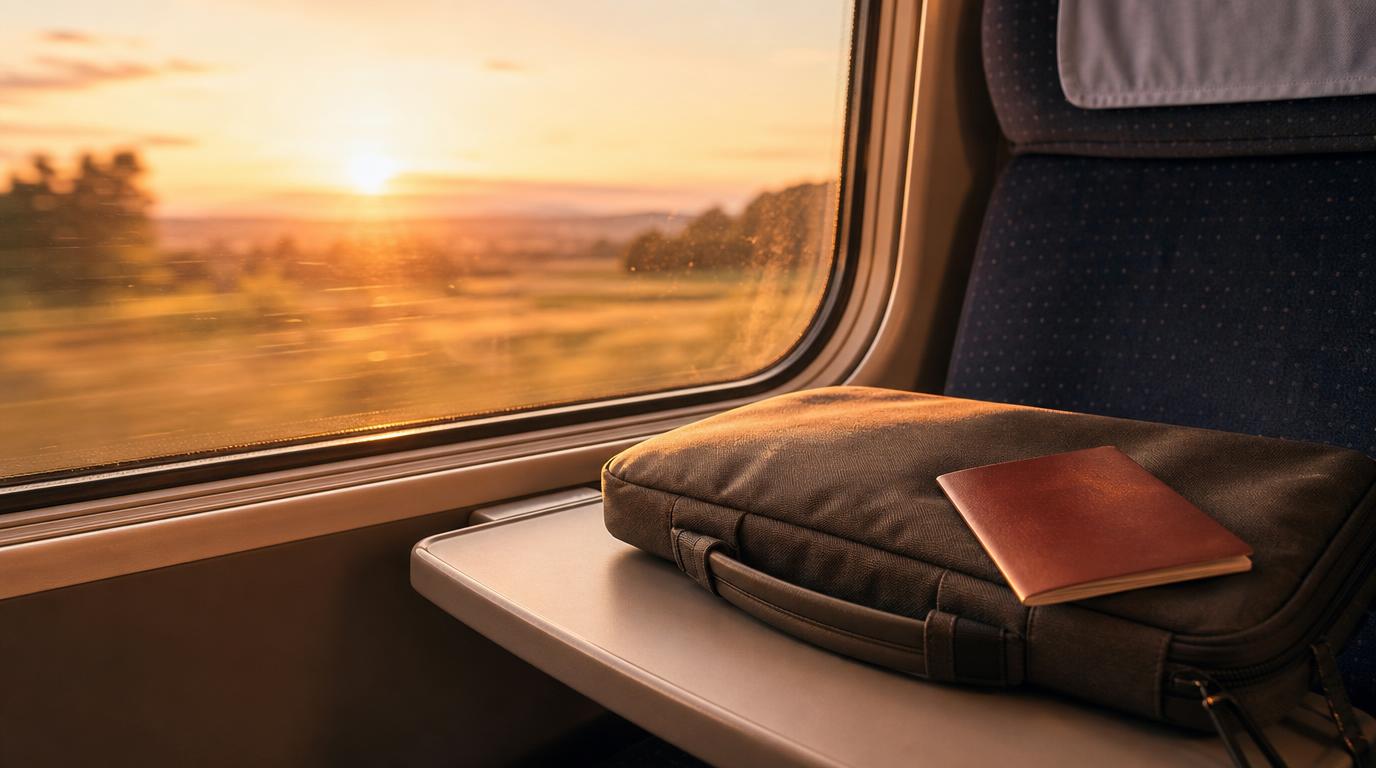
Full-time travel makes concentration harder to hold onto than it looks from the outside. A new city resets the small cues that used to signal “work mode,” often without you noticing. This guide covers what actually helps. Expect a routine you can rebuild fast, tools that borrow other people’s focus, and the one habit that quietly wrecks most travelers’ weeks.
Rebuild the same routine in every city
Decision fatigue is the real reason focus slips on the road, not laziness or a bad wifi day. Every choice about where to sit, what to eat, and when to start work draws on the same mental battery. Full-time travel adds dozens of these tiny decisions that a fixed routine used to handle automatically.
- Pick a fixed start ritual: the same coffee order, the same playlist, the same first fifteen minutes. Your brain learns to recognize work mode on cue, regardless of the location.
- Set one start time and keep it, even as it shifts across time zones, so the day has an anchor before wifi speed or weather gets a vote.
- Limit where you’ll work to two or three go-to spot types per city, one cafe, one coworking day pass, one home setup, instead of an open search every morning.
- Give the routine time to actually take hold. Psychologist Phillippa Lally’s research found new habits take an average of 66 days to feel automatic. A routine that worked in your last city deserves a couple of weeks here before you judge it.
A routine that survives time zones is less about willpower and more about removing decisions before they pile up.
Give arrival days a job besides work
A new stay resets internet setup, local sim cards, and basic groceries all at once. Treating day one like a normal work day usually fails at both. Nomad List data puts the average stay in a single city at three to nine months as of 2025. Even at that slower pace, most full-time travelers still rebuild this arrival routine several times a year.
- Test your connection before committing to a workspace. A stated wifi speed on a listing rarely matches what loads once ten other guests share the same router.
- Budget one buffer day for logistics (sim card, groceries, scoping a workspace) before expecting full output from a new base.
- Scope a backup workspace on day one, not just a favorite cafe, so a closed shop or a dead router doesn’t cost the whole day.
Full-time travel means paying a moving-day tax on a regular basis, and planning around it protects the rest of the week from slipping.
Control your environment on purpose
A new apartment or coworking desk resets most of the visual and audio cues that used to signal focus. A phone fills that gap faster than most people notice. Rebuilding a few of those cues on purpose, in each new place, works better than relying on willpower alone.
- Freedom blocks distracting apps and sites across every device on a schedule, so a phone can’t quietly cover for a blocked laptop. It runs $8.99 a month, $39.99 a year, or a one-time $99.50 for lifetime access.
- Forest turns a work session into a growing virtual tree that dies if you leave the app. It’s a small-stakes system, and the developer’s tree-planting partnership has funded over 5 million real trees from user sessions.
- Brain.FM streams music built around focus research rather than a generic lo-fi playlist, which holds up better than random background noise in a shared coworking space.
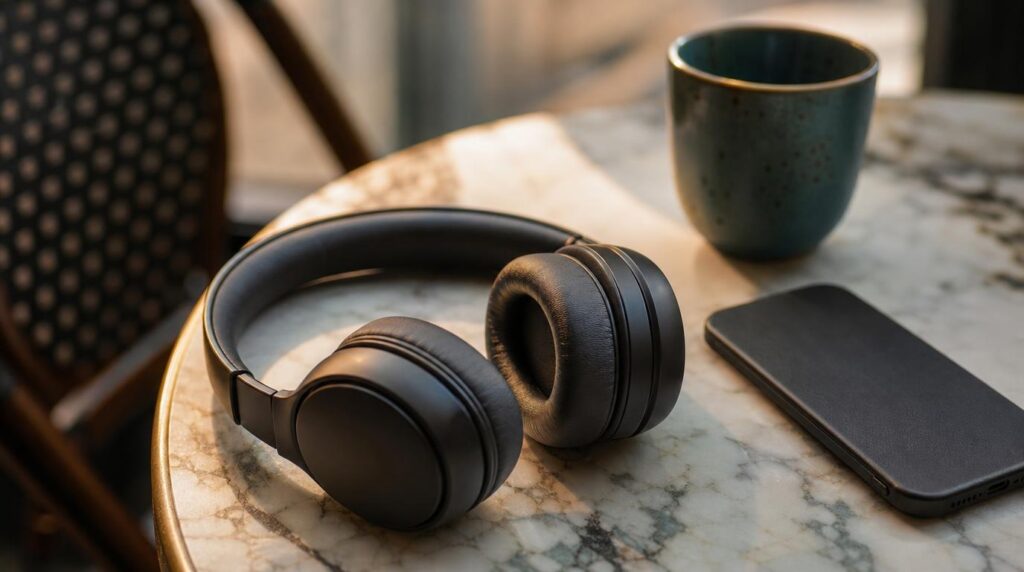
- Noise-isolating headphones often matter more than noise-canceling ones for nomad work. Cafe chatter and market noise cut through active noise cancellation more than a steady engine hum does.
None of these tools create focus on their own. They remove the small frictions a closed office door used to handle without any thought.
Borrow focus from other people
Working alone in a new city removes the low-level social pressure that keeps most office workers on task, and that loss is bigger than it sounds.
- Focusmate pairs you with a stranger for a live 50-minute virtual work session. It’s free for three sessions a week, or unlimited for $6.99 to $9.99 a month. Members join from more than 150 countries, so a session is usually available close to your local hours.
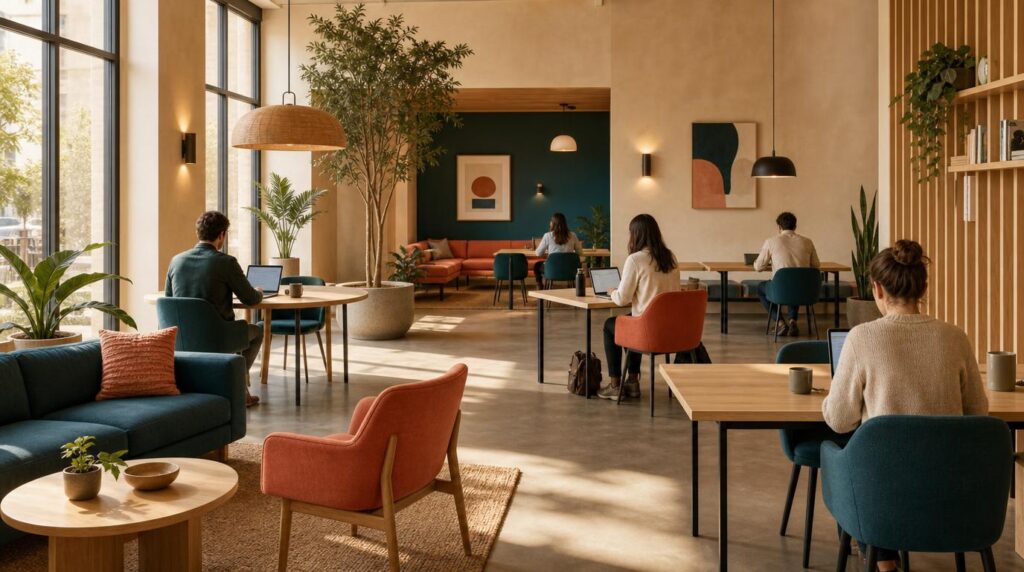
- A coworking day pass puts you next to people mid-task, which does more for focus than the desk or the wifi speed. Only about 15% of digital nomads actually work from coworking spaces day to day. A pass is often less about amenities and more about trading isolation for a room of other working people.
- Set a recurring session on the same days each week so accountability doesn’t depend on finding a new plan in every city.
Accountability doesn’t require an office. It requires one other person knowing you’re supposed to be working right now.
The mistake that undoes all of this
The most common trap for full-time travelers isn’t laziness. It’s chasing a better workspace instead of repeating an imperfect one that’s already working.
- A cafe with faster wifi three blocks away rarely justifies abandoning a spot that’s already working. Switching resets the routine cues you just spent days building.
- An hour spent researching “best coworking space in [city]” is often a symptom of decision fatigue, not a real productivity step.
- A string of one-night or two-night stays makes this worse by default. Every move restarts the search for wifi, a desk, and a rhythm. That’s part of why longer, slower stays have become the norm among full-time nomads rather than the exception.
Consistency inside a mediocre setup usually beats novelty inside a perfect one, especially in the first few weeks of a new stay. The goal isn’t the best possible workspace. It’s the fewest possible resets.
Staying focused while traveling full time comes down to fewer decisions, not more willpower. The same start ritual, one or two go-to workspaces, and a way to borrow accountability cover most of it. None of it depends on finding the perfect city first. Wherever the next stretch of work happens to be, search flights on FlyBibe and get the routine running before you’ve even landed.