
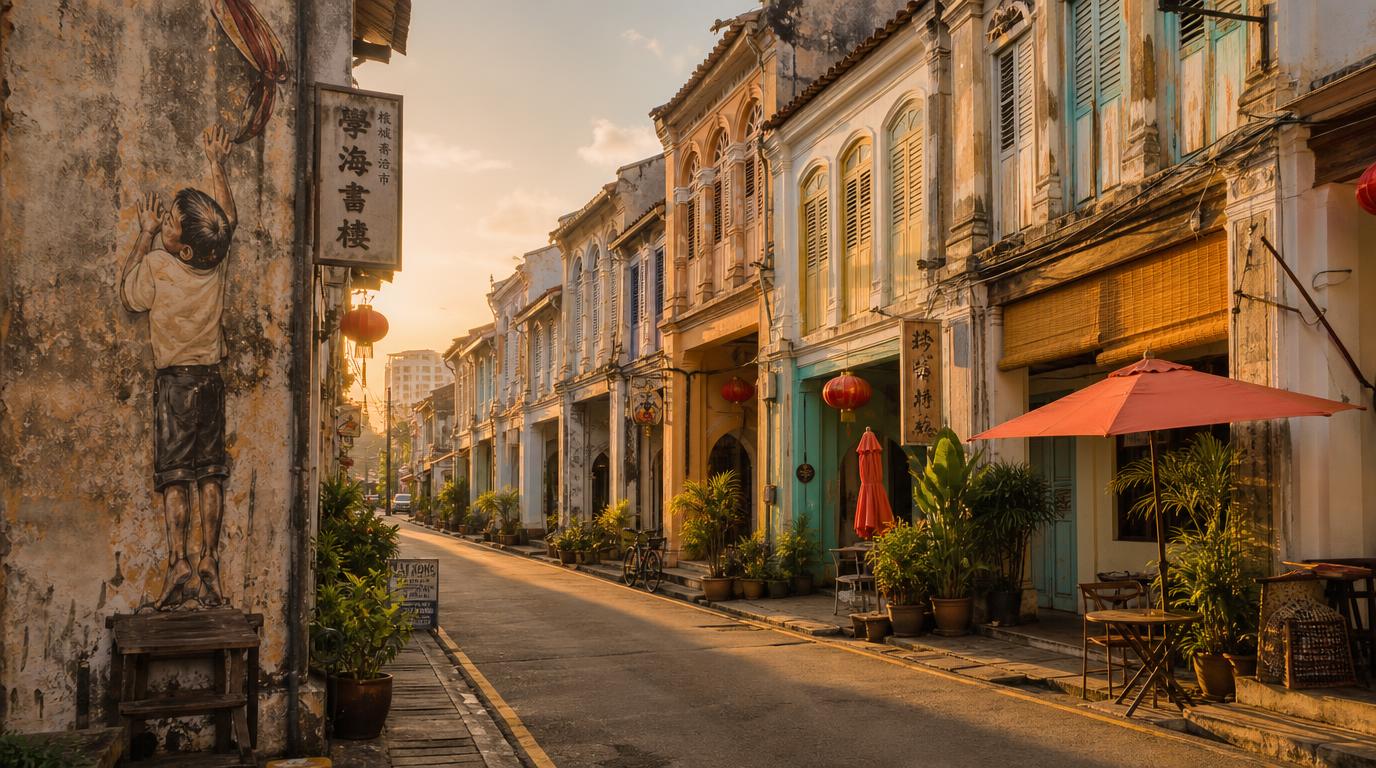
George Town, Penang pairs UNESCO heritage streets with one of Southeast Asia’s cheapest costs of living for remote workers. This guide breaks down real monthly budgets, internet speeds, visa options, and where to find reliable coworking space. Use it to decide whether Penang fits your work schedule and your budget before you book a flight.
Cost of living in George Town
Penang consistently comes up as one of the more affordable nomad bases in the region, and the numbers back that up. A comfortable single budget lands between RM3,500 and RM6,000 a month, roughly $870 to $1,490, all-in.
- Rent, heritage George Town: RM900-1,400 ($225-350) for an older one-bedroom in a shophouse-style building.
- Rent, modern condo: RM2,500-4,500 ($620-1,120) for a sea-view unit in Gurney or Tanjung Tokong.
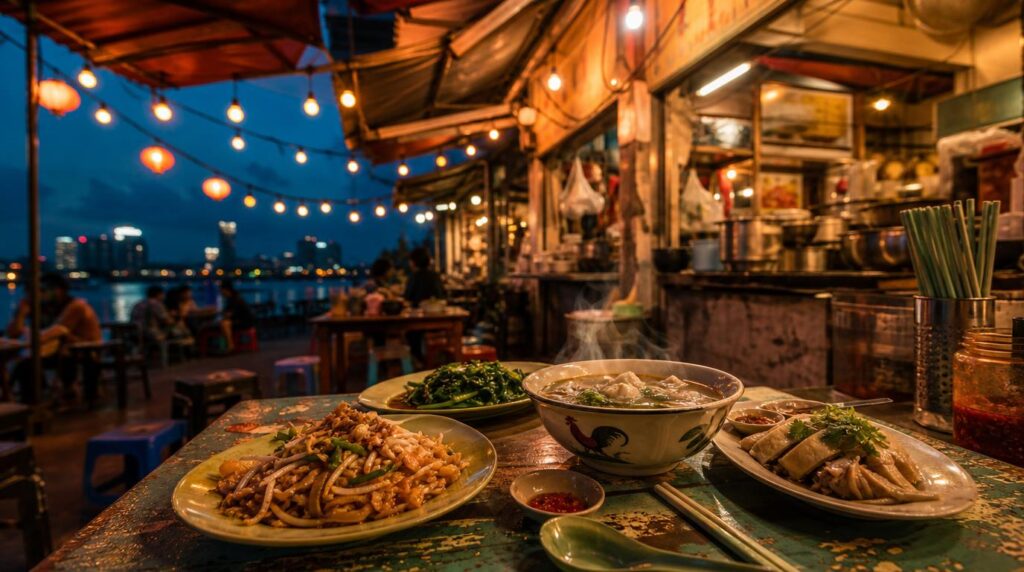
- Food, eating local: RM600-900 ($150-225) a month on two to three hawker meals a day.
- Utilities: around RM163 ($40) a month for a mid-sized apartment.
- Internet and mobile combined: RM40-125 ($10-31) a month.
- Local transport: Grab rides inside George Town typically run RM6-15 ($1.50-3.70).
Nomad-aggregator estimates put the total lower, closer to $986 a month for a single person including rent. The gap comes down to housing choice. Pick an older heritage building over a new condo and the lower end of these ranges is realistic.
Internet speed
Malaysia’s internet infrastructure has caught up with the rest of the region, and Penang’s urban core sits on full fiber coverage.
- National fixed broadband: median 169.89 Mbps download, 66.10 Mbps upload, 8ms latency, per Ookla’s April 2026 report.
- National mobile: median 154.13 Mbps download, ranking 25th globally.
- Coworking wifi: most George Town spaces and cafes advertise fast, stable connections built around video calls.
These are national figures rather than a George Town-specific test, so actual speeds still vary by building and provider. Stick to fiber-connected coworking spaces, or a condo on TM Unifi or Time, for the most reliable connection.
Visa and entry
Most Western passport holders can enter Malaysia without a visa, which makes Penang an easy trial run before committing to a longer stay.
- Tourist entry: US, UK, EU, Canadian, Australian, and Japanese passport holders get 90 days visa-free.
- Arrival requirement: every traveler must complete the Malaysia Digital Arrival Card online before landing, regardless of visa status.
- Digital Nomad Visa: the DE Rantau Nomad Pass, run by MDEC, grants remote workers and freelancers 12 months, renewable to 24.
- Income threshold: most sources put this at $24,000 a year in foreign-sourced income, though a few cite a higher bar for non-tech roles. Confirm the current figure directly with MDEC before applying.
- Application fee: about RM1,000 (~$220) for the main applicant, plus RM500 per dependent.
The 90-day tourist window covers most short stays without any paperwork. Anyone planning to stay longer, or wanting a legal runway beyond three months, should start the DE Rantau application before arriving. It cannot be converted from inside the country.
Timezone fit
Malaysia sits at UTC+8 year-round, with no daylight saving to track.
- US Eastern: 12-13 hours ahead. Malaysia’s early morning lines up with the US Eastern evening before.
- US Pacific: 15-16 hours ahead. Real-time overlap during standard work hours is close to nonexistent.
- UK: 7-8 hours ahead. Malaysia’s afternoon overlaps with UK morning meetings.
- Central Europe: 6-7 hours ahead. Malaysia’s afternoon lines up well with a full European workday.
Penang works best for anyone whose clients or team sit in Europe or elsewhere in Asia. Staying on US business hours from Penang usually means late nights or very early mornings, most weeks of the month.
Coworking and community
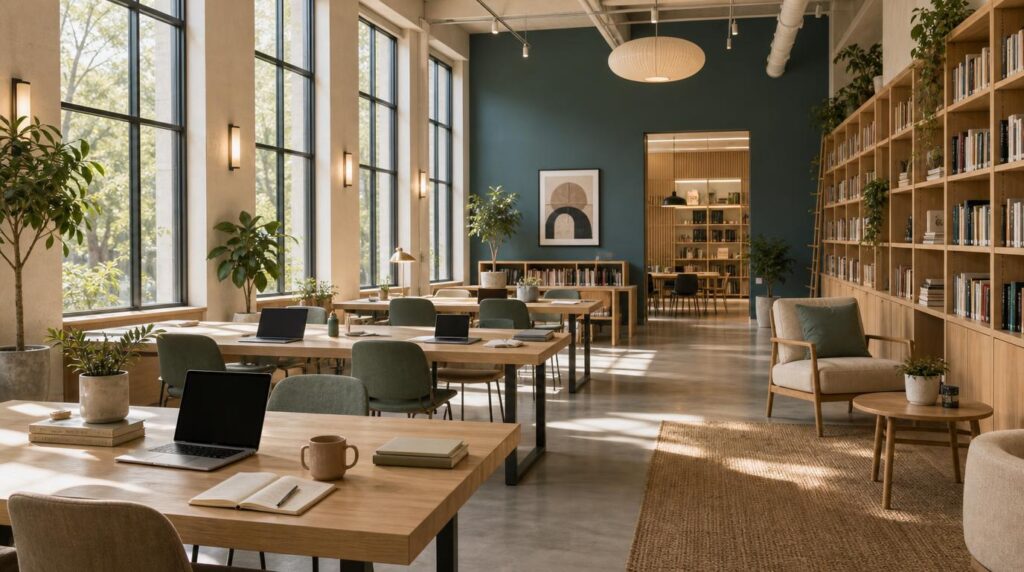
George Town has a small but genuinely solid coworking scene, plus a cafe culture built around long work sessions.
- Common Ground: a polished, professional space in Pulau Tikus with hot desks, fixed desks, and private offices, day passes around RM50.
- Masco Co-working: inside Prangin Mall in George Town, day pass around $7, hot desks from around $70 a month.
- Infinity8: on Lebuh Pantai, right in the heart of George Town’s heritage zone.
- Penang Digital Library: free, air-conditioned, and quiet, with the original Mansion building open 24 hours for anyone working odd-hour shifts.
- Cafe options: several George Town cafes, like Secawan ‘n’ Such, set aside dedicated work rooms with faster wifi than the main seating area.
The scene is smaller than Chiang Mai’s or Bali’s, but what exists is reliable. Between the paid spaces and the 24-hour library, there’s somewhere to work regardless of your schedule.
Related: Canggu vs Ubud vs Seminyak: Best Bali Base for Nomads
Safety
Penang is a low-crime, family-friendly island by regional standards, and most of the real safety considerations are weather-related rather than crime-related.
- Petty crime and scams: low. Solo travelers report fewer of the low-level tourist scams common elsewhere in Southeast Asia.
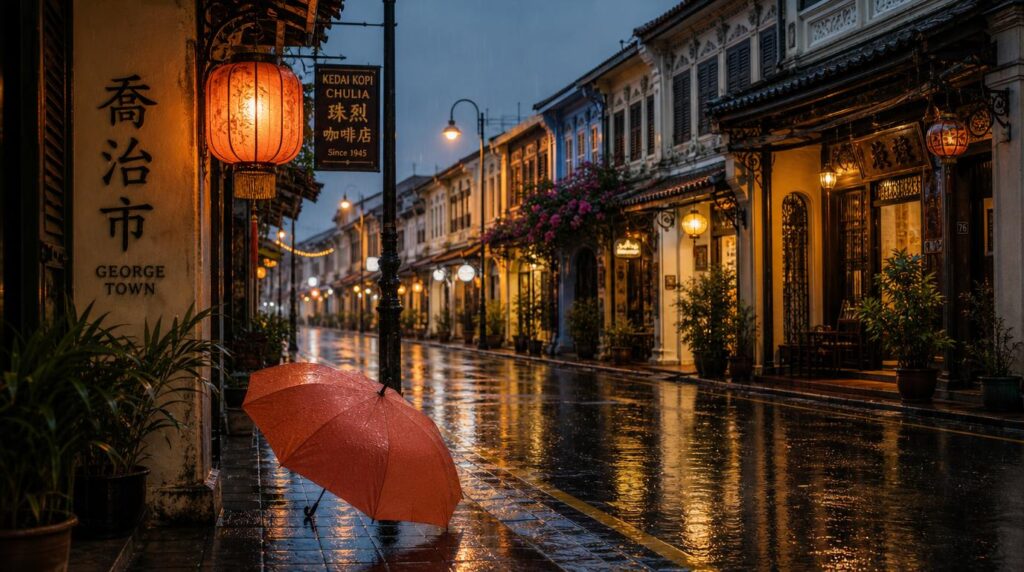
- Monsoon flooding: heavy afternoon rain between September and November can flood parts of the George Town heritage zone, including Lebuh Armenia.
- Dengue risk: rises during wetter months. Penang recorded roughly 2,800 cases in 2025.
- Water: stick to bottled or filtered water rather than tap.
- Traffic: roads are busy. Cross carefully, and expect five-foot walkways to double as motorbike parking.
None of this is unusual for tropical Southeast Asia, and it doesn’t make Penang risky. Basic precautions, mosquito repellent in the rainy months and decent travel insurance, cover most of it.
Best time to visit
Penang stays warm and humid year-round, so timing a trip is about rain, not temperature.
- December to February: the driest, coolest stretch, and peak tourist season with higher accommodation prices.
- March and November: shoulder months with lighter crowds and less rain.
- May to September: the Southwest Monsoon brings short, heavy afternoon downpours, though mornings usually stay clear.
- September and October: the wettest months overall, thanks to inter-monsoon rain.
For a short scouting trip, aim for December through February. For a longer stay, the rain rarely lasts long enough to derail a full workday, so timing matters less once you’re settled in.
Who it’s for, and who should skip it
Penang suits remote workers on European or Asian client hours who want a walkable, food-driven base with an actual digital nomad visa option. It also suits anyone who wants heritage architecture and hawker food over beach-club nightlife.
- Skip it if your work depends on live overlap with US Eastern or Pacific business hours.
- Skip it if you need swimmable beaches or nightlife as a daily draw.
- Skip it if you’re relying on public rail transit. Penang’s LRT isn’t expected until around 2031.
Search flights to Penang
George Town delivers on the numbers that matter most: low rent, strong internet speeds, a workable visa path, and a coworking scene that covers early mornings and late nights alike. The trade-off is a tough timezone for US-based work and a rainy season worth planning around. If the budget and the food scene are pulling you toward Penang, search flights to Penang on FlyBibe and start mapping out your stay.