
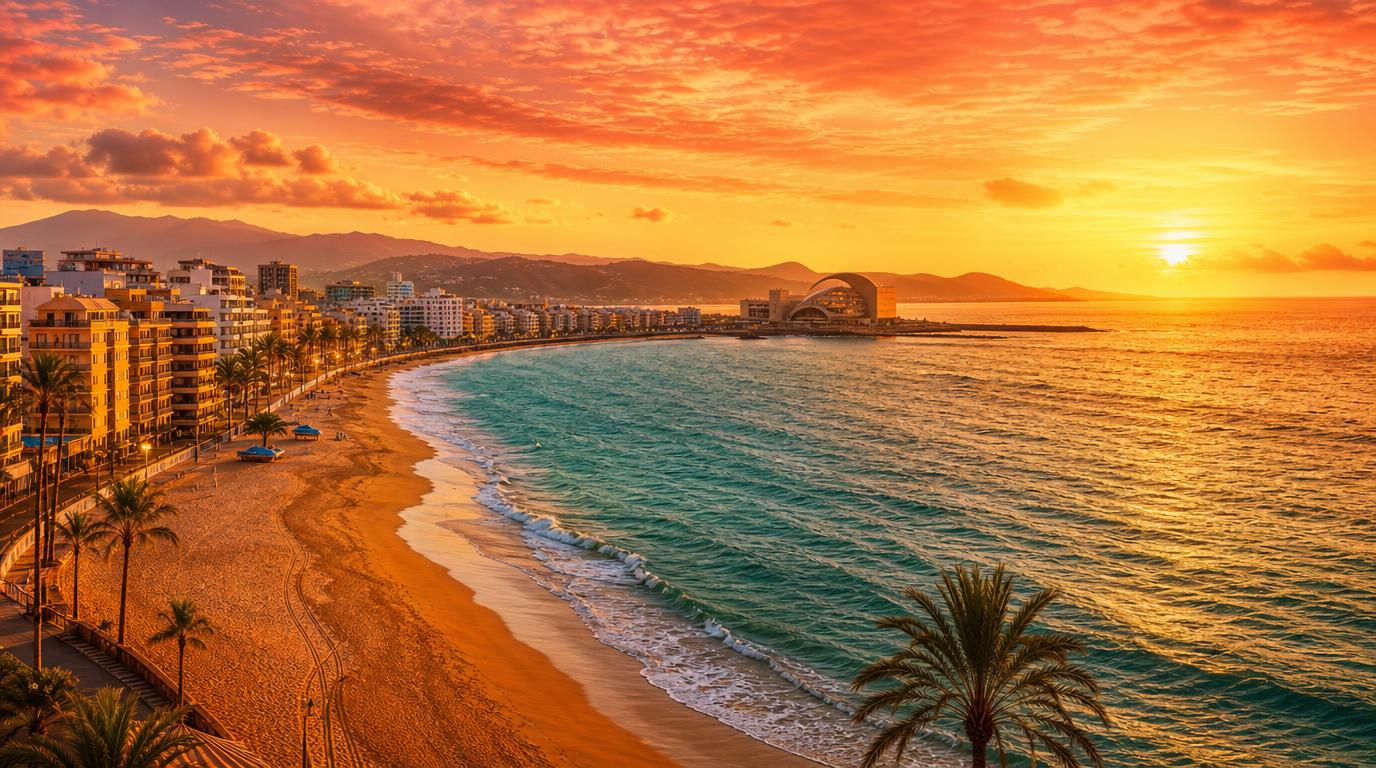
Las Palmas de Gran Canaria is the Canary Islands’ biggest city, and it draws a specific kind of remote worker: someone on UK or European client hours, working with a budget under €2,000 a month, who wants real fiber infrastructure without mainland Spain’s price tag. This guide covers actual internet speeds, rent and food costs, visa rules past the standard 90 days, and where the coworking and community scene stands right now.
Wifi and internet speed
Gran Canaria’s connectivity holds up well against mainland Spain, even where the city’s raw averages lag the national number.
- Average fixed broadband: 213 Mbps citywide, with a median of 143 Mbps. Spain’s national average sits at 243 Mbps.
- Fiber coverage: over 93% of the island has fiber-to-the-home access, with speeds up to 1 Gbps available in urban areas including Las Palmas.
- Mobile: 5G reaches 95.2% of Gran Canaria, with real-world speeds up to 300 Mbps across most of the city.
- Coworking spaces: dedicated lines running 100-500 Mbps, well above what a video call or a large upload needs.
The gap between the citywide average and dedicated coworking wifi matters more than the headline number. A cafe connection can dip during peak hours, but any of the coworking spaces below deliver enough headroom for video calls without needing a backup plan.
Cost of living
Las Palmas runs meaningfully cheaper than mainland Spanish cities, though the exact rent figures vary depending on the source, worth flagging upfront.
- One-bedroom apartment, city center: roughly $840-1,040/month (about €780-960), depending on the platform and exact neighborhood.
- One-bedroom apartment, outside center: around $700-850/month (about €650-790).
- Basic utilities: about $118/month for an 85m² apartment, covering electricity, water, and garbage.
- Food: a mid-range restaurant meal runs about $45, an inexpensive one closer to $12, and a coffee averages $2.27.
- Total monthly budget, single person: one 2026 estimate puts total living costs, rent included, at around $1,906/month, though the low end of the rent range brings a leaner budget closer to $1,600-1,700.
Rent estimates disagree by a couple hundred dollars a month depending on the platform. Treat the low end as realistic in Guanarteme or Ciudad Jardín, and the high end as closer to what you’d pay a few steps from Las Canteras beach.
Visa and entry
Entry rules depend entirely on how long the stay runs.
- Tourist stay: US, UK, and most passport holders get 90 days visa-free within any rolling 180-day period across the Schengen Area, which includes Spain and the Canary Islands.
- Border tracking: the EU’s Entry/Exit System became fully operational in April 2026, so overstays are now tracked through biometric records rather than passport stamps. A rough day count no longer covers for a miscalculation.
- Digital nomad visa: Spain’s remote work visa requires income at 200% of the Spanish minimum wage, which works out to about €2,849/month for a single applicant in 2026, plus private health insurance and proof that most income comes from non-Spanish clients.
- Tax option: approved digital nomad visa holders can apply for Spain’s Beckham Law, a flat 24% tax rate on income up to €600,000, instead of the standard progressive scale that reaches 47%.
For a short stint, the 90-day allowance needs no paperwork. Anyone planning to stay six months or longer should start the digital nomad visa process early, and confirm the current income threshold before applying rather than relying on last year’s figure, since it moves with the minimum wage each year.

Timezone fit for remote work
Gran Canaria sits on GMT/WET, one hour behind mainland Spain and the rest of continental Europe, and level with the UK.
- UK: same time, no adjustment needed.
- Central Europe (CET): one hour ahead of Las Palmas.
- US Eastern: 4-5 hours ahead, so a 9am Eastern call lands around 1-2pm local, workable across most of a US morning.
- US Pacific: 7-8 hours ahead, which pushes the overlap window into the Las Palmas late afternoon and evening.
European and UK client hours are the easiest fit here. Pacific-hours workers can make it work, but should expect regular meetings to land after dinner rather than during the working day.
Coworking and community
The coworking scene has grown into a real ecosystem rather than one or two options.
- White Forest (Guanarteme, steps from Las Canteras beach): day pass around €20, monthly membership €179-200, 300+ Mbps fiber, 24/7 access.
- Sky Coworking (near the port and Santa Catalina Park): rooftop terrace workspace, day, week, and monthly passes, and an active WhatsApp community.
- Work in Cholas / Repeople: pairs coworking with coliving, useful for anyone who wants housing and a desk bundled into one monthly rate.
- Citywide range: day passes run €12-20, monthly memberships €100-250 depending on hot desk versus dedicated desk.
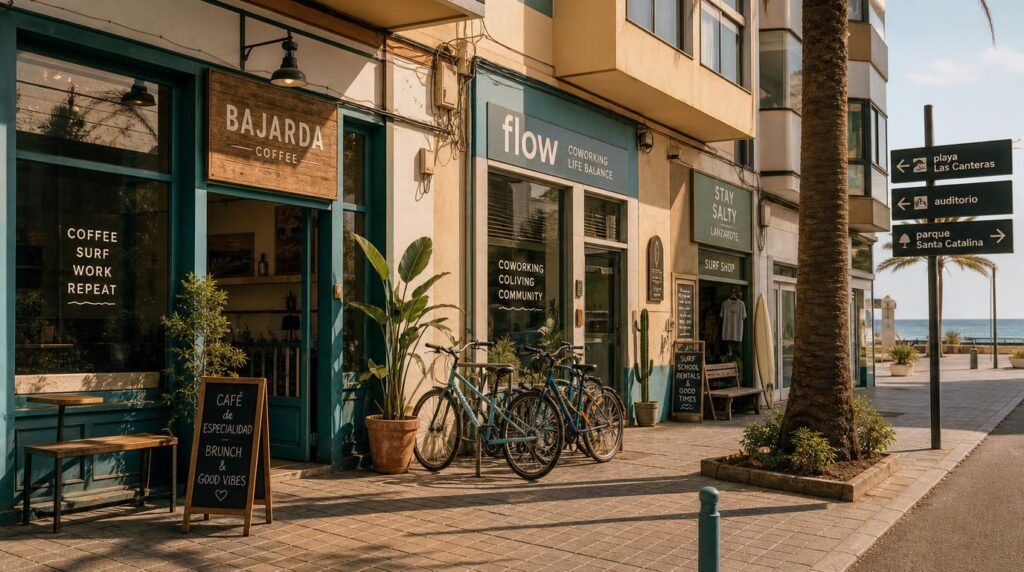
Guanarteme, the neighborhood behind Las Canteras beach, has become the de facto nomad hub. Most of the well-known spaces, along with a large share of the community, sit within walking distance of each other.
Safety
Las Palmas carries a low crime rate by European city standards, and the main risk for visitors is opportunistic rather than violent.
- Common issues: pickpocketing, purse snatching, and car break-ins, concentrated around festivals, weekends, and crowded tourist areas.
- Walking at night: generally fine in central neighborhoods, standard city awareness still applies.
- Beach safety: Las Canteras is protected by a natural volcanic reef and stays calm most of the year. Beaches without that reef, including Confital, can develop stronger currents, particularly from November through March.
- Taxis and transit: metered, licensed, and considered reliable.
The practical risk here is a stolen phone in a crowded plaza, not a safety concern that should change your plans. Keep valuables out of sight in busy areas and you’re covering the actual risk.
Best time to visit
Temperatures barely move across the year, which is the whole appeal, but a few windows still stand out.
- Year-round range: daytime highs of roughly 19-28°C (66-82°F), with February the coolest and August/September the warmest.
- Rainfall: minimal all year, around 200-250mm annually, concentrated in November and December.
- Shoulder season (March-May, September-October): the best mix of comfortable temperatures and thinner crowds.
- February: Las Palmas Carnival, one of the largest in the world, brings the biggest crowds and highest prices of the year.
Winter is peak season here, since it’s when Northern Europeans arrive escaping the cold at home. Book housing early for any stay starting between December and February.

Who Las Palmas works for
Las Palmas fits remote workers on UK or European hours who want fiber-grade internet, a functioning coworking scene, and a lower cost of living than mainland Spain’s bigger cities, without giving up city amenities.
- Good fit: solo remote workers or couples on a €1,600-2,000/month budget, European or UK client hours, and first-time nomads who want an established community to plug into.
- Skip it if: the job runs on strict US Pacific hours with frequent live meetings, or the plan calls for a bigger city’s variety than one mid-sized capital can offer.
Search flights to Gran Canaria
Las Palmas covers the fundamentals: fast fiber, an established coworking scene, a low crime rate, and living costs well under mainland Spain’s bigger cities. The trade-off is the timezone, which favors European and UK hours over US Pacific ones, and rent that varies more than expected between sources, so budget toward the higher end to stay safe. Search flights to Gran Canaria on FlyBibe and start pricing out your next stretch of work from Las Canteras beach.