
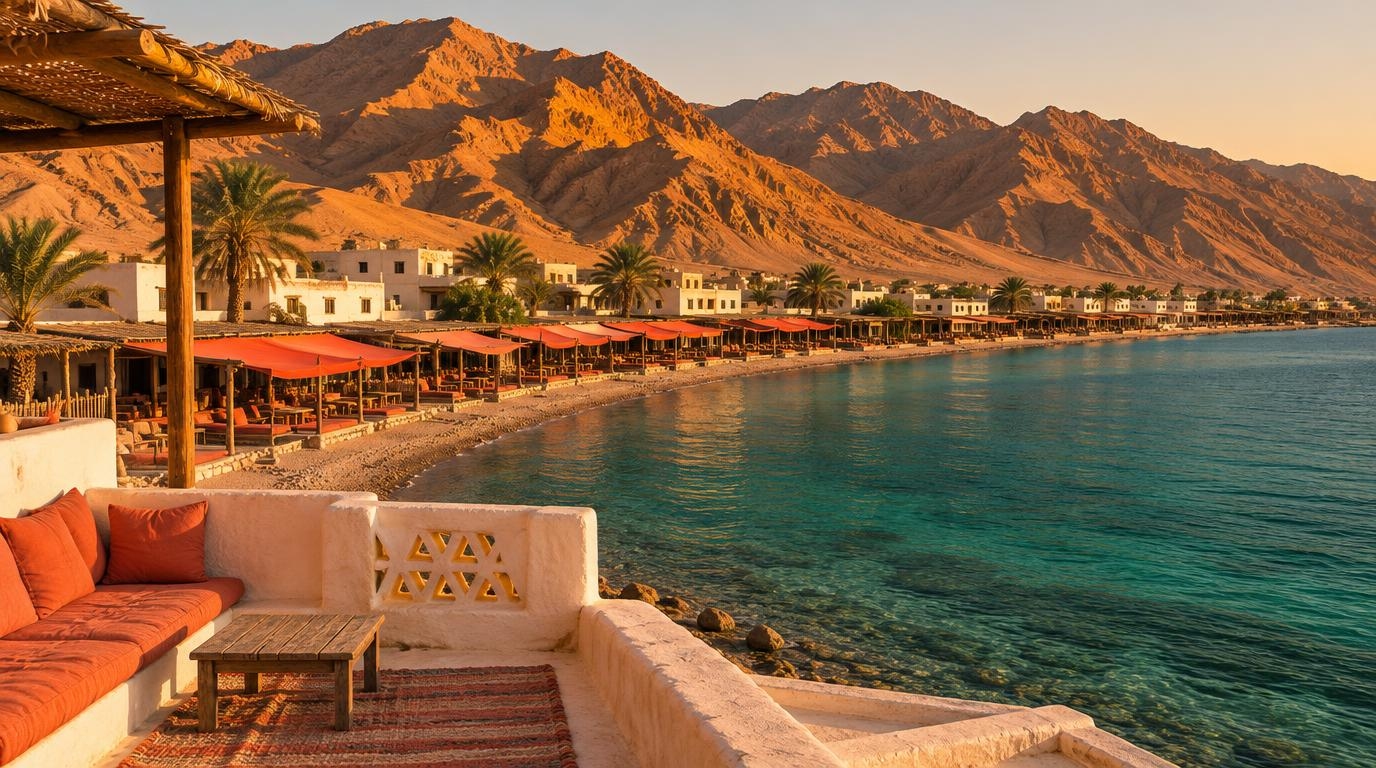
Dahab is a small Red Sea town on the Sinai coast where remote workers fit dives and freedives around their work hours. This guide covers monthly costs, wifi, visa rules, time zones, coworking, safety, and the diving scene. Figures come with a source and a date, and places where sources disagree are marked.
How Much Does It Cost to Live in Dahab?
Public cost trackers put a month in Dahab anywhere from about $470 to about $1,600. Most of them do not explain their method, so the range reflects different lifestyles as much as different data.
- Low estimate: Citycost.org lists about $471 a month for one person, rent included.
- Middle estimate: Jobicy lists about $670 a month.
- Higher estimates: Nomad.watch lists $1,590. Stamped Nomad gives $1,200 to $1,800 for a private apartment, regular restaurant meals, and a coworking membership.
The line items below come from the same kinds of sources, so treat them as ranges.
- Rent: Stamped Nomad puts an apartment in Lighthouse or Mashraba at $300 to $450 a month. Citycost.org lists a central one-bedroom between about $100 and $300.
- Coworking: El Coworking charges about $100 a month, according to Stamped Nomad. Day passes are quoted at $5 to $10 across sources.
- Mobile data: A 50 GB plan costs about $5 to $10, according to Stamped Nomad.
- Meals: Trackers list a basic local meal at about $2 to $5 and a mid-range meal at $8 to $12.
As an example only, one person might pay $350 for rent, $100 for coworking, $10 for data, and $420 for food. The food figure assumes one local meal at $4 and one mid-range meal at $10 for 30 days. The total comes to $880 a month before any diving.
A coworking owner told Egyptian Streets in April 2025 that Egyptian inflation has made prices competitive with Southeast Asia for people earning in dollars, euros, or pounds. He also said rising demand from newcomers is pushing rents up. Prices are set in Egyptian pounds, so the exchange rate on the day of payment changes all the figures above.
A guide on how to build a monthly budget shows how to turn ranges like these into a plan. Diving costs sit on top of the budget and are covered in the diving section below.
How Good Is the Internet in Dahab?
National speed data for Egypt looks decent. Reports from inside Dahab are less positive, especially for uploads.
- Egypt, fixed broadband: Ookla’s May 2026 index shows an average download of 92.73 Mbps (80th of 149 countries) and an upload near 10 Mbps, according to World Data. Ookla also named Egypt the fastest fixed-internet country in Africa for the first half of 2026, as reported by Arab Finance in October 2026.
- Egypt, mobile: The median mobile download was 44.51 Mbps in late 2025, after 5G launched in June 2025, according to Ookla data reported by Scene Now.
- Dahab averages: Tracking sites quote anywhere from about 20 to 45 Mbps for the town. The ones checked do not say how they measured it.
- Upload speeds: The owner of El Coworking told Egyptian Streets that government-provided lines give less than 1 Mbps of upload even in the best parts of Dahab.
- Mobile networks: Stamped Nomad reports that Etisalat is usually faster in Assalah and that Orange or Vodafone work well in other areas.
Video calls and large uploads are the weak spot. A layered setup is the usual answer, with a coworking desk, a local SIM with plenty of data, and an eSIM as a spare. A comparison of eSIM, local SIM, and hotspot options helps with that choice. A recent speed test that includes upload numbers can prevent a bad first month, and a separate guide covers how to check wifi speed before you book.
Visa and Entry Rules for Dahab
Egypt has no digital nomad visa, so remote workers enter as tourists. Egyptian Streets reported this in April 2025, and a Workation guide still listed none in April 2026. New readers can see how a digital nomad visa differs from a tourist visa in a separate guide.
Rules below were checked on November 17, 2026. The UK Foreign, Commonwealth and Development Office (FCDO) entry page shows an update on October 27, 2026.
- Free Sinai stamp: The FCDO says travelers who fly into Sharm el-Sheikh and stay under 15 days in Sharm el-Sheikh, Dahab, Nuweiba, or Taba get a free entry stamp. The stamp does not cover Cairo, Luxor, or other parts of Egypt. Sources give 14 days, under 15 days, or 15 days, so planning for 14 is safer. Eligibility depends on passport.
- Regular tourist visa: Stays of 15 days or more need a visa. The FCDO says travelers can buy one at Sharm el-Sheikh airport or online. The visa on arrival costs $30 in cash and lasts up to 30 days.
- E-visa: Immigration World lists $30 for one entry and $65 for multiple entries as of November 9, 2026. The official portal is visa2egypt.gov.eg, and look-alike sites exist for many e-visa systems, so starting from the official portal is the safer route.
- Fee change: A Prime Ministerial decree raises a fixed fee inside the visa price from $12 to $15 from January 1, 2027. The Egyptian Travel Agents Association expects the single-entry e-visa to reach $33, but the government has not confirmed this.
- Passport: The FCDO says passports need at least six months of validity and one blank page. More detail on the six-month passport rule is in a separate guide.
- Extensions: Tourist visas can be extended through Egypt’s passport and immigration administration. Sources disagree on which offices handle extensions and what they charge, so confirm in person.
The official pages checked do not address remote work on a tourist visa. A one- or two-month stay is simple with a 30-day visa and an extension. A longer stay has no remote-worker route to rely on, and an Egyptian immigration lawyer can answer questions about working while on a tourist visa.
Getting to Dahab
Most visitors fly into Sharm el-Sheikh International Airport (SSH). Dahab is about 85 to 90 km away.
- Taxi: A taxi takes about an hour and costs around €42, according to Welcome Pickups. There are no official fixed rates, so agreeing on a price first is common.
- Bus: There is no direct bus from the airport. Buses to Dahab leave from the East Delta station in Sharm el-Sheikh and cost about €8 for two passengers.
- From Cairo: Flights to Sharm el-Sheikh take about an hour and range from $85 to $210 on Rome2Rio. Buses take roughly 8 to 10 hours.
What Is the Time Zone Fit for Dahab?
Egypt uses UTC+2 in winter and UTC+3 in summer. Under a 2023 law, clocks move forward on the last Friday of April and back on the last Thursday of October, according to Ahram Online. Egypt is on UTC+2 now, and clocks move forward next on April 30, 2027.
For most of the year, the time difference with common client locations stays the same.
- US Eastern: Dahab is 7 hours ahead. A 9:00 to 17:00 Eastern workday equals 16:00 to midnight in Dahab.
- US Pacific: Dahab is 10 hours ahead. A 9:00 to 17:00 Pacific workday equals 19:00 to 03:00 the next morning.
- UK: Dahab is 2 hours ahead. A 9:00 to 17:00 UK workday equals 11:00 to 19:00 in Dahab.
- Central Europe: Dahab is 1 hour ahead. A 9:00 to 17:00 workday equals 10:00 to 18:00 in Dahab.
For a few weeks in March, April, and late October, the difference shifts by one hour because countries change their clocks on different dates. Clients in the UK and Central Europe fit a normal Dahab workday, Eastern clients mean afternoon and evening calls, and Pacific clients mean late nights. A guide to the best time zones for digital nomads compares other bases by client hours. For Eastern and Pacific clients, tips on managing client meetings across time zones can help.
Coworking and Community in Dahab
Dahab has a few coworking spaces and many cafes where people work. Spaces open, close, and change prices, so confirming hours and rates with each one before planning a work week is sensible. Newcomers can also read about how to build community as a solo digital nomad.
- Coworkinn Dahab: Press coverage from 2016 described it as the first coworking space in Dahab.
- El Coworking: Owner Ahmed Darwish describes sea-view seating and soundproof meeting rooms, according to Egyptian Streets.
- Mojo Cowork Cafe: The space combines a cafe, coworking, and a water-sports center in the Lighthouse area, according to Wanderlog. A 2023 SafetyWing review called its internet decent.
- Alchemist Hub: Coworker.com lists it on Mashraba Street.
Darwish said Dahab had only 10 to 15 remote workers when he first planned his space, about eight years before 2025. He said the number grew about tenfold during COVID. Winter brings more foreigners, some staying six to eight months, while summer brings more Egyptian professionals. The same article says cafes and beachside restaurants often lack the internet, seating, and quiet needed for calls.
Neighborhoods
Dahab is small, and each area has its own pace.
- Lighthouse and Masbat: The central area has many cafes, restaurants, and budget places to stay, according to Circle Divers.
- Mashraba: The area has many places to stay and a long sandy beach, according to Hostelworld.
- Assalah: The area has boutique hotels and a beach where many locals swim, according to Egyptian Streets.
- Eel Garden: Beach.com describes it as a quieter, more local beach with very clear water.
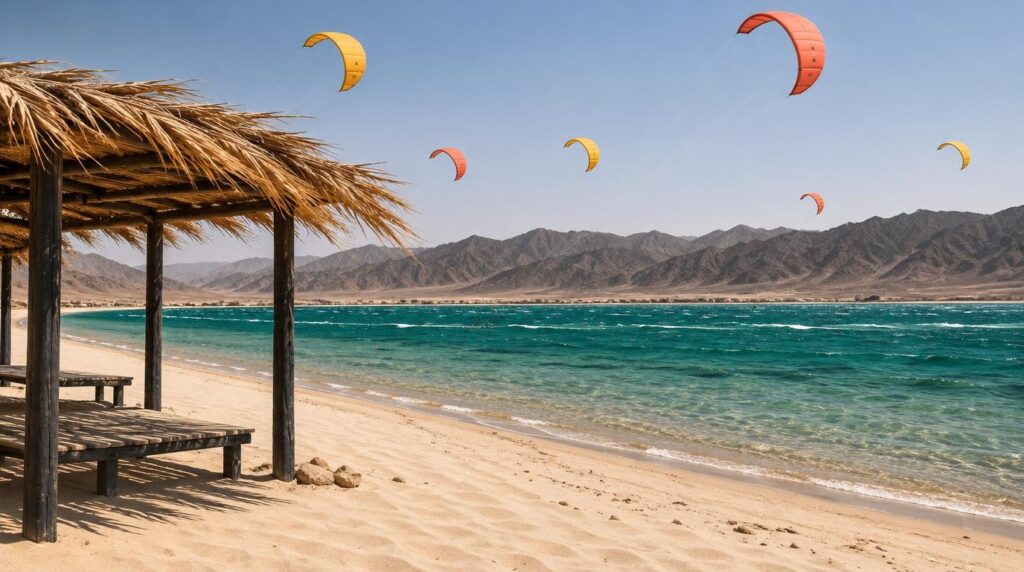
- Blue Lagoon: The area is remote and mainly used for kite surfing, according to We Seek Travel.
Sources disagree on which area lies north or south of another, so checking a map before booking is worthwhile.
Is Dahab Safe?
Government advice treats the Dahab coast differently from northern and inland Sinai. Advice changes, so the dates below matter.
- UK advice: The FCDO advises against all travel to North Sinai. It also advises against all but essential travel to the northern part of South Sinai, beyond the St Catherine to Nuweiba road. The advice excepts coastal areas on the west and east sides of the peninsula. Dahab lies on the eastern coast, although the FCDO text does not name the town.
- US advice: The US State Department page, as read for this article, shows Level 3 (reconsider travel) for Egypt. It shows Level 4 (do not travel) for northern and middle Sinai and does not name South Sinai or Dahab. Some third-party sites list Level 2, so the live page is worth checking.
- Crime: The FCDO describes the general crime rate as low and says scammers and touts sometimes target visitors at tourist sites. Crimes can be reported to the tourist police on 126.
- Personal safety: The British Embassy has reported sexual assaults in Red Sea tourist resorts, often involving someone the victim had already met, such as hotel or excursion staff. The FCDO suggests using reputable providers and sharing taxi details and live location with a trusted contact. More ideas are in these solo female digital nomad safety tips.
- Insurance: The FCDO says air and sea rescue in Egypt can cost more than $4,000 an hour, and rescue often starts only after payment is guaranteed. Travel insurance for remote workers deserves a close look for long stays, and divers also need cover that matches their maximum depth.
Day trips into the mountains toward St Catherine or the north deserve a check against the FCDO map before booking.
When Is the Best Time to Go to Dahab?
Dahab has a desert climate. The monthly averages below come from Wikipedia’s climate table for the town.
- December to February: Daily highs are 21.0 to 22.4°C, and the sea is 21 to 23°C.
- March to May: Highs rise from 25.3°C to 32.2°C, and the sea warms from 21°C to 25°C.
- June to August: Highs reach 34.7 to 35.8°C, and the sea is 26 to 28°C.
- September to November: Highs fall from 33.5°C to 26.5°C, and the sea cools from 28°C to 25°C.
Wind adds another factor. IKSurf Mag notes that the Gulf of Aqaba funnels wind down to Dahab, making it windier than other kitesurfing spots in Egypt.
October to November and April to May can offer a balance of warm water and workable air temperatures. Winter suits long indoor work days, although cooler water usually means thicker wetsuits. Summer suits wind sports and the warmest sea.
Diving Life in Dahab
Dahab is known for shore diving, which means divers walk in from the beach and skip the boat. One operator lists the Blue Hole, the Canyon, Lighthouse, and Eel Garden as sites reachable from shore.
Main Dive Sites
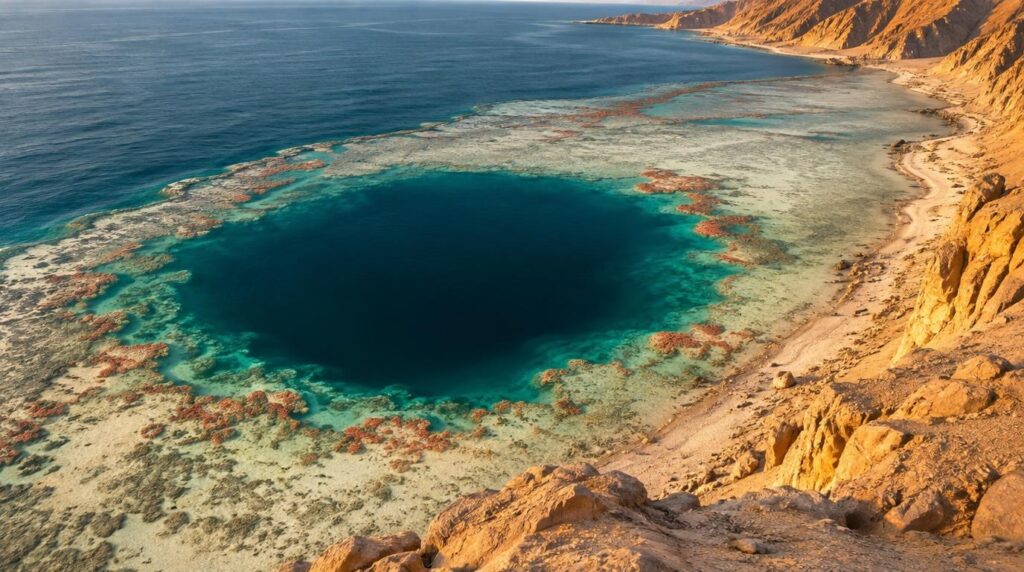
- Blue Hole: The sinkhole sits a few kilometers north of town and drops to about 94 to 100 meters. Most recreational divers use the route from the Bells, which does not reach the Arch.
- Canyon: One operator describes divers’ bubbles forming an upside-down waterfall inside the reef corridor.
- Lighthouse and Eel Garden: Lighthouse reef sits beside the town center. Eel Garden is named for its garden eels.
- Ras Abu Gallum: The protected area north of Dahab has its own park fee.
A single half-day dive fits a morning before work. Circle Divers sells one for €45 online, as the price list below shows.
What Diving Costs
Circle Divers’ online price list, read in November 2026, shows the euro prices below with 14% VAT included. Walk-in prices run a few euros higher.
- Fun dives: One dive costs €45, two dives cost €74, 10 dives over five days cost €326, and 20 dives over 10 days cost €630.
- Equipment: A full set costs €25 a day or €15 for a half day.
- Park fee: The Blue Hole and Ras Abu Gallum fee is €20 per entry. Other operator lists show €10 to €20, so confirming the current fee is worthwhile.
- Courses: PADI Open Water costs €315, Advanced Open Water costs €263, and Rescue Diver costs €300. A separate €100 certification fee is paid at the center.
As an example, a diver who dives on 10 days in a month would pay €630 for 20 dives. Equipment at €25 a day adds €250, and two park entries add €40. The total comes to €920.
Freediving
Dahab also draws freedivers, and several schools teach AIDA, SSI, or Molchanov courses. Freedive Cafe lists a five-day Molchanovs Wave 1 course at €480. A booking platform lists a one-dive introduction at the Makara school for €95. AIDA course outlines include buddy and rescue procedures.
Bibalex notes that snorkelers and freedivers use the Blue Hole. An undated Enterprise summary of Guardian reporting said deaths among technical divers and freedivers had been rising.
Blue Hole Safety, Medical Care, and Flying Home
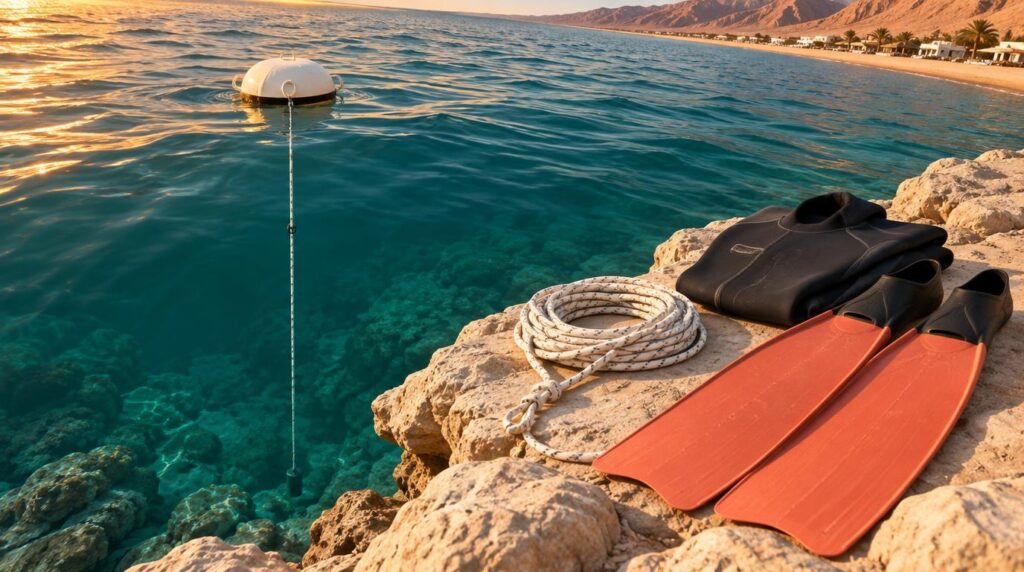
- Reputation: No official count of Blue Hole deaths exists, according to Wikipedia. One technical diver estimated more than 130 deaths between 1997 and 2012, and other claims go as high as 200. Most trouble involves the Arch, a tunnel with a ceiling at about 55 meters, which is deeper than the 40-meter recreational limit. Instructors told The Guardian that the reputation is overstated when divers prepare well.
- Rules: Wikipedia says Egypt’s Chamber of Diving and Water Sports stations a police officer at the Blue Hole to check that divers have a certified guide. Aqua Med says medical questionnaires have been required for snorkelers as well as divers since February 2018.
- Medical care: Aqua Med says only a few institutions provide medical care in the Sinai toward Dahab and Nuweiba. Sources disagree on a recompression chamber in Dahab. A DAN Europe profile says a hyperbaric center opened there in 2006, while Aqua Med lists the Dahab facility as closed, without a date. Sharm el-Sheikh has an established chamber about 85 km away.
- After an accident: The Divers Alert Network (DAN) advises injured divers to go to a hospital first, because a hospital can judge whether chamber treatment is safe.
- Flying out: DAN suggests waiting at least 12 hours after a single no-decompression dive before flying. It suggests 18 hours after repeated or multi-day diving and 24 hours after decompression dives. The transfer to Sharm el-Sheikh adds about an hour, so a departure day needs planning.
Who Dahab Suits and Who Should Skip It
Dahab suits some work styles well and others poorly.
Dahab is a good fit for these people.
- Divers, freedivers, and kite surfers who want daily access to the sea.
- Remote workers on UK or European hours, and async workers with flexible schedules.
- People who want a low monthly budget and accept a layered internet setup.
Dahab may be a poor fit for these people.
- Workers who need fast uploads for long video calls or large file transfers.
- Workers whose clients are on US Pacific hours.
- People who need a long-stay visa with a clear remote-work category.
- Travelers who want a hospital and a recompression chamber close to town.
Plan Your Dahab Stay
Dahab offers low costs, a close-knit remote work scene, and dive sites a short walk from the beach. The trade-offs are upload speed and visa options. FlyBibe books flights and tours for remote workers, so you can book your flights to Sharm el-Sheikh with FlyBibe and compare routes by price and timing. Flying into Sharm el-Sheikh also lets eligible travelers use the free Sinai stamp for stays under 15 days.