
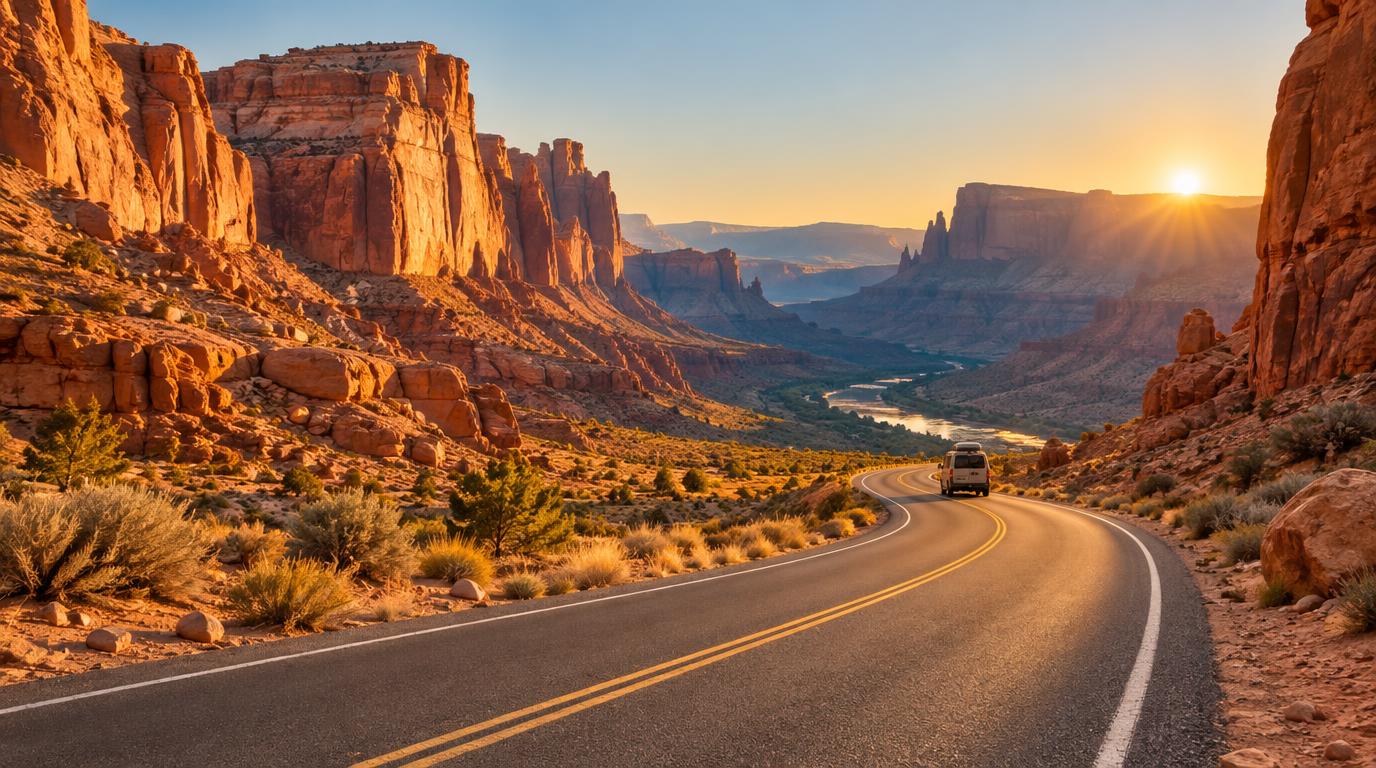
Cell service and wifi inside US national parks are limited. A good remote work road trip therefore depends on the town beside each park. This guide covers seven parks and their gateway towns, with coworking options, 2026 fees, and reservation rules. The guide also explains what visitors from outside the US should check before planning a work trip.
How These Parks Were Chosen
Each park below has a nearby town with reliable internet or a coworking space. Entry rules are also clear for 2026. The list is not ranked. The parks run from west to east, so the order follows a possible route across the country.
Time zone fit matters for calls, since the parks cover Pacific, Mountain, and Eastern time. Mountain time is 2 hours behind US Eastern and about 7 hours behind the UK for most of the year. For help with overlap hours, see this guide on how to manage client meetings across multiple time zones. Fees and rules were checked in October 2026 and may change.
Entry Rules and Fees for Visitors From Outside the US
Visitors from other countries face two checks before the trip, one about work and one about fees.
- Work rules: The US has no digital nomad visa. Immigration law firms say ongoing remote work on a tourist visa or ESTA can count as unauthorized work, even for a foreign employer. Some firms call the question open. FlyBibe’s guide to the digital nomad visa vs tourist visa explains the general difference. An immigration lawyer can advise on a specific case, since this guide gives general information only.
- Park fees: Most parks in this guide charge $30 to $35 per vehicle, and Great Smoky Mountains is free. According to the National Park Service, non-US residents aged 16 and older pay an extra $100 per person at 11 parks. Zion, Grand Teton, Glacier, and Rocky Mountain are on that list.
- Annual pass: A $250 nonresident annual pass covers the extra fee for the passholder and the passengers in one vehicle. A solo adult who visits two surcharge parks pays about $270 at $35 per vehicle, so the pass costs less.
Fee-free days apply only to US residents. A tour company filed a lawsuit against the nonresident fee in September 2026, so the rules could change.
The Parks
1. Joshua Tree National Park, California
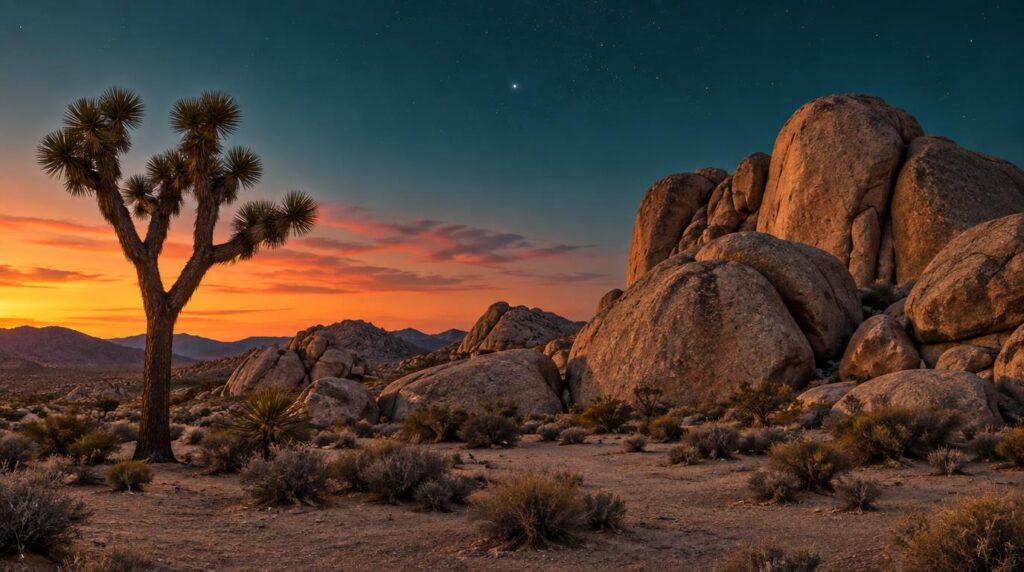
Joshua Tree works best as a stay in the desert towns on its edge, since signal inside the park is weak.
- Internet: The NPS says connectivity in the park is limited or missing. Black Cactus Co-Working in Twentynine Palms lists high-speed internet and a kitchenette. A listing site shows booking by the hour.
- Park access: A private vehicle pays $30 for seven days, and the park annual pass costs $55. The park has no nonresident fee and does not use timed entry.
- Timezone: Pacific time, which is 3 hours behind US Eastern.
The NPS suggests saving a digital pass on a phone before arriving, because signal may not reach the gate. The park is open 24 hours a day and is an International Dark Sky Park, so evenings after work can include stargazing.
Best for: Pacific-time workers who want a desert stay without the extra nonresident fee.
2. Zion National Park, Utah
Springdale sits at the park entrance, which makes it a practical place to stay and work.
- Internet: A remote work guide says Springdale has full cell service and cafes with free wifi. Cell service inside the canyon is limited and fades further in. Zion Lodge warns that its wifi may be slow. Coworking spaces are listed in St. George, a larger city in the area.
- Park access: A private vehicle pays $35, plus the $100 nonresident fee for visitors from outside the US. During shuttle season, private vehicles cannot drive the Zion Canyon Scenic Drive, and the free shuttle resumed on March 7, 2026.
- Timezone: Mountain time, which is 2 hours behind US Eastern.
Parking at the visitor center fills by 7 to 9 AM on busy days. Many visitors park in Springdale and ride the free town shuttle. Lodging close to the entrance costs more, and it helps to check the wifi speed before booking a stay.
Best for: a short work and hiking stay with good cell service in town.
3. Arches National Park, Utah
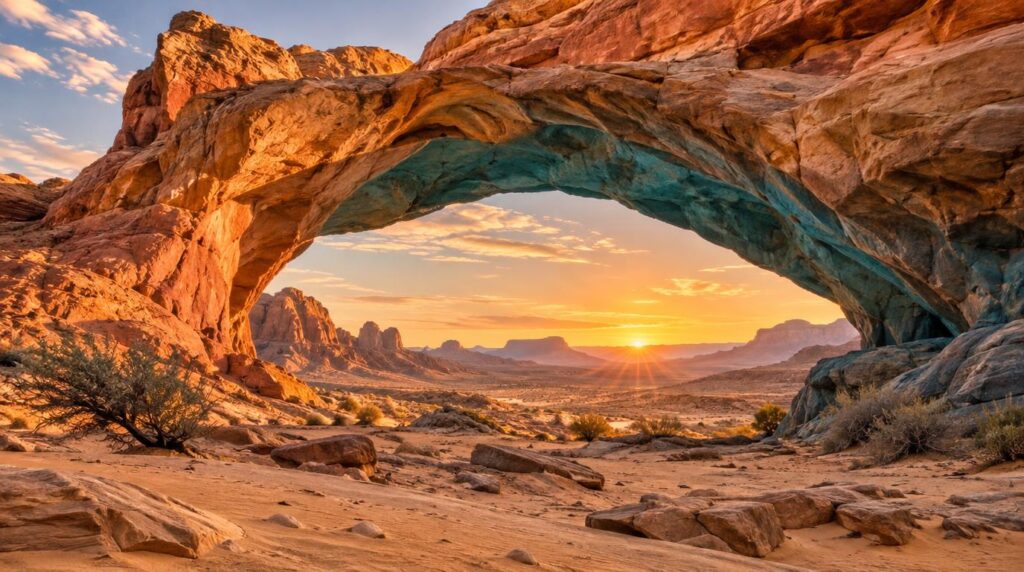
Moab sits about 5 miles south of the park entrance and has both fiber internet and a low-cost coworking space.
- Internet: According to Moab Sun News, Emery Telcom offers fiber service to most Moab homes, with speeds up to 1 Gbps.
- Coworking: Moab Arts runs a coworking space for $15 per drop-in or $75 per month, open weekdays from 8 AM to 5 PM. The center has closed for holidays and for one month in summer in past years, so checking dates first is wise.
- Park access: A private vehicle pays $30. Arches dropped timed entry for 2026 and does not charge the nonresident fee, although Devils Garden Campground still needs a reservation.
- Timezone: Mountain time.
Average July highs reach about 100°F with little shade, and parking lots fill between about 8 AM and noon. Arches ran timed entry from 2022 through 2025, so the rule could return in a later year.
Best for: longer stays that need fast home internet and a low park cost.
4. Grand Teton National Park, Wyoming
Jackson is the main base, about 12 miles south of the park, and it has several coworking options.
- Coworking: The Cowork Space lists day passes from $50, and Poppy lists day passes from $55, both in downtown Jackson. Travelers who plan to stay in several towns on this list can compare day passes with a flexible coworking membership.
- Internet: The NPS approved a plan to add cell towers and fiber in the developed areas of the park.
- Park access: A private vehicle pays $35 for seven days, plus $100 for nonresidents. Entrance stations accept electronic payment only.
- Cost: One 2026 travel guide puts peak-season lodging in Jackson at $280 to $620 per night.
- Timezone: Mountain time.
June through September is the main visiting season, and lodging prices rise to match.
Best for: workers who want a coworking desk close to the park and can pay mountain-town prices.

5. Glacier National Park, Montana
Glacier gives a full break from signal on park days, with Whitefish as the working base.
- Internet: The NPS says cell reception reaches from West Glacier to Apgar Village. Visitors should not expect any at Many Glacier, Two Medicine, or Logan Pass. Public wifi is limited to the Apgar and St. Mary visitor centers, so reviewing public wifi security beforehand is sensible.
- Coworking: Basecamp Coworking in Whitefish offers shared desks, dedicated desks, and private offices. A listing site puts open desks at about $200 per month. Whitefish is a premium resort town with costs above the national average.
- Park access: A private vehicle pays $35 from May 1 to October 31 and $25 from November 1 to April 30. Nonresidents pay $100 more. No vehicle reservation is required in 2026, but Logan Pass shuttle tickets must be booked on Recreation.gov.
- Timezone: Mountain time.
The high section of Going-to-the-Sun Road usually opens in late June or early July. It closes in mid-October, so the full drive has a short season.
Best for: workers who want signal-free days in the park and a quiet desk in town.
6. Rocky Mountain National Park, Colorado
Estes Park is the gateway town, and its coworking space is aimed at visitors who work remotely.
- Coworking: Vert CoWorking in Estes Park lists 1 Gb broadband, meeting rooms, and a fitness facility. Day, week, and month access are offered.
- Park access: A seven-day vehicle pass costs $35, plus $100 for nonresidents. A $2 timed entry reservation is required during set hours from May 22 to mid-October in 2026.
- Altitude: Estes Park sits near 7,500 feet, and Trail Ridge Road climbs above 12,000 feet. The NPS says altitude sickness affects many visitors each year.
- Timezone: Mountain time.
Working in town on the first day gives the body time to adjust before higher hikes. The NPS also advises a slow pace and plenty of water.
Best for: Mountain-time workers who need fast broadband next to a park.
7. Great Smoky Mountains National Park, Tennessee and North Carolina
Great Smoky Mountains has free entry and is the only park in this guide on Eastern time.
- Internet: The NPS says cell coverage in the park is extremely limited and mostly missing. Asheville, North Carolina, has several coworking spaces, including Hatch Coworking with day passes from $30, and Focal Point Coworking.
- Park access: The park has no entrance fee, no nonresident fee, and no timed entry. A vehicle parked longer than 15 minutes needs a parking tag, at $5 per day, $15 per week, or $40 per year. The America the Beautiful pass does not cover the tag.
- Timezone: Eastern time, which is 5 hours behind the UK for most of the year.
The park is the most visited in the country, with about 12 million visitors a year, so parking areas can be busy.
Best for: East Coast or European-hours workers who want the lowest park cost.
Plan the Route
A remote work road trip across these parks works best when work happens in the gateway towns and park days stay free of calls. Moab, Estes Park, Whitefish, and Jackson all have coworking options, and Great Smoky Mountains has the lowest park cost. For a city stop between parks, the Austin digital nomad guide covers costs for US-based remote workers. When the route is set, search flights on FlyBibe to Jackson Hole, Glacier Park, or the airport nearest the first stop.