

Southeast Asia has dive bases where a morning dive and an afternoon work block fit into the same day. This guide covers six of them, with internet speeds, prices, open seasons, and adventure trips for the days off. Each pick lists what a remote worker should know before booking.
How This List Is Ordered
The picks run from the most dependable internet to the least, based on the sources checked. Those sources often disagree on speeds, so the order is a rough guide. The list also covers course and dive prices, the months each site is open, and the distance from the nearest airport.
Time zones help as well. Thailand is seven hours ahead of UTC, while the Philippines, Bali, and Malaysia are eight hours ahead. A morning on the reef can leave the afternoon free for client meetings across time zones with Europe. You can browse dive and adventure tours across Southeast Asia on FlyBibe while comparing these bases.
1. Koh Tao, Thailand
Koh Tao is a small island in the Gulf of Thailand with more than 100 dive schools. Many remote workers arrive for a first certification and stay for the coworking scene.
- Internet: Tao Hub, a coworking space on the island, is open 24 hours and has a backup connection. Nomads.com lists an island average near 19 Mbps, while another tracker lists about 30 Mbps.
- Cost: An Open Water course runs about 11,000 to 12,500 baht in 2026, according to Big Blue Diving. Advanced Open Water costs about 11,000 to 12,000 baht.
- Season: Diving works year-round, with warm water and mostly calm seas, according to a PADI dive center on the island.
- Getting there: The closest airports are on Koh Samui and at Chumphon, each at least 1.5 hours away by boat.
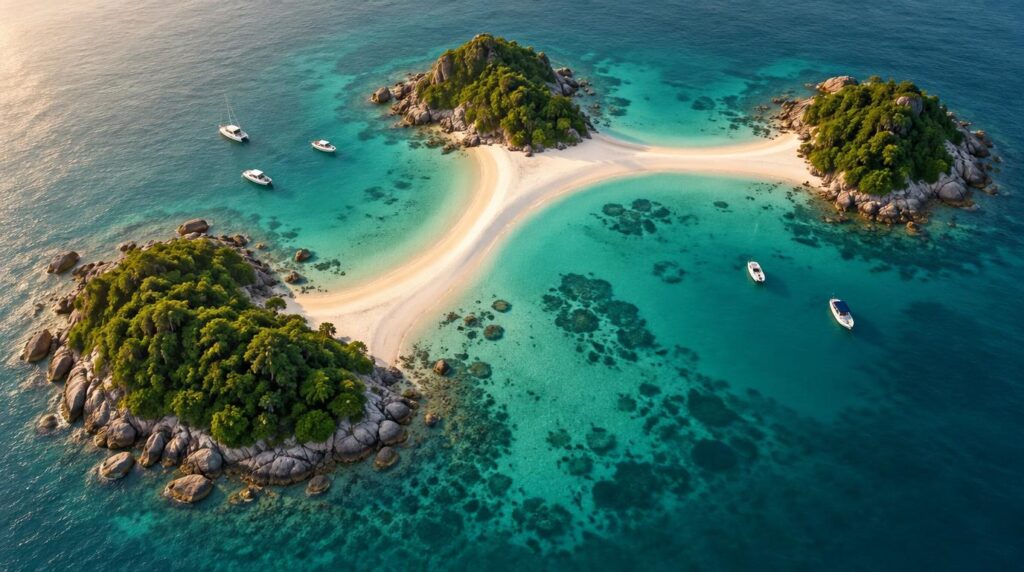
The Open Water course takes three to four days and fills most of each one, so those days work best as planned time off. Koh Nang Yuan, three small islands joined by one sand beach, is among the best-known dive sites. A trial day at Tao Hub shows how the connection holds up for video calls before a full week of work.
Best for: First-time divers who want a certification and a coworking desk on the same island.
2. Koh Lanta, Thailand
Koh Lanta sits on the Andaman Sea and draws divers who want big marine life. The main draw is the day trip to Hin Daeng and Hin Muang, two offshore rocks covered in red and purple soft coral.
- Internet: KoHub, a coworking space on Long Beach, advertises high-speed fiber internet. Nomads.com lists an island average near 21 Mbps and a hot desk at about $141 a month.
- Cost: Phoenix Divers charges about 4,500 to 5,000 baht for the Hin Daeng and Hin Muang day trip, plus a 600 baht marine park fee.
- Season: Peak season runs from November to April. Phoenix Divers says Hin Daeng, Hin Muang, and Koh Haa close from 15 May to 15 October.
- Getting there: According to KoHub, the island is about two hours by road and two ferries from Krabi.
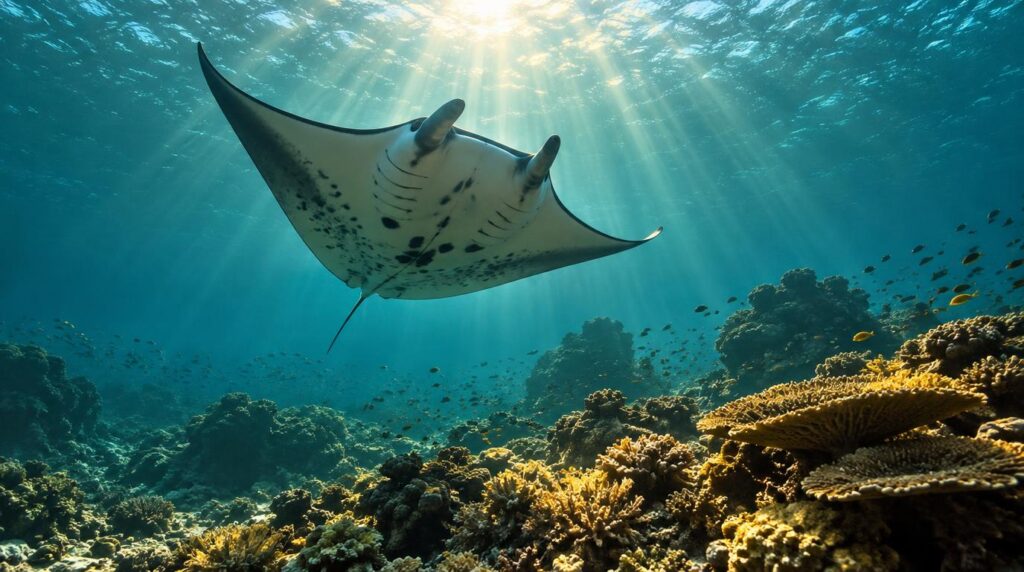
The sites suit divers with more experience. Phoenix Divers recommends the trip for divers with an Advanced certification or at least 50 logged dives, because currents can be strong. A speedboat reaches the sites in about 1 hour 20 minutes, according to Hidden Depths Diving, while larger boats take about four hours. January and February are the best months for mantas, according to Phoenix Divers.
Longer stays in Thailand may fit the Destination Thailand Visa, which has its own rules and fees.
Best for: Advanced divers who can plan a stay between November and April.
3. Nusa Lembongan and Nusa Penida, Indonesia
Nusa Penida has the manta rays, and Nusa Lembongan has the better internet. Boats run between the two islands, which sit off the southeast coast of Bali.
- Internet: The Lembongan Traveller reports fixed broadband on Nusa Lembongan averaging about 29 Mbps, with the best work cafes near 32 Mbps. Wifi on Nusa Penida is less dependable, according to Nomad Watch and Holafly.
- Cost: One booking listing prices two dives at Nusa Penida at about $175 and three dives at about $210, with Bali hotel pickup. A 100,000 rupiah conservation fee is extra.
- Season: Manta rays can be seen year-round. The mola mola season usually runs from late July into November, according to local guides on Airbnb.
- Getting there: Speedboats from Bali take about 35 minutes to an hour, depending on the route.
Strong currents and choppy water make Nusa Penida a harder dive than most bases on this list. Local guides on Airbnb recommend a private guide for newer divers. Manta Point also gets crowded in December, January, and June to August, according to Bali Fun Diving, so early boats help.
A Telkomsel SIM, a good work cafe, and a phone hotspot as backup cover most remote jobs on Lembongan, according to The Lembongan Traveller. The choice between an eSIM and a local SIM depends on how long the stay is. Remote workers already based in Bali can fit Nusa Penida into one of the weekend trips from Bali.
Best for: Divers based in Bali who want mantas on a weekend.
4. Moalboal, Cebu, Philippines
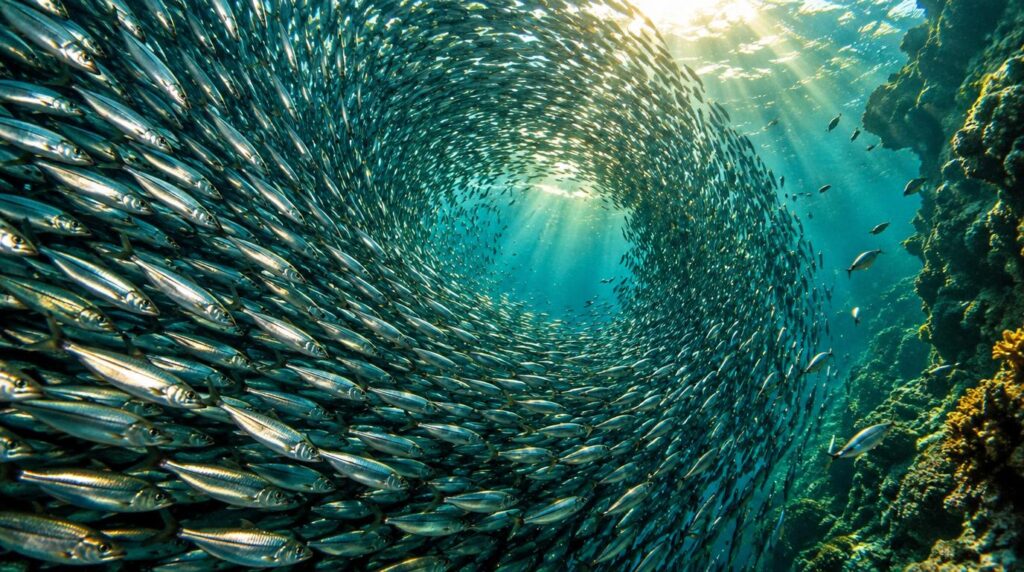
Moalboal is a small beach town about three hours southwest of Cebu City. A school of sardines swims close to shore at Panagsama Beach, and dive centers there reach it within minutes.
- Internet: Nomad Watch says fiber on Panagsama Beach has improved, but power outages can cause short breaks and some cafes lack fast wifi. Co-Work Moalboal is one listed coworking space in town.
- Cost: Two travel blogs list fun dives at about 1,200 to 1,800 pesos and Open Water courses at about 17,500 to 22,000 pesos.
- Season: Remote Lands says the sardines can be seen on most days of the year.
- Getting there: A hotel transfer from Cebu airport takes about 3.5 hours and costs about 3,200 pesos, according to Cathay Pacific.
Nomad Watch suggests asking any rental about generator backup and wifi speed. A guide to checking wifi speed before booking a stay explains how to verify the answer.
Kawasan Falls in Badian, near Moalboal, offers a canyoneering trip for the days off. The regulated price is about 2,000 pesos per person with a guide, and the trip takes three to five hours, according to GoAsia. Canyoneering closes on the third Wednesday of each month for a clean-up, so plans should avoid that day.
The Philippines signed Executive Order 86 in April 2025 to create a nomad visa, but sources disagree on whether applications are open. Visitors can extend a tourist stay at Bureau of Immigration offices in the meantime. This applies to both Philippine bases on this list, and the Department of Foreign Affairs can confirm current rules.
Best for: Divers who want a short walk from the desk to the reef and a canyoneering day nearby.
5. Dauin and Dumaguete, Negros, Philippines
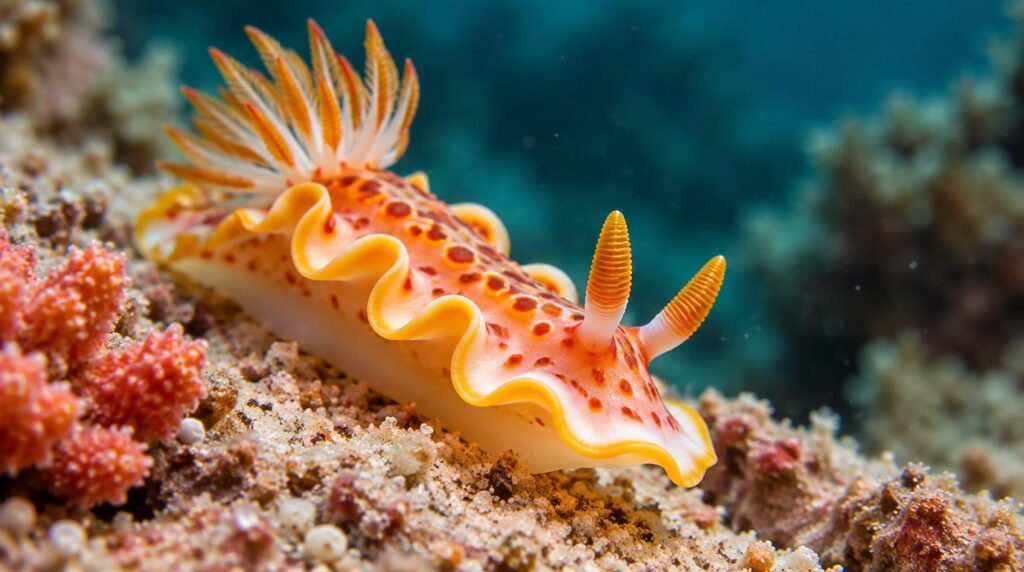
Dauin is a quiet coastal town about 15 kilometers south of Dumaguete, and most of the area’s dive resorts are there. The coast is known for muck diving, which means searching sandy slopes for small animals such as nudibranchs and frogfish.
- Internet: Sources disagree. One tracker lists about 30 Mbps, while another calls the internet slow and unreliable, especially in rain. Dumaguete city center has the most stable connections, according to Stamped Nomad.
- Cost: Mike’s Dauin Beach Resort lists a single dive at 2,000 pesos. A 500 peso fuel surcharge has applied to each Apo Island trip since April 2026.
- Day pass: The same resort sells a 400 peso day pass that includes the pool, free wifi, and 200 pesos of food or drink.
- Season: Diving works year-round, and visibility tends to be best from March through June, according to GoAsia.
- Getting there: Dumaguete Airport handles domestic flights, so international trips need a transfer, according to Nomad Watch.
Apo Island, a marine sanctuary known for sea turtles, is about 45 minutes by boat from Dauin. For the days off, Twin Lakes and Casaroro Falls near Dumaguete offer mountain trips. GoAsia says a tricycle between Dauin and Dumaguete takes about 30 minutes. A work week in the city and a dive weekend in Dauin is realistic.
Best for: Macro and critter divers who want slow, low-cost weeks.
6. Perhentian Islands, Malaysia
The Perhentian Islands sit off the east coast of Malaysia inside the Terengganu Marine Park. The sites are shallow with gentle currents, which suits new divers.
- Internet: Nomad Watch calls connectivity slow and unreliable, and the islands have no dedicated coworking spaces. The days here work best as time off or light work.
- Cost: One dive center lists an Open Water course at an estimated 1,350 ringgit.
- Season: The islands are open from early March to mid-October, according to Scuba Diver Magazine. Resorts and dive centers close from mid-October to the end of February.
- Getting there: A boat from Kuala Besut jetty takes about 45 minutes. Flights from Kuala Lumpur to Kota Bharu take about an hour, according to Dive Planit.
Tokong Laut, a rock pinnacle about 20 minutes away by boat, is the best-known dive site, according to Scuba Diving magazine. Kuala Lumpur makes a practical stop for work weeks before and after the islands.
Best for: Beginners who want a screen-free stretch on the water.

What to Sort Out Before Booking
- Flights home: DAN suggests waiting at least 12 hours before flying after one no-decompression dive, and 18 hours after repeated dives or several days of diving. PADI adds that 24 hours is best when possible.
- Certification: Most beginner sites need an Open Water card. Hin Daeng, Hin Muang, and Nusa Penida suit divers with more experience.
- Insurance: Some dive centers leave insurance out of the price. A travel or health policy should state that it covers scuba diving.
This section gives general information only. A doctor or dive medical professional can answer questions about personal fitness to dive.
Each of these bases pairs a reef with a desk. Koh Tao and Koh Lanta suit steady work weeks, Moalboal and Dauin suit slower ones, and the Nusa islands fit a Bali weekend. The Perhentian Islands work best as a break from screens. Once one fits your next month, find tours and stays near these dive bases on FlyBibe and plan the dive days around your work calendar.